


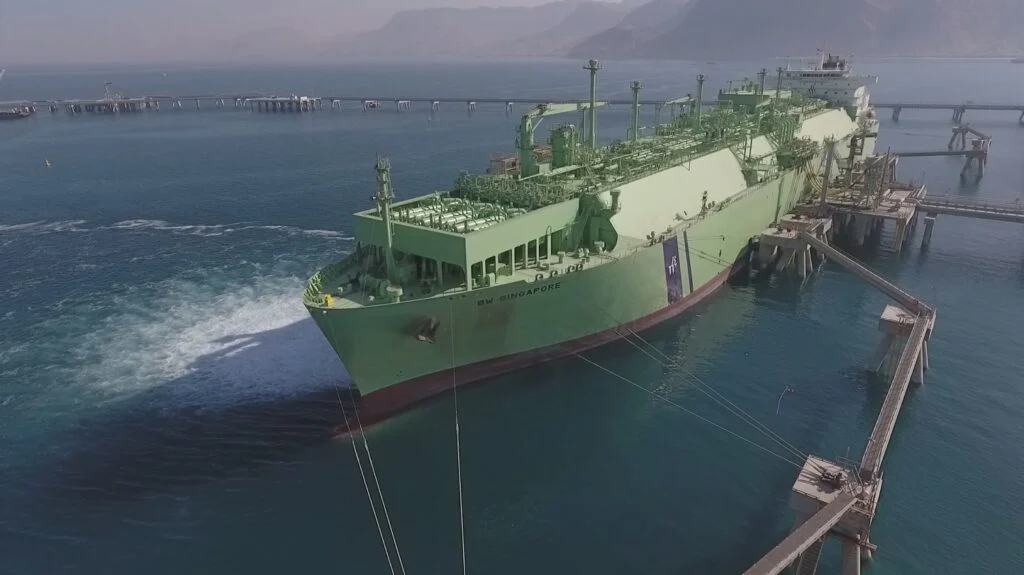
BW LNG, a liquefied natural gas (LNG) shipping company that is part of Singapore-based BW Group, has shed more light on its move that pushes LNG carrier capacity beyond the conventional 174,000-cubic-meter (cbm) design with a new 177,000-cbm, three-tank configuration, described as being able to carry more cargo while retaining the flexibility and terminal compatibility of the established vessel class.
BW LNG has explained that the 177,000-cbm three-tank design will be used on four LNG carriers being built by HD Hyundai Samho, with deliveries scheduled between the fourth quarter of 2028 and the third quarter of 2029. Developed with GTT and HD Hyundai Heavy Industries and evaluated and approved by DNV, the design increases cargo capacity by 3,000 cubic meters without changing the vessels’ overall dimensions.
The company emphasizes that the approach is intended to build on the characteristics that have made 174,000-cbm LNG carriers widely adopted across the market, while increasing the amount of LNG that can be transported on each voyage.
The three-tank configuration also provides operational flexibility for partial-load conditions, based on the company’s statement, while the design incorporates a lower boil-off rate that can reduce natural boil-off and reliquefaction power requirements.
The LNG shipping player said: “The 174k cbm LNG carrier has become a preferred size in today’s LNG shipping market, offering the compatibility and operational flexibility needed to serve a wide range of terminals and trading routes.
“With our new 177k cbm three-tank design, BW LNG is building on these strengths by increasing cargo capacity by 3,000 cbm – while retaining the same vessel dimensions and compatibility.”
BW LNG expects the larger cargo capacity and lower energy requirements to reduce emissions intensity per unit of LNG delivered. The vessels will use GTT’s Mark III membrane containment technology with reinforced membrane systems.
The firm described the design as an evolution of the established 174,000-cbm vessel rather than a departure from it, arguing that the additional capacity can be achieved while maintaining the operational flexibility and compatibility associated with the class.
The LNG vessel owner highlighted: “Rather than changing what already works, the 177k design takes the flexibility and compatibility of the 174k workhorse and enhances it with greater carrying capacity and efficiency.
“By combining proven technology with thoughtful innovation, BW LNG continues to advance LNG shipping for the years ahead.”

Power Your Brand With Offshore Energy ⤵️
Take the spotlight and anchor your brand in the heart of the offshore world!
Join us for a bigger impact and amplify your presence at the core hub of the offshore energy community!
