


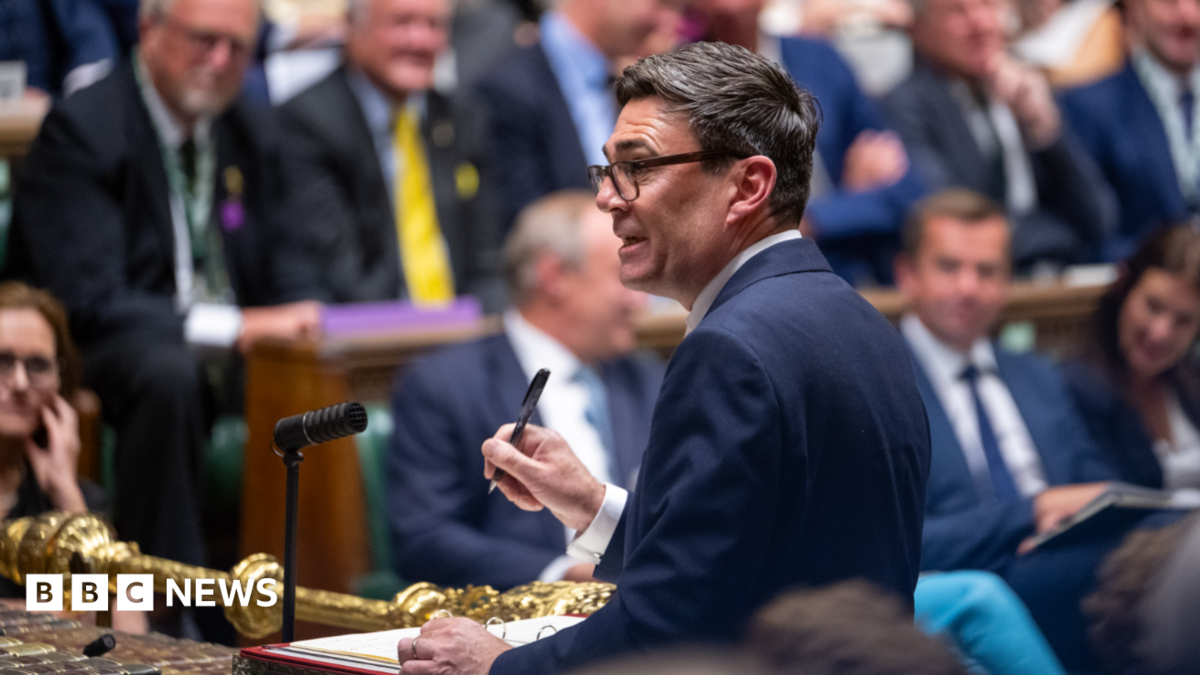
Burnham said his time as Greater Manchester mayor had given him “a clear theory of growth”, namely that devolving powers to regions outside London would boost their economy.
He argued the approach had worked in Manchester and now he wanted “every single place across our regions and nations to be able to do the same, creating the conditions for good growth in every postcode”.
Some MPs have raised concern that areas without mayors – and the new powers that have come with them – would suffer, leading to a two-tier system.
Efforts to secure a devolution deal in Cornwall have been stymied by the county’s reluctance to form a group with Devon but also to having a mayor.
Burnham appeared to have accepted the county’s concerns, telling the House of Commons his government would work with Cornwall Council and its six MPs on a devolution deal “with or without an elected mayor”.
He added that he would be extending “the same offer to all parts of England without devolved power”.
He also said he was interested in exploring “a local model of devolution” in Scotland, Wales and Northern Ireland.
Shortly before Burnham’s speech to Parliament, Sir Keir Starmer said in a surprise announcement that he would be stepping down as an MP, less than two months after he quit as prime minister.
Burnham began his speech by paying tribute to his predecessor telling the House of Commons that Sir Keir had “given this country a lifetime of public service” and created a “platform to change this country for the better”.
In his wide-ranging statement, which lasted three-and-half-hours, Burnham gave an indication of his approach on several other issues including welfare.
He suggested that providing more council homes and thereby bringing down rent for more people would be the “Labour way” of reducing the benefits bill.
The prime minister also committed to introducing legislation that would allow homeowners to move more easily from the leasehold system to a commonhold form of ownership.
Asked by Badenoch about defence spending, Burnham said he had specifically chosen John Healey to be his chancellor because of his “commitment to defence”.
Healey resigned as defence secretary earlier this year, accusing then-prime minister Sir Keir of failing to commit the resources needed to keep the country safe.
Liberal Democrat leader Sir Ed Davey used his question to argue that too much power in the UK was in “the wrong hands” and called for “fundamental change” of the political system.
Burnham said he would look at the voting system but would not introduce any changes before the next general election.
