


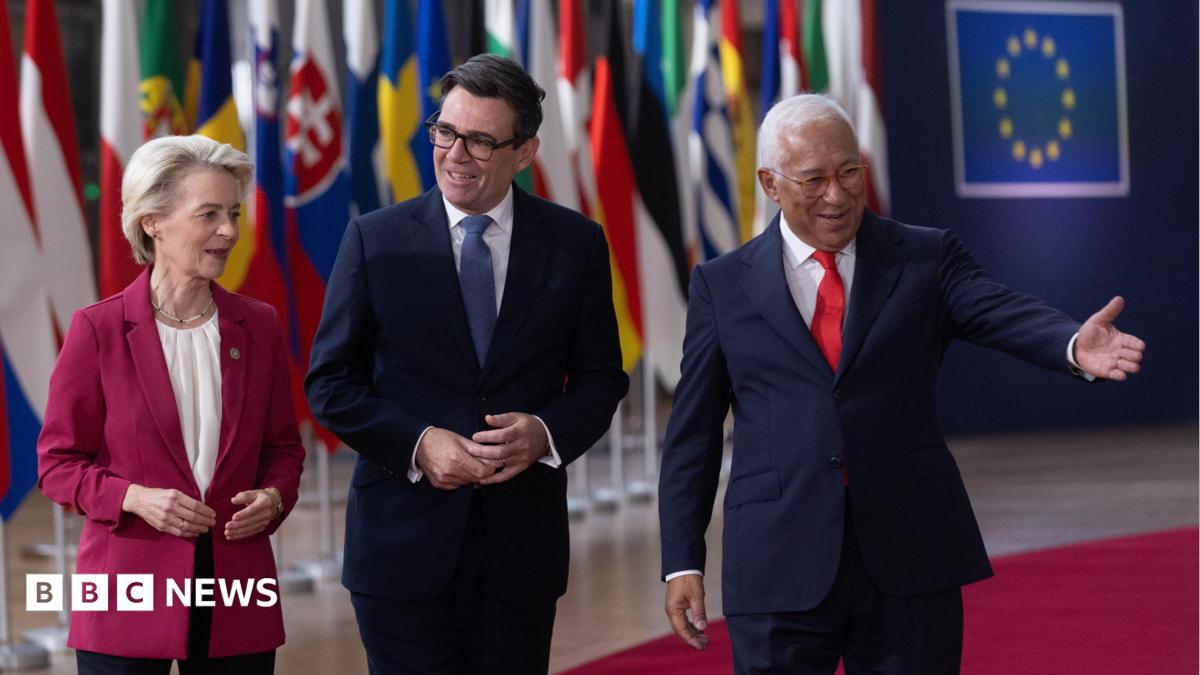
At the dramatic conclusion of his first party conference speech as Labour leader in September – a moment he has been dreaming of for decades – the prime minister vowed to get closer to the EU.
Over the subsequent two months it has at times been a bit unclear how exactly he envisages that playing out and quite how far he is willing to go.
But focusing on the process risks obscuring the most important development, which is that the prime minister and the government are now unambiguously committed to Britain not only getting closer, but getting much closer to the EU.
There were two significant moments at today’s summit in that regard.
First, Burnham said that the government had got as far as it could go with incremental deals with the EU, at least this side of a general election.
In other words, he has got as far as he believes is possible with the strategy he inherited from Sir Keir Starmer of getting closer to the EU within the confines of the post-Brexit architecture set out by Theresa May all those years ago, of Britain remaining outside the single market and the customs union.
That suggests that after two years of this, there will not be a third annual summit to unveil specific agreements designed to smooth post-Brexit issues affecting specific sectors.
Yet it does sound like there will be another summit next year – or, rather, an “informal brainstorming process” about potential options for future relations with the EU.
That sounds pretty nebulous, sure, but an event dedicated specifically to both sides discussing how to change the terms of Britain’s arrangements with the EU is likely to become quite a big moment when it arrives.
Perhaps as importantly, von der Leyen made clear that the EU was embracing this event too.
That said, it does diminish the chances of major movement from Burnham towards embracing a specific model for the EU relationship in the intervening period.
And what of the domestic politics of this?
Britain’s seventh prime minister in just over 10 years watched from Manchester as the fraught relationship with Europe wrecked the careers of so many of those predecessors.
Burnham’s gamble is that this time it’s different.
He believes that public regret about how Brexit has played out opens the political space for a far-reaching renegotiation.
Plenty of Labour MPs enthusiastically agree, and see this as the route to uniting the “progressive” vote at the next election too.
Some, especially those who represent Labour’s former industrial heartlands, are a little more apprehensive.
This morning’s confusion is a reminder that there is another element to this gamble.
Negotiating with Brussels, even if both sides believe progress is a “win-win”, can be a fraught and complicated business.
Once he’s on the other side of his brainstorm, can Burnham carry that off without getting bogged down and distracting from his government’s other priorities?
On the day he became Labour leader in July, Burnham described it as the biggest change moment in British politics in 40 years.
He was talking principally about economic transformation.
But going to Brussels and getting what he wants without serious complications would be a pretty big change too.
