


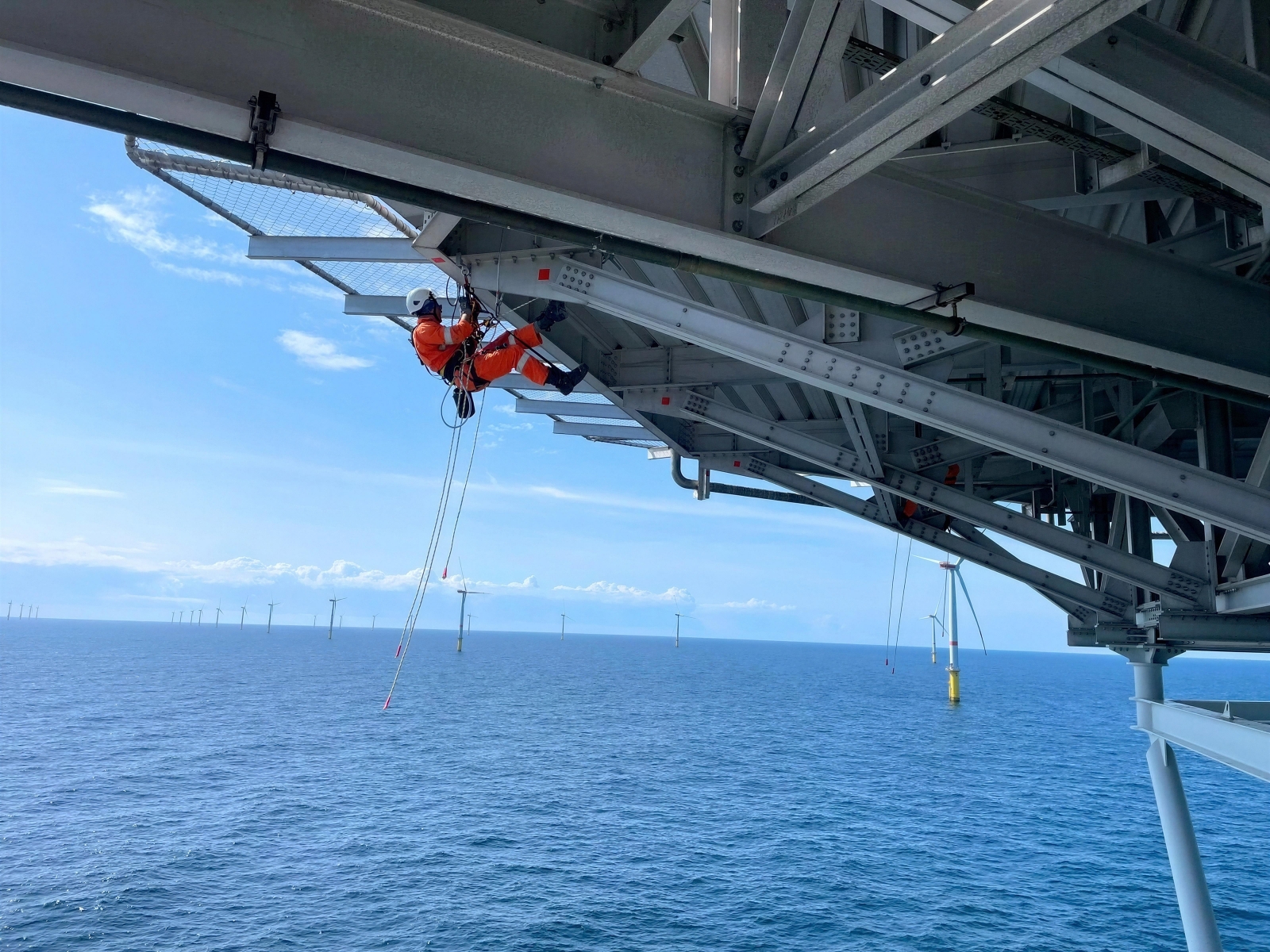
Written by Agata Maderska, azul.marketing studio for Alpin Weld
Offshore maintenance and repair rarely involve straightforward conditions. Structural defects may occur in areas with restricted access, while components requiring inspection, repair or replacement are often located in challenging environments where conventional access methods are difficult or inefficient to deploy. As a result, what may initially appear to be a single welding or maintenance task can develop into a complex operation involving engineering, specialised access, inspection, fabrication and corrosion protection.
This is the environment in which Alpin Weld has built its business. With headquarters based on the north of Poland, the company carries out projects in the offshore and onshore wind energy market, oil and gas, as well as maritime sector, combining engineering, steel prefabrication, welding, rope access work, NDT, QA and QC, coating of offshore structures, assembly and project management. Rather than treating these capabilities as separate services, Alpin Weld increasingly approaches them as consecutive stages of the same problem-solving process. The idea is simple – when something needs to be inspected, repaired or modified, reaching the worksite is only the beginning.
Offshore doesn’t leave much room for improvisation
A repair taking place in the workshop is one thing. The same repair performed offshore, directly on the turbine or O&G platform on the open sea is a totally different story. Weather, access limitations, mobilisation, vessel schedules and restricted working windows can turn a relatively small technical task into a complex operation. This makes preparation as important as execution.
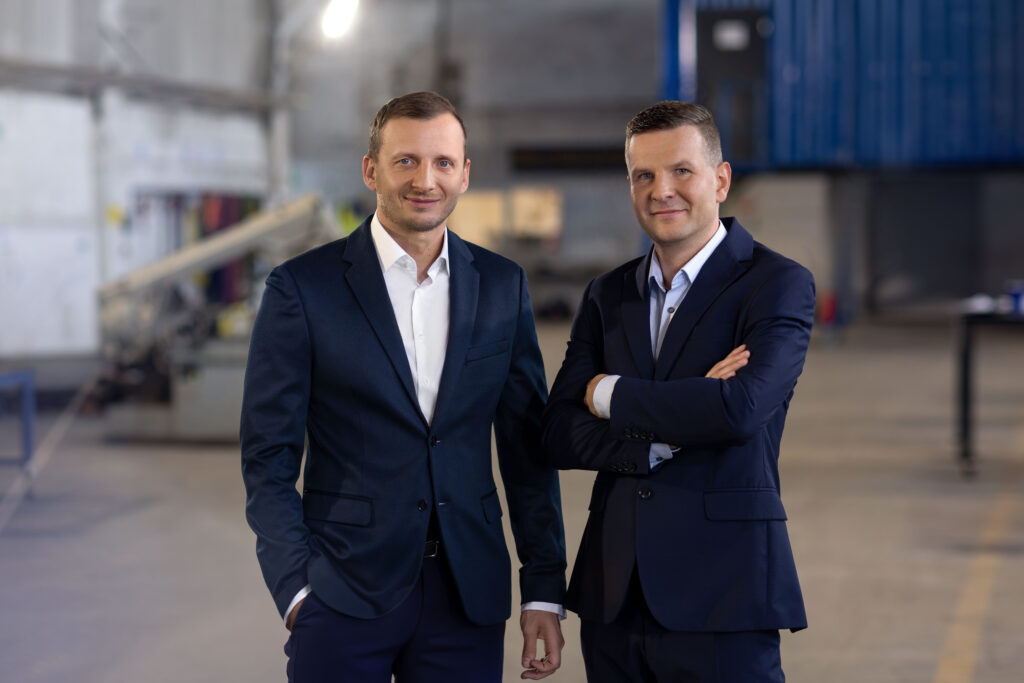
Before technicians arrive on site, the work may already involve inspection and diagnosis, review of the technical documentation, engineering and repair design, risk assessment, selection of materials and welding procedures, access and rigging planning, as well as defining inspection stages and acceptance criteria. For larger scopes, Alpin Weld takes the process even further. „We take a comprehensive approach to every project we undertake. Our team prepare workshop documentation, prefabricate required steel structures or piping components at our workshop facility in Poland, and carry out necessary measurements and testing. Then, we manage the next steps – from transportation to site, installation and welding, through NDT and restoration of anti-corrosion system, up to the final as-built documentation. What the client initially reports as an offshore issue may therefore be only one part of a much broader scope of work” – points out Adam Kozłowski, CEO and co-owner of Alpin Weld.
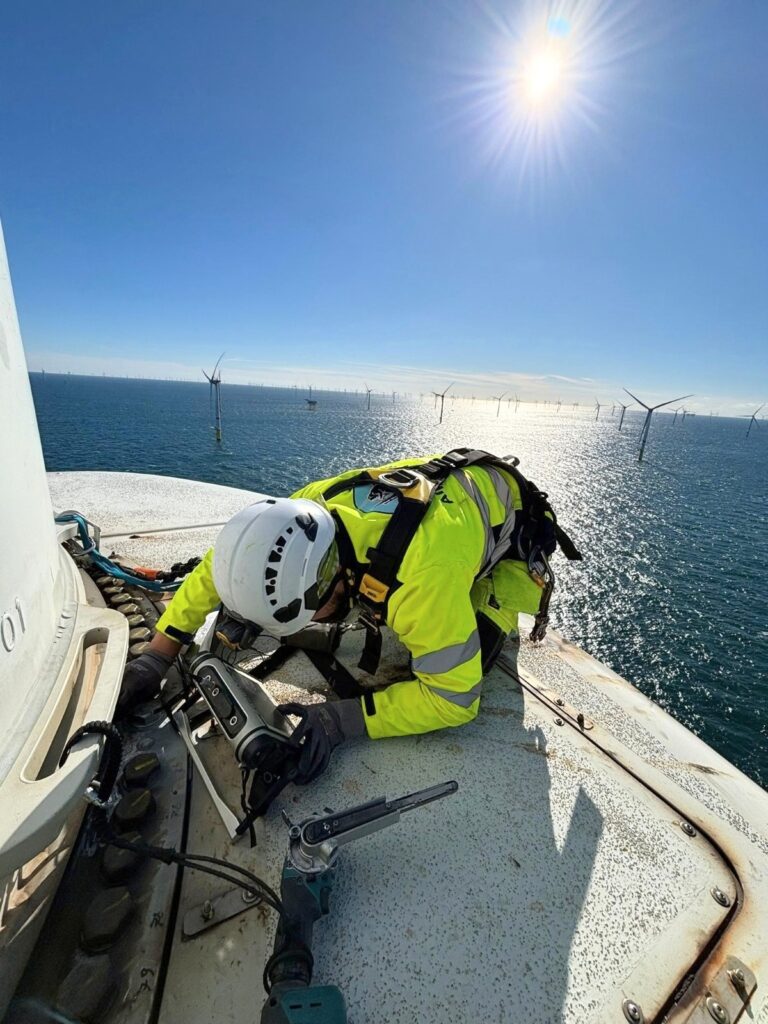
As wind turbines and offshore steel structures operate under continuous mechanical and environmental loads like wind, vibration, cyclic loading and salt water, the corrosion can expose weaknesses that were not necessarily visible during fabrication or installation. When a defect appears, welding immediately is not always the answer. First, its location, extent and possible cause need to be understood. Alpin Weld’s projects to date have followed this sequence of steps. Technicians carry out an inspection of the structure and document the defect. Engineers then analyse the possible causes and determine the appropriate repair method. The repair is then carried out and NDT is used again to verify the result. Finally, the repaired area is protected with a suitable coating system. This closed-loop process is important in offshore conditions, where bringing in another contractor, organising another mobilisation and delivering another set of equipment to the site can result in delays, additional complications and increased costs.
Getting there is a part of the engineering
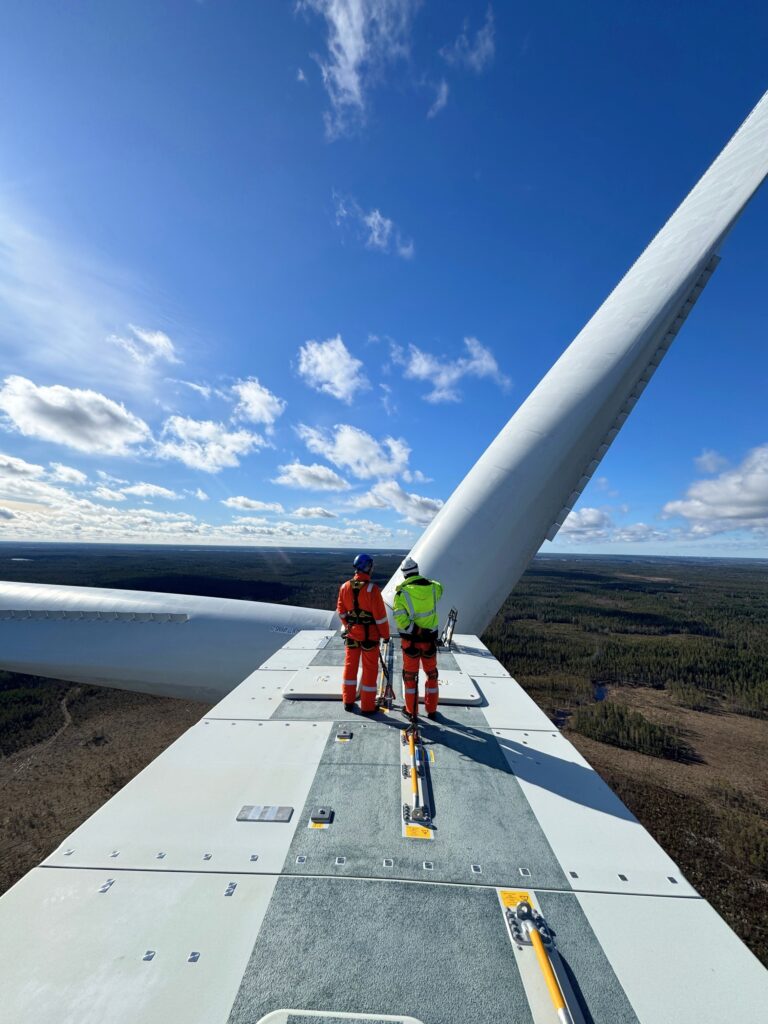
Knowing what needs to be repaired doesn’t mean the repair site is easy to reach. This is where one of Alpin Weld’s core areas of expertise comes into play. The company’s roots lie in welding services for O&G installations. Its founders later combined professional welding experience with IRATA rope access system, developing teams in which technical specialists are also capable of reaching difficult work locations. That order is significant. The concept was not to teach rope access technicians some welding. It was to take experienced welders and other technical specialists and give them additional knowledge required to operate safely at height.
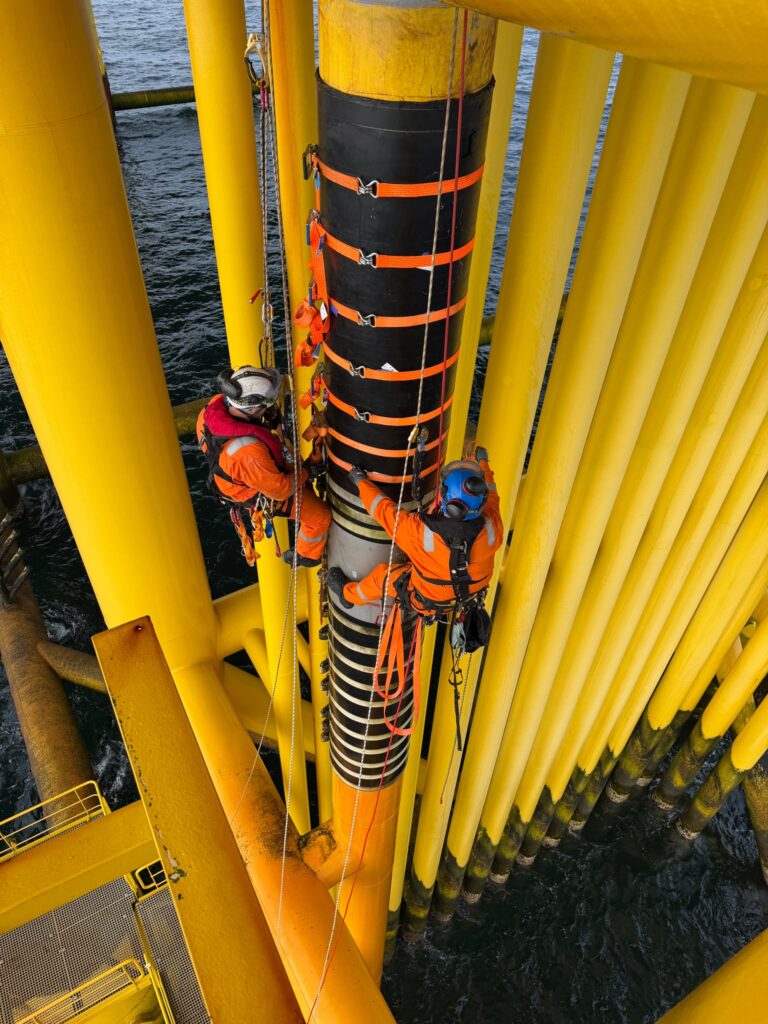
in complex areas of offshore and onshore structures, ©Alpin Weld
Today, rope access supports much more than welding. It is used for inspection, NDT, repairs, maintenance and installation work. For an offshore operator, the advantage can be practical. Where appropriate, rope access can eliminate the need for extensive scaffolding, reduce equipment requirements, installation time and logistics while giving technicians access to areas that are restricted or difficult to reach. Alpin Weld’s rope access personnel operate under IRATA system, with safety planning being part of the execution process. Scaffolding still has its place, so do platforms, cranes and other access methods. The goal is not to replace them all but to have another option when conventional access becomes inadequate to the task.
Engineering can predict a great deal, operation reveals the rest
This applies in particular to complex offshore structures, where practical problems may become apparent once the platform or installation is exposed to actual operating conditions. One of the projects previously carried out by Alpin Weld involved an offshore platform where the exhaust system caused exhaust fumes to be channeled back towards the deck and living quarters. The solution required the exhaust system to be modified and extended in order to redirect the flow of gases.
On another project, offshore personnel had initially been intended to reach a platform by a helicopter. When this proved to be expensive, sea access became a more adequate solution, which in turn required the structure to be modified with boat landings. Alpin Weld fabricated and welded required structures on site to the platform.
These examples illustrate something broader than welding capabilities. Maintenance work and modifications often start with a problem for which there is no pre-defined service category. The contractor needs to understand what is happening, develop a workable solution, determine how it can be fabricated and installed, plan safe access and then prove that completed work meets required quality. This is why Alpin Weld’s scope has gradually expanded beyond the discipline contained in its name.
The work starts before the technician arrive onsite
„A significant part of our work begins long before our technicians arrive at the wind farm or on the platform. Having our own production facility allows us to prefabricate steel structures and piping in a controlled environment, from smaller assemblies to larger structural components, before they are mobilised to site. With fabrication and welding carried out in line with EN 1090-2 EXC4 and our welding quality system certified by ISO 3834-2, we can maintain continuity between workshop preparation and execution – whether the project is offshore or onshore. For us, these are not separate stages, but parts of one delivery process” – says Paweł Rudacki, COO and co-owner of Alpin Weld.
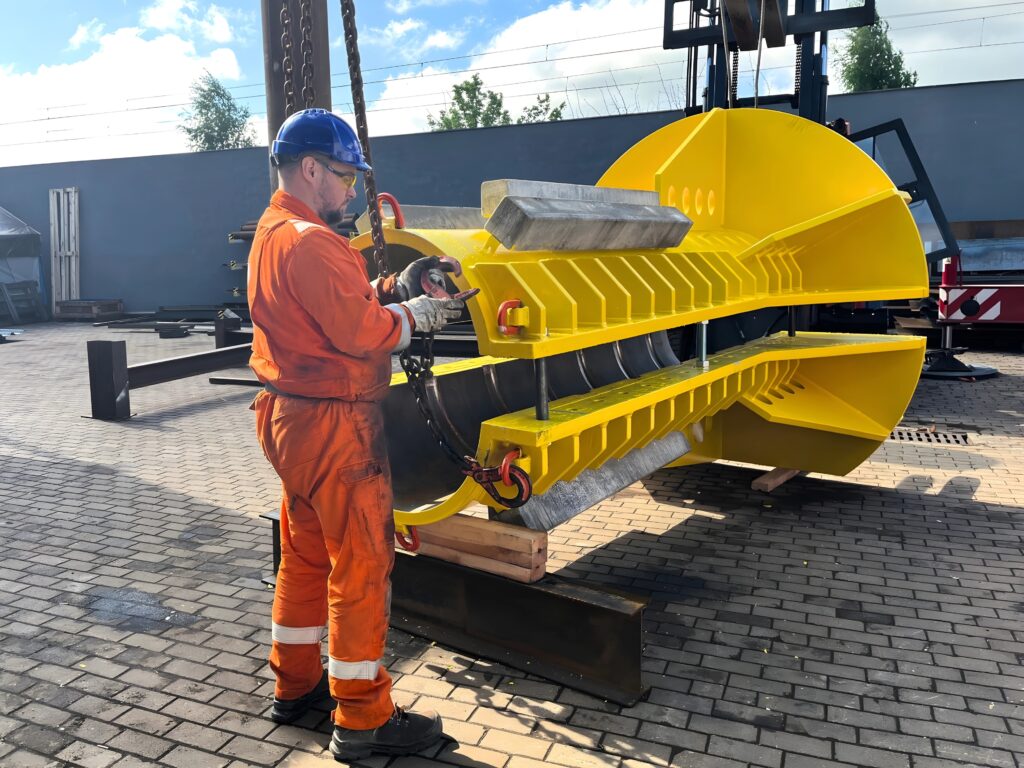
A component can be engineered, prefabricated and inspected at Alpin Weld’s facility in Poland before being transported to the wind farm and installed by teams familiar with both fabrication requirements and conditions they will encounter on site. This connection between workshop preparation and field execution helps reduce interfaces between different stages of the project and enables Alpin Weld to maintain control over the quality throughout the delivery process.
Welding in the name, but a range of services at the heart of the business
The result is a portfolio that may look broad on paper – engineering, prefabrication, welding, rope access, NDT, QA/QC, coatings, mechanical and hydraulic maintenance, workforce supply and project management. But the logic connecting those services is more important than the list itself. An offshore repair may start with NDT. NDT may reveal a structural defect. The defect may require engineering and engineering may demand a new prefabricated component. Next, installation may require rope access and welding may require inspection. Inspection should be followed by coating and the entire operation requires documentation and quality control. Separating every stage between different contractors is possible, but it creates difficulties. Alpin Weld’s idea is to reduce those obstacles by keeping a defined technical work package within one project structure and one accountable team. This approach has taken the company into projects for customers and partners across wind energy and O&G markets throughout whole Europe.
Technology matters, but it’s people who get the job done
There is one critical element that cannot be prefabricated – expertise. It has to be built overtime. Wind energy and O&G projects require specialists who combine several layers of competence – vocational education, safety training, project-specific qualifications, as well as the ability to work across disciplines. For Alpin Weld, this has shaped recruitment and training from the beginning. Welders, IWEs, platers, pipe fitters, rope access technicians, NDT inspectors, mechanicians, painters, FROSIO inspectors and high-voltage technicians form teams according to the scope of a particular assigned project.
The company emphasises that both onshore and offshore related skills cannot be reduced to possessing a single certificate. The team must be able to perform their technical roles in the environment where weather, access, time pressure and safety requirements influence execution. That is particularly relevant as the European wind market moves from installation towards an increasingly important parallel challenge – maintaining a growing fleet of assets throughout decades of operation. Turbines will need inspection, coatings will have to be renewed, welds will require checking and components will need modification or replacement. And many of those tasks will happen in places that were never designed to make maintenance easy.
Bring your offshore challenge to Hamburg
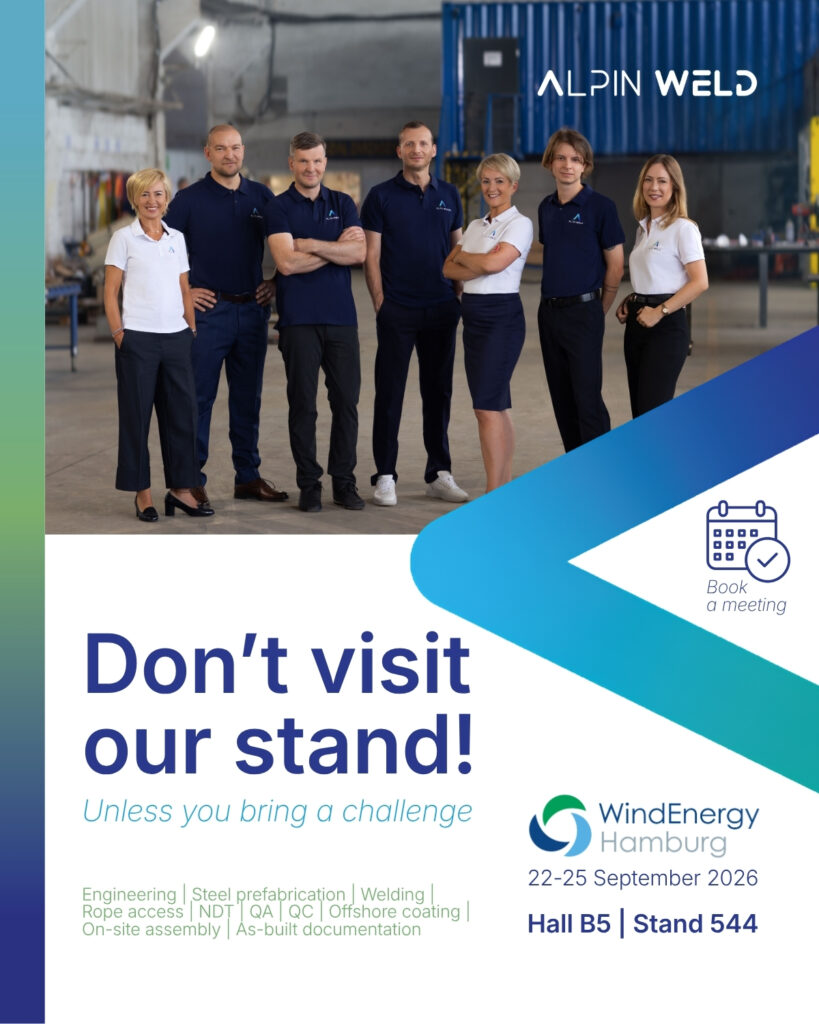
This September, Alpin Weld will bring its integrated approach to WindEnergy Hamburg 2026. For Alpin Weld team, the exhibition isn’t simply an opportunity to present individual services – it’s a place to talk about real offshore challenges and how combining engineering, prefabrication, welding, NDT, rope access and coating within one project structure can make their delivery more efficient. Whether the challenge is a difficult-to-access repair, a structural modification, an inspection that reveals a larger issue or a project requiring several technical disciplines, Alpin Weld team will be in Hamburg to discuss how to turn that challenge into a workable scope – from the first assessment to offshore execution and final documentation.
So, if you are planning a wind energy project, looking for a technical partner for maintenance or modifications, or simply have an offshore problem that does not fit into a single service category, Hamburg is a good place to start the conversation. Because offshore work rarely begins and ends with welding. What matters is having the right capabilities to handle what comes next.
Note: The opinions, beliefs, and viewpoints expressed in this article do not necessarily reflect the opinions of offshore-energy.biz.
