


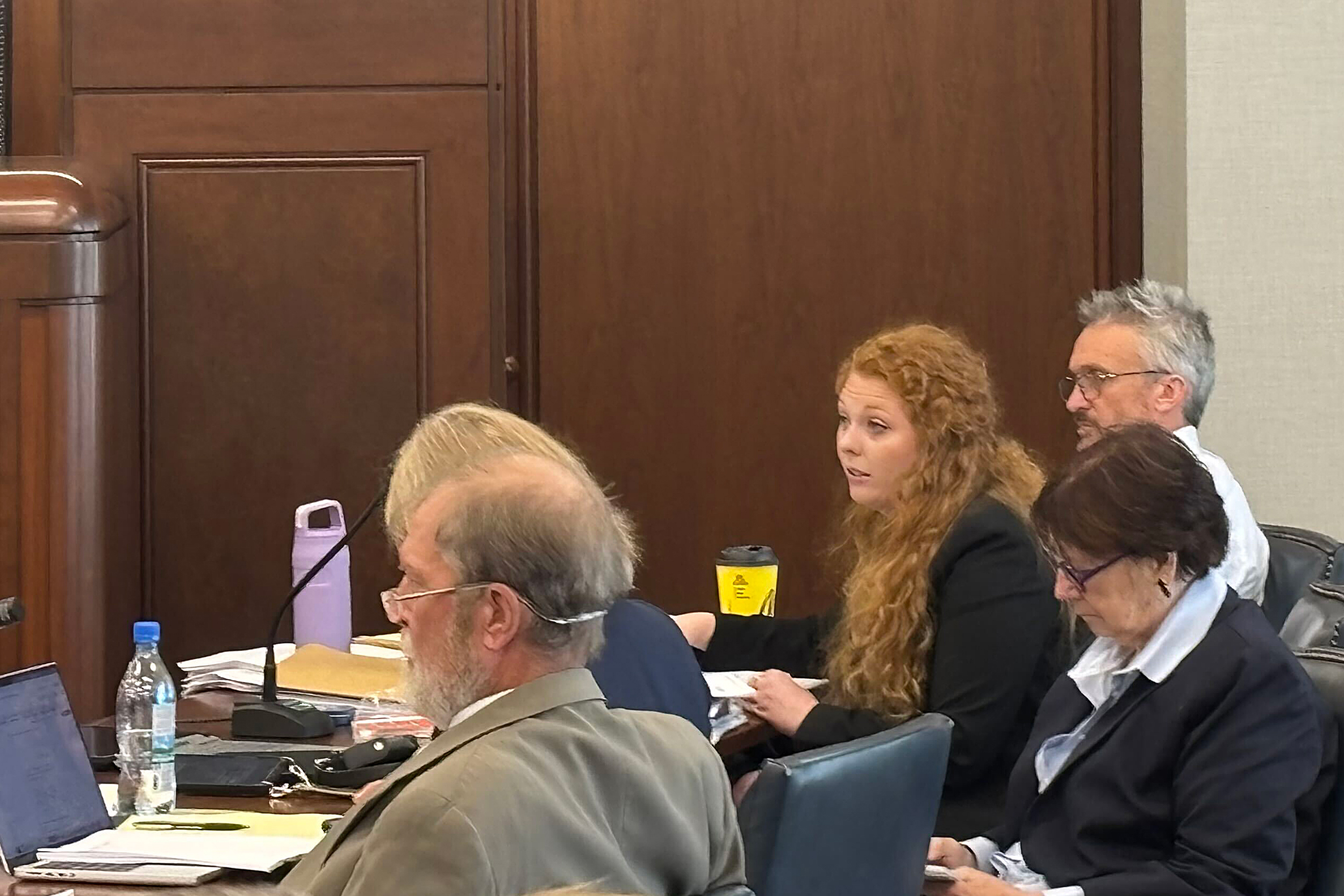
MONTGOMERY, Ala.—For the first time in more than 40 years, Alabama utility regulators this week convened formal hearings to potentially decrease profits for one of the state’s major monopoly utilities.
The Alabama Public Service Commission held the hearings on Thursday and Friday to consider the allowed rate of return for Spire Alabama and Spire Gulf, subsidiaries of Spire Inc., which provides natural gas to nearly 2 million homes and businesses across Alabama, Mississippi, Missouri and Tennessee.
The hearings were triggered when Alabama Attorney General Steve Marshall’s office—which represents the public in rate matters—could not reach an agreement with Spire on how much the company should be allowed to earn.
Like most regulated utilities, Spire is allowed to earn a certain amount of profits on their investments. But that return on equity amount is determined by state regulators, in this case the Public Service Commission (PSC).
Spire Alabama President Joe Hampton testified Thursday that reducing a utility’s profit, when that utility was performing well, would be “highly inappropriate” and could jeopardize the company’s ability to attract investors to provide needed funds.
“If you perform well, you meet all the expectations set forth by the attorney general, by the commission, and you deliver at a high level, and then someone turns around and says, ‘Thank you for being great, but I am going to reduce your ability to earn in the state,’ that feels punitive to me,” Hampton said.
Spire (previously Alagasco) has used rates set under the PSC’s Rate Stabilization and Equalization (RSE) mechanism since 1983. The RSE method was developed for electric utility Alabama Power in 1982, and has been criticized for the high returns it authorized for Alabama Power and the lack of transparency in the process.
High electricity prices and expansion of data centers in the state have put the Alabama PSC and the Attorney General’s Office of Consumer Protection under intense public pressure this year. Both PSC incumbents on the ballot this year lost their seats in the Republican primaries.
The Alabama PSC currently allows Spire to earn between 9.5 and 9.9 percent returns on its equity investments, with a target midpoint of 9.7 percent. The company is projected to earn a 9.85 percent return on equity for fiscal year 2026, according to filings with the PSC.
During the hearings, the commission heard testimony from expert witnesses on three different proposals:
- Spire asked the commission to increase the target midpoint of its returns from 9.7 to 10.5 percent, with the allowable range stretching from 10.3 to 11 percent, effective for five years.
- The Alabama Attorney General’s Office recommended a target return of 9.2 percent, with a range of 9 to 9.4 percent, effective for two years.
- Nonprofit clean energy advocate Energy Alabama filed as an intervenor in the matter and recommended a target of 8.3 percent and an allowed range from 8.3 to 8.7 percent.
The parties were not able to come to agreement, triggering the rate hearings.
Mark Wilkerson, an attorney representing Spire, said during opening statements that the recommendations made by other parties would represent unusually low returns.
“We know other witnesses today will recommend materially lower returns,” Wilkerson said. “We believe the evidence will show, both testimony and documentary evidence, that that would place, if adopted, those recommendations at or near the lowest authorized return on equity of any natural gas utility in the country.”
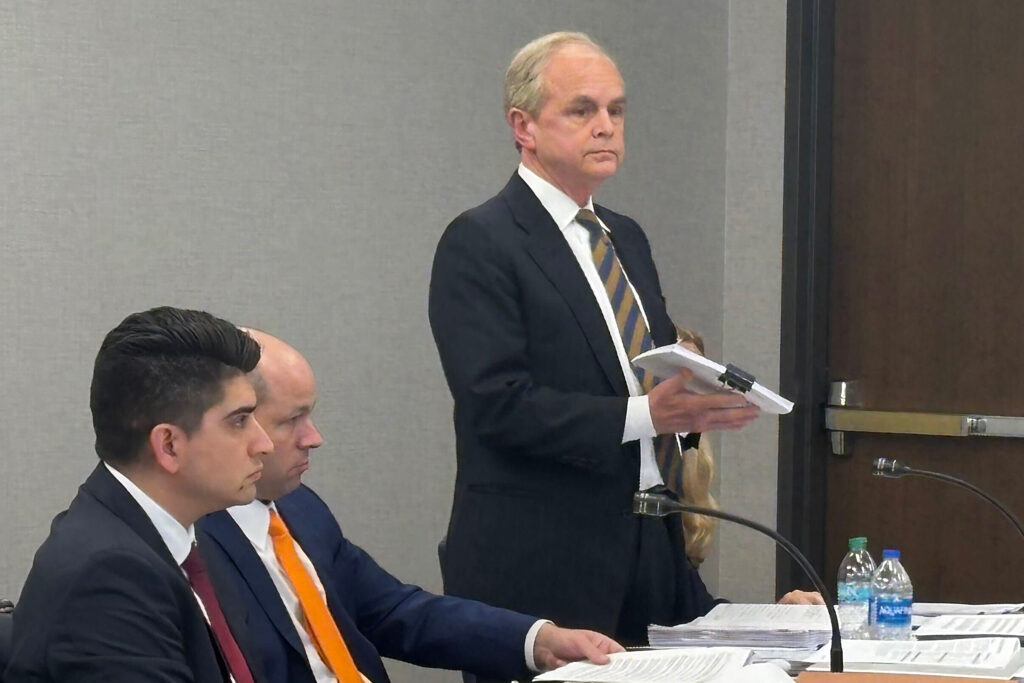
Ultimately, the PSC will decide the final parameters of Spire’s allowed returns. That decision is expected at the next regular commission meeting on Sept. 1.
Hampton’s testimony kicked off a two-day hearing which consisted mostly of Spire executives and expert witnesses from all three parties summarizing written testimony they had pre-filed and answering questions on cross-examination from the other parties.
Witnesses were sworn in at the beginning of the proceedings and testified under oath, with Luke Bentley, the PSC executive director and chief administrative law judge, presiding. PSC President Cynthia Lee Almond was present in the audience for the proceedings. The other two commissioners were not in attendance.
This story is funded by readers like you.
Our nonprofit newsroom provides award-winning climate coverage free of charge and advertising. We rely on donations from readers like you to keep going. Please donate now to support our work.
Bruce Fairchild, a Ph.D. economist, testified on models he used to develop Spire’s recommendations, considering economic conditions and comparing returns granted to comparable gas utilities in the region.
George Ford, an economist and utility expert called by the Attorney General’s Office, testified that reducing the company’s return midpoint from 9.7 percent to 9.2 percent would save the average ratepayer about $14 per year. Increasing the return on equity to Spire’s requested 10.5 percent would cost ratepayers about $22 per year.
Energy Alabama witness David Garrett, an attorney and utility consultant who previously worked for the Oklahoma Corporation Commission’s utility division, testified that he believed utility returns to be inflated across the board, and that his 8.3 percent figure represented the cost of equity, or the amount of return a utility has to offer in order to attract investors.
“So what happens if the commission authorizes an ROE [return on equity] that is above cost, assuming the cost is 8.3 percent? What it’s effectively doing is facilitating an excess transfer of wealth from Alabama citizens and businesses to Wall Street, ultimately,” Garrett said.
Garrett said he did not have enough information available when he conducted his analysis to calculate how much his proposal would save Alabama ratepayers.
The other witnesses had argued that the cost of capital was higher.
Matt Aplington, Spire’s chief legal officer and senior vice president, said during closing arguments that the decision would have a major impact on the company’s operations.
“Proceedings such as these have real consequences,” Aplington said. “They generate significant media attention, intervener attention. They’re closely watched by investors, by adjunct research analysts and credit rating agencies. They introduce uncertainty into our capital expense planning.”
In addition to the return on equity change, Spire also requested to restructure its rates. The company wants to increase its fixed fee from $7.99 per month to $12.99 per month, while simultaneously decreasing the rate a customer pays per unit of natural gas, to offset the overall cost for most customers.
The attorney general’s office opposed that recommendation, saying Spire had not performed sufficient analysis to show how the changes would impact customers.
Bentley and the PSC staff will compile the testimony and exhibits from the docket and are expected to make a recommendation to the commissioners in time for their next meeting in September.
About This Story
Perhaps you noticed: This story, like all the news we publish, is free to read. That’s because Inside Climate News is a 501c3 nonprofit organization. We do not charge a subscription fee, lock our news behind a paywall, or clutter our website with ads. We make our news on climate and the environment freely available to you and anyone who wants it.
That’s not all. We also share our news for free with scores of other media organizations around the country. Many of them can’t afford to do environmental journalism of their own. We’ve built bureaus from coast to coast to report local stories, collaborate with local newsrooms and co-publish articles so that this vital work is shared as widely as possible.
Two of us launched ICN in 2007. Six years later we earned a Pulitzer Prize for National Reporting, and now we run the oldest and largest dedicated climate newsroom in the nation. We tell the story in all its complexity. We hold polluters accountable. We expose environmental injustice. We debunk misinformation. We scrutinize solutions and inspire action.
Donations from readers like you fund every aspect of what we do. If you don’t already, will you support our ongoing work, our reporting on the biggest crisis facing our planet, and help us reach even more readers in more places?
Please take a moment to make a tax-deductible donation. Every one of them makes a difference.
Thank you,

Reporter, Alabama
Dennis Pillion is a reporter for Inside Climate News based in Alabama. He joined ICN in 2024 after 17 years working for Alabama Media Group, including nine as the statewide natural resources reporter. His work for AL.com and The Birmingham News, won numerous Green Eyeshade and Alabama Press Association awards for his coverage of environmental issues in Alabama. He was born and lives in Birmingham, Ala.
