


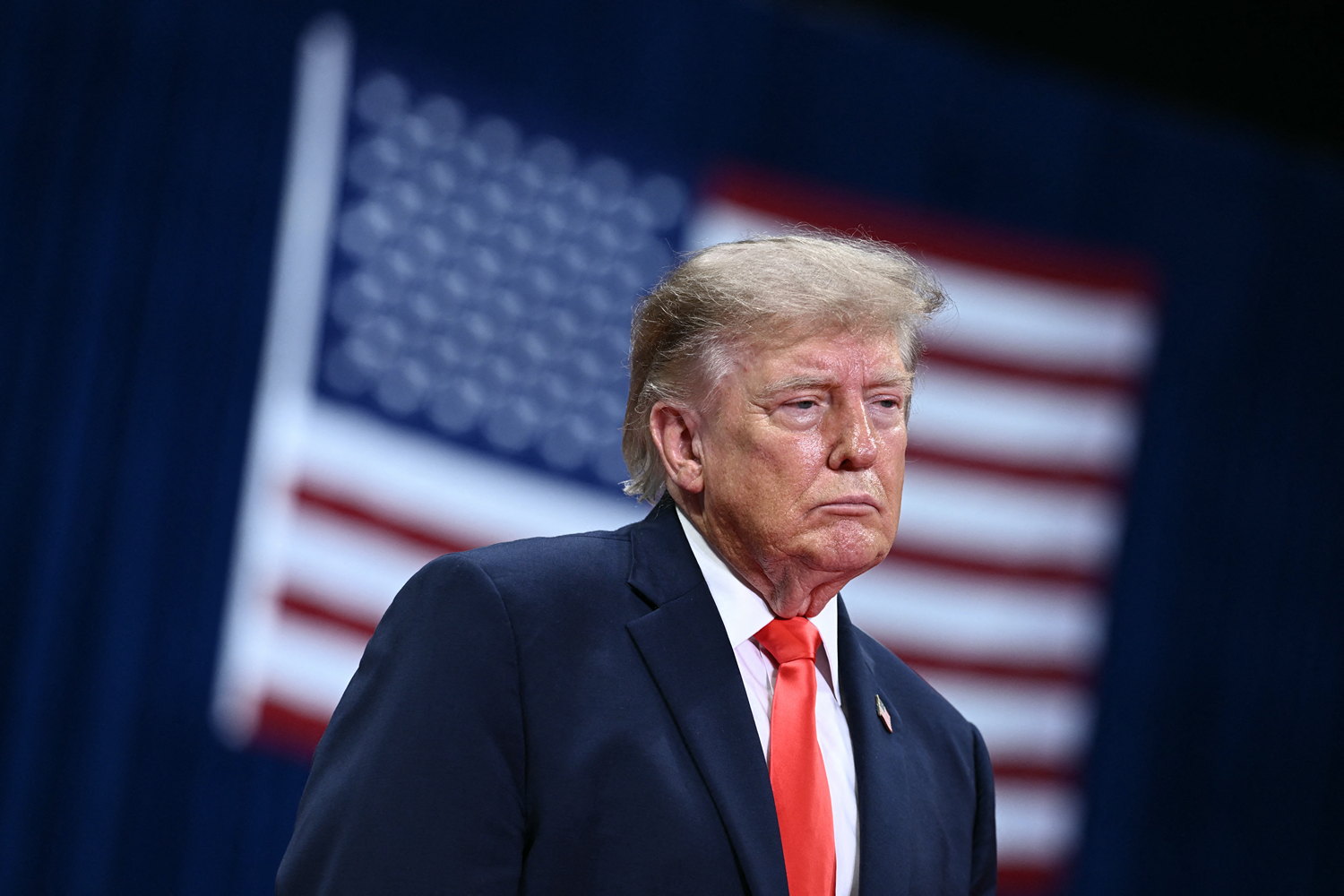
Voters dealt U.S. President Donald Trump a crushing rebuke in the Nov. 3 midterm elections, with Republicans losing control of both chambers of Congress. As Trump meets once again with Xi Jinping this week, how will the Chinese leader now view a weakened U.S. president?
I believe Xi will not fundamentally change his personal assessment of Trump. But he is reassessing Trump’s ability to shape U.S.-China relations over the next two years—and the extent to which the two leaders can deliver on the new framework for bilateral relations they agreed on this year. Beijing may come to see Trump as a president who remains willing to negotiate on a personal level but is becoming less capable of delivering on major political commitments.
This matters because both Xi and Trump place considerable importance on personal diplomacy between heads of state. Trump visited China in May, and Xi traveled to the United States in September. During those meetings, according to the Chinese readout, they agreed to establish a new framework for bilateral relations: a “constructive and strategically stable relationship based on respect, fairness, and reciprocity.” Xi also called for a relationship characterized by “cooperation as the priority, managed competition, controlled differences, and the prospect of peace.”
Trump, for his part, repeatedly emphasized his good personal relationship with Xi and expressed confidence that U.S.-China relations could succeed under their leadership.
Despite their very different political backgrounds and governing philosophies, Xi and Trump, who have both sought to expand their own authority at home, share a belief that strong leaders can play a decisive role in national decision-making. Beijing routinely emphasizes the strategic importance of diplomacy conducted by heads of state. Trump, meanwhile, distrusts the traditional foreign-policy bureaucracy and prefers to negotiate deals directly with other leaders. Both seem to believe that once leaders reach an understanding, many complicated problems between their countries can be resolved.
But there is a fundamental difference between them. Xi’s autocratic status allows him to translate his personal diplomatic preferences into Chinese government policy. Trump, despite his unusually personal approach to presidential decision-making, cannot entirely circumvent Congress, the judiciary, or other domestic political forces—especially after the recent midterm results.
That difference was less visible when Republicans controlled both the White House and Congress. After returning to office, Trump enjoyed considerable authority within the Republican Party, while a supine Congress offered little effective resistance to his policies, even when pro-Ukrainian Republicans objected to his attempts to cozy up to Russian President Vladimir Putin. Xi had reason to believe that maintaining a stable personal relationship with Trump could help stabilize Washington’s China policy and perhaps even facilitate adjustments to U.S. positions on sensitive issues through direct negotiations between the two leaders.
The midterms have changed that. With Democrats controlling Congress, Trump retains substantial authority over foreign affairs, but major agreements he reaches with Xi will face greater congressional scrutiny and potential challenges. On Taiwan and advanced technology in particular, especially after the Jensen Huang scandal, Democrats are not necessarily more accommodating toward China than Republicans. If Trump attempts to make significant concessions to Beijing in these areas, Democrats could use hearings, investigations, budgetary powers, and legislation to obstruct him—and turn any such concessions into political ammunition.
For Trump, however, the more difficult constraint may come from his own party’s political interests. He cannot run for president again, however much he wants to, but Republicans must defend the White House and seek to regain Congress in 2028. If Democrats portray a Trump-Xi agreement as sacrificing Taiwan’s security or undermining America’s technological advantage, Republican candidates will face an uncomfortable choice. Supporting Trump could expose them to accusations of being soft on China; opposing him could alienate MAGA voters. Trump may be willing to disregard Democratic criticism, but he cannot entirely ignore his party’s electoral prospects or his own political legacy.
This creates a paradox. Having lost his congressional majority, Trump may have a stronger incentive to demonstrate his leadership through foreign-policy achievements, making him more eager to reach a major agreement with Xi. Yet the greater his need to present such an agreement as a victory for the United States, the less room he has to appear to be making concessions to China. His weakened political position increases his incentive to strike a deal while simultaneously narrowing the concessions he can offer.
Xi is likely to recognize this. Rather than downgrading the importance of his personal relationship with Trump, he may become even more determined to preserve that direct channel of communication. Compared with Democratic politicians, Trump remains more inclined to approach U.S.-China relations transactionally and more willing to adjust specific policies according to his own judgment. From Chinese leaders’ perspective, he remains someone they can deal with—but they may no longer trust his ability to deliver. He remains a president worth negotiating with.
Beijing set the language after the Trump-Xi meeting in September, with little pushback from the White House. From Beijing’s perspective, the framework represents more than an effort to move beyond the intense trade confrontation of recent years. It also signals, in China’s interpretation, that Washington is beginning to accept China as an equal strategic power and is willing to keep bilateral competition within certain limits. Beijing clearly hopes that the principles of “respect” and “strategic stability” will extend to issues it considers central to its interests, particularly Taiwan and technology.
Yet Trump’s acceptance of this diplomatic language does not mean the entire U.S. political system is on board. Trump himself may well not understand the implications of the Chinese language. For Washington, strategic stability is more about managing conflict, protecting U.S. interests, and preserving competitive advantages.
The Chinese Foreign Ministry’s response to the results of the U.S. midterms offers an indication of Beijing’s approach. Rather than commenting on Trump’s political defeat, its spokesperson emphasized China’s willingness to continue implementing the understandings reached by the two presidents and to advance their constructive, strategically stable relationship.
Xi is unlikely to repudiate diplomatic achievements in which he has invested substantial political capital simply because of a U.S. midterm election. On the contrary, he has good reason to reaffirm the framework and invoke it when pressing Washington to honor the understandings reached between the two leaders.
But I suspect that the more Beijing emphasizes the framework in its diplomatic rhetoric, the more cautious it will become in practice. This brings us to a second question: How does Xi interpret U.S. politics itself?
When Trump won reelection in 2024, Republicans also captured both chambers of Congress, and the media was eager to trumpet a new era of dominant Trumpism. Just two years later, Democrats have won their biggest victory in generations. This sharp reversal may reinforce Xi’s perception that U.S. politics lacks stability and continuity.
Yet Xi would be making a mistake if he interpreted U.S. political divisions as evidence that China now enjoys a greater strategic opportunity. In U.S. politics, the two parties may fight bitterly over domestic issues and presidential authority while maintaining considerable agreement on strategic competition with China.
I expect Beijing to gradually shift the emphasis of its U.S. policy over the next two years. It will continue to maintain Xi’s personal relationship with Trump, seek to implement existing agreements, and avoid another serious confrontation over trade or security. At the same time, it will lower its expectations that leader-to-leader diplomacy can fundamentally redirect U.S.-China relations. Instead, Beijing will accelerate attempts to reduce China’s vulnerability to shifts in U.S. policy during a prolonged period of strategic competition.
Such an adjustment would not mean Xi is preparing for an all-out confrontation with the United States. Because Beijing increasingly recognizes that the competition will be prolonged, it has greater reason to avoid a direct clash before the conditions are in its failure. Maintaining basic stability in U.S.-China relations remains a way to buy time for China’s own development.
The new framework established by Xi and Trump this year is therefore unlikely to be abandoned easily. Beijing still needs it, and so does Trump. But their expectations may increasingly diverge. Xi wants the framework to provide China with long-term strategic stability, while Trump is more likely to see it as a means of managing relations with Beijing and securing diplomatic achievements during the remainder of his presidency.
For Xi, the central lesson of the midterms may be that he can build personal trust with Trump but he cannot entrust the future of U.S.-China relations to Trump alone.
