


- The United Nations weather agency (WMO) says El Niño is already underway and getting stronger. It is almost certain to continue through February 2027, according to the WMO.
- Regional weather forecasters predict a 90% chance of heavier-than-usual rain in southern Ethiopia, central to southern Somalia and northeastern Kenya from October to December 2026. Too much rain could cause floods and destroy crops.
- Action Against Hunger, an international aid organization, warns that failed harvests can leave families hungry months after a drought or flood. In southern Madagascar, it says, families are facing food shortages earlier than usual.
- Rotimy Djossaya, the aid organization’s chief impact officer, wants governments and donors to help families prepare now. He says repeated crises and cuts in aid leave people less able to cope with another lost harvest.
El Niño, a naturally occurring climate pattern that involves unusually warm surface waters in the central and eastern equatorial Pacific Ocean can alter atmospheric circulation and significantly influence rainfall and temperatures patterns far beyond the ocean, according to the World Meteorological Organization (WMO).
The WMO, the United Nations’ weather agency, says this warming is already underway and getting stronger. In an Oct. 8 update, it put the chance of an El Niño continuing through February 2027 at nearly 100%. It expects the event to be strongest in December.
Regional forecasters predict a 90% chance of heavier-than-usual rain in southern Ethiopia, central to southern Somalia and northeastern Kenya between October and December 2026. Excessive rainfall could cause flooding, destroy crops, spread disease and make health services inaccessible in some areas, depending on local conditions and the season.
Action Against Hunger, an international aid organization, says families in southern Madagascar are enduring food shortages earlier than usual following a season of poor harvests. Its teams are treating children for malnourishment, as households continue to endure worsening food insecurity.
Cuts in aid are also making help to tackle malnourishment harder to obtain. The United Nations International Children’s Fund (UNICEF) reported on Aug. 21 that 205 health and nutrition facilities in Somalia had closed because of funding cuts, forcing families to travel farther to find care.
“We need to act now,” Rotimy Djossaya, Action Against Hunger’s chief impact officer, told Mongabay in an interview from Nairobi. He said repeated droughts and floods leave families little time to recover. He called for warnings that reach households and flexible funding: Money flows that can be adjusted to meet local needs before a crisis worsens.
This interview has been edited for length and clarity.
Mongabay: If you were to speak to a farmer in Kenya, Somalia or Zimbabwe today, what would you tell them?
Rotimy Djossaya: I would talk about the additional negative impact of the strong El Niño likely to hit many countries here (Eastern and South Africa). We are talking about different weather patterns; droughts and floods, but the consequences for communities are the same: Losing the means to support their families and having inadequate food because they are not able to produce as they normally would.
In South Sudan, for example, one part is experiencing too little rain, and in another part, floods are causing them to lose crops and sources of livelihoods.
We are lucky today to have information ahead of those impacts. Farmers need to connect with relevant information to understand what could happen in their areas. I have been in countries where communities are already preparing to act before a crisis. But what will make the difference is their ability to access the funding they need to take those actions. Early warning is key because it is the starting point. What will make the difference is early action.

Mongabay: Why does the same climate event bring drought to one area and flooding to another?
Rotimy Djossaya: Different parts of a country are affected by different weather patterns. In Kenya, for instance, towards the border with Somalia, there are areas experiencing too little rain, while other parts of the same country experience flooding. That adds to the complexity.
This is why access to information matters. You need to know what is likely to happen in your area and what to do to prepare.
Mongabay: How confident should people be in the forecasts, and what should they do with that information?
Rotimy Djossaya: I was in Kigali recently with researchers looking at weather patterns. They focused on what was already happening in other parts of the world and what was likely to happen in this region. We need to take the early warnings seriously. We have information about what is likely to happen, where, and at what scale. That should help us invest now. But we also need to remember the context. These communities are already vulnerable. They are experiencing food shortages, malnutrition and conflict. El Niño comes as another layer of vulnerability.
Mongabay: Do funding cuts make communities more vulnerable to El Niño?
Rotimy Djossaya: That’s what I am saying. In August, 205 health clinics had closed in Somalia because of funding cuts. More children and families with malnourished children are unable to access health clinics. They have to travel long distances to find care.
Looking at the implications of El Niño such as food shortages and malnutrition, and the growing number of people needing help, we are likely to have fewer facilities that support children. We need to feel that sense of urgency.
Mongabay: How can too little or too much rain contribute to malnutrition in communities, especially among children?
Rotimy Djossaya: Excessive rainfall, or flooding, can wipe out farmlands, leading to loss of food produce that would be enough to keep them going until the next season.
The issue is not just the weather event; it is what happens later. Food shortages and malnutrition follow because people have lost means to provide for their families, and the farm produce they expected to harvest.
One event can trigger challenges in the coming months. Our focus should be on the impact on communities and children, who are the most vulnerable, and how to invest and act.

Mongabay: When should families seek assistance?
Rotimy Djossaya: The short response is now. The window of opportunity is closing. We know what is likely to happen between October and December, and even February [2027]. We need to work with communities to plan the activities that can help prevent those impacts. Then we need flexible funding to translate those ideas into practical action. We should act now, based on the early warning information and what we know about the likely number of people needing help and scale of the problems in some areas.
Mongabay: Farmers in Madagascar are deciding what to plant. What can poor farmers realistically do when they cannot afford new seeds or irrigation?
Rotimy Djossaya: We need a combination of solutions. While we anticipate and act early, we should also be ready to save lives through direct aid. We need to boost farmers ability to adapt, including by adjusting some of their practices to the foreseeable weather patterns. That includes farming practices suited to changing weather and helping them think about what makes sense to produce when there is likely to be too little or too much rain. It is about using the science available today to decide which kinds of seeds and production to prioritize.
Mongabay: What should people living near rivers or in flood-prone areas do now?
Rotimy Djossaya: They should move to safe spaces in good time. But to move from one place to another, you need support if you do not have the resources or somewhere to go. That is why planning is important. If people are moving for longer periods, they need to know where they are going. They must be places where they can live with dignity. We are talking about human beings. Lives. The actions they identify need to be relevant to their situation. Information from early warning systems should not remain at regional, national or international level; it should get to communities and households, because that is where it matters most. Investing in sharing that information is the first step as we anticipate and act early.
Mongabay: Are governments in the region prepared for El Niño?
Rotimy Djossaya: I attended a regional climate outlook meeting in Kigali with government representatives, regional bodies, disaster management directors and some ministers. Governments have the information. After that meeting, the government of Kenya organized a dedicated meeting for Kenya. It is good that governments have started planning.
However, planning is just the starting point. What will make a difference is activating the flexible funding that grassroots communities and other levels need to act early.
Mongabay: Are the preparations adequate for El Niño and the longer-term challenges ahead?
Rotimy Djossaya: Governments need to do more. I am already seeing Kenya, for example, embedding some measures in its laws, policies and spending plans. That is where we need to move. We need to use what we know about shifting weather patterns to take decisions about national policies, laws and spending. Governments need to move from responding after crises to preparing before it, including putting more money into solutions that can be handled nationally.

Mongabay: What are the consequences when governments and donors wait for disaster to spend money?
Rotimy Djossaya: When you wait until it is too late, you are likely to lose lives before starting to save them. Media headlines attract attention when something happens, usually when it is too late. We are trying to respond and save lives. It is about making the best use of money as well as saving lives and protecting people’s ability to support themselves. It is also about dignity. We should not wait for people to lose their lives before we start acting. We know more today about what is likely to happen, where, and at what scale. That can drive the investments needed before it is too late.
Mongabay: If you had more funding today, what three interventions would you prioritize in East and Southern Africa?
Rotimy Djossaya: The first thing I would invest in is early warning, ensuring that information gets to the relevant people in time. The second is helping communities plan and discuss the relevant actions. Supporting that work with local people, organizations and government, so people know what to do and plan accordingly.
Third is flexible funding to support those plans. Plans will remain plans if they are not funded. Communities and countries need the resources to put them into action. In Ethiopia and Somalia, we have recently triggered flexible funding for communities. But that level of funding is not enough for the scale of the issues we are talking about. I would recommend expanding that kind of funding to enable timely action.
Mongabay: How much more can households withstand after repeated droughts, floods, conflict and food shocks?
Rotimy Djossaya: Think about the daily life of a farmer, a woman or a child in that household, moving from one cycle of drought into another cycle of floods, and what they are losing. We need to think at national level about what must happen. In some areas, the infrastructure may need work so communities can continue to live where they are without losing their sources of livelihood every year. I call upon the international community to act. But countries need to take ownership and see this as their work. Resources need to be invested in the right solutions, with local ownership to make them sustainable. They need to be part of the long-term solutions.
Mongabay: Where do you see gaps in government responses?
Rotimy Djossaya: The first gap is moving from planning to action, starting with government funding. I gave the example of Kenya because it is also mobilizing the private sector. I recently took part in an event in Isiolo, where acting was becoming a national urgency. I would like to see other governments include these activities in their work, policies, laws and spending decisions. That can also help attract funding to support their plans. We need more leadership at country level and the right national investment to support the actions.

Mongabay: Who is most exposed to the risks?
Rotimy Djossaya: Children under 5 are the most exposed because their bodies and brains are still developing. When you talk about children under 5, you also think about pregnant and breastfeeding women. You know the connection between the mother and the child. Even before birth, things can happen that have lasting implications for the child’s life. Displaced people are also more exposed. The scale of damage could be huge in camps for internally displaced people and refugee camps. We need to target our solutions accordingly. Small-scale actions are important; but given the scale of El Niño and the existing vulnerabilities, what will make the difference is our ability to expand the solutions.
Mongabay: These look like challenging times, and the news can be really gloom and doom. What gives you hope?
Rotimy Djossaya: The first one is access to early warning information. MERIAM is a forecasting tool that can predict malnutrition at district and community levels, including how severe it could be and the number of children likely to need help.
That information gives us ways to act earlier and be more targeted in the solutions we offer. When I saw government entities coming together in Kigali, taking this seriously and planning together, that gave me hope. But there is also a sense of urgency. The window of opportunity is closing.
We need to act now. The international community should not wait for catastrophic events or media headlines. Acting now can help us save lives and protect people’s ability to support themselves.
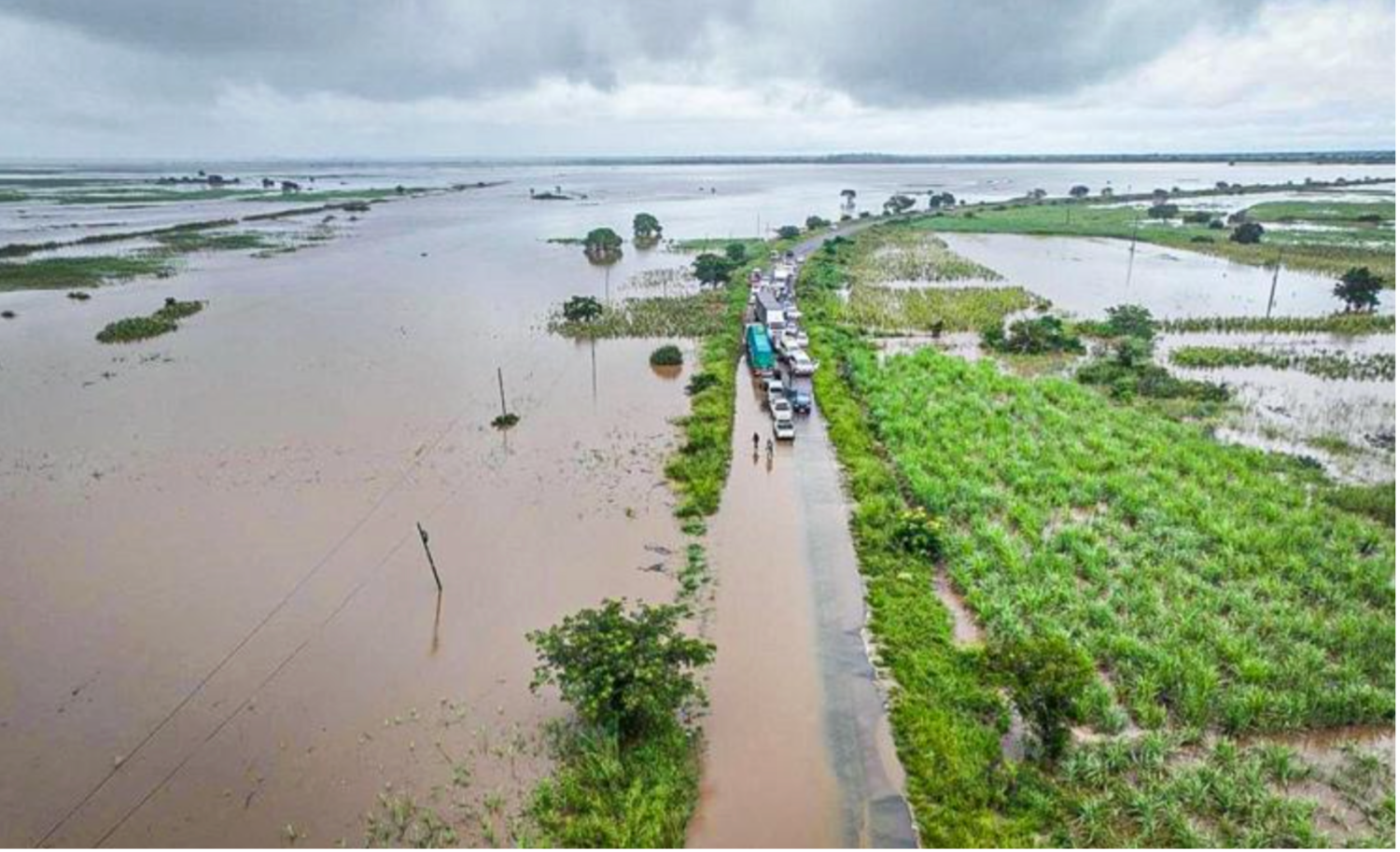
Banner image: Vehicles navigate a flooded road in Mozambique’s Maputo province in January 2026. Forecasters warn that the developing El Niño could bring heavier rainfall and flooding to parts of East and Southern Africa. Image by AP Photo.
Solar power helps Amazon communities ditch diesel and prepare for El Niño drought
Evidence builds showing climate change could be intensifying El Niño events
Feedback: Use this form to send a message to the author of this post. If you want to post a public comment, you can do that at the bottom of the page.
Cite this article
David Akana (2026). Act before El Niño: Expert worries about deepening hunger in East and South Africa. Mongabay Conservation news. DOI: https://doi.org/10.66709/news-332647

