


A new vaccine could soon protect patients from returning skin cancer.
In a large clinical trial, patients with high-risk melanoma given an experimental vaccine alongside an approved immunotherapy drug called Keytruda were cancer free for longer than patients who received the drug alone, Moderna and Merck announced August 19. Because the vaccine is tailored to attack specific cancer cells, the tactic could offer patients a personalized treatment option if approved by regulatory agencies.
The pharmaceutical companies have not yet released data from the trial. Previous trials showed the combination treatment cut the risk of returning cancer or death in half.
Some vaccines for cancer exist already. Examples include preventative shots for human papillomavirus and hepatitis B, viruses that can cause tumors to grow, as well as therapeutic vaccines that treat tumors that have already developed. Others are still in testing, including one for pancreatic cancer.
The vaccine used in the melanoma trial, called intismeran, relies on delivering mRNA to cells, the same technology was used in COVID-19 vaccines and a recently approved flu shot. Intismeran is a therapeutic vaccine that does not prevent melanoma from developing. Instead, it trains the immune system to recognize tumors using genetic material from a patient’s own cancer cells, allowing researchers to craft custom treatments.
Together, the vaccine and Keytruda — already approved to treat a wide variety of cancers including lung, colon and breast cancers — aim to coax the body to attack cells left behind after surgical removal of the tumor.
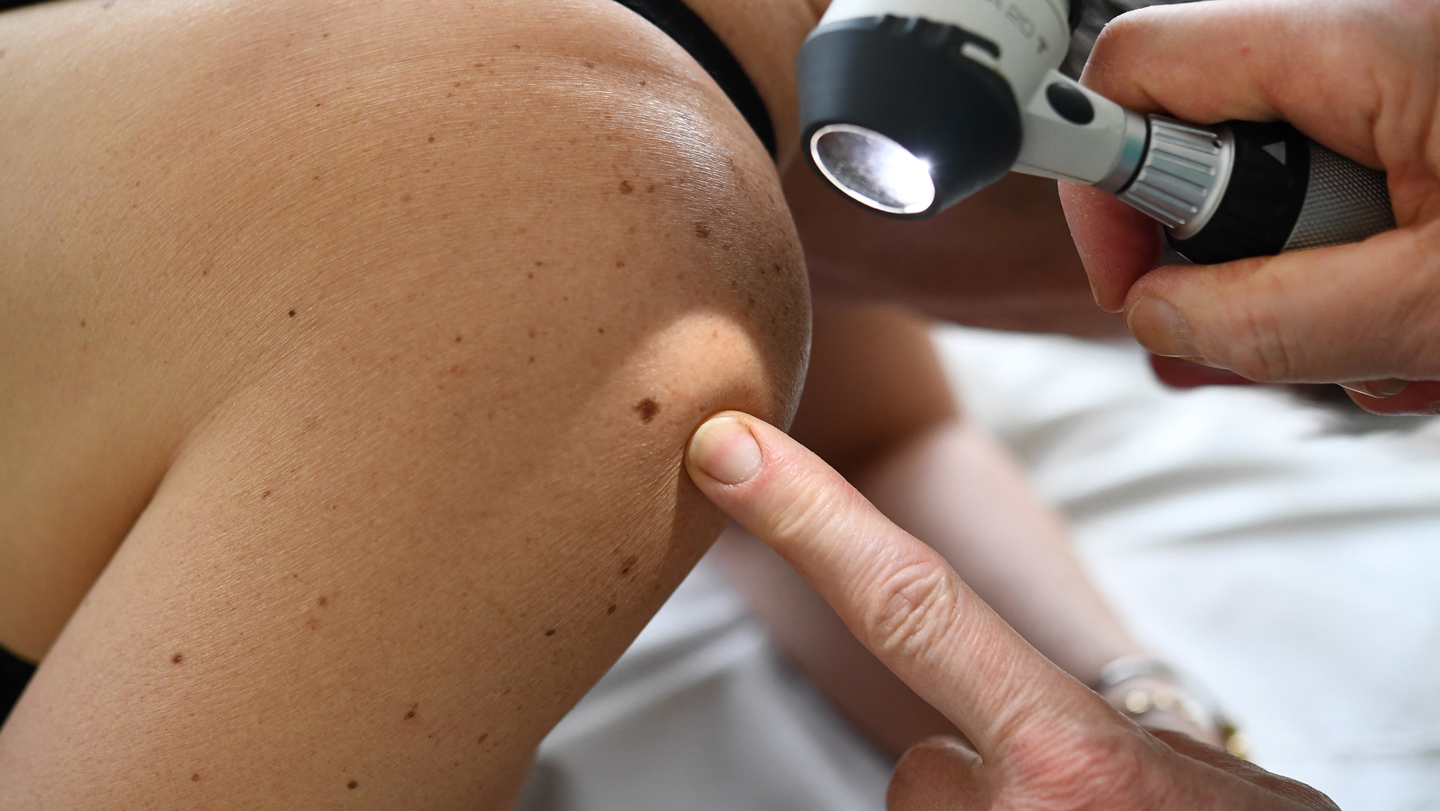
Skin cancer is the most common cancer in the United States, and melanoma is responsible for most deaths from skin cancer. More than 100,000 people are diagnosed every year and about 8,500 people die, according to estimates from the American Cancer Society.
Science News spoke with Leslie Fecher, a medical oncologist who specializes in skin cancer at the University of Michigan in Ann Arbor, about how the treatment works and how it’s different from existing options. This conversation has been edited for length and clarity.
SN: How do the vaccine and Keytruda work?
Fecher: The idea behind this is that a vaccine is generated out of specific tumor tissue from an individual patient. It is designed to have an informed, specific immune response using neoantigens. Antigens are small pieces of proteins [that the immune system uses to know what to attack]. And “neo” is the idea that these are novel antigens for the cancer, with the hope of distinguishing them from other antigens in the body.
[Keytruda] is a checkpoint inhibitor, a PD-1 antagonistic antibody. If we think of gas pedals and brakes in the immune system, PD-1 is a brake on the immune system. [Keytruda] tries to take the brake off. It is used to treat both advanced melanoma that is not surgically removable, as well as after surgery.
SN: Why is this announcement important?
Fecher: New therapies that have shown benefit to patients are good. This is important for clinical research to advance understanding in how we take care of patients. It’s exciting to see novel technology keep moving the field forward.
Plus, understanding the importance of and risk of skin cancer is critical for people to be aware of. It’s good to know your skin.
SN: Is melanoma hard to treat?
Fecher: Melanoma is a common cancer. Happily, most cases are earlier stage. But it is a cancer that affects many people. When it does become more advanced it can be quite serious.
Treatments have improved significantly over the last approximately 15 years with the development of checkpoint inhibitors as well as some other targeted therapies. But there are still limited [options after surgical removal], and we continue to hope to see continued improvement in delaying or preventing recurrence.
It is exciting to have a new treatment of any kind. It’s also exciting to see a [new mode of] treatment. A vaccine in the cancer setting may not be new, but the fact that it could be personalized and may [help patients survive longer cancer free] is exciting as well.
SN: What types of melanoma would the vaccine aim to treat?
Fecher: This is all being done in the setting of surgically removed melanoma, and they involved various stages. High-risk stage II, which is a tumor still confined to the skin, through stage III [that has spread to lymph nodes close to the original tumor], and stage IV [that has spread to other parts of the body, such as the lungs or brain].
The stage IV had to all be surgically removed. This would be possibly a single tumor that had been surgically removed in the lung, as opposed to multiple sites of cancer. Treatment after surgery is with the goal of trying to have a greater period of time that is cancer free.
SN: How is this different from other mRNA vaccines or other melanoma treatments?
Fecher: Cancer vaccines are different than infection vaccines. These have been studied in people who have already had cancer, and there’s a wide variety of different kinds. Cancer vaccines have been under investigation for a long time in the melanoma space. But there are none that have reached the statistical criteria to have FDA approval and be used in practice.
The mRNA technology, and the fact that this is also specific to an individual patient’s neoantigens, is unique. It has been a challenge to have a personalized vaccine, just from simply obtaining the tissue, obtaining the information, and manufacturing it and getting it back to the patient. There’s lots of logistical issues in there, so this is exciting.
