

Close Menu
NCIJ Network NCIJ Network
    What's Hot

    Why AI Confidence Is Not Validation

    October 18, 2026

    Scientists predicted doomsday for November 13, 2026. Should we be worried?

    October 18, 2026

    Next.js Ships Out-of-Band Patch for Two Critical RCE Flaws in Caching and SVG Processing

    October 18, 2026
    Facebook X (Twitter) Instagram
    Trending
    • Why AI Confidence Is Not Validation
    • Scientists predicted doomsday for November 13, 2026. Should we be worried?
    • Next.js Ships Out-of-Band Patch for Two Critical RCE Flaws in Caching and SVG Processing
    • Nearly 90% of countries adopt biodiversity targets, but most remain off track
    • Scientists discover how deep sleep builds muscle, burns fat, and boosts the brain
    • NGINX Fixes 5 Flaws, Including Possible RCE and a TLS Bug That May Skip Client-Cert Checks
    • A 24-year study uncovers a surprising climate benefit beneath forests
    • Kmart used to sell pet monkeys in the 1960s. It wasn’t alone
    • About
      • Our Team
      • Editorial Policy
      • Editorial Independence
      • International Support
    • Trust & Standards
      • AI Usage Policy
      • Conflict of Interest Policy
      • Corrections Policy
      • Ethics Policy
      • Fact-Checking Policy
      • Source Protection
    • Get Involved
      • Guide for Sources
      • Support Independent Journalism
    • Legal
      • Cookie Policy
      • Privacy Policy
      • Terms of Use
    Facebook X (Twitter) Instagram
    NCIJ Network NCIJ Network
    Sunday, October 18
    • Home
    • World
    • Ai
    • Business
    • Politics
    • Health
    • Crypto
    • Science
    • Technology
    • Cybersecurity
    • Defense & Security
    • Economy
    • Energy
    • Europe
    • More
      • Fact Check
      • Investigations
      • Opinion & Analysis
      • Environment
    NCIJ Network NCIJ Network
    Home»Science

    A lost mega-cliff may explain the Grand Canyon’s missing billion years

    NCIJ NETWNCIJ NETWORKBy NCIJ NETWNCIJ NETWORKAugust 22, 2026 Science No Comments4 Mins Read
    Share
    Facebook Twitter LinkedIn Pinterest Email

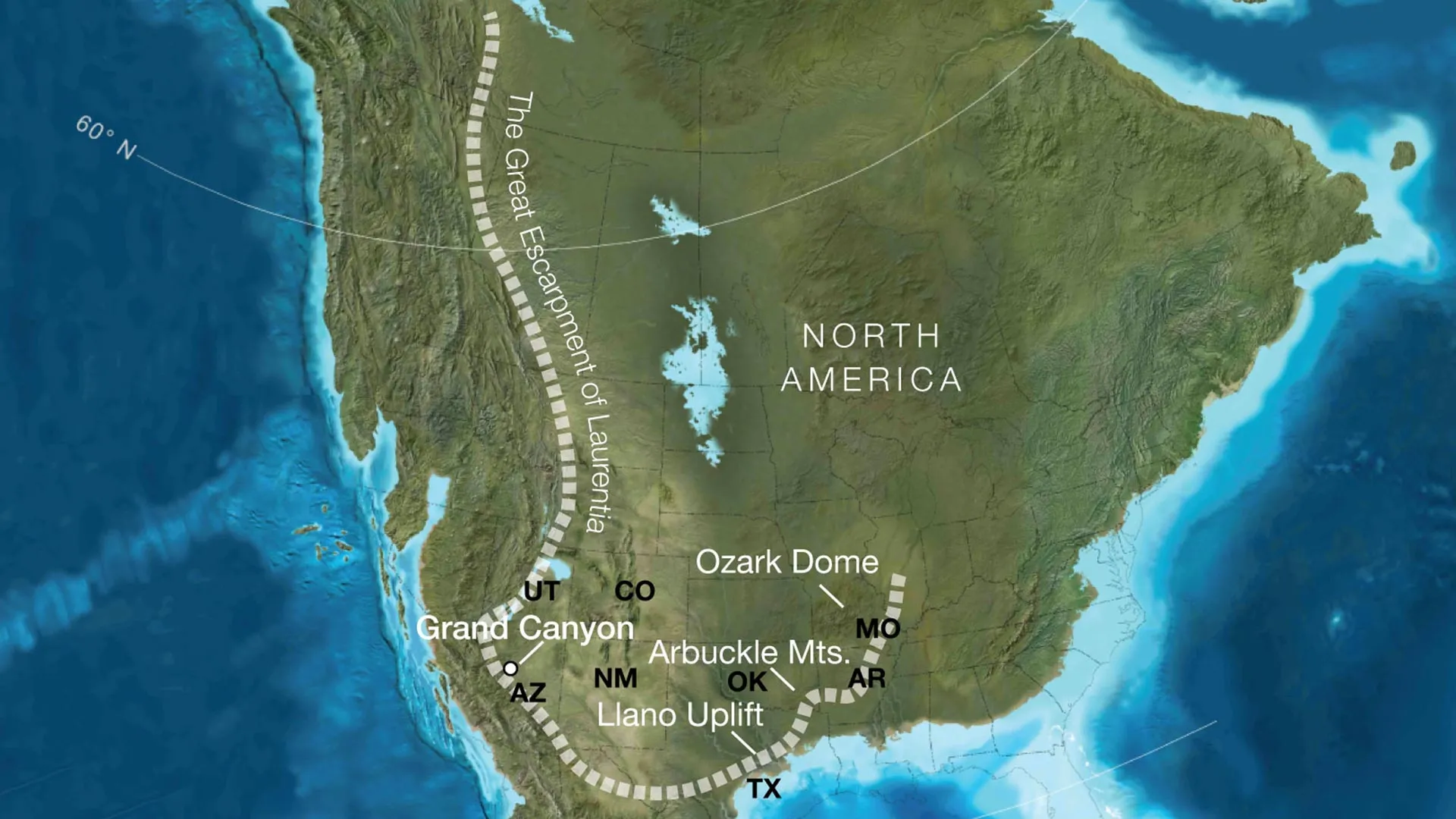
    Scientists have uncovered evidence that an enormous ancient cliff system may have helped expose the deepest rocks of the Grand Canyon nearly a billion years before the Colorado River began carving the landscape seen today.

    Led by researchers at the University of Southampton in the UK, the new study suggests that a vast “great escarpment” formed about 800 million years ago as the supercontinent Rodinia broke apart.

    These towering cliffs may have reached roughly a kilometer in height and extended for thousands of kilometers along western North America. Over time, erosion along this immense rocky boundary removed huge amounts of material, eventually exposing ancient crystalline basement rocks that can now be seen in the Grand Canyon in southern Arizona.

    A Billion Years Missing From the Grand Canyon

    Thomas Gernon, Professor of Earth Science at the University of Southampton and lead author of the study, explained that the Grand Canyon preserves a geological history stretching back about two billion years. Yet more than half of that rock record appears to be absent.

    He said: “Our paper suggests the Canyon’s basement rocks were progressively brought to the surface as part of an immense escarpment that developed during the breakup of an ancient supercontinent.

    “The findings also shed light on the formation of the Great Unconformity, a mysterious gap in the rock record that spans over a billion years.”

    Published in Geology, the research involved scientists from the University of Southampton, GFZ Helmholtz Centre for Geosciences and University of Potsdam, both in Germany, and the University of Illinois Urbana-Champaign in the USA.

    The researchers propose that this ancient escarpment crossed areas that today include Arizona, Utah, Idaho, Wyoming, Colorado, Texas, Oklahoma, Arkansas, Missouri and Illinois.

    Prof Gernon said powerful erosion across this enormous region eventually uncovered some of the oldest rocks in North America, with the Grand Canyon providing the best known example.

    Reconstructing a Lost North American Landscape

    To investigate what the region may have looked like hundreds of millions of years ago, the team combined reconstructions of plate tectonic movements with data showing how landscapes evolve through time.

    Their results indicate that when Rodinia was fragmenting, the future Grand Canyon sat in roughly the same position relative to the continental edge as major escarpments found today in places such as South Africa and Brazil.

    Over tens of millions of years, the giant cliff system would have gradually migrated inland as erosion wore it down. The researchers estimate that this process could have removed as much as eight kilometers of rock in some locations.

    That prediction agrees with other geological evidence showing that roughly five to ten kilometers of rock disappeared from parts of the region long before the modern Grand Canyon formed.

    “This long-lived tectonic landscape provides a missing piece in understanding why erosion associated with the Great Unconformity varies so dramatically across the southwestern US,” said Prof Gernon.

    He added: “Our work suggests that tectonic uplift related to continental rifting and breakup created both steep slopes and high ground, providing the mountainous terrain that rivers and glaciers could readily erode.”

    An Ancient Mountain Rim That Reshaped North America

    The influence of this enormous escarpment may have extended far beyond the area that eventually became the Grand Canyon.

    By producing a long-lived mountainous rim around western Laurentia — the ancient core of North America — the landscape may have shaped the paths of rivers, determined where sediments collected, and influenced when rising seas spread across the continent before the so-called Cambrian explosion, a period when complex life diversified rapidly.

    Prof Gernon added: “Today’s escarpments in Africa, Brazil, India and Antarctica provide windows into the forces that shape continents over hundreds of millions of years.

    “By comparing Grand Canyon’s ancient history with active landscapes like the Great Escarpment of South Africa, we’re able to see North America’s most iconic geologic landmark in an entirely new light.

    “Our findings could help geologists reinterpret other ancient continental interiors where similarly large gaps occur in records, offering a better understanding of how Earth’s continents have changed over hundreds of millions of years.”

    Billion Canyons explain Grand lost megacliff missing years
    NCIJ NETWNCIJ NETWORK
    • Website

    Keep Reading

    Scientists predicted doomsday for November 13, 2026. Should we be worried?

    Scientists discover how deep sleep builds muscle, burns fat, and boosts the brain

    A 24-year study uncovers a surprising climate benefit beneath forests

    NASA’s Webb reveals the wild weather of a mysterious world 20 light-years away

    Brain cells meant to protect us may be fueling cognitive decline

    This bird flies thousands of miles, but its wings have a catch

    Add A Comment
    Leave A Reply Cancel Reply

    Editors Picks

    Why AI Confidence Is Not Validation

    October 18, 2026

    Scientists predicted doomsday for November 13, 2026. Should we be worried?

    October 18, 2026

    Next.js Ships Out-of-Band Patch for Two Critical RCE Flaws in Caching and SVG Processing

    October 18, 2026

    Nearly 90% of countries adopt biodiversity targets, but most remain off track

    October 18, 2026
    Latest Posts

    The Guardian view on Japan’s yen: Trump wants to keep the easy-money machine running | Editorial

    August 12, 2026

    Minesto reshapes organization to drive commercial expansion of tidal technology

    August 12, 2026

    Corpus Christi Puts Industrial Water Charge on November Ballot

    August 12, 2026

    Subscribe to News

    Get the latest sports news from NewsSite about world, sports and politics.

    NCIJ Network is an independent digital news platform delivering trusted investigative journalism, European and global news, in-depth analysis, and fact-based reporting with accuracy, transparency, and integrity.

    Facebook X (Twitter) Instagram Pinterest YouTube

    Why AI Confidence Is Not Validation

    October 18, 2026

    Scientists predicted doomsday for November 13, 2026. Should we be worried?

    October 18, 2026

    Next.js Ships Out-of-Band Patch for Two Critical RCE Flaws in Caching and SVG Processing

    October 18, 2026

    Subscribe to Updates

    Get the latest creative news from FooBar about art, design and business.

    Type above and press Enter to search. Press Esc to cancel.