


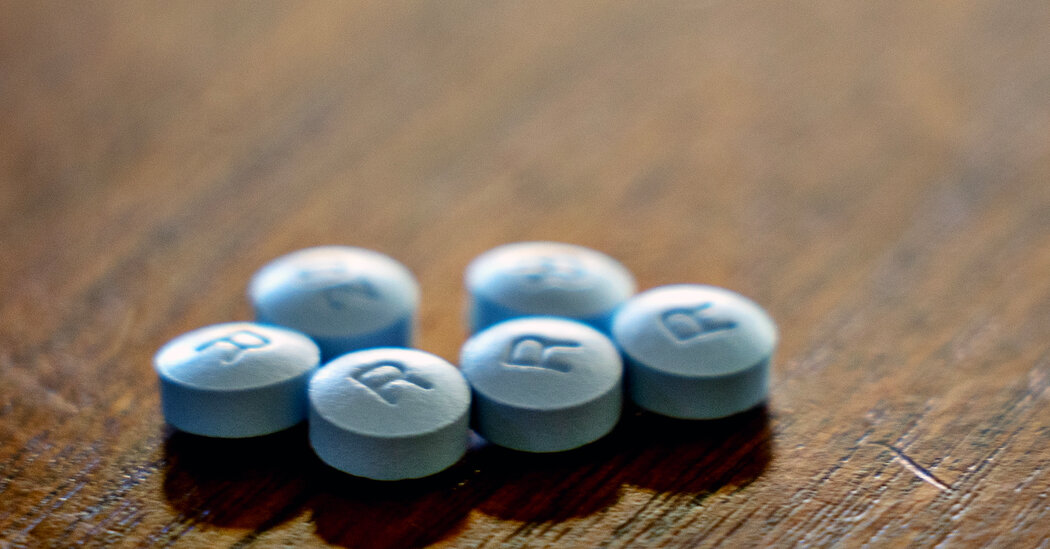
Revolution Medicines set a sticker price of about $480,000 a year, or $663 a tablet, for its new pancreatic cancer drug — a cost that would have once been unthinkably high.
Today, such prices are routine for cancer drugs.
One cutting-edge CAR-T therapy now goes for $600,000 for a one-time infusion. A competitor, given the same way, is listed at $550,000. A daily pill for gastrointestinal cancer has a sticker price of $520,000 a year. A twice-daily pill for leukemia? It’s $430,000 a year.
In 2024 alone, nine cancer drugs were approved and then introduced with sticker prices above $400,000 annually, according to a tally by the Institute for Clinical and Economic Review, which evaluates the value of medicines.
That these prices have become commonplace would have been hard to imagine two decades ago, when even the prospect of a $100,000-a-year cancer drug evoked fierce criticism.
But since then, cancer drug prices have steadily increased, with few constraints beyond what a company thinks the market will bear. The expense is borne by government programs like Medicare, employers, patients and Americans who pay taxes and health insurance premiums.
A spokesman for Revolution Medicines, Brian Crawford, said the price of its new drug, Rasonque, “reflects its differentiation and the meaningful benefit it provides for patients.”
As is typical with other cancer drugs, the vast majority of the cost of Rasonque is expected to be covered through insurance, with varying out-of-pocket costs for patients. Mr. Crawford said uninsured and underinsured patients who met certain financial and medical criteria would receive the drug for free. The drug, also known as daraxonrasib, is taken as two pills a day.
In the medical world, much of the anger over cancer drug prices has been directed at pricey medicines that either failed or did not undergo clinical trials assessing whether they extend lives. Those drugs won approval because they could shrink tumors or delay their growth.
Revolution Medicines’ drug is not a cure, but it has shown that it can prolong life expectancy. In a key clinical trial, patients with advanced pancreatic cancer who got the pill lived for a median of 13.2 months, compared with 6.7 months for those who got chemotherapy.
Those results have electrified pancreatic cancer specialists and patients because they occurred in people who had no good treatment options and little time left to live.
In that context, it’s hard to say whether Revolution Medicines’ price is fair, said Stacie Dusetzina, a health policy professor at Vanderbilt University who studies drug pricing. “This drug does have substantial clinical benefits over existing treatment, which isn’t always the case for high-priced cancer drugs,” she said.
Cancer patients often stay on a drug for only a matter of months, stopping because it has become too toxic or their cancer has progressed. For example, in the clinical trial that won approval for Rasonque, patients were on the drug for a median of six months. But even over several months, the costs can pile up, and some patients who respond well can stay on a cancer drug for years.
Over the years, the public and lawmakers have expressed outrage at the high costs of insulin and drugs for H.I.V., hepatitis C and, most recently, obesity. One-time therapies for rare genetic diseases now routinely carry price tags of a few million dollars.
But cancer holds a unique place in the system, because care and drugs are so expensive and affect so many people.
For the past five years, employers have said cancer is the top disease category driving their medical expenses, according to a survey published in late August by the Business Group on Health, which represents large employers that provide health insurance to their workers.
Compounding the rising costs is that in some cancers, like multiple myeloma, patients are now routinely given three or four therapies at once.
The high prices aren’t limited to drugs that treat small numbers of patients. Oncology’s biggest blockbuster is Keytruda, which has a sticker price of $213,000 a year. It is given as an infusion or an injection every few weeks and has been used to treat several million patients.
For many older drugs, generic competition and government negotiations have sharply driven down costs. But there are hardly any limits on manufacturers’ ability to set high prices for newly approved medications.
“We allow pharmaceutical companies to charge whatever they want, and without any clear rationale, other than how much they think they can get,” said Dr. Aaron Kesselheim, a professor of medicine at Harvard and Brigham and Women’s Hospital who studies drug pricing.
A drug’s sticker price is not the real price paid by patients or their insurers — it’s just the starting point for negotiations that lower the final price for the employer or the government. But while that dynamic sharply reduces the true prices of diabetes and autoimmune drugs, the final price for cancer drugs is typically only slightly lower than the sticker price.
Cancer drugmakers and their defenders say the prices reflect a boom in innovation that has transformed deadly diseases into chronic ones and even produced cures.
And particularly in the case of smaller companies, they say, there’s a need to recoup considerable investments in clinical trials.
Revolution Medicines, based near San Francisco, has registered $4 billion in losses since its founding in 2014. That is largely because of the $3.3 billion the company has reported spending on research and development this decade. Buoyed by high investor hopes that Rasonque, the company’s first approved product, will become a blockbuster, Revolution has surged to a market valuation of $45 billion.
The company set up an expanded access program that, over the past few months, granted more than 2,000 patients free, early access to the drug. Now, with its drug approved, the company is shifting participants to getting the drug covered through insurance.
Pharmacy benefit managers play a key role in determining whether new pills like Rasonque are broadly covered, by recommending to their employer clients whether to pay for them.
Two of the largest benefit managers, CVS Health’s Caremark and UnitedHealth Group’s Optum Rx, said they had begun a review process for Rasonque.
David Whitrap, a spokesman for CVS, said Rasonque appeared to be a breakthrough. “At the same time,” he said, “it is critical that drugmakers realize that break-the-bank prices can severely limit the number of patients who are able to access these breakthroughs.”
Experts said they expected that most insurance plans would cover Rasonque, even at such a high price, because of the strong evidence that it benefits patients and the lack of alternative options.
Still, the experts said, plans could aggressively seek to limit coverage to people who meet the criteria tested in the clinical trial and approved by regulators: those with advanced pancreatic cancer who have already tried or can’t try chemotherapy. That could shut out many patients seeking it and cause battles over whether a patient is really eligible.
To make sure that ineligible patients aren’t getting the drug, experts predict, plans will use levers like prior authorization, an often cumbersome review that has been criticized for dangerously delaying care.
Revolution Medicines said it would give patients experiencing insurance delays free access to a few weeks’ supply of pills to get them started on treatment while any coverage issues were being sorted out.
Still, commercially insured patients with high deductibles could face huge sticker shock this January, when their deductible resets and they fill their first Rasonque prescription of the year. (The company said such patients might be eligible for assistance with their out-of-pocket costs.)
Commercially insured people typically have an upper limit on their annual out-of-pocket drug and medical costs. But that maximum can be high — in some cases, more than $6,000.
“It will be really a tragedy if this price makes it hard for patients to get it,” Dr. Kesselheim said.
Pancreatic cancer disproportionately affects older people, so many of the patients who will take it are covered under Medicare. Federal law should require Medicare drug plans to cover Rasonque because cancer is a protected class.
The drug offers a vivid example of how Medicare patients benefit from an annual cap on out-of-pocket drug costs created by the Inflation Reduction Act, which was passed in 2022 by Democrats without any Republican votes. That cap, which was $2,100 this year, will rise to $2,400 next year. It covers the pills and injections that patients get from a pharmacy — including Rasonque.
That means that a patient on Medicare who takes several other pricey prescription drugs may pay only a few hundred dollars a year, or even nothing at all, by starting Rasonque.
Had the drug arrived before the law went into effect, many patients would have been on the hook for over $25,000 a year for Rasonque, Dr. Dusetzina calculated.
