


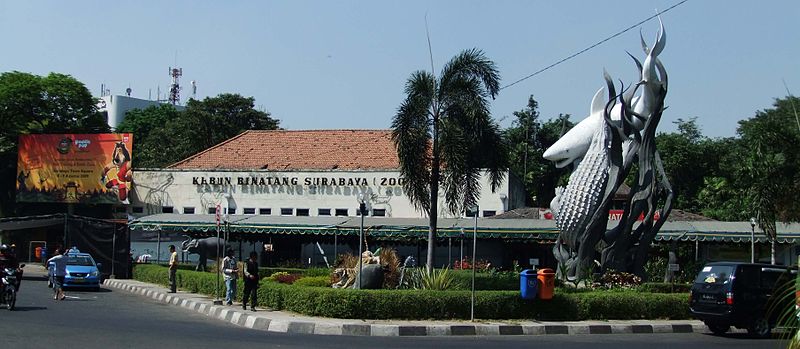
- An alleged corruption case at Indonesia’s Surabaya Zoo has reignited concerns over governance at the country’s wildlife conservation institutions.
- Experts say the investigation highlights broader questions about transparency, accountability and how conservation facilities are monitored.
- They warn that failures in oversight can have far-reaching implications for both public trust and animal welfare.
An alleged corruption case at Indonesia’s Surabaya Zoo has renewed scrutiny of how the country’s wildlife conservation institutions are governed and prompted experts to warn that financial misconduct can have consequences that extend beyond public finances to the welfare of animals entirely dependent on human care. The investigation has also reignited calls for stronger oversight and accountability to ensure conservation institutions protect both public resources and the wildlife entrusted to them.
East Java prosecutors named Choirul Anwar a suspect on July 21, 2026, in connection with an alleged corruption case involving the operational budget of Surabaya Zoo between 2016 and 2024. Choirul was previously the president director of the Surabaya Zoo and Wildlife Park Regional Company.
A preliminary audit conducted jointly with the East Java representative office of the Financial and Development Supervisory Agency (BPKP) estimated state losses at 10.2 billion rupiah ($564,000), of which approximately 7.4 billion rupiah ($409,000) was allegedly diverted for the suspect’s personal benefit.
Prosecutors said the alleged corruption had contributed to a deterioration in the management of Surabaya Zoo in the subsequent years, leading to declining services and facilities, while a number of animals reportedly died due to inadequate care.
The case has renewed calls from zoo and conservation experts for stronger oversight of conservation institutions, including audits that assess not only financial compliance but also animal welfare outcomes and governance safeguards in hopes of detecting misconduct earlier.
“Many people still equate animal welfare simply with whether animals are fed, when in reality, the concept is far broader,” Arisa Mukharliza, campaign director at the Wildlife Whisperer of Sumatra, told Mongabay in an interview.
She said animal welfare encompasses the quality of nutrition, veterinary care, disease control, enclosure conditions, environmental enrichment, opportunities for animals to express their natural behaviors, and the adequacy of the staff responsible for their care.
“It is important to remember that animals in conservation institutions have no choice. They cannot forage for their own food, choose a veterinarian when they are ill, or move elsewhere when their living conditions are no longer adequate. Ultimately, every management decision is also a decision that affects the animals’ quality of life,” Arisa said.
Some experts noted that if the alleged corruption resulted in animal neglect, it could constitute a violation of both conservation responsibilities and animal welfare protections, with lasting consequences for the zoo’s animals.
“This is because the alleged wrongdoing would have violated not only the state’s finances but also the fundamental rights of animals as living beings that have been removed from their natural habitats and placed under the care and responsibility of the institution’s management,” said Dhia Al Uyun, a law lecturer at the Brawijaya University, as quoted by newspaper Kompas, noting that Indonesia’s new criminal code has now criminalized acts of neglect that result in animal suffering.

The mounting concerns in the wake of the alleged corruption within Surabaya Zoo management are not without precedent. In 2021, Indonesia’s Bandung Corruption Court sentenced two executives of the Tamansari Wildlife Foundation, the previous operator of Bandung Zoo in West Java, to seven years in prison after finding them guilty of corruption in a land lease scheme that caused state losses of 25.5 billion rupiah ($1.4 million).
Arisa cautioned against using a single case to judge all of Indonesia’s conservation institutions, noting that many zoo managers, veterinarians and animal keepers remain deeply committed despite limited resources. However, the case should serve as a catalyst for strengthening governance across the sector, she said, adding that greater transparency, independent oversight and accountability are essential to restoring public trust and ensuring conservation institutions fulfill their mission to protect wildlife.
“In conservation, public trust is the most valuable currency. Once that trust is eroded, the damage extends beyond a single institution to the broader conservation effort,” she said.

Founded in 1916, Surabaya Zoo is one of Indonesia’s oldest and best-known zoological parks, housing thousands of animals in the country’s second-largest city. It came under intense international scrutiny in the early 2010s after a series of high-profile animal deaths and allegations of neglect, mismanagement and corruption earned it the nickname “the death zoo.” This prompted calls from animal welfare groups for its closure, while others pushed for reforms and stronger oversight.
The Indonesian government had revoked Surabaya Zoo’s operating permits in 2010 after years of criticism over animal deaths and poor management and placed the facility under a temporary management team led by officials from the Indonesian Zoo and Aquarium Association and Taman Safari, the country’s largest private zoo operator. In 2014, then-president of Indonesia Susilo Bambang Yudhoyono returned the century-old zoo to the Surabaya city administration, which later secured new conservation permits to renovate the facility and improve animal welfare.
Overcrowding, once one of Surabaya Zoo’s most persistent welfare problems, has received less public attention in recent years. While the zoo says animal welfare has improved under its current management, there has been no recent independent assessment confirming that the facility is no longer operating above its ideal capacity.
“Animals are the most vulnerable here. They cannot tell us when their quality of life is declining or when their basic biological needs are no longer being met. That is why the state has a responsibility to ensure its oversight systems protect animal welfare before problems become visible,” Arisa said.
Basten Gokkon is a senior staff writer for Indonesia at Mongabay.
See related story:
Indonesia investigates alleged abuse of Sumatran tigers at city zoo
FEEDBACK: Use this form to send a message to the author of this post. If you want to post a public comment, you can do that at the bottom of the page.

