


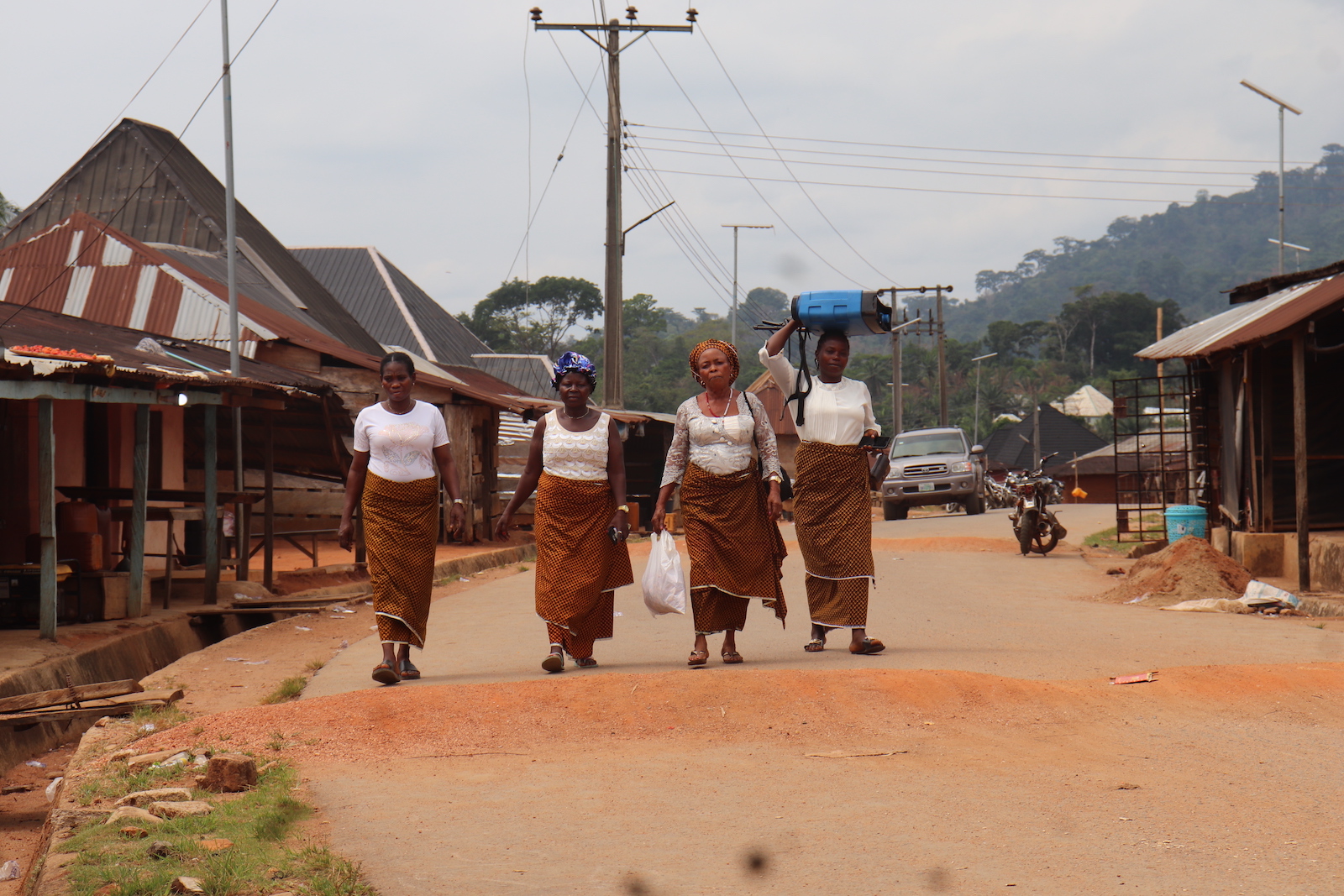
In the communities surrounding Nigeria’s Afi Mountain Wildlife Sanctuary, women’s conservation collectives are transforming the protection of a biodiversity hotspot that’s home to the critically endangered Cross River gorilla and endangered Nigeria-Cameroon chimpanzee.
These collectives, operating in villages such as Ulom, Katabang and Buanchor in southeastern Nigeria, were born from a realization that traditional, male-led governance often struggled to curb illegal activities in and around the 100-square-kilometer (39-square-mile) sanctuary, reports contributor Orji Sunday for Mongabay.
Village residents told Mongabay that because men were frequently the primary participants in hunting, logging and river pollution, they often lacked the moral authority to enforce communal bylaws that punish those activities.
“Our men have failed to stop the threats,” Ofre Mary, founder of the Ulom Women’s Conservation Collective, told Mongabay. “That’s why women decided to take a stand. That’s why we decided to take the risk”.
The collectives conduct regular and spontaneous patrols, sometimes late at night or at dawn, to track signs of hunting, wildfires or illegal logging. The groups also investigate allegations of wildlife crimes, either alone or together with other community leaders, state forestry officers and nonprofits in the region.
In 2024, women in both Ulom and Buanchor successfully halted illegal timber deals, being made by men, Francis Akie, who heads the Traditional Rulers Council of Ulom, told Mongabay. The women threatened nude protests, a form of resistance that forced local leaders to refund timber dealers and cancel contracts.
The women’s collectives also patrol the Afi River and other streams to prevent river poisoning, a destructive fishing method. They have even developed manual methods to scoop contaminated water from dammed sections of local rivers to restore water safety for humans and wildlife.
Aside from patrolling and enforcement of communal bylaws, the women also work on ideological campaigns to persuade young people away from hunting and timber trade and toward conservation.
The success of this quiet revolution is already visible. In some communities where the groups are active, river pollution has been nearly eradicated and there has been significant resistance to illegal logging.
“The animals are returning,” said Osang Sarah, a member of the Katabang collective. “The forest is gradually regenerating and thick. Recently, we started hearing the calls of chimpanzees once more.”
The collectives have several challenges, including a lack of basic gear such as rain boots and GPS units, and struggles to raise money to rent motorcycles. Yet, the women-led conservation model is spreading. More than half of the 16 communities that have a share in the ownership and conservation responsibility for the Afi region are now in various stages of launching their own women’s conservation initiatives.
Read the full story by Orji Sunday here.
Banner image: The women of the Ulom collective walk home after a successful review of river poisoning and wildlife laws. Image by Orji Sunday for Mongabay.
