


- In January, floods exposed weaknesses in Limpopo’s infrastructure as roads, bridges and water systems were damaged.
- Residents said they went for several days without household water after floodwaters damaged pipelines and a pump station.
- Months later, Limpopo residents still contend with some damaged roads and bridges that remain partially repaired; meanwhile, they are looking ahead toward the next rainy season, uncertain whether they are prepared.
- Disaster preparedness should begin before heavy rains, with authorities identifying vulnerable communities and infrastructure, says Hope Magidimisha, a national planning commissioner.
“Everyone needs to understand their responsibilities before an emergency occurs.”
This is the view of Hope Magidimisha, a national planning commissioner in the Office of the Presidency, South Africa. She said the January floods in South Africa’s Limpopo province, which is still feeling the effects, should serve as a reminder that disaster preparedness must begin long before heavy rains arrive.
Some residents affected by the floods are still uncertain whether the repairs carried out since January will protect them when the next floods come.
In Boelang, about 15 kilometers (9.3 miles) southwest of Ba-Phalaborwa, a municipality in Limpopo’s Mopani district, residents are once again fetching municipal water from their taps after infrastructure damaged by the January floods was repaired in March.
Shanine (not her real name, due to safety concerns) told Mongabay that the repairs restored their water supply after the community had gone without municipal water for almost three months. However, she said water pressure remained unreliable, with water sometimes flowing slowly.
“Our water infrastructure is right in the Selati River. The municipality has repaired it, but we are not sure how safe the structure is to withstand another flood,” she said.
The January floods left a trail of destruction in Limpopo and disrupted learners from attending school and severely damaged water infrastructure in Boelang village. Two main pipelines crossing the Selati River at Boelang were washed away, while a pump station also failed. The damage left residents without municipal water for almost three months as they waited for the Mopani district municipal authorities to repair the broken pipes. In the meantime, the residents had to queue for untreated water from a communal borehole and rely on unreliable municipal water tankers. Some residents also carried up to 80 liters (21 gallons) of water from their employers in town for drinking and household use.
Other infrastructure was also affected. South African media reported students and workers staying at home for days due to the heavy rains as the damaged bridges rendered some areas inaccessible.
The floods also affected Ba-Phalaborwa town, which was placed on a water-shedding schedule as the infrastructure supplying water to the town had been washed away during the floods.
Trevor van Rooyen, vice chairperson of the Let’s Change Ba-Phalaborwa Community Forum, a local nonprofit, told Mongabay that he did not believe the government was adequately prepared for further flooding.
“They have patched the damaged roads and the bridges destroyed are still under construction,” he said.
Van Rooyen was referring to a bridge crossing the Selati River, which remains under construction. He said the condition of the bridge raises questions about whether communities will have reliable access to services when heavy rains return.
Shanine further commented that she thought the Selati River bridge crossing should have been completed by now and the government could monitor the bridge as motorists pass in order to give an idea whether work was adequately done. Less than two months before flooding typically starts in January, Shanine remains concerned.
Widespread effects
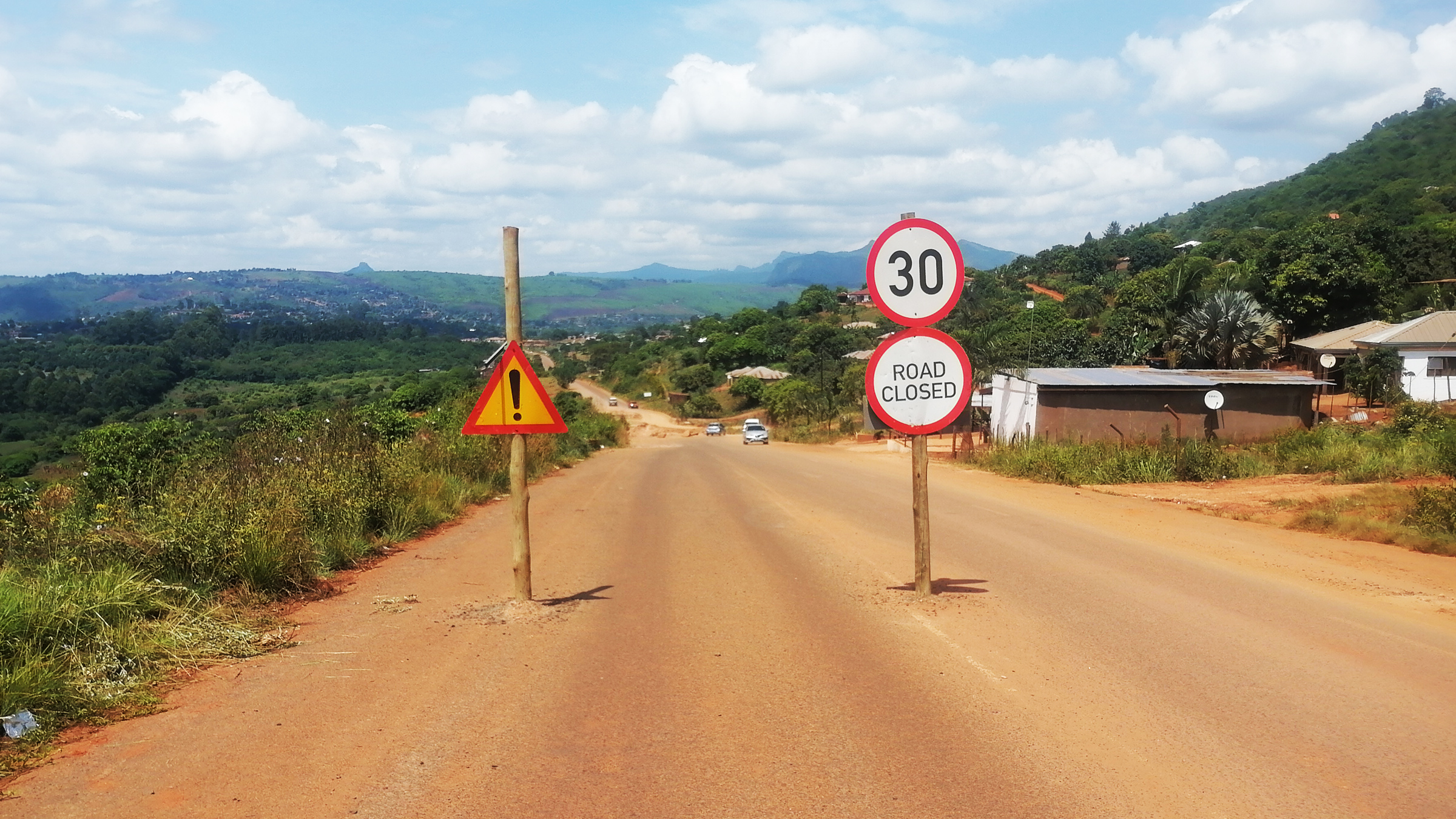
Flooding was not restricted to Ba-Phalaborwa. About 170 km away (105 mi), in Tshikunda village under Thulamela municipality, part of the road was washed away in January. In mid-November, when Mongabay visited, motorists had created an alternative route through the damaged section, but it was too narrow for two vehicles to pass at the same time, forcing drivers to take turns.
Residents of Tshikunda and nearby Tshitereke village are calling on the Limpopo Department of Public Works to urgently repair the road road (Tshikunda bypass road D3681), which links the villages to local schools and Donald Fraser Hospital, the area’s main medical facility.
“The government must urgently fix this road, as the alternative road is also in a very bad state,” said motorist Solomon Mathukela, who had just allowed another driver to pass when Mongabay caught up with him.
A 26-year-old Tshikunda resident said the government had not taken meaningful steps to repair the road before the next rainy season. “This road should be fixed urgently. In January, workers, schoolchildren and even sick people trying to reach Donald Fraser Hospital could not get through because the road was washed away,” he said. “The alternative gravel road to the hospital is equally bad, so we are calling on the relevant government department to act urgently.”
Asked how prepared the department is, Tsakani Baloyi, director of communications for the Limpopo Department of Cooperative Governance, Human Settlements and Traditional Affairs, said the department had purchased temporary residential units worth 53 million rand ($3 million) to house residents whose homes may be destroyed by the rains expected for January 2027.
She said the units had been distributed across the province’s five districts: Vhembe, Capricorn, Mopani, Waterberg and Sekhukhune. Baloyi also said the department had blankets available for distribution to households they anticipate will be affected by further flooding.


Meanwhile, Emmanuel Mongwe, spokesperson for the Limpopo Department of Public Works, Roads and Infrastructure, said work was being finalized on the Tshikunda bypass road to allow traffic to use it as an interim measure while the department concludes the process of appointing a contractor.
He said the appointment process was expected to be completed by the end of November, after which construction would resume immediately.
Regarding the damaged Selati River bridge, Mongwe said the infrastructure falls under the responsibility of the South African National Roads Agency (SANRAL). The department is engaging with SANRAL and receiving updates on the repair work, he added.
According to Magidimisha, one of the biggest lessons from the recent floods is the need to take prevention more seriously.
“We often become very active when a disaster happens, but the real work should start long before the heavy rains arrive,” she said.
The first step, she explained, was to identify communities and infrastructure most exposed to flooding, including settlements near rivers, streams and flood lines, as well as vulnerable roads, bridges, schools and other public facilities, adding that effective disaster planning depends on knowing where these risks are. She said drainage systems also needed greater attention, including regular inspections and maintenance before the rainy season.
Early-warning systems are another priority, she said. Weather warnings needed to reach communities in time and in languages people understood.

“It is not enough for the South African Weather Service to issue warnings. That information must reach ordinary people in time, in languages they understand, and communities must know what to do when a warning is issued. An early warning is only useful if it leads to early action.” Magidimisha said.
Magidimisha also said the government needed to consider the risks faced by people living in flood-prone areas, including the possibility of relocation.
“Where settlements are situated in dangerous locations, the government needs to consider appropriate long-term solutions, including relocation where necessary. This is a difficult issue because people have homes, livelihoods and connections to their communities, but we cannot ignore the risks to their lives,” she said.
According to Magidimisha, preparedness should be assessed regularly to establish whether planned interventions are being implemented. This includes identifying vulnerable areas, clearing drainage systems, preparing evacuation plans, ensuring emergency teams are ready and repairing damaged roads and bridges. She emphasized that the measure of success should be whether communities are safer, rather than the money spent or the number of meetings held.
Asked what needed to be done before the next rainy season, Magidimisha said the government should use the time to address weaknesses exposed by the January floods, rather than wait for another disaster to occur before taking preventive action. She said damaged roads, bridges and stormwater infrastructure needed to be repaired, but reconstruction should take future flood risks into account.
Magidimisha also called for arrangements to ensure that communities were not completely cut off when rivers overflowed.
“This means identifying vulnerable access roads and bridges and putting practical emergency arrangements in place for people who may become isolated.”
Essential services, including water supply, electricity, healthcare facilities and schools, should also be included in disaster preparedness plans to ensure communities do not lose access to essential services for longer periods when infrastructure is damaged.
At the community level, residents should know whether they live in flood-prone areas, where to go during an emergency and whom to contact when their lives or property are threatened, she said. Community leaders should be involved in preparedness planning, particularly to identify older people, children and people with disabilities who may need assistance, she added.
Magidimisha said effective flood preparedness would depend on disaster management structures, infrastructure departments, municipalities and communities working together to identify risks, protect essential services and respond before the next disaster strikes.
Banner image: In Tshikunda village, the Department of Public Works has put up signs warning motorists that part of the road was washed away. Image by Bernard Chiguvare.
Residents of South Africa’s Limpopo province hold breath amid fears of repeat floods
Farmers in South Africa’s Limpopo face unpredictable rainfall, uncertain futures
Cite this article
Bernard Chiguvare (2026). In South Africa’s Limpopo, residents wonder what the next flood will bring. Mongabay Conservation news. DOI: https://doi.org/10.66709/news-336665

