


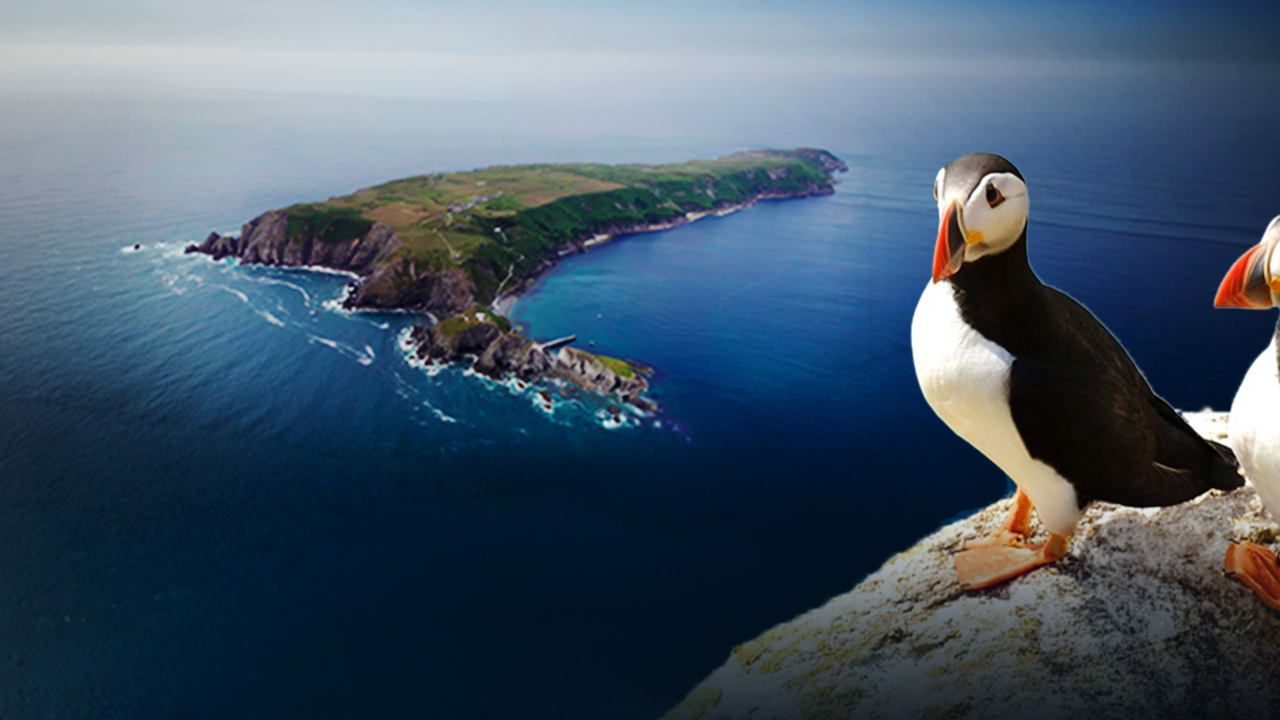
LUNDY ISLAND — United Kingdom. Out in the Bristol Channel, nestled between Wales and England, the rugged island of Lundy is one of the UK’s most pioneering conservation stories. From the return of thousands of seabirds to thriving marine life beneath its waves, decades of conservation have helped transform this small island.
But Lundy’s story isn’t simply about keeping people out. Local fishermen helped shape the marine protected area, and the UK’s first ever no-take zone was designed alongside the needs of the people who depend on these waters. Today, the island is home to thriving wildlife, a working fishing community and thousands of visitors each year.
Mongabay’s Video Team wants to cover questions and topics that matter to you. Are there any inspiring people, urgent issues, or local stories that you’d like us to cover? We want to hear from you. Be a part of our reporting process—get in touch with us here!
Banner image: Collage of Lundy Island and a puffin. © Mongabay
Notice: Transcripts are machine and human generated and lightly edited for accuracy. They may contain errors.
At the heart of it, it’s always had that wild spirit, I think. as the seabird numbers have increased, more and more people are coming here to see them, especially the key species; puffins, seals. Lundy, a rugged outcrop of rock battered by wind and sea that juts out of the Bristol Channel between England and Wales. Today, it’s the wildlife that’s the star of Lundy, but its wildness hasn’t simply been left to chance. In the early 2000s, one of Lundy’s greatest wildlife spectacles had all but disappeared. Rats accidentally introduced to the island found their way to the seabird colony. They can access their burrows. They can find their eggs. They can find their chicks. So the numbers were really low, around 6000. 20 years ago the decision was made to eradicate rats on the island. Rats are a key predator of seabirds. For the last 20 years, the numbers have risen year on year. So we have some key species here. We have puffin, razorbill. guillemot, Manx shearwaters, storm petrel, fulmar, kittiwakes. All of these birds nest on the island. So it’s their home and we need to look after it. And now we know our numbers of seabirds are around 48,000. At a time when many of Britain’s seabirds are in serious decline. Lundy offers a rare story of recovery. It’s not a very big island, but we have all these interesting underwater features, caves, pinnacles, things like that. We’ve got sandy bottoms, kelp forests with rocky reefs. We’ve got muddy habitats. And I think all of this makes it very special. There’s so much to see and the more you look, the more you see. The waters around Lundy became the UK’s first ever marine nature reserve. In 2003, Lundy also became home to the UK’s first no take zone, a small stretch of sea where all fishing would be completely off limits. So, we’re here at the moment. And then we’re looking up the east coast of the island. So everything in the pink box is the no take zone. So no fishing is out in here at all. The outline of the actual kind of room area as a whole is this rectangle. They did a rectangle because it’s easy to plot on a map. In this area there are allowed to do things like recreational rod and line fishing and lobster potting, but things like trawling and dredging are not allowed in this area. Intensive trawling and lobster fishing took its toll on the waters around Lundy, with fishing boats coming from far and wide to take advantage of the rich waters, So local fishermen, conservationists and business owners banded together to do something about it. It was quite grassroots. So people on the island, local people to North Devon, local fishermen and local conservationists work together to create it and work out what could be allowed and where. And I think that approach was very successful because it means that everyone’s on board with it. Drawing a line on the map is often the easy part. challenge was finding a way to protect these waters that worked for everyone. So this is the lobster pots that they all use here. East coast creels. This ends pots. That ends trawling, really. Geoff Huelin spent decades fishing the waters around Lundy for lobsters and crab. Today, his sea days are behind him, but he still works in the lobster trade. It’s made Lundy probably one of the most unique places in England. And that’s mainly through the no take zone. we all joined forces with the divers everybody was happy with it really. There’s such benefits with it, that I can’t see anything that would say against it. And all the fishermen are happy here and they they wouldn’t go in there. You know, everybody was stands by it. 100% really. So this is a male with a little narrow tail. Outside the no take zone on a string of 35 pots, 40 pots. You might get 12 lobsters. In the no take zone, you can catch 75 in one night. And they’re like this. They’re this size, its incredible. There’s more lobsters around now than there was when I was fishing. They’ve made a real resurgence, lobsters. I think we did a survey in there with IFCA within 4 or 5 years, and there were lobsters everywhere. They’ve made a huge recovery really quickly. Studies have found that lobsters inside the no takes zone have grown both larger and more numerous, with evidence that some are spilling over into neighbouring fishing grounds, There’s much heavier fishing now, it’s definitely improved, the fishing. You do get over-spill, there’s lobsters moving out of there. But Lundy’s protection isn’t only about the species people catch. Beneath the waves are habitats and animals. that can take decades to grow, and just moments to destroy. The Marine Protected Area was set up particularly for the protection of spiny lobsters or the crawfish. And it has been successful, they have been brought back from the brink of extinction. I think some of the key species, the pink sea fans, are very important. They’re very, very slow growing. The the seabed although sometimes looks desolate when you look closely, like there’s so many fragile structures growing up the seabed. And if a trawler comes along. It just kills it all instantly, that’s years of growth gone. On Lundy, conservation isn’t just the work of scientists and wardens. It’s woven into the life of the island. Even people that aren’t particularly interested in wildlife and conservation, they want to they want to care for the island. For the local area it’s just been a huge success all round. It creates jobs and it creates a home for wildlife. Over the past 20 years, Lundy has shown what can happen when we give nature the space and the help it needs to recover. Lundy will continue to be a place to come and disconnect. It will always be a place that people will look to for an area to escape the mainland. The wildlife will also find its home on here as well. So that’s the balance into the future will be looking improve on.
