


When Kelly Joly swiped her electronic benefits transfer card at a Kroger in Beaumont, Texas, this August, she was trying to buy groceries for herself and her teenage son. Joly had worked for decades as a waitress. The day before her grocery run, she’d received her monthly $530 in Supplemental Nutrition Assistance Program, or food stamp, benefits, she said. But now, her EBT card was being declined. She tried swiping again and began to cry. The cashier told her that this had been happening a lot recently and suggested she report the issue. Joly stepped to the side and called Texas Health and Human Services as her food sat bagged up on the belt.
The representative at the agency that oversees SNAP in Texas told her there was nothing they could do to replace the funds, Joly recalled. Her benefits were gone, likely stolen by fraudsters. Joly said her account showed transactions from the day before at stores in Illinois, Minnesota and California.
“I don’t understand why they wouldn’t replace [our food assistance] if they can see that it was fraud,” she said. “And on top of that, how am I going to feed me and my son this month?”
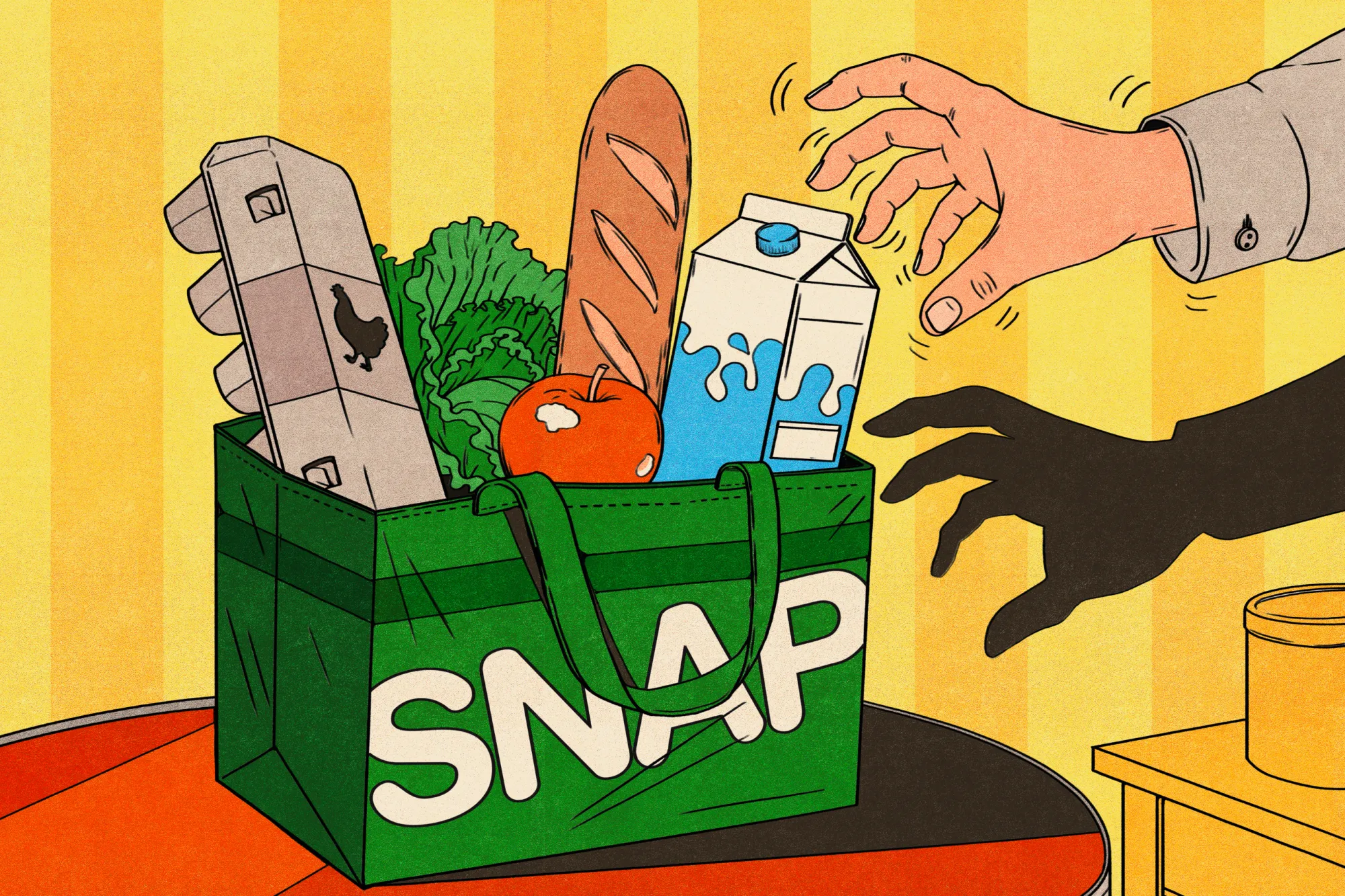
If you receive SNAP benefits, Joly’s experience may sound all too familiar. Last year alone, more than $470 million was stolen from SNAP recipients by card scammers, affecting about 990,000 households.
ProPublica recently published an investigation into why Congress and the Trump administration have failed to crack down on SNAP theft despite promises to tackle fraud and waste in safety-net programs. As part of this reporting, we gathered detailed accounts from more than 50 people across 18 states who’ve had their benefits stolen in the past five years and reviewed dozens more messages, comments and social media posts from people who said they were targeted.
Many of the victims we heard from had similar questions: How did this happen? How can I prevent it from happening again? Why am I not being reimbursed? And why does it seem like little is being done to prevent these crimes in the first place?
We spoke with dozens of federal prosecutors, Secret Service agents, U.S. Department of Agriculture officials, caseworkers, food security advocates and other experts to help answer these questions for you.
How does SNAP theft happen?
Much of this crime is the work of low-level street operatives for transnational criminal organizations who install “skimming” devices on card readers at local grocery stores and bodegas. When you swipe your card, these devices capture your data off the magnetic strip on the back, as well as your PIN. That data is either picked up later or transmitted via Bluetooth to thieves waiting nearby.
Skimming is largely preventable via microchips and tap-to-pay technology, which have been greatly successful in reducing fraud in credit and debit card transactions for over a decade. But efforts to install these chips in EBT cards have moved much more slowly.
In recent years, criminals have also used random number generators, phishing calls and spam texts to steal people’s card information, and they will call state hotlines to try to check your SNAP balance and deposit date. In other instances, corner store owners themselves are in cahoots with these scammers, ringing up fake grocery purchases in exchange for cash. And in at least one prominent case, a federal SNAP employee gave sensitive data to criminals for them to be able to steal benefits.
What can I do to protect my benefits?
Unfortunately, due to the government’s inaction, the burden of protecting benefits from being stolen has largely been left up to you, the individual SNAP recipient. And the options are less than ideal.
Phone apps, like ebtEdge or Propel, allow you to keep careful track of your card balance, monitor your transaction history for any suspicious purchases and lock your card when it isn’t in use. These apps may also allow you to change your PIN and block out-of-state or online transactions.
But these aren’t always practical solutions, many victims told us. Remembering new PINs all the time, for example, isn’t easy, especially for older beneficiaries.
Cynthia Clark, a 63-year-old retired special education teacher in Jackson, Tennessee, said she has several health conditions that affect the dexterity of her hands, her vision and at times her speech. After her SNAP benefits were stolen in May, she was advised to lock her card every time she wasn’t using it. But she said her disabilities make using a cellphone incredibly difficult. On more than one occasion, she has locked herself out of her SNAP account trying to access her benefits.
“I was simply unable to do whatever the steps were, no matter how hard I tried,” she said.
Besides card locking and changing PINs, the Secret Service has suggested that people may be able to spot evidence of tampering with card readers at grocery stores. For example, if you look closely at the reader and see a noticeable gap between the keypad and the rest of the device, or if you see that something is blocking the light from under the keys, there may be a skimming device there.

What can I do after my benefits have been stolen?
If you’ve had your SNAP benefits stolen, you can report the theft to your state or local social services office — the agency where you applied for SNAP — or to the EBT card customer service line on the back of your card to receive a new card and change your PIN so thieves can’t continue to access your benefits.
You can also report the crime to local law enforcement and to the agency within your state in charge of investigating SNAP fraud — for example, in Texas, SNAP theft victims are advised to report it to the Texas Health and Human Services Office of Inspector General. (This map shows where to report SNAP fraud for each state).
A representative for Texas Health and Human Services said, “HHSC takes the security of our client’s benefits very seriously. SNAP card skimming has been a persistent problem across the country, including Texas.”
While there have been some large-scale investigations into SNAP theft, individual reports don’t often lead to an arrest. More than 40 of the victims we heard from said that they had reported their stolen benefits to a SNAP office, the EBT card customer service line, the police or all of the above. A handful also called the stores where they’d noticed unrecognized transactions on their card history, and two said they contacted the FBI. Most were told nothing could be done.
“I was told that I will receive another card in the mail and that I will not get the money back,” one person wrote us. “They took my statement but said they couldn’t help,” wrote another. “No one ever followed up,” said a third.
The main benefit of reporting these thefts is that doing so keeps the issue on the radar of SNAP officials. Many program administrators and caseworkers told us that they feel the urgency of this crisis precisely because so many people have been calling in about it.

Will my stolen benefits be replaced?
In all but two states (California and Maryland), your benefits will not be reimbursed.
The federal government had been reinstating stolen SNAP funds in all 50 states starting in late 2022. However, at the end of 2024, an effort to extend that reimbursement system was quashed after Elon Musk posted more than a hundred social media messages opposing legislation that included it, as the Department of Government Efficiency era began. (Musk did not reply to a previous request for comment.)
Democrats in Congress have proposed legislation to restart the reimbursement program. Following the recent midterm elections, they will take power in January.
How does law enforcement investigate SNAP theft?
As ProPublica has reported, the Secret Service devotes a lot of investigative resources to this issue, with teams going store to store around the country to manually check card readers for skimming devices. But that’s not a very efficient approach — it’s a little like playing whack-a-mole, multiple Secret Service agents told us.
Local cops and state prosecutors, meanwhile, are often overmatched, having neither the jurisdiction nor the technical chops to catch scammers who are constantly crossing county, state and international lines. And the feds, who do have the capacity to bring interstate conspiracy charges, haven’t always shown an interest in doing so, given that these are considered relatively low-level cases compared with the other types of crime that federal prosecutors work on.
As for caseworkers, most can’t offer concrete help. Several said that all they can do is provide a list of local food banks.

Will chip cards help prevent theft?
If your benefits were stolen, there’s a good chance they were skimmed. And the best solution to skimming appears to be tap-to-pay EBT cards with microchips.
In California, where chip cards were implemented independent of federal efforts, reported theft of SNAP and other benefits decreased by more than 80% within two years.
Following ProPublica’s reporting in October, the federal Department of Agriculture, which oversees SNAP, announced plans to require all 50 states to adopt more secure card technology. But overhauling the SNAP payment system could take years, as well as additional funding from Congress.
The chip card transition comes at a time when social benefits are being drastically cut and more of the financial weight of SNAP is being shifted to the states. Issuing these new cards is likely to cost states millions, involving complicated negotiations with EBT card companies like FIS and Conduent, which are essentially the Visa and Mastercard of SNAP. Grocery stores, bodegas and any places that accept EBT will also need to update their card reader systems. It will be mostly up to states to notify local stores about this and help them with it, which some, like California, Alabama and Oklahoma, have already tried to do.
While ProPublica is no longer gathering information about people’s experiences with SNAP theft, we are still interested in learning more about America’s changing safety net. If you work to administer SNAP or Medicaid, we want to know how the so-called One Big Beautiful Bill is shaping your work and what you are seeing and hearing from the communities you serve.
