


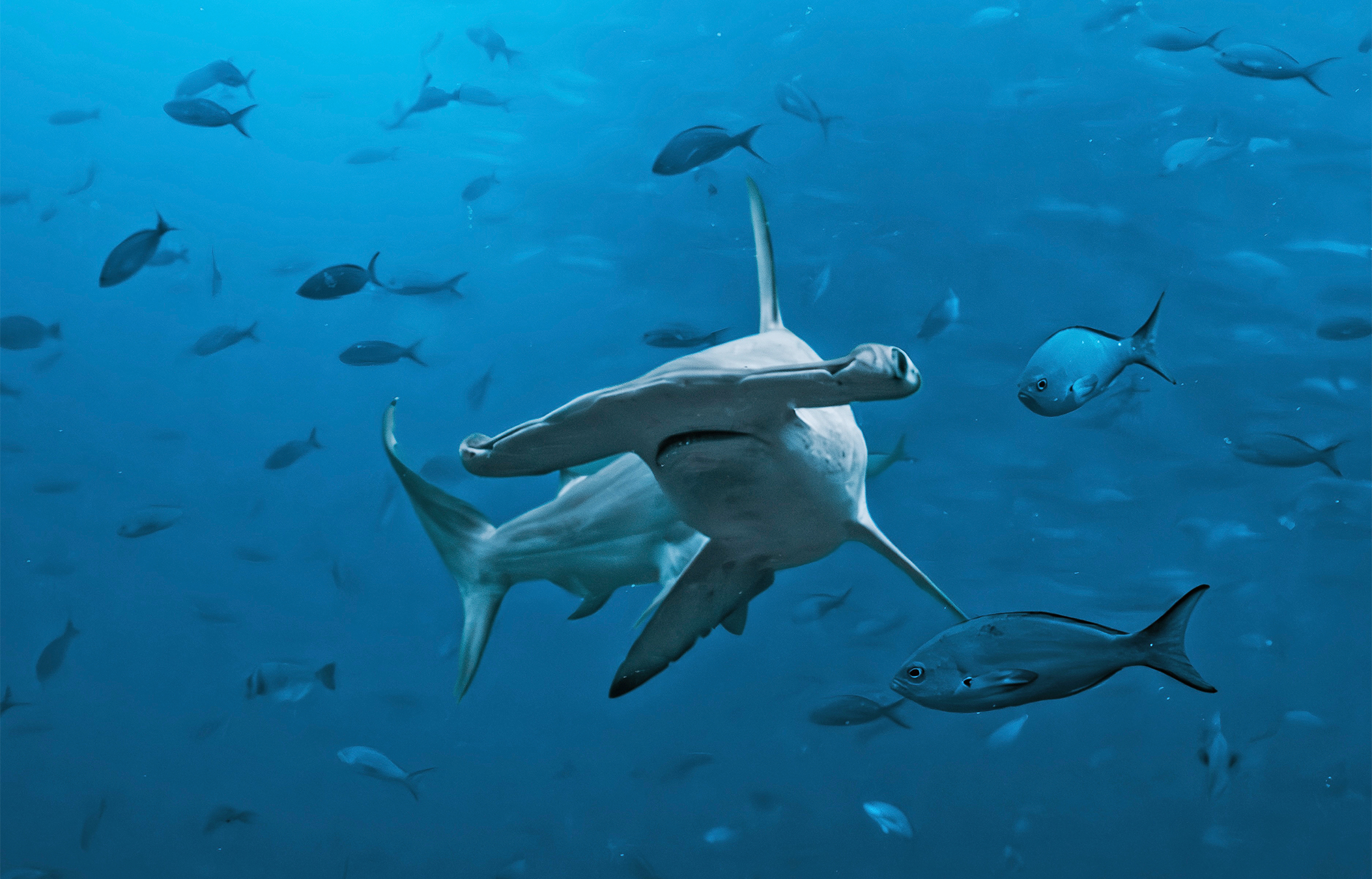
- Research found that threatened species made up 50% of shark catches landed in the Indonesian fishing port of Muncar, highlighting the conservation risks posed by local fishing activities.
- The five most frequently caught shark species are classified as threatened on the IUCN Red List, and subject to stringent export controls.
- Although relatively few vessels used specifically targeted sharks, they accounted for the highest number of catches of threatened shark species.
- Researchers said that effective shark conservation needs to balance ecological protection with ensuring fishers’ livelihoods.
JAKARTA — In Muncar, a busy fishing port on the southeastern coast of Indonesia’s East Java province, sharks can fetch as much as 1.5 million rupiah each, or about $82. However, their value to fishing communities comes at a cost to conservation: Threatened species, including the critically endangered scalloped hammerhead (Sphyrna lewini), made up a substantial share of the sharks landed at Muncar.
A study published earlier this year in the journal Oryx examined shark catches landed in Muncar between 2023 and 2024. Researchers combined catch records with interviews with fishers, landing data, and GPS data to investigate which species were caught, where fishing took place, and which practices posed the greatest risks to threatened species.
The findings revealed a worrying pattern. According to the study, 50% of recorded shark catches comprised species classified as threatened on the Red List of the IUCN, the global wildlife conservation authority. A third of species were listed on CITES, which regulates the global trade in protected wildlife.
Scalloped hammerheads accounted for 11.7% of recorded catches. Other frequently caught species included the silky shark (Carcharhinus falciformis), spinner shark (Carcharhinus brevipinna), and blacktip reef shark (Carcharhinus melanopterus), all listed as vulnerable on the IUCN Red List; and the pelagic thresher shark (Alopias pelagicus), listed as endangered. All five species appear in CITES Appendix II, which means their international trade is highly restricted.
In an interview with Mongabay, corresponding author Osmaleli, a lecturer and researcher at the Bogor Institute of Agriculture (IPB), just outside Jakarta, said the study focused on how sharks were caught, whether as target species or unintentionally alongside other fish, a practice known as bycatch.
Bycatch piles even greater pressure on shark populations already threatened with extinction, she said. “Sharks are predators, so they play an important role in maintaining the balance of marine ecosystems,” she said.
The use of longlines — kilometers-long lines of baited hooks — emerged as a particular concern in the study.
Only 14 of the 127 fishing vessels that researchers recorded operating from Muncar deployed longlines. Specializing in shark fishing, these vessels were bigger than the rest, which targeted mainly other fish such as tuna and marlin and caught sharks as bycatch. They also operated across a wider region and accounted for the highest number of threatened shark catches landed at Muncar.
Indonesia, whose waters are home to 117 shark species, is the world’s top shark-fishing nation. Demand for shark products comes not only from the domestic market but also overseas markets, including Hong Kong, Taiwan, China, and Singapore.
Most of Indonesia’s shark fisheries are small-scale and based in poor coastal communities like Muncar. Other scholars who did similar research at other fishing villages have urged the government to regulate shark fisheries to better protect shark and ray populations.
Shark fishing has been passed down through the generations in Muncar, part of the area’s long-standing fishing tradition, Osmaleli said. Shark meat is usually consumed locally, while fins and other products that have commercial value are sold to traders.

Financial incentives
Osmaleli said the researchers were interested in finding ways to protect the animals without undermining the fishers’ livelihoods. Simply asking fishers to stop catching sharks does little to address the economic pressure, said study co-author Muhammad Ghozaly Salim, also known as Egin, who leads the Mobula Project Indonesia, a local NGO involved in the study.
He told Mongabay that some fishers owed debts to fish traders, making it harder for them to give up sharks as a source of income.
One approach tested by the researchers was to offer financial incentives for releasing sharks caught as bycatch. From February to September 2025, they paid fishers compensation for releasing live sharks, with payments based on the sharks’ market value.
CCTV cameras installed on fishing vessels allowed the researchers to verify that sharks had been released alive back into the sea.
However, there were few successful releases; once a shark is hauled aboard, according to Osmaleli, it can quickly die.
The approach is similar to research conducted in a fishing community on Alor Island, in eastern Indonesia. According to that 2025 study, “livelihood interventions can create win-win situations for conservation and people, provided they are designed according to local needs, interests, institutions and the broader socio-economic context.”

The financial scheme in Muncar ended with the conclusion of the research funding period, leaving questions about the best way to encourage fishers to reduce or stop catching threatened sharks.
Egin said data collection and monitoring are essential first steps in developing effective conservation measures. “From there, we can begin researching how best to protect sharks,” he said.
Osmaleli agreed, saying: “This is just the beginning.” Future research will focus on examining the social and economic factors behind shark fishing, including fishers’ perceptions of threatened species and how shark catches contribute to their livelihoods.
Banner image: Scalloped hammerheads accounted for 11.7% of recorded catches in Muncar, a fishing port in Indonesia’s East Java province. Image by Noemi Merz / Ocean Image Bank.
Clock ticks on Indonesia shark skinners as predator population plunges
Citations:
Osmaleli, O., Booth, H., Adrianto, L., Kusumastanto, T., Yulianto, G., Fahmi, F., … Tawang, F. (2026). Ecological insights to inform management of shark catches in Muncar, Indonesia. Oryx, 1-12. doi:10.1017/s0030605325102160
Yulianto, I., Booth, H., Ningtias, P., Kartawijaya, T., Santos, J., Sarmintohadi, … Hammer, C. (2018). Practical measures for sustainable shark fisheries: Lessons learned from an Indonesian targeted shark fishery. PLOS ONE, 13(11), e0206437. doi:10.1371/journal.pone.0206437
Shidqi, R. A., Sari, D. R., Alopen, J., Bang, Y. M., Arianto, I., Kopong, P. N. S., … Booth, H. (2025). Designing and evaluating alternative livelihoods for shark conservation: A case study on thresher sharks in Alor Island, Indonesia. Oryx, 59(1), 19-30. doi:10.1017/S0030605324001376
Cite this article
Annisa Dinulislam (2026). Threatened species make up half of shark catches at Indonesian fishing port, study finds. Mongabay Conservation news. DOI: https://doi.org/10.66709/news-336323

