


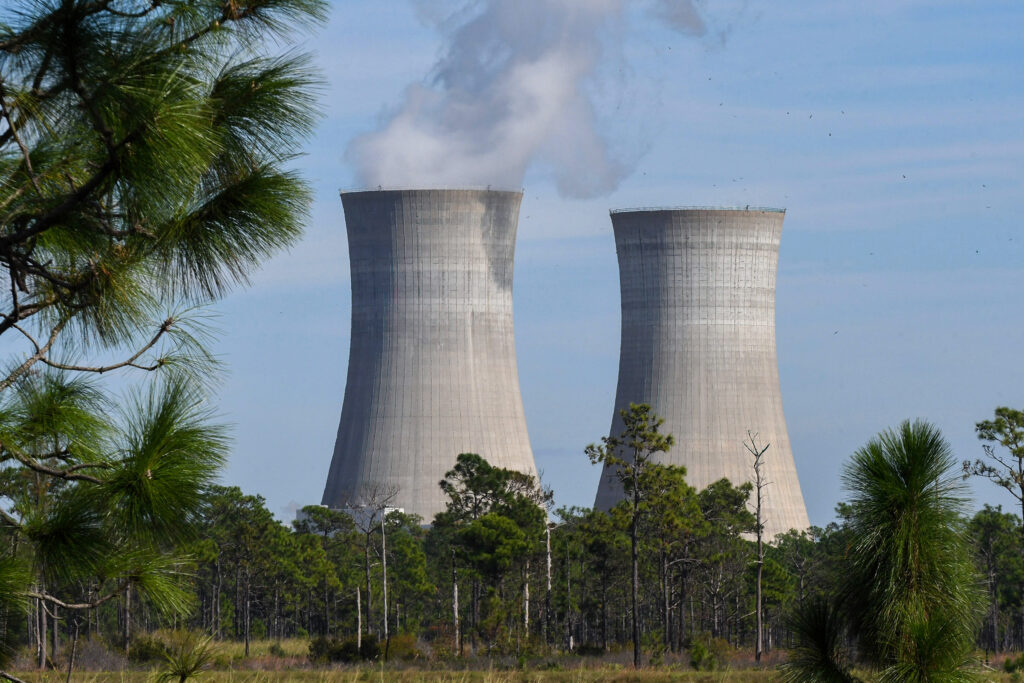
A series of consecutive federal emergency orders that have kept a Florida coal plant running beyond its scheduled retirement have come at a cost to ratepayers of some $25.6 million, according to a new analysis.
The Stanton Energy Center in Orlando is one of six power-generating facilities nationwide where the Trump administration ordered the reversal of plans to wind down coal plants. Together the orders have cost ratepayers some $593 million, according to the analysis by the Environmental Defense Fund.
The group said the orders were issued under a law designed for temporary emergencies such as weather events, but the Trump administration repeatedly has renewed the orders. In Florida, the Orlando Utilities Commission had planned to move one of two coal-fired plants at Stanton into a state of “extended cold shutdown” by the end of May 2026, as part of a plan to transition to renewable energy and achieve net zero emissions by 2050.
The Department of Energy issued an initial order to keep the plant running in June and another in September that expires Nov. 30. OUC is the state’s second-largest municipal utility, serving more than 288,000 customers in Orange and Osceola counties in central Florida.
“If they stay true to form then they’re going to issue another order,” said Bradley Marshall, senior attorney at Earthjustice, which filed a legal challenge against the Trump administration over the situation at Stanton.
“We know that a lot of these coal plants were due to be retired for a reason. They simply weren’t economic to run anymore,” he said. “When you unexpectedly have to keep a plant running that you were planning to retire, and you don’t need to keep it running for any kind of reliability purpose but because the Trump administration has told you to keep it running, it shouldn’t be surprising there are a lot of economic costs associated with that.”
The Department of Energy has attributed an energy emergency in Florida to a shortage of facilities and anticipated growing demand related to a burgeoning data center industry in the state. The agency also noted a February cold snap that strained OUC’s resources.
“Radical climate activists will say anything to further their anti-energy agenda. The Trump Administration’s actions—including saving six coal-fired plants, preserving more than 17 gigawatts of coal power from retirement, and unleashing backup power generation—likely saved hundreds of American lives during peak demand periods,” a Department of Energy spokesperson told Inside Climate News.
“The Energy Department remains committed to ensuring reliable power generation is available for American families and businesses, unlike past Democrat leaders, whose energy subtraction policies threatened grid reliability, especially during periods of peak demand.”
The Environmental Defense Fund said the coal plant at Stanton, along with the others under emergency orders, are not cost-competitive with clean energy sources. OUC’s financial reports show coal in recent years has been its most expensive fuel per megawatt-hour. The group, which is involved in the same legal challenge with Earthjustice, estimated that keeping the plant running would cost about $6.2 million a month.
Ted Kelly, director and lead counsel specializing in clean energy at the Environmental Defense Fund, said the Trump administration has been issuing the emergency orders as the coal plants are scheduled to retire, and that Stanton was next on the list, so to speak. He said one reason for the higher costs was that all of the coal plants under emergency orders are older.
“They’re all more than 20 years old, and so in general as plants get older they have more problems,” he said. “Coal just is a costly resource.”
This story is funded by readers like you.
Our nonprofit newsroom provides award-winning climate coverage free of charge and advertising. We rely on donations from readers like you to keep going. Please donate now to support our work.
OUC noted, in response to an inquiry from Inside Climate News, that its board in December will consider a proposed fuel rate decrease that would save customers about $5 each monthly, or $3.3 million total. If approved, the new rate would take effect in April 2027.
“Claims regarding the operating costs of Stanton Unit 1 are based on assumptions that do not reflect the comprehensive analysis OUC regularly undergoes to balance reliability, affordability, and sustainability,” a representative for the utility said in a statement provided to Inside Climate News.
The utility said its own analysis found that “adding new solar and energy storage while enhancing fuel flexibility at Stanton Units 1 and 2 is a more cost-effective option than building new fossil-based generation resources in the near term and/or converting the units strictly to 100% natural gas. This fuel flexibility also helps maintain affordable and reliable electric service while protecting customers from fuel market volatility. The recommended portfolio balances affordability, reliability, sustainability, and resiliency while achieving OUC’s CO2 reduction goals of 50% by 2030 and 75% by 2040.”
The Environmental Defense Fund, Sierra Club and Earthjustice, on behalf of Florida Rising, a grassroots group representing communities of color, filed the legal challenge in July asking the Department of Energy to reconsider the order in Florida. The groups argued the order failed to show that an emergency actually exists, exceeded the agency’s statutory authority and violated the National Environmental Policy Act.
The groups also said continuing to operate the coal plant would increase air pollution that is harmful to those living around the facility. It also would lead to higher energy costs for Floridians, further burdening underserved communities that especially are vulnerable to hotter temperatures, rising seas and more damaging storms as the global climate warms. The Trump administration faces similar challenges over the emergency orders in the other states.
In Michigan, the Trump administration issued a seventh consecutive emergency order Nov. 13 to extend operations at the J.H. Campbell Generating Plant, even after the U.S. Court of Appeals for the District of Columbia Circuit found in September there was no emergency to warrant the order and that the order exceeded the Department of Energy’s authority.
“We already have some of the highest bills in the nation so we should be doing all we can to lower those bills,” Marshall said of energy costs in Florida. “It’s just making things worse when we should be trying to make things better.”
About This Story
Perhaps you noticed: This story, like all the news we publish, is free to read. That’s because Inside Climate News is a 501c3 nonprofit organization. We do not charge a subscription fee, lock our news behind a paywall, or clutter our website with ads. We make our news on climate and the environment freely available to you and anyone who wants it.
That’s not all. We also share our news for free with scores of other media organizations around the country. Many of them can’t afford to do environmental journalism of their own. We’ve built bureaus from coast to coast to report local stories, collaborate with local newsrooms and co-publish articles so that this vital work is shared as widely as possible.
Two of us launched ICN in 2007. Six years later we earned a Pulitzer Prize for National Reporting, and now we run the oldest and largest dedicated climate newsroom in the nation. We tell the story in all its complexity. We hold polluters accountable. We expose environmental injustice. We debunk misinformation. We scrutinize solutions and inspire action.
Donations from readers like you fund every aspect of what we do. If you don’t already, will you support our ongoing work, our reporting on the biggest crisis facing our planet, and help us reach even more readers in more places?
Please take a moment to make a tax-deductible donation. Every one of them makes a difference.
Thank you,
