


Climate negotiators head to Turkey next month for the United Nations annual climate summit, just two months after an alarming U.N. report said the world has a vanishing chance of limiting global warming to safe levels.
The report’s projections will likely ripple through discussions at the event, known as the Conference of the Parties or COP, including one of its more urgent messages: In order to bring planet-warming gases under control, countries have to slash methane pollution, fast.
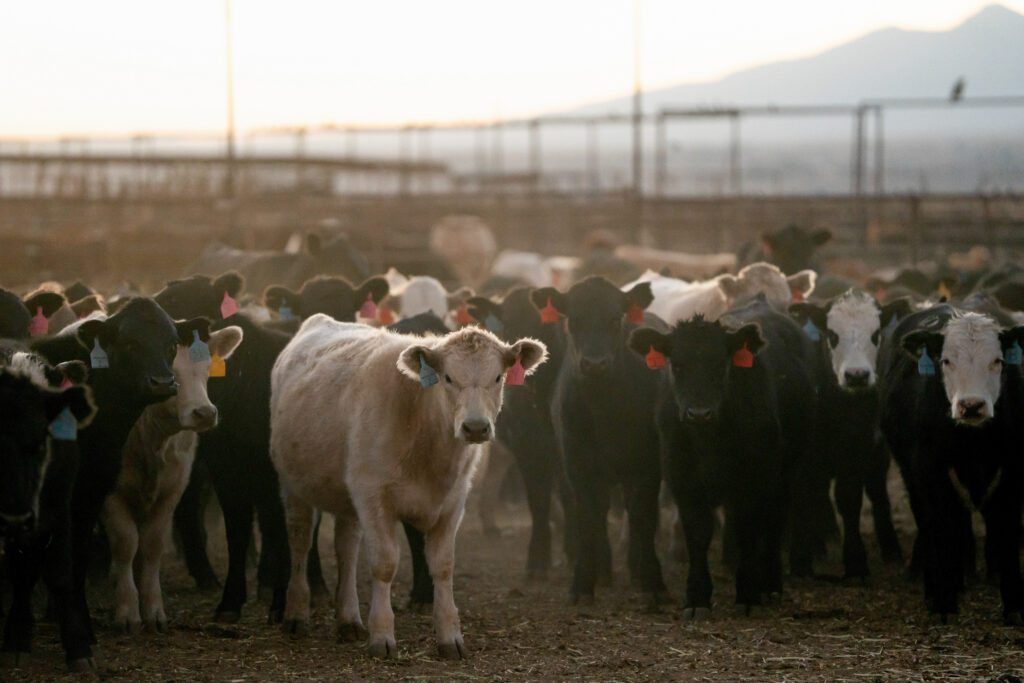
Because methane is more powerful over a shorter period of time than carbon dioxide—about 80 times more over 20 years—cutting methane emissions represents an expedient way to claw the world back from its current trajectory. But measuring methane, especially from livestock, its primary human-caused source, continues to stir controversy. Two new reports on methane say measurements of the gas are being manipulated and underestimated.
In a new analysis published Oct. 29 and commissioned by Greenpeace International, researchers dive into a method for measuring methane known as “global warming potential*,” or GWP*. Their findings underscore the concerns of many scientists who have said that if rich, livestock-heavy countries use GWP* to measure their livestock emissions, they can continue emitting vast quantities of methane and misrepresent the total emissions in reporting their progress toward global climate goals.
“Proponents of GWP* will tell you methane is part of the natural carbon cycle, we just need to keep it stable,” said Sophie Nodzenski, a campaigner with Greenpeace. “We argue that methane levels are already too high. Methane is the climate emergency brake. It disappears so quickly from the atmosphere and is so warming—if we acted on methane right now, we could see results within the next 15 years.”
Under the UN Framework Convention on Climate Change, greenhouse gas measurements have been standardized as carbon dioxide equivalents, based on their GWP, typically over 20- and 100-year time frames (GWP20 and GWP100, respectively). This has helped make different greenhouse gases more comparable.
Carbon dioxide, the most abundant greenhouse gas, persists and accumulates in the atmosphere over centuries. But because methane’s impact is speedy and brief, causing an initial burst of warming and then degrading after about 12 years, scientists have argued that GWP100 doesn’t accurately reflect its warming power.
About 10 years ago, scientists at the University of Oxford developed GWP*, in which emission rates of methane and other short-lived climate pollutants are equated to single pulses of carbon dioxide. This measurement reflects that methane doesn’t have the same cumulative effect as carbon dioxide and also that the methane emitted from cow belches originates from vegetation that originally removed carbon dioxide from the atmosphere. It assumes a steady climb in emissions won’t cause additional warming because methane degrades relatively quickly while methane sinks—mostly involving molecular processes that naturally break down the gas —mean emissions can remain stable.
Climate scientists say the science underpinning GWP* is legitimate and represents another tool to more accurately understand planet-warming emissions and how they behave. They worry, however, that the method is being used to justify weakening efforts to cut emissions from livestock and have warned against using it to measure emissions, especially as the livestock industry, including in the United States, has embraced it.
The industry has called for a “split gas approach,” underpinned by GWP*, to “better reflect the distinct warming behaviours of long- and short-lived GHGs.”
Industry groups did not respond to requests for comment from Inside Climate News.
But earlier this year, 42 prominent climate scientists warned that using GWP* threatens to undercut essential methane reductions because its calculation allows industries or countries to set “no additional warming” targets. That effort followed an open letter to New Zealand Prime Minister Christopher Luxon, also signed by top climate scientists and bearing the same warning.
Last year, New Zealand, where the economically critical livestock industry accounts for nearly half the country’s greenhouse gas emissions, became the first country to set a “no additional warming” target based on GWP* accounting principles.
But critics and the new Greenpeace report say that applying GWP* to reflect progress toward the global climate goals enshrined in the Paris Agreement is potentially deceptive. They maintain it allows countries with historically high methane emissions to claim major reductions even for minor cuts, and in some cases report “negative emissions,” “climate neutrality” or “no additional warming.”
This story is funded by readers like you.
Our nonprofit newsroom provides award-winning climate coverage free of charge and advertising. We rely on donations from readers like you to keep going. Please donate now to support our work.
The new report analyzes the top 10 livestock-exporting countries that also committed to cutting methane emissions 30 percent by 2030 via the Global Methane Pledge and compared how their emissions reporting would look with both GWP100 and GWP*.
The report, based on modeling by the consultancy group Cerulogy, finds that these countries, which include two beef powerhouses, Brazil and the U.S., could cut actual methane by just 0.6 percent in 2030 compared to their 2020 emissions, yet report a 30 percent reduction under GWP*.
“As long as you are not causing more warming than your very recent baseline, you’re essentially fine,” Nodzenski said. “This is why it benefits high livestock producers. If they take a recent baseline, all they need to do is keep their emission level sort of stable.”
The analysis found that if these bigger, livestock-heavy countries reduced actual methane emissions by 30 percent, in order to meet the Global Methane Pledge, they would need to collectively cut the equivalent of 640 million metric tons of carbon dioxide emissions in 2030.
But using GWP*, they could claim 898 million metric tons of “negative” carbon dioxide emissions. The warming caused by the remaining 70 percent of methane emissions would equal 640 million metric tons under GWP100. When combined with the “negative” emissions, this results in a difference of 1,538 million metric tons of carbon dioxide between the GWP100 metric and the GWP*.
“This bookkeeping trick wipes away real-world climate-heating gases, creating a massive 1,538 million metric [ton] gap between reported figures under GWP* and atmospheric reality in a single year,” the report says, noting that amount exceeds Indonesia’s total greenhouse gas emissions in 2025 or the annual tailpipe emissions from about 780 million vehicles.
In the U.S., the report found, the livestock industry could claim 218 metric tons of negative carbon dioxide emissions, when the industry would actually still emit 178 million metric tons in 2030. The gap between these numbers is equivalent to the annual emissions of about 86 million cars.
“We’ve seen this playbook from the fossil fuel industry. We’ve seen it from Big Tobacco,” said Jennifer Molidor, a campaigner with the Center for Biological Diversity. “It’s creative accounting and fuzzy math, with this difficult concept people trip over.”
Molidor and researchers from the University of California, Los Angeles, recently did their own analysis of livestock emissions and methane metrics. In a study published Oct. 11 in the journal Frontiers in Sustainable Food Systems, they note that the Intergovernmental Panel on Climate Change uses both GWP20 and GWP100, but that GWP100 is most commonly used in analyses of the emissions impacts of food.
When they applied GWP20 across 16 food categories and 222 food items, comparing it with GWP100, they found that livestock-based foods, beef in particular, produced much higher emissions.
“Over 100 years you’re basically averaging out the really high potency of methane,” said Jennifer Jay, one of the paper’s authors.
Using the GWP100 metric, they found that beef-based meals produced about 3,500 grams of carbon dioxide equivalent. Using GWP20, those same meals were determined to have produced more than 7,000 grams of carbon dioxide equivalent. Most other foods they looked at were determined to have about the same emissions impact, whether the researchers applied GWP20 or GWP100.
The researchers say this significant difference suggests that policy makers and climate negotiators should depend on more than one metric in analyzing the climate impact of the world’s eating patterns.
“As far as personal changes and institutional changes, it’s really important to have quantitative data,” Jay said. “It’s really important to tell people that there are real serious differences between beef and other sources of protein.”
About This Story
Perhaps you noticed: This story, like all the news we publish, is free to read. That’s because Inside Climate News is a 501c3 nonprofit organization. We do not charge a subscription fee, lock our news behind a paywall, or clutter our website with ads. We make our news on climate and the environment freely available to you and anyone who wants it.
That’s not all. We also share our news for free with scores of other media organizations around the country. Many of them can’t afford to do environmental journalism of their own. We’ve built bureaus from coast to coast to report local stories, collaborate with local newsrooms and co-publish articles so that this vital work is shared as widely as possible.
Two of us launched ICN in 2007. Six years later we earned a Pulitzer Prize for National Reporting, and now we run the oldest and largest dedicated climate newsroom in the nation. We tell the story in all its complexity. We hold polluters accountable. We expose environmental injustice. We debunk misinformation. We scrutinize solutions and inspire action.
Donations from readers like you fund every aspect of what we do. If you don’t already, will you support our ongoing work, our reporting on the biggest crisis facing our planet, and help us reach even more readers in more places?
Please take a moment to make a tax-deductible donation. Every one of them makes a difference.
Thank you,
