


Eric Pratt, a Republican congressional candidate in Minnesota, uses his campaign website to push the “Pratt Playbook,” a three-point plan to reduce prices, increase accountability and emphasize “common sense.”
But, at least for a brief while, his online pitch to voters also included an unusual passage. “The President is not popular,” it read, “so all messaging should be focused on local politics and needs.”
The odd sentence was a sign that artificial intelligence tools had been used to write parts of his website. A staffer had apparently asked an A.I. chatbot to steer clear of President Trump in its writing. (Mr. Pratt said in a statement posted to Facebook that the passage was “an internal note” and that his campaign had used A.I. tools to “clean up the wording.”)
It was one example among hundreds identified by The New York Times in which candidate biographies and position papers were apparently written with A.I. tools.
A.I. has increasingly seeped into all parts of the nation’s electoral process, rewriting the playbook for how politicians connect with voters. Money-strapped campaigns, eager for shortcuts, have rapidly adopted several A.I. tools, even though many of the candidates have not spoken publicly about their use.
“If it improves the quality of campaign information” for voters seeking information about candidates, “that can be a good thing,” said Lisa Argyle, an associate professor of political science at Purdue University, who studies generative A.I. and political communication. The problem arises when candidates begin prompting A.I. “without really reflecting in a meaningful way on their own views and what they want to do as a representative.”
Chatbots, like OpenAI’s ChatGPT and Google’s Gemini, are capable of writing glistening prose almost instantly, after being provided with a set of simple instructions, called prompts. When producing their own text, they have a tendency to drift toward the most likely writing styles — and often the most predictable or clichéd.
To identify campaign sites produced with A.I., The Times downloaded text from the websites of 695 candidates running for House and Senate. That content was then analyzed by two A.I.-text detectors: Pangram and GPTZero. Both services can make errors and can be fooled if writers significantly rework A.I. generated text. But a 2025 study from the University of Chicago found that with the most common types of online writing, Pangram was accurate more than 99 percent of the time, with GPTZero not far behind.
The detectors found there was high likelihood that 291 candidate websites were written with A.I. tools. One hundred fifty had pages flagged as generated by A.I., while the detectors found the remaining sites were a mix of human and A.I. writing.
The A.I. detectors work by detecting subtle linguistic patterns like character frequency, word order and rhythm — all signs that are often imperceptible to humans and difficult for politicians to replicate by accident. That makes the tools less likely to falsely identify mere clichéd writing, which is common in campaign writing, as A.I.-made.
Many passages across the websites used telltale signs of A.I. writing. The systems, trained on billions of passages of text from across the internet, tend to repeat phrases and writing styles that were eventually identified by A.I. watchdogs.
“The cost of living isn’t just ‘high’,” Stephanie Vargas, a Republican House candidate in California, said on her platform page, which was flagged as A.I.-written by detectors. “It’s being driven up by government spending.”
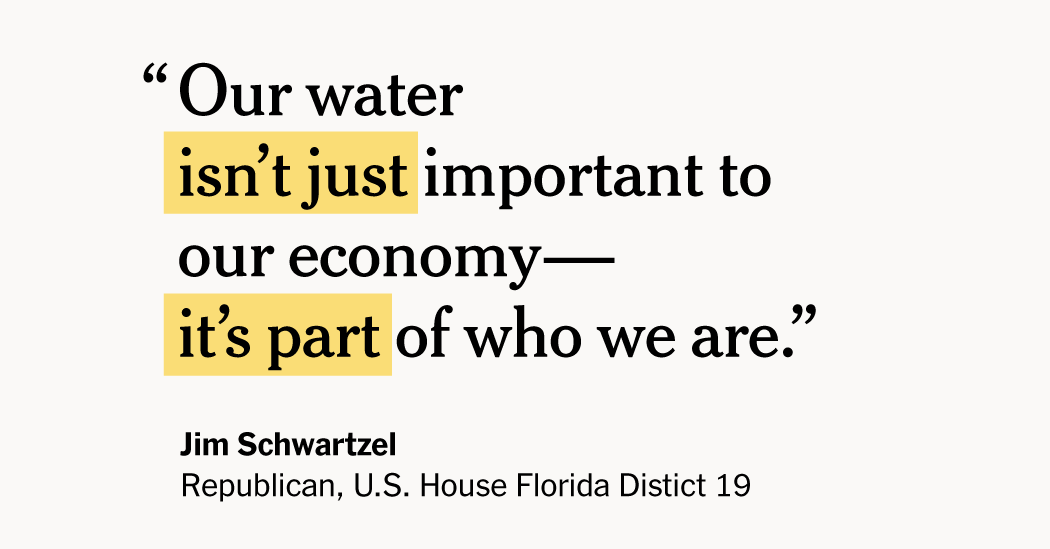
That kind of passage — a phrase that includes the words “isn’t just,” followed by a phrase beginning with “it’s” — was repeated across dozens of campaign websites flagged as having A.I. text, including these:
-
From Ray Pooley, a Democratic House candidate in Michigan: “True strength isn’t just a mighty military. It’s the wisdom to know when to use it.”
-
From Patrick Halpin, a Democratic House candidate in New York: “Long Island’s environment isn’t just something we enjoy. It’s what makes this a great place to live.”
The tools identified each of those websites as having been heavily if not entirely written by A.I. tools.
“A.I. has allowed me to be able to run a campaign effectively,” said Dale Pabst, the campaign manager for Mr. Halpin, who is running against Andrew Garbarino, a well-funded Republican incumbent. “It allows us to compete with another campaign that has a 20-time financial advantage over us.” He said that he pulled together Mr. Halpin’s platform webpage in a few days using A.I. tools, instead of a couple of weeks.
The other campaigns did not respond to requests for comment.
While more than 30 states have laws requiring disclosures around A.I.-generated content in campaign ads, such regulations tend to focus on deceptive replicas of candidates, known as “deepfakes.” There are no laws requiring A.I.-written text to be disclosed.
Political operatives have adopted A.I. in a variety of ways this year, seeing the tools as useful for the difficult and monotonous work of campaigning, at least behind the scenes. That includes managing voter databases, writing campaign messages and processing feedback from voters through door-knocking operations nationwide.
Some candidates have also relied on A.I. to help guide their campaigns, turning to chatbots as a cheap form of campaign manager.
But the integration of A.I. in campaigns also threatens to send conflicting messages to voters, especially as lawmakers push for more A.I. regulations and fight plans for enormous data centers that make A.I. possible.
Many of the campaigns flagged for having A.I. text were congressional races with limited funds and long-shot odds. But some had far more resources.
The A.I. detectors found that the online biography for Ken Paxton, the Republican candidate for Senate in Texas, was heavily written by A.I. His race is one of the most expensive nonpresidential races in U.S. history, with ad spending surpassing $500 million.
“Ken Paxton is a fearless conservative, a relentless fighter, and a true defender of Texas values,” the site said. Pangram assessed the sentence as “100 percent A.I.,” indicating it was fully written by an A.I. model.
A representative Mr. Paxton’s campaign declined to comment.
The campaign website of James Talarico, Mr. Paxton’s Democratic opponent, was also tested for A.I. writing. It received a score of “100 percent human.”
