


- The death of Kavantissa, one of Sri Lanka’s most iconic wild tuskers, sparked widespread public grief, political attention and criticism of wildlife authorities over elephant protection and veterinary care.
- Questions over the treatment provided before his death have prompted calls for an independent, evidence-based investigation, with experts cautioning against drawing conclusions before clinical findings are assessed.
- Sri Lanka recorded 455 wild elephant deaths in 2025, including 79 from gunshot injuries as the primary cause, highlighting the continuing threat posed by human-elephant conflict.
- Kavantissa’s head was separated and buried securely to protect his tusks, but conservationists argued that cremating the entire body would send a stronger message that a living tusker is worth more than its ivory.
COLOMBO – The death of Kavantissa, one of Sri Lanka’s most iconic wild tuskers (Elephas maximus maximus), following a gunshot injury triggered an extraordinary wave of public grief, political attention and criticism of wildlife authorities.The elephant’s final days brought together politicians, Buddhist monks, wildlife enthusiasts and veterinarians in a collective effort to save a giant that had captured the hearts of many Sri Lankans.
A photograph of Sri Lanka’s opposition leader Sajith Premadasa, an ardent elephant enthusiast kissing the elephant’s head went viral on social media as did the environment minister Dhammika Patabendi visiting the elephant amidst heavy rain. Buddhist monks chanted Pirith (traditional Buddhist verses to invoke blessings), while a prominent businessman Dudley Sirisena offered to fund treatment, including a foreign veterinary team being flown in. Former president Mahinda Rajapaksa was among those who paid tribute to the magnificent tusker as well.
Despite the intensive efforts of wildlife veterinarians, Kavantissa suffered cardiac arrest on the evening of Oct. 16.
Senior wildlife veterinary surgeons were present, and one reportedly climbed onto his chest in an attempt to administer cardiopulmonary resuscitation (CPR). Their efforts failed, and the tusker died at around 6:18 p.m.
His death was followed by an outpouring of grief and anger, with many demanding accountability from the Department of Wildlife Conservation (DWC) over the treatment provided and the circumstances surrounding his injury.
Veterinary care under scrutiny
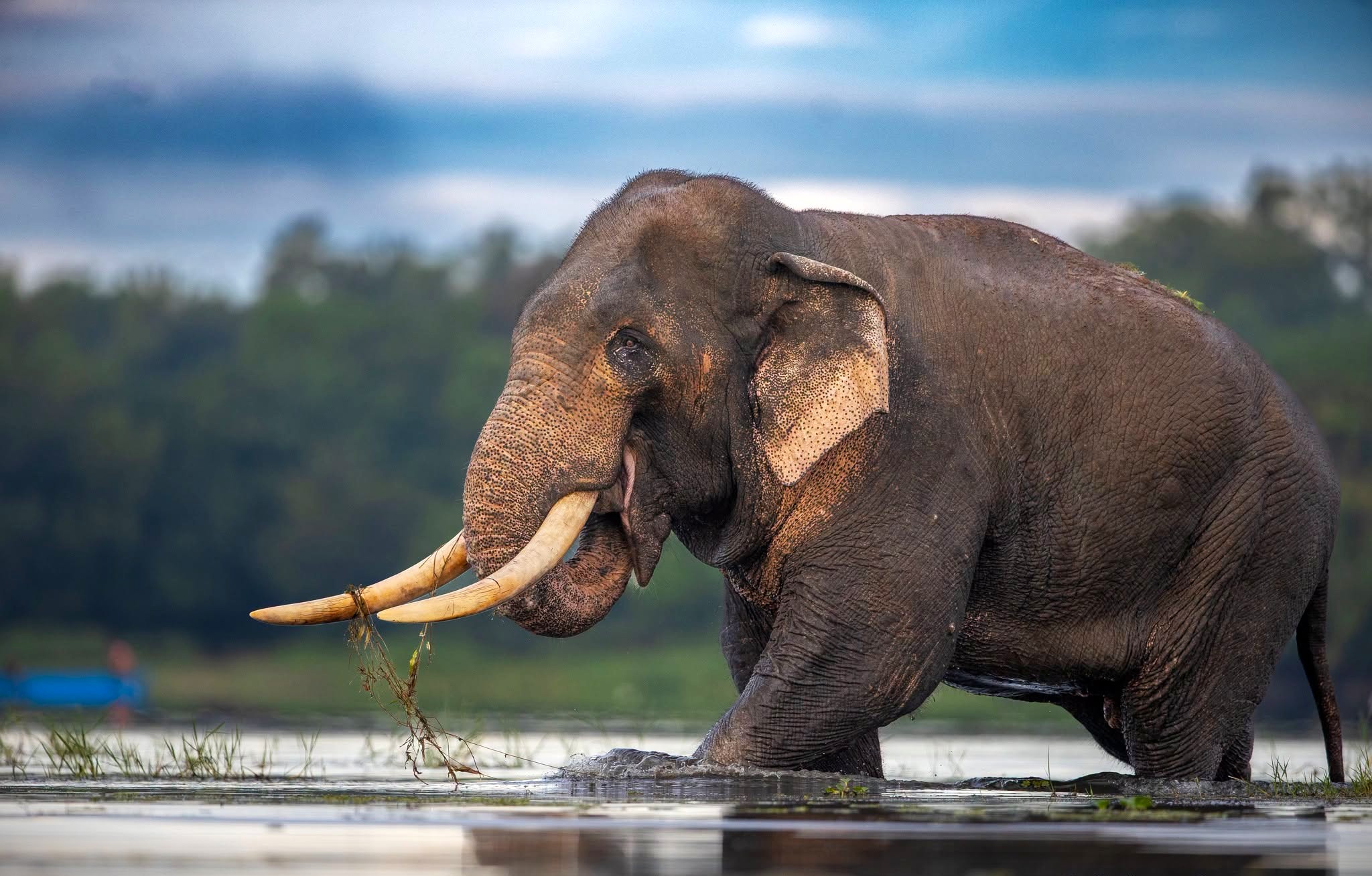
Known for his majestic appearance and gentle demeanor, Kavantissa was a favorite among wildlife photographers, especially when seen crossing busy roads near Galgamuwa in northwestern Sri Lanka alongside elephant herds. He was in musth when the injury was first noticed. He was seen limping on Sept. 22, the DWC began treatment on Sept. 24, initially administering antibiotics by dart and sedating him the following day.

The DWC reported that the elephant was responding well to treatment, but he was not seen again until Oct. 2. Severe diarrhoea was reportedly observed on Oct. 5 and treatment resumed the following day. Kavantissa was later seen submerged in water and had stopped eating. His condition steadily deteriorated, and he fell on Oct. 15 and died the next day.
Social media users questioned whether Kavantissa received appropriate veterinary care, with some alleging negligence and speculating about a possible antibiotic overdose. Videos showing wildlife officers repeatedly darting the injured elephant fueled these concerns even as such allegations require evidence.
Social media trials and a public outcry have rendered authorities defensive and diffident at the same time. Director General of the DWC Ranjan Marasinghe defended the veterinary team, saying the DWC made every effort to save the tusker.

“When an iconic tusker like Kavantissa is injured, our team of veterinarians act together as a team. We also welcome opinions of other senior veterinarians in the country who excel in treating elephants, so it is a planned operation,” Marasinghe told Mongabay.
DWC’s former director of wildlife health Tharaka Prasad called for a scientific assessment based on evidence rather than conclusions drawn from social media speculation.
“The reported history of feeding difficulties, prolonged absence of faeces and subsequent severe diarrhoea raises important clinical questions that must be assessed alongside the elephant’s medical records, treatment history and any post-mortem findings,” he told Mongabay.
The circumstances surrounding Kavantissa’s death have prompted calls for an independent investigation. A court-ordered post-mortem examination is expected to establish the cause of death conclusively, while questions concerning his treatment and the shooting require careful examination.
Call to treat root cause
For Sri Lankan elephant scientist Prithiviraj Fernando who leads the Center for Conservation and Research (CCRSL), the intense public reaction to Kavantissa’s death offers an opportunity to draw attention to a much wider conservation problem.

“From the perspective of its cause of death, there is no difference, as Kavantissa apparently died from a trap gun injury [as per DWC]. So, his death was not caused by the fact that he was an iconic tusker, and in ecological terms, the death of an iconic elephant is no different from that of any other elephant,” Fernando told Mongabay.
He noted that Kavantissa’s iconic status had amplified public attention and emotional responses. That attention, he said, should be used to highlight the human-elephant conflict (HEC) that ultimately led to the tusker’s death.
Sri Lanka continues to lose hundreds of wild elephants annually. Recorded deaths totaled 488 in 2023, around 388 in 2024 and 455 in 2025. Gunshot injuries accounted for 98 deaths in 2023, 84 in 2024 and 79 in 2025. Although the number of recorded shooting deaths has declined, firearms and illegal trap guns remain serious threats. Elephants that survive shootings may also endure severe injuries, infections and prolonged suffering.
The practice of issuing firearms to farmers to protect crops raises further concerns. Crop damage can threaten livelihoods, and farmers’ concerns must be addressed. However, conservationists say greater access to guns risks escalating conflict and increasing harm to elephants.

Fernando also cautioned against the assumption that an iconic tusker can be protected through individual guards or round-the-clock surveillance. Elephants roam across large home ranges, sometimes covering hundreds of square kilometers of dense habitat shared with other elephants. Maintaining constant surveillance of one animal is impractical. For example, guards cannot guarantee that a tusker will avoid a concealed trap gun, he noted.
“Ultimately, the only effective way to protect iconic tuskers, or any other elephant, is to protect elephants in general and address the wider threats they face,” Fernando said.
A tusker worth more than its ivory
Kavantissa’s death has renewed calls for better elephant protection, improved veterinary care and greater accountability. Wildlife enthusiasts staged a protest outside the DWC headquarters, demanding justice for the tusker.

Following religious observances, a ceremony was held in his memory. After the post-mortem examination, the tusker’s head was separated from the body and transported to a secure location to prevent the tusks from being removed, while the remainder of the body was cremated at the site, according to the DWC.
However, Fernando questioned whether retaining the tusks was consistent with the desire to honor and protect the elephant.
The high value placed on ivory, he argued, can increase the risks faced by tuskers. Cremating the entire body, including the tusks, could send a message that ivory has no value once an elephant dies and that the living animal matters far more than its tusks, he said.
Banner Image: Named after an ancient Sinhala king, who ruled southern Sri Lanka in the second century B.C.E., tusker Kavantissa was both majestic and gentle. A towering bull elephant, Kavantissa captured the hearts of Sri Lankans and became a symbol of the nation’s natural heritage. Image courtesy of Sahan Gooneratne.
Cite this article
Malaka Rodrigo (2026). Sri Lanka mourns iconic tusker amid renewed calls to address human-elephant conflict. Mongabay Conservation news. DOI: https://doi.org/10.66709/news-333803

