


Welcome to Foreign Policy’s Africa Brief.
The highlights this week: A new rebel alliance in eastern Congo threatens to drag the rest of the country into war, Mauritius experiences its worst riots in decades, and Egyptian President Abdel Fattah al-Sisi outlines a succession plan.
A new development in the decades-long conflict in the eastern Democratic Republic of the Congo threatens to draw the rest of the country into a wider war.
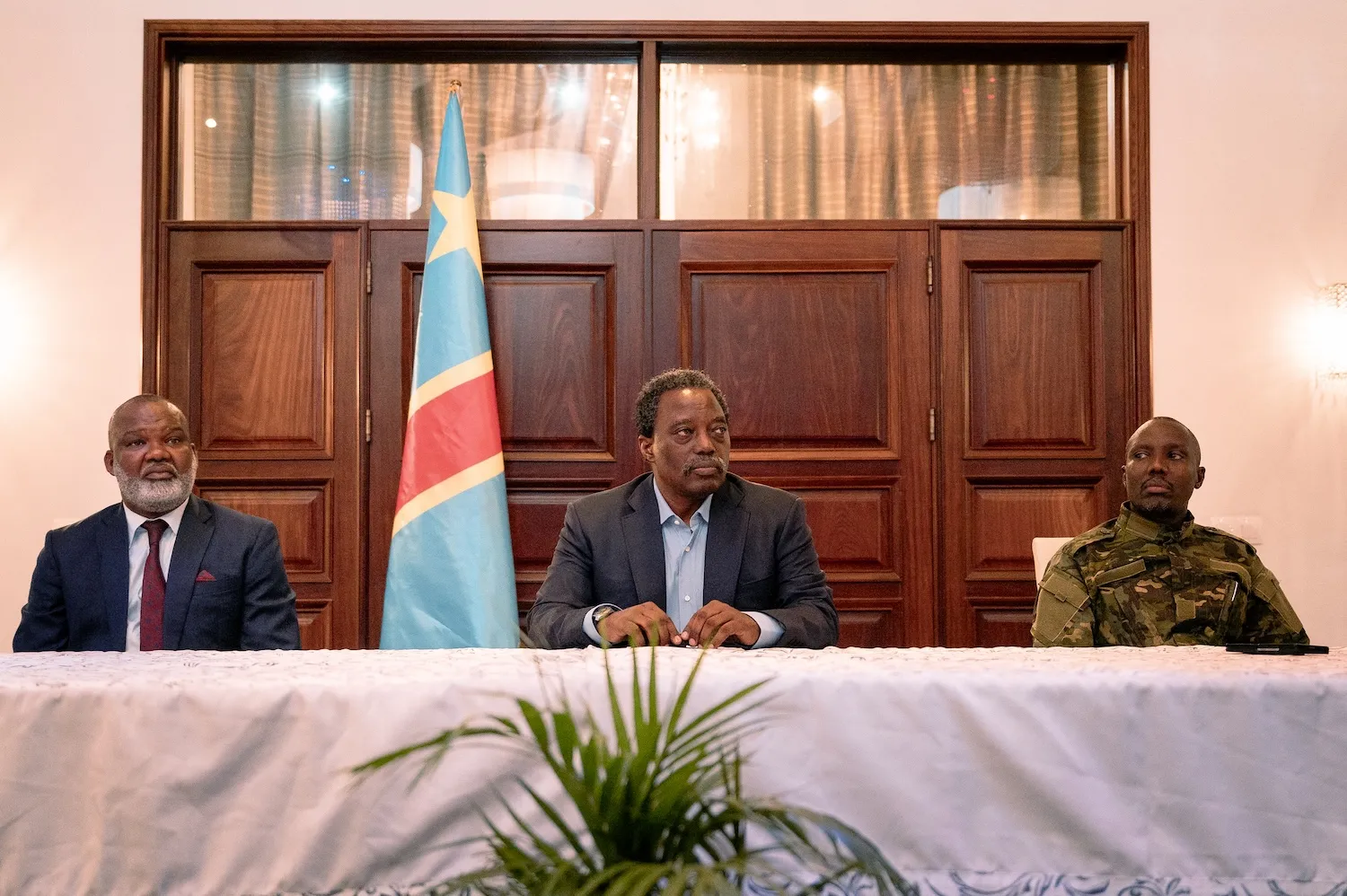
Last week, former President Joseph Kabila, who led Congo from 2001 to 2019, joined an armed coalition that seeks to challenge the current administration “by all means, including force.” Now, some analysts believe that an insurgency that has so far been concentrated in eastern territories could make its way to the capital of Kinshasa in the country’s west.
Kinshasa “now confronts a more formidable opposition: an armed movement with demonstrated military capabilities, led by a former president with extensive political networks,” commentator Samson Kasujja wrote last week in the Great Lakes Eye.
The new coalition, called the Front for the Refoundation of the Nation (FRN), unites militias and opposition figures under one banner. It includes the Rwanda-backed M23 movement, which has controlled vast areas of eastern Congo since 2022, and its broader political coalition, the Congo River Alliance, led by Corneille Nangaa, the former head of the country’s electoral commission.
The FRN’s members have diverse goals. M23, for instance, purports to seek protection—and a greater political voice—for Congo’s minority Tutsi population, which has long faced discrimination. Kabila, meanwhile, likely aims to use his political connections to unseat Congo’s current president, Félix Tshisekedi, his former coalition partner turned rival.
But on a broader level, Congo’s conflict is rooted in competition over land and mineral resources. Congo produces more than 70 percent of the world’s cobalt and is home to deposits of other metals that are essential to the technology and defense industries.
The escalation of the insurgency demonstrates the failure of a so-called peace deal between Rwanda and Congo brokered by the Trump administration last year, whereby the Congolese government agreed to give the United States preferential access to minerals in exchange for U.S. security support, and Rwanda’s Tutsi-led government, in turn, agreed to stop backing the M23 in exchange for private U.S. investment in minerals processing.
If the conflict spreads, it will have a devastating impact on civilian lives and exacerbate an already catastrophic humanitarian crisis marked by sexual violence and the forcible recruitment of child soldiers. Already, the fighting has displaced more than 8 million people.
The Kabila-led coalition is seeking to position itself as a political alternative to Congo’s current administration. Both Kabila and Tshisekedi are the sons of former Congolese political figures. And both have their fair share of domestic critics.
The election that Tshisekedi, whose father was a three-time prime minister of Zaire, won in 2018 was widely disputed. In recent months, he has faced mounting calls to resign over his attempts to implement constitutional reforms that could pave the way for a third presidential term, exceeding the two-term limit. Protests organized by a broad alliance of opposition parties, known as the Article 64 Coalition, took place last month denouncing the move as a constitutional coup.
Tshisekedi’s name has also been linked to a recent corruption scandal. Last week, Belgian police raided the homes of Tshisekedi’s family members and associates in Brussels as part of a money-laundering investigation connected to mining revenues, following a complaint filed last year by a collective of Congolese civil rights groups.
Kabila, meanwhile, did not leave office as a popular figure. He took power in 2001 following the assassination of his father, President Laurent-Désiré Kabila, who also led a Rwanda-backed rebellion in the 1990s to seize power in Kinshasa. Joseph Kabila’s tenure was marked by a clampdown on protests after overstaying his time in office by two years, using a constitutional clause that allowed his government to remain as a caretaker.
By the end of his tenure, one poll found that eight in 10 Congolese people had a negative opinion of Kabila. Overwhelming international pressure saw him become the first leader in Congo’s history to oversee a peaceful handover of power in 2019. Although the two were on good terms when Tshisekedi took office, a Congolese military court sentenced Kabila to death in absentia in September 2025 on charges of treason over claims that he was supporting M23.
Still, with opposition groups under one movement, Kabila could pose a real challenge to Tshisekedi’s government. But questions remain over how long an FRN coalition can last given the disparate aims of those within it and how much influence Kabila can reasonably have over the M23, which reportedly is dealing with its own internal power struggle.
Meanwhile, the latest political scramble has taken focus away from Congo’s Ebola crisis, the fastest-growing on record. Since the outbreak in eastern Congo earlier this year, Ebola has infected nearly 10,000 people and killed more than 4,000. There is still no approved treatment for this latest strain of the virus which has now spread to four other countries.
Wednesday, Oct. 21: South African Finance Minister Enoch Godongwana presents the country’s medium-term budget.
Mauritian protests. Mauritius is experiencing its most violent demonstrations in decades. They began in early October to protest high living costs and water shortages—a result of drought, global warming, and aging infrastructure—but escalated into rioting after police shot and seriously wounded a demonstrator on Oct. 9. Mauritian authorities imposed a curfew last week but lifted it on Monday.
So far, nearly 100 people have been arrested, including 16 minors. Meanwhile, the government is considering lowering the age for detention and prosecution of minors from 14 to 12. The authorities said that protests have been marked by arson and damage to police stations, traffic lights, and CCTV.
EU migrant funding. The European Union has approved an additional 25 million euros (around $29 million) for authorities in eastern Libya to control migration from Africa to the EU, despite reports suggesting that some of those same Libyan officials are linked to people-smuggling networks.
The money, which comes on top of the estimated $247 million that the EU allocated to Libya from 2021 to 2024, will finance border management, search-and-rescue operations, and anti-smuggling efforts in eastern Libya, which is controlled by Gen. Khalifa Haftar’s forces.
More than 30 rights groups issued a joint statement in July opposing greater EU cooperation with both Libya’s U.N.-backed government in Tripoli and the rival Haftar-backed government in Benghazi, citing torture, sexual violence, and forced labor on both sides.
Ethiopia conflict. On Friday, Ethiopia’s federal government appointed a new interim administration for the northern Tigray region after the Tigray People’s Liberation Front (TPLF) withdrew from the region’s capital of Mekelle.
In recent weeks, Ethiopian troops and allied fighters have regained control of towns on Tigray’s northern border with Eritrea from the TPLF, after the TPLF and its allies launched an offensive against the federal government in late September.
Still, the fighting, which is concentrated in the Amhara, Tigray, and Afar regions, has continued, though reporting from the ground is limited. Meanwhile, observers fear the possibility of a border war between Ethiopia and Eritrea, which Addis Ababa accuses of backing the TPLF.
Succession plan. Egyptian President Abdel Fattah al-Sisi has pledged to leave office when his term ends in 2030, after 16 years in power. Under Sisi, the military has played an expanded role in Egyptian affairs, and he has proposed a 30-month military academy to train presidential candidates, which would target Egyptians aged 40 to 50 who hold a university doctorate.
“They will be taught what a state is, what its institutions are, and how to protect it,” Sisi said on Saturday.
Egypt’s military already controls most state institutions, from cement manufacturing to farming and construction, despite the country agreeing to reforms that would see the military relinquish some control as part of its loan program with the International Monetary Fund.
After more than 30 years, Formula 1 is set to return to Africa. Last week, Rwanda announced a 10-year deal to host an annual African Grand Prix from the early 2030s. A new circuit and airport will be built for the event, which will take place in Bugesera, just southeast of the capital of Kigali.
The last Formula 1 race held on the continent was the South African Grand Prix in 1993. Although there has largely been pan-African support for the Rwanda deal, it has faced scrutiny from rights groups such as Amnesty International and Human Rights Watch, which have raised concerns about Rwanda’s poor human rights record and potential “sportswashing.”
South Africa, Morocco, and Nigeria also put in bids to host the event but were ultimately unsuccessful. South African President Cyril Ramaphosa has publicly congratulated his Rwandan counterpart, Paul Kagame, and urged South Africans to celebrate the success of other African nations.
Meanwhile, Gayton McKenzie, South Africa’s sports and culture minister, suggested that Pretoria would campaign for a second race to take place in South Africa. “Italy, a country smaller than South Africa, has two,” McKenzie said. “Now … the whole continent of 54 countries must only have one. What type of thinking is that?”
Literary scandals. This month, Zimbabwean writer Simbarashe Kundizeza won the Caine Prize for African writers for his short story “The Blue Fighter.” Days later, the Atlantic reported that a software had flagged the story as almost completely artificial intelligence-generated, prompting a denial from Kundizeza and pushback by the African literary community.
In Literary Hub, James Folta writes that AI is “muddying” the “cultural waters,” noting that its “omnipresence has introduced doubt about the provenance of any text, and I fear that erosion of trust is going to have an outsized impact on writers from more marginalized backgrounds.”
Meanwhile, in the New York Times, Doyle D. Calhoun notes that nearly all allegations of AI fraud have involved Black and brown writers. “The surveillance of Black writers is more than backlash against the literary world’s recent efforts to open its doors,” he writes. “It is a way for anti-woke activists to say the quiet part out loud: They would prefer that the literary world remain a fortress.”
