


Written by Vandi Verma, Chief Engineer for Robotic Operations at NASA’s Jet Propulsion Laboratory
Oct. 12, 2026
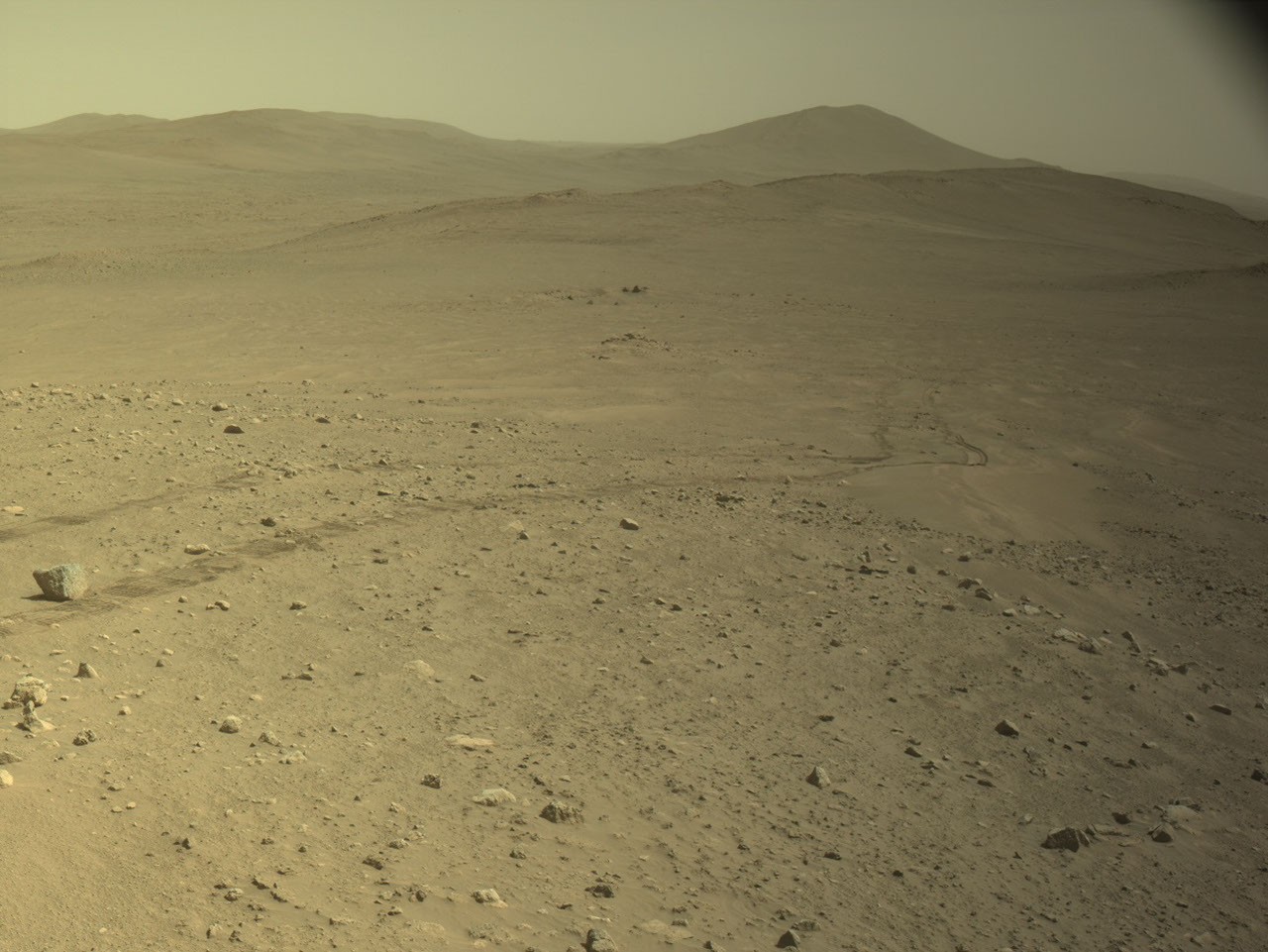
Since the last blog update, Perseverance has achieved a major milestone on Mars. On Sol 2006 (Oct. 11, 2026), its odometer reached 45.22 kilometers (28.10 miles), setting a new record for the farthest distance driven on another celestial body. Its engineering twin here on Earth even received a plaque from Guinness World Records celebrating the achievement.
Two months ago, on Sol 1947, the odometer sat about 200 meters away from the milestone, a distance easily achievable with a single drive using Autonomous Navigation (AutoNav). However, the rover found itself in a very scientifically interesting area and spent time executing short drives to perform rock abrasions and proximity science on ancient rock outcrops. When Perseverance was finally ready to move on to a new site, it sailed past the record.
On its way to the drive record, Perseverance has navigated challenging terrain while also pioneering new ways to drive across the Martian surface. Perseverance’s various encounters with dense boulder fields and steep slopes have pushed the team to re-evaluate driving guidelines so the rover is better prepared to handle tough terrain. After running thousands of simulations, the team raised the rover’s tilt limit to 24 degrees and reduced the clearance required under the rover’s belly pan to 20 centimeters (about 7.9 inches). The team also updated the rover’s braking software to avoid rock hazards, nearly doubled steer motor current limits, updated flight software with “dynamic slip tables” to model expected slip, and used cross-slope driving to better anchor wheels on exposed bedrock.
One of the most exciting updates the team has made is an autonomous drive capability called onboard Global Localization (GBLC). GBLC repurposes the high-speed commercial processor inside the Ingenuity Helicopter Base Station to compare ground and orbital imagery to autonomously locate the rover in global coordinates at the end of a drive (as though we had GPS on a world without it), enabling Perseverance to drive longer distances without human intervention. Unlike Perseverance’s main flight computer, this coprocessor is not hardened against the punishing radiation environment of the Martian surface, where a thin atmosphere and the lack of a global magnetosphere leave little shielding. This radiation can induce “transient bit flips” in memory the software needs to function, and the team developed an effective software-based approach to radiation hardening. Looking forward to the greater demands of longer drives and to planning more activity with fewer resources, the team is also exploring the use of generative SI to help efficiently propose solutions to steer AutoNav along the many legs of a strategic path.
The team is using hard-won lessons from 45 kilometers (more than 28 miles) of driving to reinvent how the rover drives across the Martian surface. As Perseverance climbs higher along the crater rim, the next leap in autonomous exploration on Mars is just getting started.
