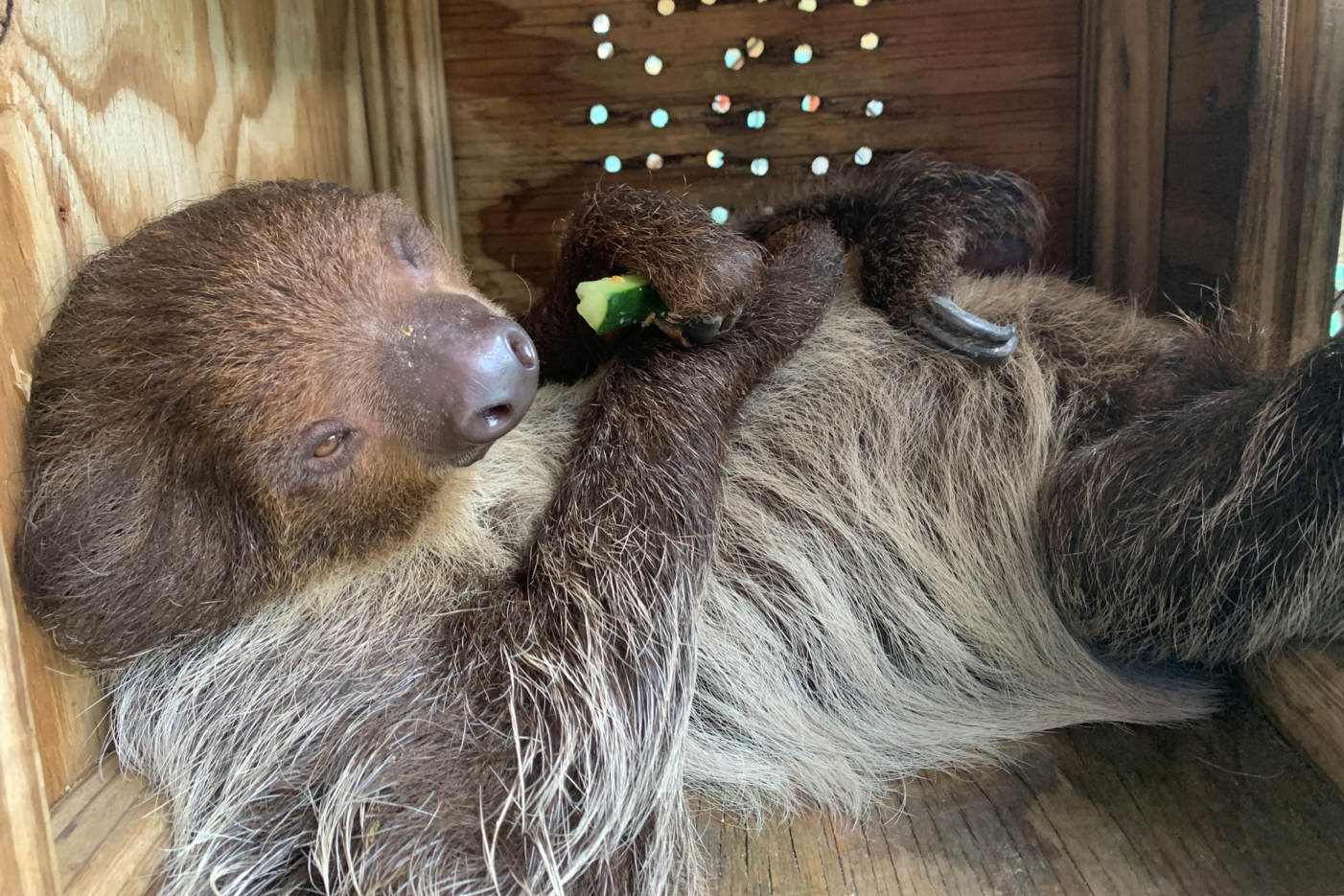
Federal lawmakers want to ban imports of wild sloths to the United States, a move experts say could have global implications for the conservation of the tree-dwelling species.
Maxwell Alejandro Frost (D-Fla.) is set on Tuesday to introduce a bill, co-sponsored by Laurel Lee (R-Fla.), known as the “SLOTHS Act”—Stopping Legalized Organized Trafficking and Harm to Sloths. It’s a reaction to mass sloth deaths at a planned attraction in Orlando.
An Inside Climate News investigation in April revealed that 31 sloths imported from the forests of South America died between late 2024 and early 2025 at the now-shuttered Sloth World, which planned to offer a $49 animal encounter experience along a busy tourist strip.
Additional government records obtained by Inside Climate News show that more than 50 sloths ultimately died—primarily due to stress and illness—at Sloth World. The business never opened to the public.
“It’s really about preventing something like Sloth World from happening again. Because I promise you this: This type of stuff is happening everywhere, all the time,” Frost said in an interview with Inside Climate News. “It’s not just a Florida problem, it’s a national problem.”
Sloth World sparked outrage around the world. Florida regulators quickly imposed a two-month ban on sloth imports into the state and recently proposed new rules to strengthen protections for the animals.
However, a separate Inside Climate News investigation found that Florida regulators were aware of sloth deaths at the facility since at least August 2025 but saw no need to intervene even as the toll climbed. And an investigation from the Orange County Sheriff’s Office concluded that no crime occurred at the facility.
“We haven’t really seen anything of substance happen,” Frost said. Sloth World’s owner “should have been held accountable, and the fact of the matter is, he wasn’t.”
Sloth World owner Benjamin Agresta previously denied that he intentionally mistreated or neglected animals. He also called reports of sloth deaths “completely fiction” just before Inside Climate News published state records confirming dozens had died at his business.
Now, Frost and Lee hope their bill will prevent sloths from ever being put into this situation.
“Nowhere was there a clear cut, obvious prohibition on this type of commercial activity and the commercial capture and sale of sloths, and that’s the number one thing that we really wanted to crack down on,” Lee said in an interview.
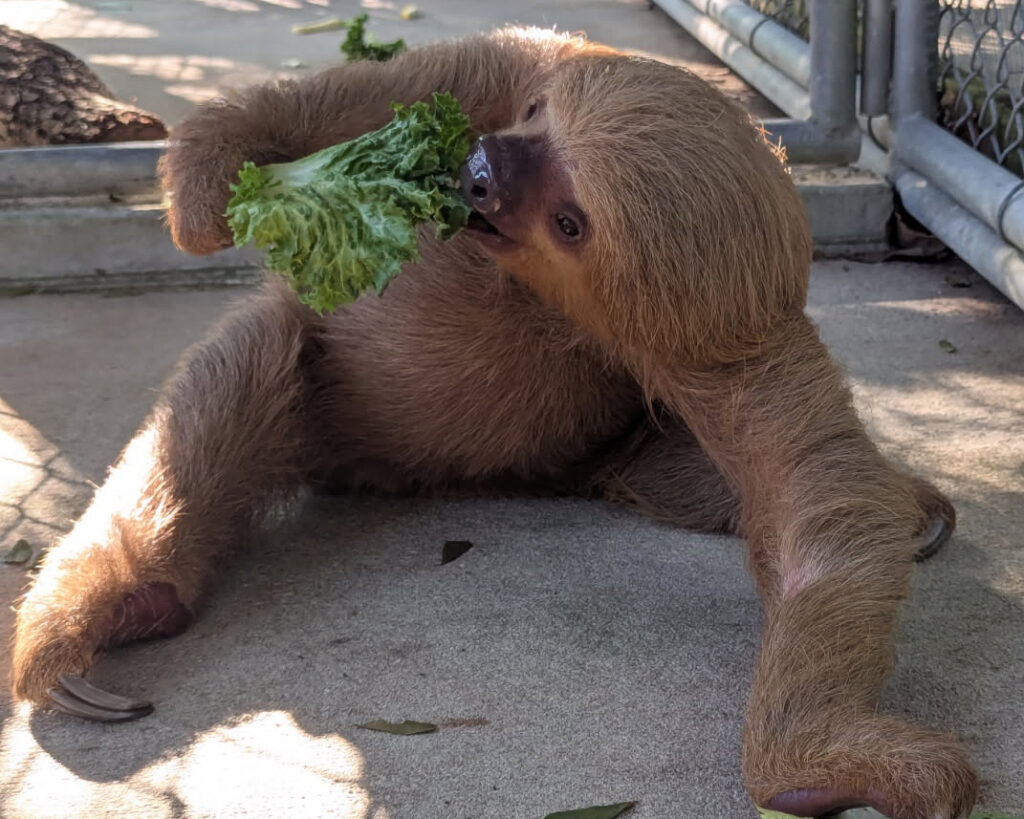
Violators of the proposed law would face steep penalties, including a possible criminal fine of up to $100,000 and loss of federal import licenses. Sloth scientist Rebecca Cliffe and Sam Trull, co-founder of the Costa Rica-based Sloth Institute, worked with lawmakers on the proposal. Both women had called on state and federal authorities to intervene at Sloth World months before Florida officials announced a criminal investigation in May.
Cliffe and Trull said the bill could fundamentally reshape the U.S. roadside zoo and sloth industry because it would effectively cut off the supply of wild sloths to U.S. businesses that market hands-on encounters, photo ops and other exhibits. Only sloths already in captivity, and their offspring, could remain in commercial businesses or zoos. Between 2011 and 2021, people imported more than 1,100 live sloths into the United States, according to federal records.
“If we want to stop this permanently, like really cut off this sort of activity at its knees, then we’ve got to stop the sloths from being brought into the country,” said Cliffe, who is also the founder of The Sloth Conservation Foundation, based in Costa Rica.
She and Trull say the wildlife trade, which removes wild sloths from the tropical rainforests of South and Central America and ships them to zoos and private buyers, including facilities like Sloth World, is inherently cruel. Sloths are deeply sensitive to stress and biologically adapted to mostly solitary life in tree canopies. They lack the typical mammalian flight or fight response, and instead internalize stress, which can ultimately kill them.
Tourists often mistake sloths’ distress for docileness. They’re also psychologically sensitive, with some captive sloths exhibiting what researchers call stereotypic behaviors, such as swaying repeatedly back and forth, similar to the stress behaviors seen in elephants and other zoo animals.
This story is funded by readers like you.
Our nonprofit newsroom provides award-winning climate coverage free of charge and advertising. We rely on donations from readers like you to keep going. Please donate now to support our work.
“They do suffer immensely, both physically and psychologically,” Cliffe said. “People tend to gloss over [psychological suffering] because it’s not measurable, but we know animals feel scared and frightened and confused.”
She and Trull are fighting to end the trade on a global scale—starting with the United States.
“It’s really the only way to stop the suffering of sloths in places like Sloth World or other roadside zoos,” Trull said. “We can’t rely on people just not going to these places. … The only way to really stop the suffering is legislation.”
The bill, Trull added, has the potential to act as model legislation for other countries.
The bill includes narrow carve-outs. Under an exception for zoos accredited by the Association of Zoos and Aquariums, facilities could exchange already captive sloths—such as between a U.S. and German zoo—to prevent inbreeding.
A second exception would permit importation of biological samples—such as skin scrapings—for research, but not live animals, so that scientific collaborations aimed at conserving wild sloths can continue.
“We wouldn’t want the import ban to stop important work that’s actually helping sloths in the wild,” Cliffe said.
Alice Hughes, a professor at the University of Melbourne who studies wildlife imports and exports, said there’s substantial, underregulated legal trade of exotic animals. She thinks the bill is unlikely to curb the sloth trade altogether in the country because captive sloths remain, which could support a domestic market—or at least the guise of one.
“The problem is that unless you very carefully implement this kind of legislation, you can often have laundering, and then you can have purportedly captive breeding,” she said. “It’s great that this is getting attention, but if it could lead to a more sea change in how we regard the import of wild animals, it would be phenomenal.”
Frost and Lee said constituents were among the first to make them aware of the Sloth World situation, showing a desire for improved animal welfare in the country.
“I heard from friends and neighbors about this story when it happened, and it was one of those moments where it’s a great thing to be in Congress and be able to do something that is practical and will have real results,” Lee said. “I think it is a great example about how the right policy … is an opportunity for us to work together across the aisle.”
About This Story
Perhaps you noticed: This story, like all the news we publish, is free to read. That’s because Inside Climate News is a 501c3 nonprofit organization. We do not charge a subscription fee, lock our news behind a paywall, or clutter our website with ads. We make our news on climate and the environment freely available to you and anyone who wants it.
That’s not all. We also share our news for free with scores of other media organizations around the country. Many of them can’t afford to do environmental journalism of their own. We’ve built bureaus from coast to coast to report local stories, collaborate with local newsrooms and co-publish articles so that this vital work is shared as widely as possible.
Two of us launched ICN in 2007. Six years later we earned a Pulitzer Prize for National Reporting, and now we run the oldest and largest dedicated climate newsroom in the nation. We tell the story in all its complexity. We hold polluters accountable. We expose environmental injustice. We debunk misinformation. We scrutinize solutions and inspire action.
Donations from readers like you fund every aspect of what we do. If you don’t already, will you support our ongoing work, our reporting on the biggest crisis facing our planet, and help us reach even more readers in more places?
Please take a moment to make a tax-deductible donation. Every one of them makes a difference.
Thank you,

Reporter
Kiley Price is a reporter at Inside Climate News, with a particular interest in wildlife, ocean health, food systems and climate change. She writes ICN’s “Today’s Climate” newsletter, which covers the most pressing environmental news each week.
She earned her master’s degree in science journalism at New York University, and her bachelor’s degree in biology at Wake Forest University. Her work has appeared in National Geographic, Time, Scientific American and more. She is a former Pulitzer Reporting Fellow, during which she spent a month in Thailand covering the intersection between Buddhism and the country’s environmental movement.