


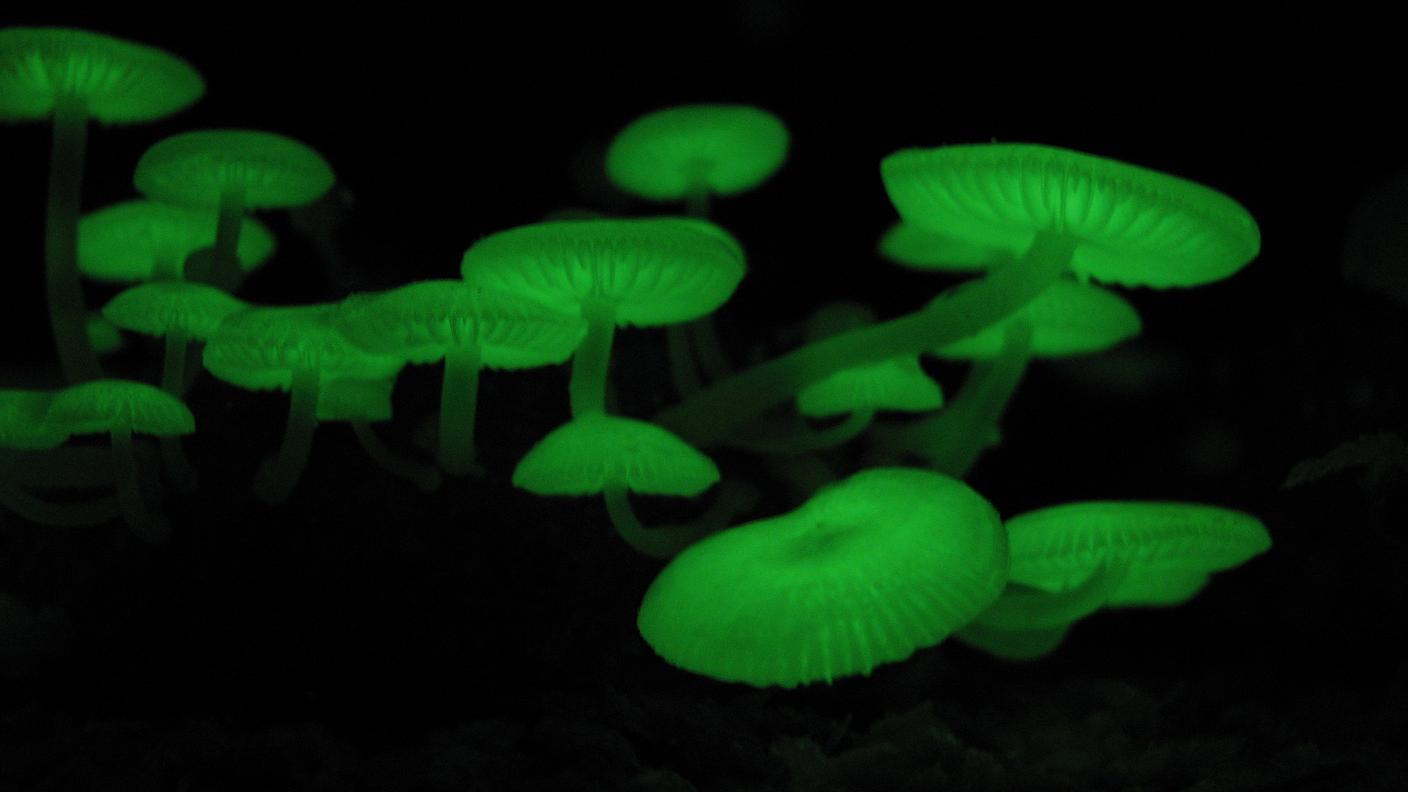
A mushroom is analogous to a flower on a plant — it’s the reproductive organ of a fungus, which protects and distributes fungal spores.
Mushrooms are critical part of our ecosystems. For humans and other animals, mushrooms are also food. And they may be part of the solution for food security and solving the plastic crisis.
On Oct. 15, World Mushroom Day, we highlight three such stories that Mongabay has covered.
Mushrooms can help inspire eco-friendly solutions to problems
Mushrooms are helping us create low-cost, sustainable housing materials and additional income for farmers, according to Gabriela D’Elia, director of the Fungal Diversity Survey.
In a Mongabay video titled “Fungi are our climate allies” published last year, D’Elia cited examples of projects that are using mushrooms to address food security and waste management. For example, a company called Evocative uses a mushroom called artist’s conk (Ganoderma applanatum) to create materials that can possibly replace leather, plastic, and other packaging materials, D’Elia said.
“Fungi are showing us new ways to live in allyship with the planet,” D’Elia added.
Golden oyster mushrooms are crowding out native fungi in North America
Golden oyster mushrooms, known for their bright yellow caps and earthy flavors, are prized edible mushrooms. They’re native to Asia, but have gained popularity throughout North America, where they’re spreading across forests and displacing native fungal species, a 2025 study found.
Aishwarya Veerabahu, lead author and a doctoral student at the University of Wisconsin-Madison, U.S., told Mongabay’s Shreya Dasgupta that the study was prompted by a growing number of wild golden oyster observations in North America across citizen-science biodiversity databases.
“The take home message for people who grow and cultivate mushrooms is that non-native mushrooms are often cultivated in North America but can become invasive, causing devastating effects on native fungal biodiversity,” Veerabahu said.
Mushrooms can be cultivated on waste products and may help establish mushroom farming in Africa
Researchers in Nigeria have cultivated a wild mushroom species using sawdust, an agricultural waste product. This could help develop farming of local mushrooms in Nigeria and other parts of Africa, they reported in a 2026 study.
Lentinus squarrosulus is a wild mushroom that typically grows on decaying logs in wild habitats across tropical forests, including in eastern Nigeria. This mushroom is both edible and has medicinal value, and is at risk of becoming scarce in the wild because of habitat destruction. If domesticated, however, this mushroom could be an inexpensive and reliable source of protein, mushroom researcher Chiemeziem Agbonma Onyeka told Mongabay’s David Brown.
Bioluminescent mushrooms
Mushrooms can glow in the dark! For younger readers, Mongabay Kids explored how bioluminescent mushrooms light up the forest night in India.
Banner image: Bioluminescent mushrooms (Mycena chlorophos) at Hachijo Botanical Park, Japan. Image by self via Wikimedia Commons (CC BY-SA 3.0).
