


Authorities in Thailand say they have seized about 400 pieces of African elephant ivory in a shipment of timber from Zambia, and are now testing the contraband to identify the origin of the animals.
The tusks were found concealed inside logs in two containers declared as holding processed timber at Laem Chabang Port, Chonburi province, according to an Oct. 7 announcement by the Thai Department of National Parks, Wildlife and Plant Conservation (DNP).
Thailand’s environment minister, Suchart Chomklin, said in the statement that a team of DNP academics and forensic experts have been asked “to officially inspect and count the confiscated items and conduct DNA testing.”
The DNP added the testing will help determine the origin of the elephants from which the ivory was taken. This “will be used to coordinate with [Interpol] to identify the main perpetrators and the destination countries.”
“The fact that DNA analysis is being initiated at an early stage demonstrates considerable leadership in the fight against the illegal trafficking of ivory and should assist in determining the source country as it is unlikely that all the ivory in the consignment is from Zambia elephants,” Mary Rice, executive director of the Environmental Investigation Agency U.K., told Mongabay by email.
Rice added that another large seizure made earlier this year in Zambia hasn’t yet undergone DNA analysis. Under the regulations of CITES, the global wildlife trade treaty, ivory seizures of more than 500 kilograms (1,100 pounds) should trigger collection of DNA samples for forensic analysis within 90 days.
The DNP’s announcement doesn’t specify the weight of the recent Thai seizure. Mongabay contacted the DNP for comment, but didn’t receive a response by the time this story was published.
According to the Times of Zambia, Evans Muhanga, permanent secretary for Zambia’s Ministry of Tourism, said in a statement that the reported Zambian origin had not been established. Muhanga added that government agencies are working to review the details associated with the shipment.
Rice said her organization is seeing a significant number of large ivory seizures linked to Southern Africa. “Based on all available evidence, Zambia is clearly a transit (and possibly a source) for the illegal ivory being trafficked into and out of the country by organised criminal networks,” she said. “To date there has been little information on the progress of ongoing investigations and prosecution relating to individuals linked to these networks.”
Rice added the recurring ivory seizures, and the availability of ivory products in countries like Laos, contradict the current belief that poaching and trade in elephant tusks has declined.
The ivory is either being sourced from poached elephants or existing stockpiles, Rice said: “The DNA analysis may assist in determining this.”
Either way, she added, “sustaining an ongoing illegal trade stimulates the market and increases demand … resulting in sights being set on live animals again.”
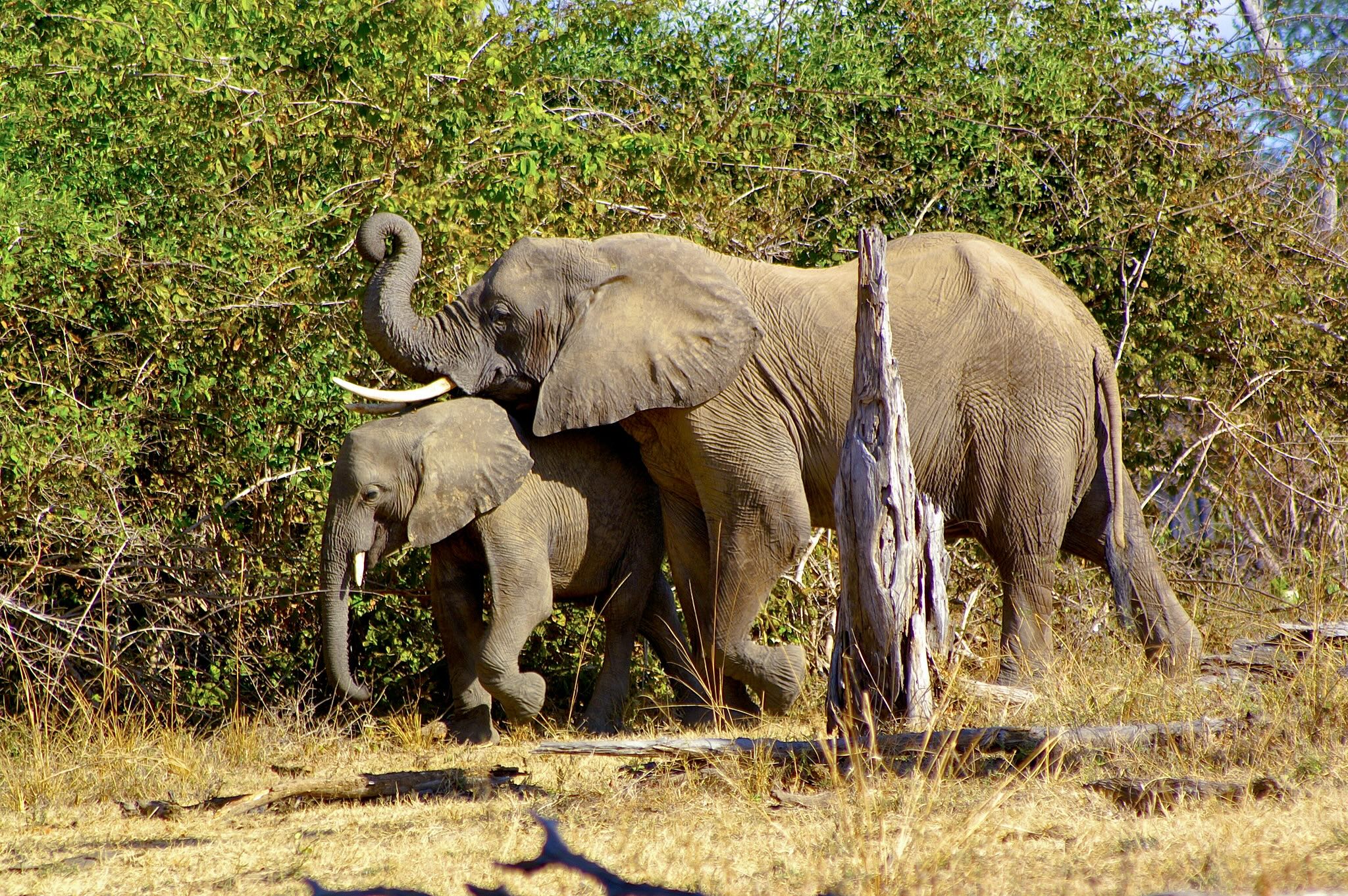
Banner image: African elephants (Loxodonta africana) in Luangwa Valley, Zambia. Image by GRID-Arendal via Flickr (CC BY-NC-SA 2.0).
