


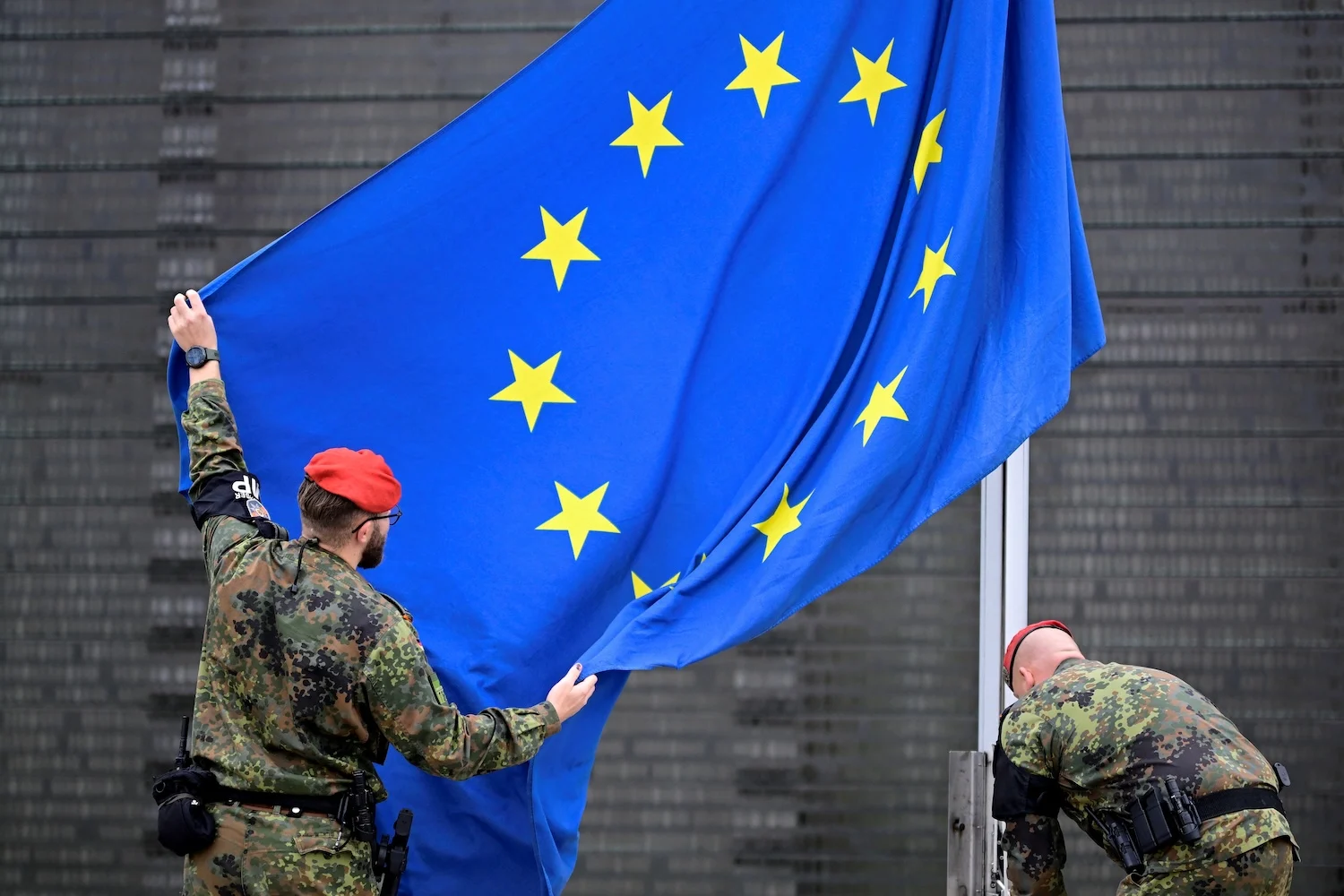
European countries have had a rude awakening over the last five years or so. The Russian invasion of Ukraine and its escalating acts of hybrid warfare have exposed the limits of civilian power and underscored the importance of hard military capabilities. The process began in 2022, when Sweden and Finland announced their intention to join NATO and then-German Chancellor Olaf Scholz proclaimed a dramatic reversal (Zeitenwende) of Germany’s security policy. Since then, most European states have begun to formulate ambitious rearmament plans. The Trump administration’s open hostility toward the European Union, a gradual reduction in the U.S. military presence on the continent, and President Donald Trump’s tendency to favor Russia over Ukraine have made the need for greater European capacity even clearer. Instead of counting on Uncle Sam to be the first responder when trouble occurs, European states will have to rely on their own resources and strategies to keep themselves safe.
Not surprisingly, this sense of alarm is most evident in the states that lie closest to Russia (e.g., the Baltic states, Poland, etc.) and less visible in those that are farther away, such as Portugal or Spain. Far-right parties like the Alternative for Germany remain sympathetic to Moscow, but France’s National Rally has recently become more critical of Russia’s actions toward Europe, if only in an attempt to accommodate French opinion.
European countries have had a rude awakening over the last five years or so. The Russian invasion of Ukraine and its escalating acts of hybrid warfare have exposed the limits of civilian power and underscored the importance of hard military capabilities. The process began in 2022, when Sweden and Finland announced their intention to join NATO and then-German Chancellor Olaf Scholz proclaimed a dramatic reversal (Zeitenwende) of Germany’s security policy. Since then, most European states have begun to formulate ambitious rearmament plans. The Trump administration’s open hostility toward the European Union, a gradual reduction in the U.S. military presence on the continent, and President Donald Trump’s tendency to favor Russia over Ukraine have made the need for greater European capacity even clearer. Instead of counting on Uncle Sam to be the first responder when trouble occurs, European states will have to rely on their own resources and strategies to keep themselves safe.
Not surprisingly, this sense of alarm is most evident in the states that lie closest to Russia (e.g., the Baltic states, Poland, etc.) and less visible in those that are farther away, such as Portugal or Spain. Far-right parties like the Alternative for Germany remain sympathetic to Moscow, but France’s National Rally has recently become more critical of Russia’s actions toward Europe, if only in an attempt to accommodate French opinion.
Those of us who have wanted Europe to take on greater responsibility for its own defense might be pleased by this development, even if we regret the events and circumstances that brought it about. Unfortunately, that silver lining is accompanied by some ominous black clouds.
Even when they are fully justified, efforts to bolster one’s security are always costly, sometimes counterproductive, and occasionally dangerous. Building up one’s strength and using it to deter or defeat what an adversary is doing may be desirable and even necessary, but it is also a path strewn with pitfalls.
As European states take entirely predictable and defensible steps to protect themselves from active Russian interference and a possible long-term military threat, these actions will also reinforce the fears that led Russia to embark on these objectionable activities. The seizure of Crimea in 2014 and the invasion of Ukraine in 2022 did not come out of nowhere, or spring unbidden from the fevered imperialist brow of Russian President Vladimir Putin. As many experts had warned since the mid-1990s, they were a response to a long series of Western actions that virtually the entire Russian political elite viewed as threatening, an existential danger so great that Moscow eventually decided to launch an illegal preventive war. Those fears might seem far-fetched to us, but Russia is hardly the only country that is prone to threat inflation and worst-case analysis.
Europe and the United States responded vigorously to this gross violation of international norms, and their support, combined with Russia’s initial blunders and Ukraine’s staunch resistance, turned what Putin thought would be an easy coup de main into a long, costly, bloody, and gradually escalating war of attrition. But the more Moscow tries to force Europe to reduce its support for Ukraine by rattling sabers and conducting acts of sabotage, the more threatening it will appear and the more that Europeans will redouble their own efforts to protect themselves.
That, ladies and gentlemen, is the security dilemma at work. Each side thinks it is acting solely from defensive motives (even when taking aggressive actions), yet it sees the other’s behavior as unjustified and as evidence of dangerous revisionist ambitions. The result is precisely the sort of action-reaction cycle that the late Robert Jervis labeled the “spiral model.” The dangers should not be dismissed lightly. Although I personally believe the risks of an all-out war in Europe are quite low, and that warnings that Russia might attack in the next few months or years are wildly exaggerated, we cannot entirely rule out further escalation or expansion. Consider that what was supposed to be a short, quick war to destroy the Iranian regime has now gone on for months and gradually expanded to include the Gulf states, Saudi Arabia, Yemen, and the entire world economy.
Even if a wider war in Europe is avoided, an armed standoff between Russia and its neighbors to the West will impose economic costs that neither side can easily afford and reinforce a Sino-Russian alignment that both Europe and the United States ought to be trying to dissolve or at least complicate. And as I noted in my last column, it is also allowing far-right, proto-fascist parties to blame Europe’s economic woes on defense spending increases and excessive support for Kyiv.
It follows that everyone would be better off if Europe and Russia could unwind the spiral, take steps to reassure the other, and gradually reestablish a less hostile and more businesslike relationship. But that is not easy to do, because the security dilemma is a dilemma. Offering concessions or a compromise to allay the other side’s concerns might work, but it might also be interpreted as a sign of weakness or as an opportunity to increase the other side’s demands. It’s also possible that each side’s security requirements are simply incompatible and that both want more than the other is willing to give. Merely being aware that a security dilemma exists is no panacea.
To be sure, there are cases where states have been able to overcome these dynamics successfully, even if only partially. The United States and Soviet Union did so when they signed the Austrian State Treaty in 1955, for example, and the arms control efforts that began following the Cuban missile crisis in 1962 were a deliberate and largely successful effort to reduce the nuclear dangers that the crisis had revealed. Egyptian President Anwar Sadat’s bold decision to visit Israel and speak to the Knesset in 1977 helped open the door to the Egypt-Israel peace treaty, although success also required protracted and skillful U.S. mediation. To say that security dilemmas are hard to overcome is not to say that it is impossible.
Just as Soviet leader Joseph Stalin’s death in 1953 made a deal over Austria more likely, a successful effort to lower tensions between East and West may have to wait until most of today’s leaders have left the stage. But planning for this possibility and laying the groundwork for it could start today, with the long-run aim of creating a set of security arrangements for the broader European region. There are plenty of models that could serve as inspiration: the Organization for Security and Cooperation in Europe, the Clinton-era Partnership for Peace (which was unwisely abandoned in favor of NATO enlargement), the nuclear and conventional arms control agreements negotiated at the height of the Cold War, or variations on the old concert systems in Europe. I strongly suspect that none of these models is quite right now, but they can provide a starting point for creative efforts to restore some of the optimism that followed the end of the Cold War.
A final paradox should not be forgotten, however. Imagine that diplomatic efforts succeed—the war in Ukraine finally ends with its independence preserved, European and Russian security requirements are discussed, negotiated, and reconciled in a mutually acceptable way, Russian interference in Europe ceases, and the risk of all-out war recedes. Were all this to occur—and I am not suggesting this will happen anytime soon—then I can easily imagine Europe letting its military capabilities atrophy and its economic dependence grow once again. The question you should ponder is this: Would that situation be worse than what Europe faces today? If not, then efforts to explore how to get there without sacrificing one’s independence or autonomy deserve more attention than they are getting at present.
