


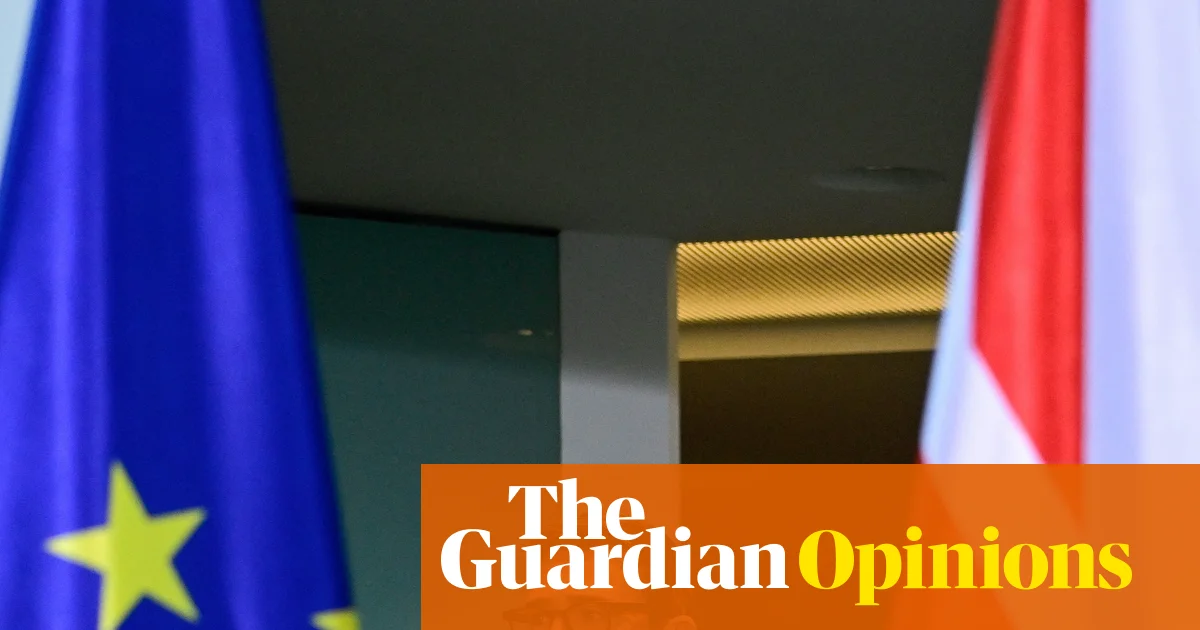
The German philosopher GWF Hegel famously evoked the owl of Minerva when discussing the historical wisdom that comes through hindsight. This autumn, she has flown tirelessly over the landscape of British politics. Party conference season was dominated by conflicting Labour and Conservative accounts of the 1970s and 80s. And a decade after the United Kingdom voted to leave the European Union, Andy Burnham this week abandoned all equivocation over the damage – economic but also strategic – that resulted from that decision.
Having declared that it is time to “face up to the reality that Brexit has done more harm than good”, Mr Burnham told the House of Commons on Monday that it would be a “dereliction of duty” not to explore all options for closer relations with Brussels. Though he confirmed that in this parliament he will honour the red lines in Sir Keir Starmer’s Labour manifesto, all bets will subsequently be off.
A long-delayed reset summit, Mr Burnham also announced, will take place next month with deals on food and drink and youth mobility to be negotiated. The former Labour leader Neil Kinnock asserted to an Italian newspaper on Tuesday that the prime minister’s “obvious” eventual objective was to rejoin.
That might well be contested in Downing Street. But as has become the norm in this overture phase of Mr Burnham’s premiership, his Commons statement was bracingly expansive and forthright. It also had the signal virtue of being correct in its diagnosis and prescription. Nevertheless, the reality of reopening the most divisive debate of recent British history will be drawn out, obstacle-strewn and fraught with political risk.
Labour’s hyper-caution over revisiting the EU relationship has increasingly been at odds with polls indicating a substantial majority of the public supports closer ties. But the devil will be in the detail. In the red wall, in particular, much will depend on the prime minister’s undoubted persuasive powers. The need to undo the economic self-harm of Brexit was not something that Mr Burnham chose to emphasise while campaigning for his seat in the leave-voting constituency of Makerfield.
For its part, the EU itself is in flux and may have new red lines of its own. Responding to a more menacing geopolitical environment, Brussels is contemplating deeper coordination in areas such as defence and economic policy. The direction of travel is already evident in the “Made in Europe” strategy, which threatens to leave British-based car manufacturers out in the cold.
As that risk illustrates, it is overwhelmingly in Britain’s interests to be acting in concert with the EU, rather than flailing in sorry isolation on the sidelines. Following the visceral mutual distrust of the Tory Brexit years, Sir Keir restored a basic if circumscribed civility to relations between the UK and the EU. Mr Burnham’s boldness can now open up new possibilities down the line for “a real reset”, to use the formulation of one EU diplomat.
It will not have escaped Mr Burnham’s notice that such a prospect would unite progressive Britain behind it, and could significantly boost Labour’s percentage vote share. His overriding early theme has been the need to rectify the political “wrong turns” of past decades. Beginning the long task of doing so on Brexit is brave, but it promises significant dividends for his premiership and, much more importantly, the country.
-
Do you have an opinion on the issues raised in this article? If you would like to submit a response of up to 300 words by email to be considered for publication in our letters section, please click here.
