


Lionel Messi said goodbye to the Argentine national team in Buenos Aires the night of Oct. 6 the way that he did most things in the blue-and-white shirt for 21 years: by setting up two goals and scoring a third in a 3-0 friendly win over Benin.
Having let his feet do the talking for 90 minutes, he then picked up a microphone and made his way to the center circle of the Estadio Monumental to address the 85,000 people who were hoarse from chanting his name. He spoke for several minutes, about his late father, his teammates, and the honor of representing his nation. “I am proud to be Argentine,” he declared.
Lionel Messi said goodbye to the Argentine national team in Buenos Aires the night of Oct. 6 the way that he did most things in the blue-and-white shirt for 21 years: by setting up two goals and scoring a third in a 3-0 friendly win over Benin.
Having let his feet do the talking for 90 minutes, he then picked up a microphone and made his way to the center circle of the Estadio Monumental to address the 85,000 people who were hoarse from chanting his name. He spoke for several minutes, about his late father, his teammates, and the honor of representing his nation. “I am proud to be Argentine,” he declared.
Hering that from anyone else, I would have dismissed that as a cliché and moved on. But coming from Messi, it gave me pause and took me back. He had said almost exactly the same thing to me in Barcelona, Spain, in January 2012, and it had sounded very different then. He was answering the charge, common in Argentina at the time, that the boy who had moved to Spain at 13 was a Spaniard at heart—and that this was why he could never perform the same miracles for the national team that he did for FC Barcelona.
Six months before we met, after a goalless draw in the Argentine province where he was born, the crowd had chanted “Mercenary! Catalonian!” at Messi. Now, I was interviewing him for a Time magazine cover story, and he had spent most of our conversation gripping the bottom of his chair with both hands, avoiding eye contact and giving little away. Then the conversation turned to Argentina, and he opened up. “I’ve never stopped being Argentine, and I’ve never wanted to,” he told me. “I feel very proud of being Argentine, even though I left there.”
What had come off as plaintive and defensive that January morning sounded perfectly matter-of-fact on Tuesday night, when he said it to a stadium—and a nation—that no longer needed convincing.
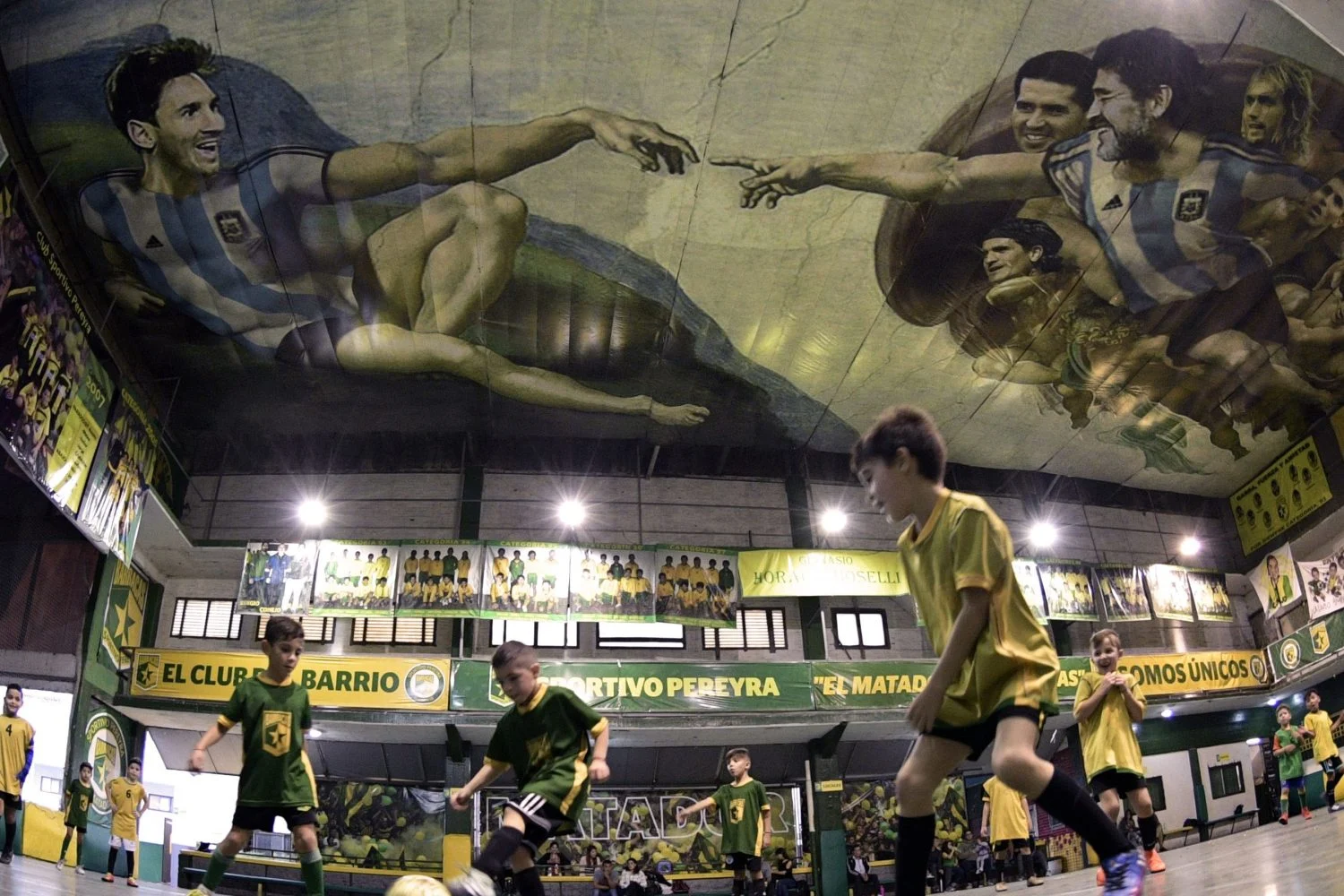
For Messi, getting to this point took most of his career. Argentina lost three straight international tournament finals between 2014 and 2016, and many Argentines blamed Messi for the failures. Diego Maradona wondered aloud in 2015 whether Leo was “Argentine or Swedish”; as recently as 2019, Messi said his son asked him, “Why do they kill you in Argentina?”
Trophies ended that. It began with the Copa América in 2021, then the World Cup in Qatar a year later, and the Copa again in 2024. Journalist Sergio Levinsky, the co-author of a forthcoming Messi biography, described the resulting national reappraisal of the player as “a love under construction.” By this past summer, though, the construction was complete. Spain may have beaten Argentina in the World Cup final, but it was Messi’s goals and assists that got the team to the title game. Nobody in Buenos Aires would have suggested that the captain’s heart was with the team on the other side.
Polls show how complete the conversion has been. In a survey published this summer by Giacobbe and Asociados, 73 percent of Argentines said Messi was the best player in the country’s history, while fewer than 23 percent chose Maradona. A smaller survey of 300 people, carried out last year by the research firm DatosClaros with political science students from the University of Buenos Aires, found that 58 percent identified more with Messi than with Maradona, and that they described him only in terms of virtues: effort, constancy, humility, leadership.
But Giacobbe also asked a different question. In values and way of being, which of the two great No. 10s do Argentines, as a people, more closely resemble? On that one, Maradona won handily, about 57 percent to 39 percent. The two findings seem contradictory, but they aren’t. What they suggest is that, in the eyes of their countrymen, Leo represents individual aspiration whereas Diego represents national character.
That has less to do with the performance of the national team than with the culture of Argentine soccer. In his 1999 study Masculinities: Football, Polo and the Tango in Argentina, the anthropologist Eduardo P. Archetti traces the roots of the culture to the pages of the sports magazine El Gráfico in the 1920s. Since then, the ideal Argentine footballer has been the pibe, or the kid, a scruffy urchin who learns the game on a vacant lot and outwits the orderly Englishmen who brought the game to the country.
Maradona, raised in the Villa Fiorito shantytown on the edge of Buenos Aires, was this ideal made flesh: One of his sobriquets was el pibe de oro, or the golden boy. In 1986, four years after the Falklands War, he beat England in a World Cup quarterfinal with a goal punched in by hand and another, widely regarded as the best ever, that took him past half the English team.
Messi grew up on the streets of Rosario, but he became a player among the elite talent of his generation in Barcelona’s famously methodical academy. His nom de pitch is la pulga, the flea, a comment on his size. And although a soccer purist might argue that the stirring come-from-behind win that he inspired against England in Atlanta three months ago was the better game, it will never match the 1986 classic as a cultural touchstone.
Maradona was also a political figure in a way that Messi has never tried to be. Pablo Alabarces, a University of Buenos Aires sociologist and the author of Fútbol y Patria (Football and Homeland), argued in New Lines Magazine in May that Maradona embodied popular defiance, embracing Cuban leader Fidel Castro and marching against U.S. President George W. Bush, whereas Messi, who stood beside President Donald Trump at the White House this spring, “demonstrates not neutrality, but indifference.”
The class line shows up in the numbers, too: An Opina Argentina poll in January 2023 put Messi ahead of Maradona, 60 percent to 28 percent, but his support came mostly from Argentines with middle and higher purchasing power, according to the polling firm’s director, Facundo Nejamkis. Among Argentina’s poorest, the race was much closer. It split along party lines as well. Messi is far more popular among supporters of the center-right Juntos por el Cambio and Maradona among those of the Peronist party Frente de Todos.
Maradona’s international career ended in disgrace at the 1994 World Cup, when he tested positive for ephedrine and was sent home. As he said at the time: “They cut off my legs.” Maradona was also addicted to cocaine for years. At his farewell match in 2001, he told the crowd at La Bombonera in Buenos Aires, “I made mistakes and paid for them, but the ball stays pure.” The crowd forgave him, as they had before and would again.
A country that has defaulted on its debts nine times—and spent much of the past century lurching between crisis and recovery—recognizes something in a genius who keeps squandering his gifts and coming back. In Comediantes y Mártires (Comedians and Martyrs), the essayist Juan José Sebreli counted Maradona among the four great Argentines of mythical stature, along with Eva Perón, Che Guevara, and tangoist Carlos Gardel.
In contrast to Maradona, Messi has lived a clean life—and in this case, it counts against him. To the rest of the world, Leo may well be the greatest player of all time, and Argentines now agree that he was the best of their own. But as the embodiment of the nation, la pulga will never match el pibe de oro.
Still, Messi, who has always seemed content to let others argue about such things, can take comfort from how far he has come. In 2012, he had to insist that he was Argentine. Today, the nation needs no convincing.
