


Volodymyr Zelenskyy has vowed to respond to Russia’s continuing attacks on the Ukrainian power grid as European leaders rally around Kyiv amid a feud with Donald Trump over Ukraine’s strikes on oil refineries.
Speaking to a gathering of European security officials in Warsaw on Monday, the Ukrainian president said Kyiv would retaliate if strikes on its power grid continued: “If Russia does not agree to an energy ceasefire this winter, we will respond.”
On Sunday, Trump announced an “energy ceasefire” between Kyiv and Moscow that Zelenskyy said neither side had agreed to. On Monday, Zelenskyy said he was “surprised” by the post, which went online while Kyiv was being attacked by Russian Shahed drones.
Russia then launched a “targeted attack” on a Kharkiv power station hours later, as much of Kyiv was plunged into darkness. “It’s clear that Putin does not read Truth Social,” Zelenskyy said.
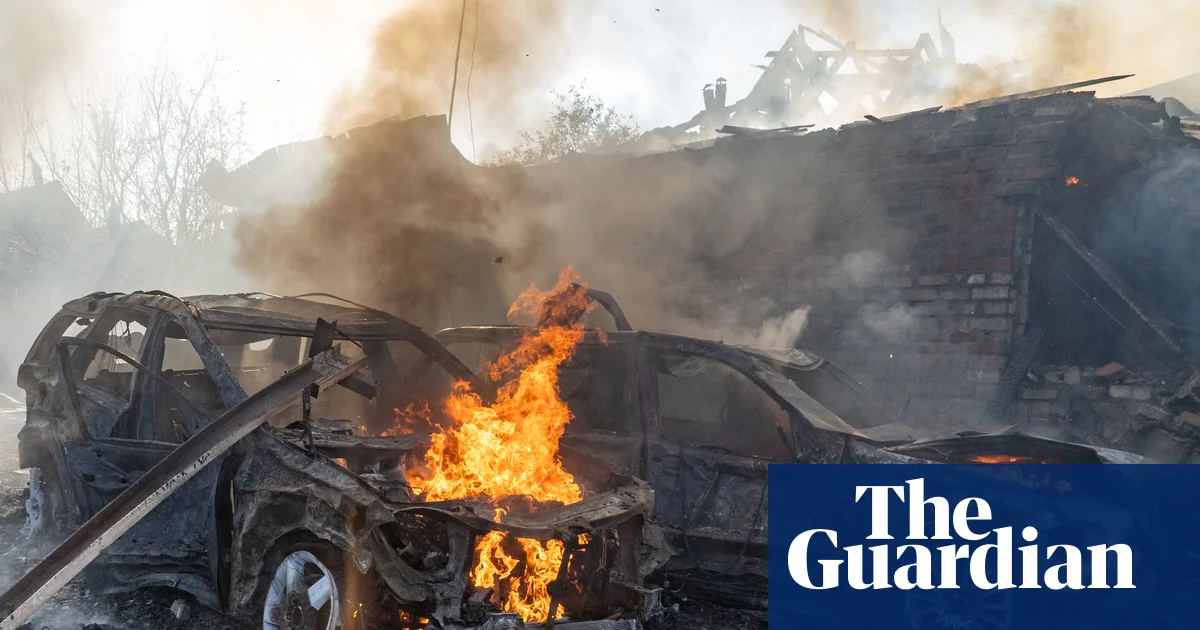
Russia bombed six energy facilities on Monday, injuring 33 people, the Ukrainian president said. “It is becoming increasingly clear that Russia does not want to agree to the energy ceasefire proposed by the US and intends to continue its terrorist air attacks against our communities,” he added.
Zelenskyy also suggested that Ukraine’s recent counter-strikes on datacentres belonging to the Russian technology company Yandex had reduced the number of bots posting messages in Europe and the US. “It suddenly became a little easier to breathe on many social platforms. There was less hate, less division and fewer provocations,” he said.
The Kremlin refused to say on Monday whether it agreed with Trump’s Truth Social post, which claimed a ceasefire was “effective immediately”. It also rejected Zelenskyy’s proposal that Russia stop bombing for 60 days so Ukraine could hold a presidential election. Moscow wanted an overall peace deal first, it said, which, for the Kremlin, means Kyiv’s capitulation.
The fast-moving row between Washington and Kyiv began on Friday when Trump announced he was lifting sanctions on Russian diesel exports. He said the move would reduce global and domestic fuel prices before next month’s US midterm elections.
Both Republican and Democratic politicians have criticised the move, pointing out that the deal violates a US law that blocks Russian energy imports. On Monday Trump defended it. “I made the right choice for the American People – ALWAYS, AMERICA FIRST!” he wrote in a social media post.
Earlier a furious Zelenskyy called the decision “weak” and said it would generate “billions” in extra revenue for Putin, enabling him to wage war “even more intensely”. An equally irate Trump said Zelenskyy should “damn well stop” hitting Russian refineries. Ukraine needed a “new leader”, he said on Saturday.
Ukraine has said it is ready to negotiate an energy ceasefire that would take the pressure off its electricity grid before the winter. European leaders have voiced support for Kyiv in its dispute with Washington, saying Russia was responsible for the continuing strikes on energy infrastructure in both countries.
“We welcome the energy ceasefire when it holds,” the EU foreign policy chief, Kaja Kallas, said at a meeting of European foreign ministers on Monday. “We haven’t yet seen that also Russia will stick to it.”
Ministers from the Baltic states criticised a US decision to lift sanctions on imports of Russian diesel, which had been blocked as part of punishment for Putin launching the full-scale invasion of Ukraine in 2022.
“This deal doesn’t help, neither the crisis of the oil products, nor the unity within the transatlantic community when it concerns Russia,” said Lithuania’s foreign minister, Keʂtutis Budrys. “And it is not the European way. Our way is to increase pressure because we already see how it works.”
Russia has increased its attacks on Ukrainian infrastructure, using jet-powered drones and ballistic missiles ahead of the cold winter months, leading to blackouts and water shortages far earlier in the season than has been usual during the war.
Trump’s proposal was for both sides to halt strikes on oil refineries but Kallas said that deal favoured Russia, which has far more refineries.
The US president has blamed the high price of diesel on Ukraine’s attacks, rather than the global shock to energy markets from the US war in Iran and the subsequent closure of the strait of Hormuz.
According to the Financial Times, the US has threatened to stop the procurement system that provides Ukraine with weapons, paid for by its European allies. The White House has also said it could turn off intelligence sharing unless Kyiv halts its long-range strikes on Russian oil refineries.
The Kyiv Independent newspaper said Ukraine’s commander in chief, Mykhailo Drapatyi, had received a call from the US telling him to stop bombing. “They called all the top military officials with threats,” a Ukrainian official told the newspaper.
Ben Hodges, the former head of US forces in Europe, described the energy ceasefire “deal” as a fantasy and “a classic ‘Trumpian’ announcement of something not based on any facts.”
“No one should be misled,” he said, adding that Russia “never adheres to any agreements unless forced to do so”.
He urged Ukraine’s military to ignore Trump and “ramp up” their attacks on Russian oil and gas complexes. “Clearly, this is having a very significant effect. Otherwise, you wouldn’t be hearing all this pressure from the Kremlin on the White House demanding that it stop. Of course, it is having a huge impact.”
