

Close Menu
NCIJ Network NCIJ Network
    What's Hot

    The 7 biggest issues CISOs and security teams face today

    October 12, 2026

    Solana sandwich bots took $29.7 M before costs

    October 12, 2026

    Live: EU’s top diplomat says she will welcome Russia-Ukraine energy ceasefire ‘when it holds’

    October 12, 2026
    Facebook X (Twitter) Instagram
    Trending
    • The 7 biggest issues CISOs and security teams face today
    • Solana sandwich bots took $29.7 M before costs
    • Live: EU’s top diplomat says she will welcome Russia-Ukraine energy ceasefire ‘when it holds’
    • Father was asked for DNA test to get a passport for his daughter | Money
    • Let’s Encrypt Cuts Default Certificate Validity to 64 Days Ahead of 45-Day Switch
    • FSB Outlines Stablecoin and AI Priorities for G20
    • Wildlife disease surveillance at global scale needs stronger local networks: Study
    • TGS-Galdor AI partnership targeting overlooked or underestimated North Sea exploration plays
    • About
      • Our Team
      • Editorial Policy
      • Editorial Independence
      • International Support
    • Trust & Standards
      • AI Usage Policy
      • Conflict of Interest Policy
      • Corrections Policy
      • Ethics Policy
      • Fact-Checking Policy
      • Source Protection
    • Get Involved
      • Guide for Sources
      • Support Independent Journalism
    • Legal
      • Cookie Policy
      • Privacy Policy
      • Terms of Use
    Facebook X (Twitter) Instagram
    NCIJ Network NCIJ Network
    Monday, October 12
    • Home
    • World
    • Ai
    • Business
    • Politics
    • Health
    • Crypto
    • Science
    • Technology
    • Cybersecurity
    • Defense & Security
    • Economy
    • Energy
    • Europe
    • More
      • Fact Check
      • Investigations
      • Opinion & Analysis
      • Environment
    NCIJ Network NCIJ Network
    Home»Environment

    Wildlife disease surveillance at global scale needs stronger local networks: Study

    NCIJ NETWNCIJ NETWORKBy NCIJ NETWNCIJ NETWORKOctober 12, 2026 Environment No Comments3 Mins Read
    Share
    Facebook Twitter LinkedIn Pinterest Email

    A recent study has proposed a road map for countries to better monitor wildlife health and disease outbreaks.

    Previous research found that nearly 60% of the 107 countries it surveyed showed no evidence of a functional wildlife health surveillance system. This leaves ecosystems, agriculture, and human populations vulnerable to catastrophic outbreaks, the researchers say.

    The blueprint presented in the latest study offers actionable solutions to improve surveillance, said study co-author Sarah Olson, director of health at the Wildlife Conservation Society (WCS).

    “Earlier research did a good job diagnosing the problem in terms of what’s missing, and what wildlife health surveillance needs to deliver,” Olson told Mongabay by email. “This paper goes further: it uses a Theory of Change to map out how we actually close that gap, given limited resources and fragmented networks, to reach real collaborative surveillance. The challenge now is scaling efforts and expertise through a global community of practice — no single organization can meet this need alone, and the more we collaborate, the faster surveillance can grow everywhere.”

    Olson and her colleagues write that unmonitored disease events have already inflicted severe ecological and economic damage; for instance, sheep and goat plague caused an estimated 80% decline in Mongolia’s endangered saiga antelope (Saiga tatarica), while highly pathogenic avian influenza (H5N1) continues to trigger mass mortality across populations of wild birds and marine mammals. Mongabay recently reported on the spread of H5N1 affecting wild birds, urban wildlife, and live animal markets across cities like New York. The researchers say that if lethal pathogens can spread unchecked in heavily monitored megacities, the risks are vastly magnified in regions lacking basic biosurveillance.

    However, existing monitoring efforts remain plagued by sporadic, crisis-driven funding that evaporates as soon as emergencies subside, according to the researchers.

    To overcome these systemic barriers, the study outlines a collaborative road map or “theory of change” designed by the Wildlife Health Intelligence Network (WHIN) to establish lasting, locally led surveillance programs. The road map identifies six pathways.

    This includes shifting mindsets away from viewing wildlife merely as an economic liability; securing dedicated political support and funding; and adopting evidence-based practices. A fourth pathway includes deploying user-driven tools like the shared HAWK data platform, a service for managing wildlife health surveillance data. The other steps include strengthening frontline workforce skills, and mobilizing a global community of practice.

    Rather than imposing top-down mandates, the road map advocates scaling up proven regional models, such as WildHealthNet in Southeast Asia, to integrate community monitoring directly into national legislation.

    The authors noted that many of the recognized experts in this field are in high-income countries, creating a significant limitation in global representation. But Olson said the network is intentionally structured to reverse that imbalance, “by elevating local expertise from low- and middle-income countries along with Indigenous-led and community-led efforts.”

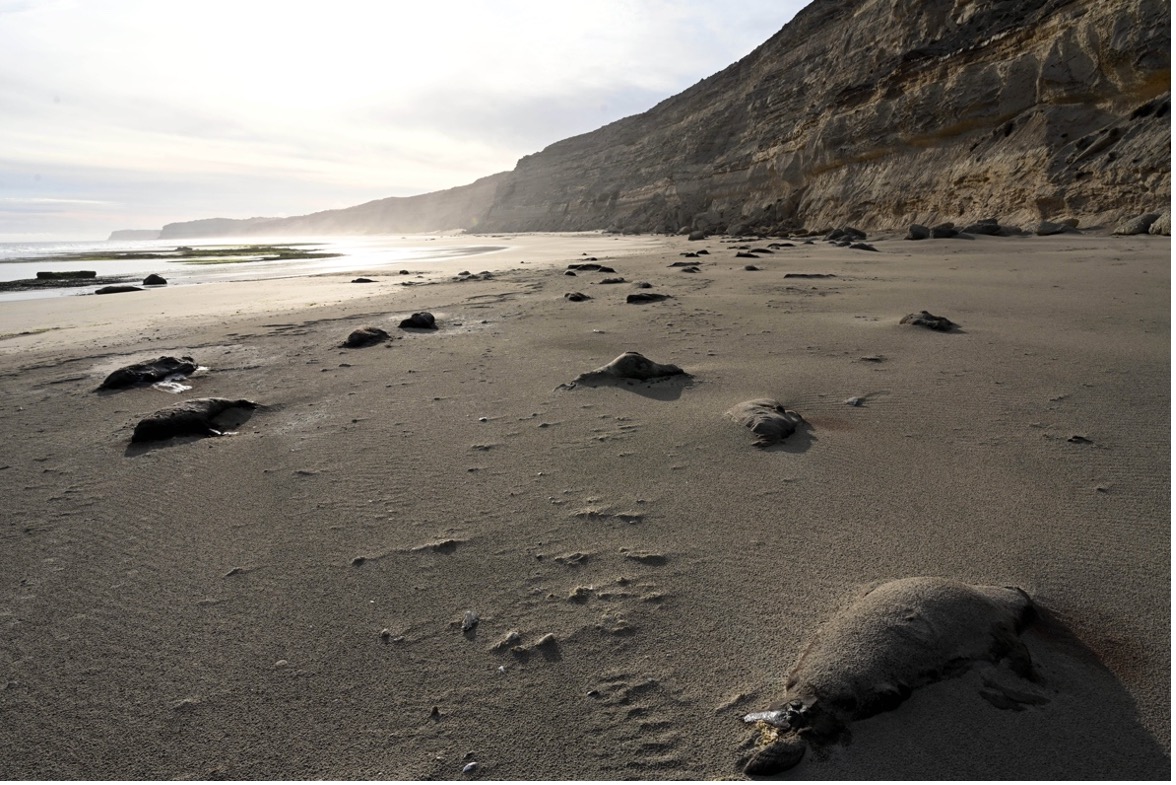
    Banner image: Dead elephant seal pups on a beach in Argentine Patagonia. It’s unclear how they died. Image © Maxi Jonas via WCS.


    disease global local networks scale stronger study Surveillance wildlife
    NCIJ NETWNCIJ NETWORK
    • Website

    Keep Reading

    Learning to use local AI is exciting, overwhelming, and frustrating

    ‘Prepare for the unthinkable’ warning over autumn flooding forecast

    A plastic once thought harmless may be fueling fatty liver disease

    As Rival Resorts Battle in a Bahamas Court, a Threatened Conch’s Nursery Is Caught in the Middle

    The Race for Lithium Is Becoming a Race for Water

    The Greek National Park Suffocated by Fish Farming

    Add A Comment
    Leave A Reply Cancel Reply

    Editors Picks

    The 7 biggest issues CISOs and security teams face today

    October 12, 2026

    Solana sandwich bots took $29.7 M before costs

    October 12, 2026

    Live: EU’s top diplomat says she will welcome Russia-Ukraine energy ceasefire ‘when it holds’

    October 12, 2026

    Father was asked for DNA test to get a passport for his daughter | Money

    October 12, 2026
    Latest Posts

    Why recovery readiness has become the new standard for cyber resilience

    August 11, 2026

    Maga ignores the many meanings of Mount Rushmore

    August 11, 2026

    A question for Burnham as he tours the country: how to reduce the magnetic pull of London? | Peter Hetherington

    August 11, 2026

    Subscribe to News

    Get the latest sports news from NewsSite about world, sports and politics.

    NCIJ Network is an independent digital news platform delivering trusted investigative journalism, European and global news, in-depth analysis, and fact-based reporting with accuracy, transparency, and integrity.

    Facebook X (Twitter) Instagram Pinterest YouTube

    The 7 biggest issues CISOs and security teams face today

    October 12, 2026

    Solana sandwich bots took $29.7 M before costs

    October 12, 2026

    Live: EU’s top diplomat says she will welcome Russia-Ukraine energy ceasefire ‘when it holds’

    October 12, 2026

    Subscribe to Updates

    Get the latest creative news from FooBar about art, design and business.

    Type above and press Enter to search. Press Esc to cancel.