


This investigation was reported in a collaboration between Inside Climate News and Columbia Journalism Investigations.
CALIPATRIA, Calif.—On a border-town road surrounded by alfalfa and grain fields, William Cooper stopped before a dusty, vacant lot. Its owner, he said, is one of many investors drawn to the arid Imperial Valley by a critical mineral propelling the green energy transition.
“They buy it up and leave it, just waiting for the opportunity,” Cooper said of the land investors.
Now, with each gust of desert wind, dust drifts from the lot into the yards of two adjacent schools. Often, the buildings disappear behind a haze and the schoolchildren gasp for air, said Cooper, who moved here from San Diego years ago.
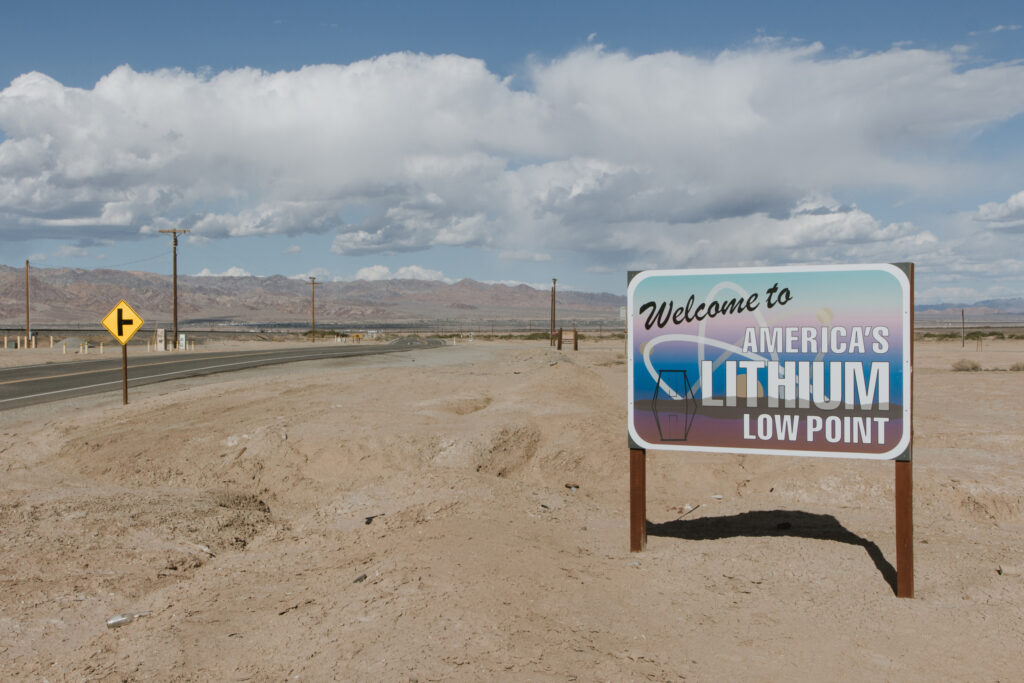
The pollution adds to a litany of burdens plaguing one of the nation’s poorest areas. And it hints at a new pressure reshaping the area’s future: a lithium deposit buried beneath a nearby lake called the Salton Sea—the mother lode for prospectors rushing to extract this key ingredient for the batteries that power electric vehicles.
Companies are racing to draw out lithium from brine bubbling below the Salton Sea. With hefty government support, developers say they will create “the most sustainable lithium and power project in the world,” bringing hundreds of jobs and billions of dollars here.
In Calipatria’s county, Imperial, local officials greenlit two mines and launched an ambitious proposal to use direct lithium extraction, a fledgling technology touted as a cleaner alternative than traditional lithium mining. Company executives and government officials alike promise to transform Imperial Valley into a renewable-energy hub—what they call “the next Silicon Valley.”
These lithium ventures are among 100 proposed mining projects advancing through the permitting pipeline in the country today, as the U.S. ramps up critical-mineral production. By 2030, at least half dozen new mines are expected to extract lithium, with another 13 soon to follow, an investigation by Columbia Journalism Investigations and Inside Climate News has found. Most are concentrated in the dry Southwest.
Using corporate filings and other records collected by the financial firm S&P Global, the news organizations identified roughly 540 proposed lithium mines worldwide, as well as the companies and investors behind them. The first-of-its-kind dataset offers a window into just who controls America’s lithium rush—from global mining conglomerates and smaller explorations firms, many based in Australia and Canada, to powerful American financial institutions that dominate the sector’s funding network.
Nearly two-thirds of the proposed and developing mines in the U.S. bump up against some of the nation’s most socially and economically vulnerable communities, according to an analysis by Columbia Journalism Investigations and Inside Climate News of demographic measures like income, age and race. Topping that list is Imperial County, an area of mostly Hispanic residents that has severe unemployment rates, low schooling levels and crowded housing conditions.
Interviews with dozens of residents, advocates, government officials and company executives and visits to four states reveal the stark tension in the energy transition: Who gets to define “clean”? And who has to live with the impacts of mining needed to build cars that don’t foul the air?
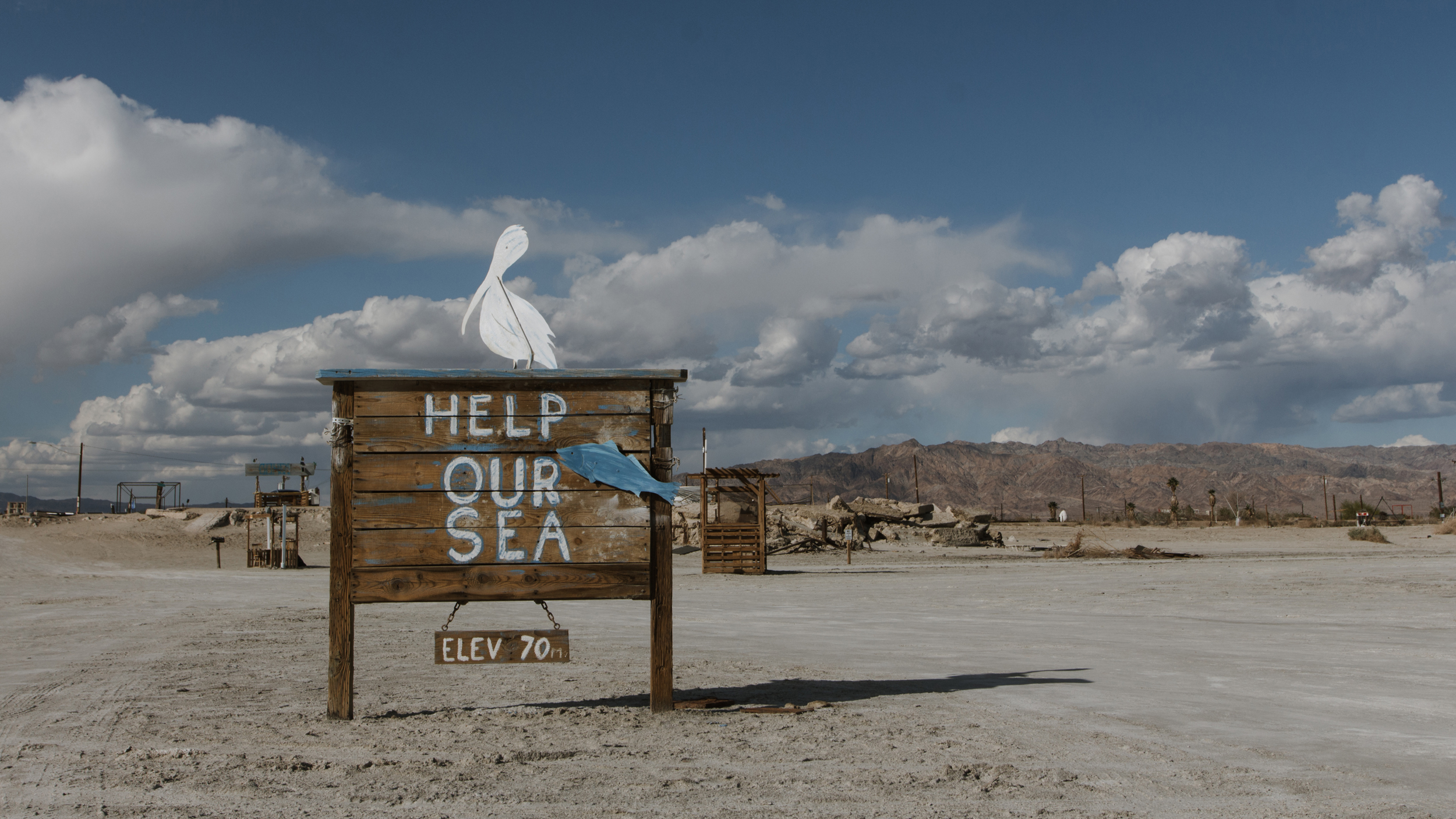
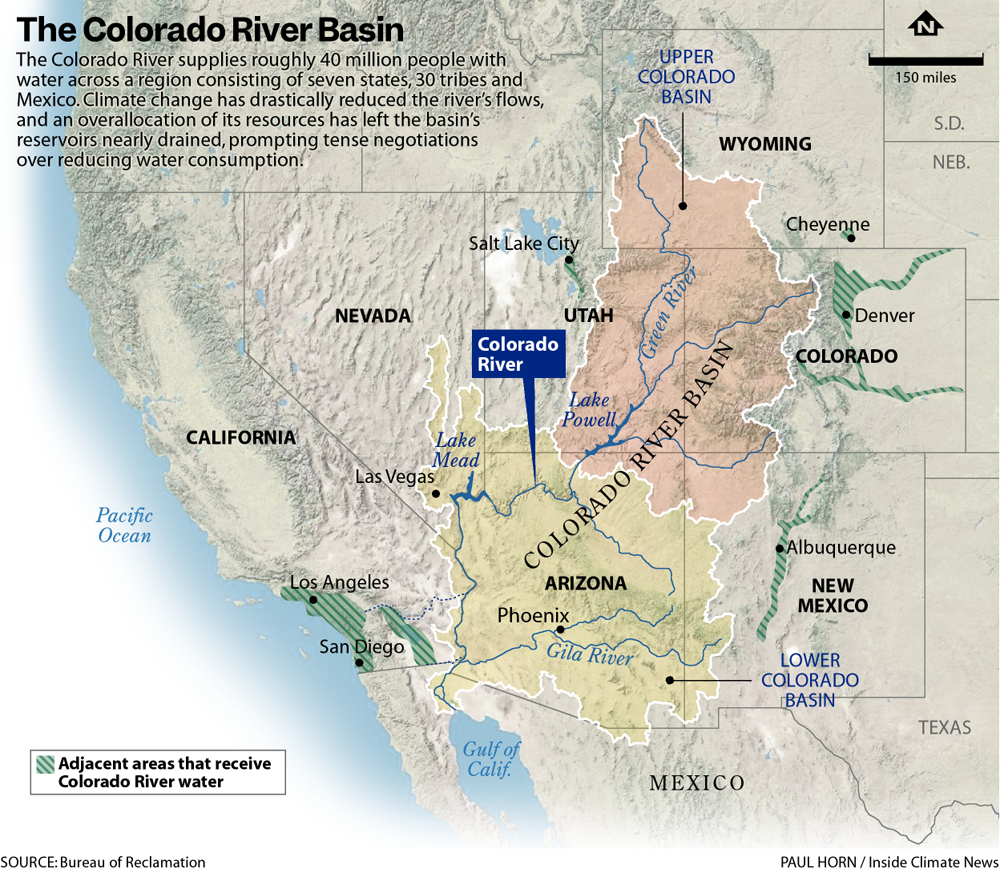
In Imperial County, where lush farms dominate an otherwise parched landscape, rising heat and drought are colliding with the lithium industry’s water demands. Control over increasingly scarce water supplies determines who will benefit from lithium extraction and who will bear its costs. A small number of landowners whose water rights date back a century are set to profit, while many nearby residents struggle to pay the basic utility rate for clean drinking water.
Lax and inconsistent regulations leave these same residents with few enforceable economic, environmental and community protections.
James J.A. Blair, an associate professor of anthropology at California State Polytechnic University, Pomona, has studied lithium mining’s social impacts. Places like Calipatria already face significant inequities, he said, and lithium development that doesn’t attempt to mitigate them is likely to deepen those rifts. The mineral’s importance to the clean energy transition means its impacts on communities and the environment often receive little scrutiny, he added.
“They’re using lithium as a kind of loophole to make everything seem green,” Blair said.
Across the West, the lithium boom is on a collision course with climate-driven declines in rivers and aquifers. Federal data shows that almost all proposed or developing lithium projects are in counties where risk of drought is expected to rise sharply—much more so than in most of the nation. Nearly six in 10 are in places where drought is projected to cause some of the most severe impacts.
A recent study concludes that most lithium mining areas won’t have enough water by mid-century to meet the industry’s demands.
“Those regions are already water-stressed,” said co-author Jennifer Dunn, director of the Center for Engineering Sustainability and Resilience at Northwestern University. Adding lithium mining onto them without reducing water consumption across the board will make it extremely challenging for those mines to operate in the near future, not to mention meeting everyone’s water needs, she said. “As engineers, we can think of some technology solutions to cut water consumption, but the engineering is not going to get you over the hump in this case. It really has to be a local discussion about how we want to use water.”
In Amargosa Valley, Nevada, where wells are already running dry, residents feared that a lithium mining company’s proposed drilling would threaten their sole water supply. The high-poverty town sits in one of the state’s most climate-stressed counties. After the Biden administration paused mining in January 2025 to evaluate how to protect local water resources, the company scrapped its lithium plans. Another mining company has since gained approval from the Trump administration’s Bureau of Land Management to drill just a mile away from that area. The Timbisha Shoshone Tribe and environmental groups sued the agency in February to try to stop the project’s exploratory drilling.
In Green River, Utah, a lithium mining company plans to drill into an aquifer along a tributary of the drought-stricken Colorado River in an area famed for its melon farms. Locals fear the proposal will further strain the water body, a concern the federal agency managing the river expressed in public meetings during the Biden administration.
As the warming planet shrinks freshwater resources, experts say, the clean-energy transition driving demand for lithium may ultimately be constrained by the water scarcity that decades of fossil fuel use have accelerated. If domestic lithium production is a national priority, “we just can’t stick our head in the sand and be like, ‘This is going to work out just fine,’” said Dunn.
“Any entity that wants to increase [water] use is unfit to manage our most precious resource,” said Kyle Roerink of the Great Basin Water Network, which has opposed the Green River lithium project and is monitoring an ongoing fight among Western states over how best to divide what’s left of the Colorado River.
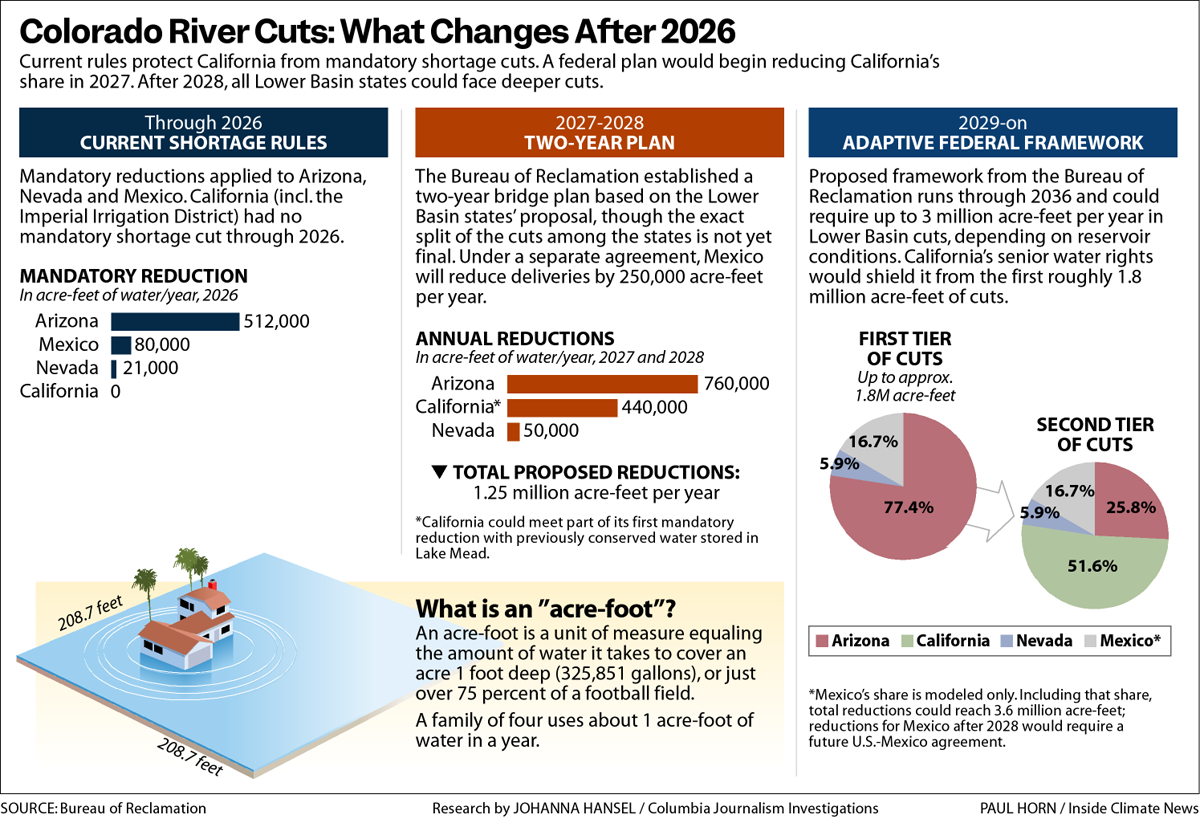
The rules governing usage of the river’s water are rooted in century-old legal frameworks that encourage overuse and never imagined a West as dry as it is today. As reservoirs that supply California and six other basin states hover at record lows, federal agencies have ordered drastic reductions expected to start in the new year, though legal action may complicate the matter.
How that will be parceled out by location in California has yet to be decided. But Imperial County gets the largest share of that water, so major cuts are all but assured here.
Local officials, however, don’t see a reason to worry about lithium-driven water use.
“There will be things that we don’t know at the moment,” said Ryan Kelley, a county supervisor. “But nowhere else in this country do you have this much effort in pre-planning packaged ready to roll for development to occur.” The county is trying to address environmental hazards and economic challenges, he said, in “the most responsible way possible.”
In Calipatria, the projects raise both hopes and fears. Residents like Cooper worry that mining companies will fail to deliver on promises of rigorous environmental oversight, meaningful community engagement and equitable economic benefits, leaving the community worse off than before. As Cooper travels Imperial Valley raising his concerns, he feels outmatched.
“What am I doing without $1,000 in my bank account fighting with billionaires?” said Cooper, founder of The Becoming Project, a grassroots group focused on economic opportunity. “But … if we don’t stand in the middle of this, then this community will get rolled over.”
Rich Deposits, Poor Community
Calipatria sits about seven miles southeast of the Salton Sea, a roughly 300-square-mile lake that formed in the early 1900s after floodwaters breached an irrigation canal built by Imperial Valley’s first farmers to divert water from the Colorado River.
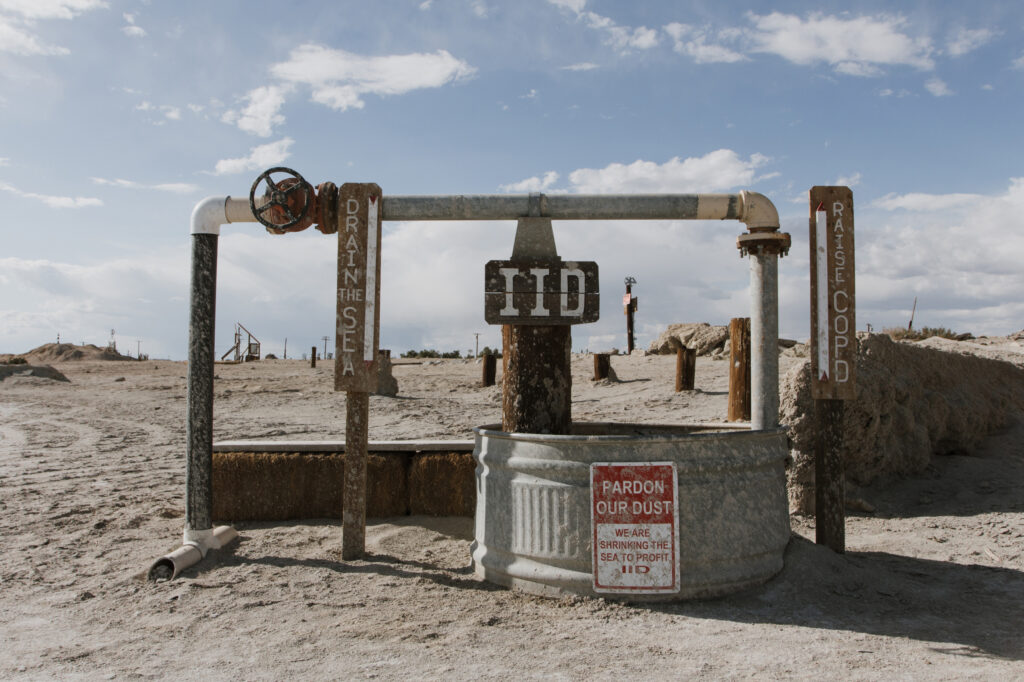
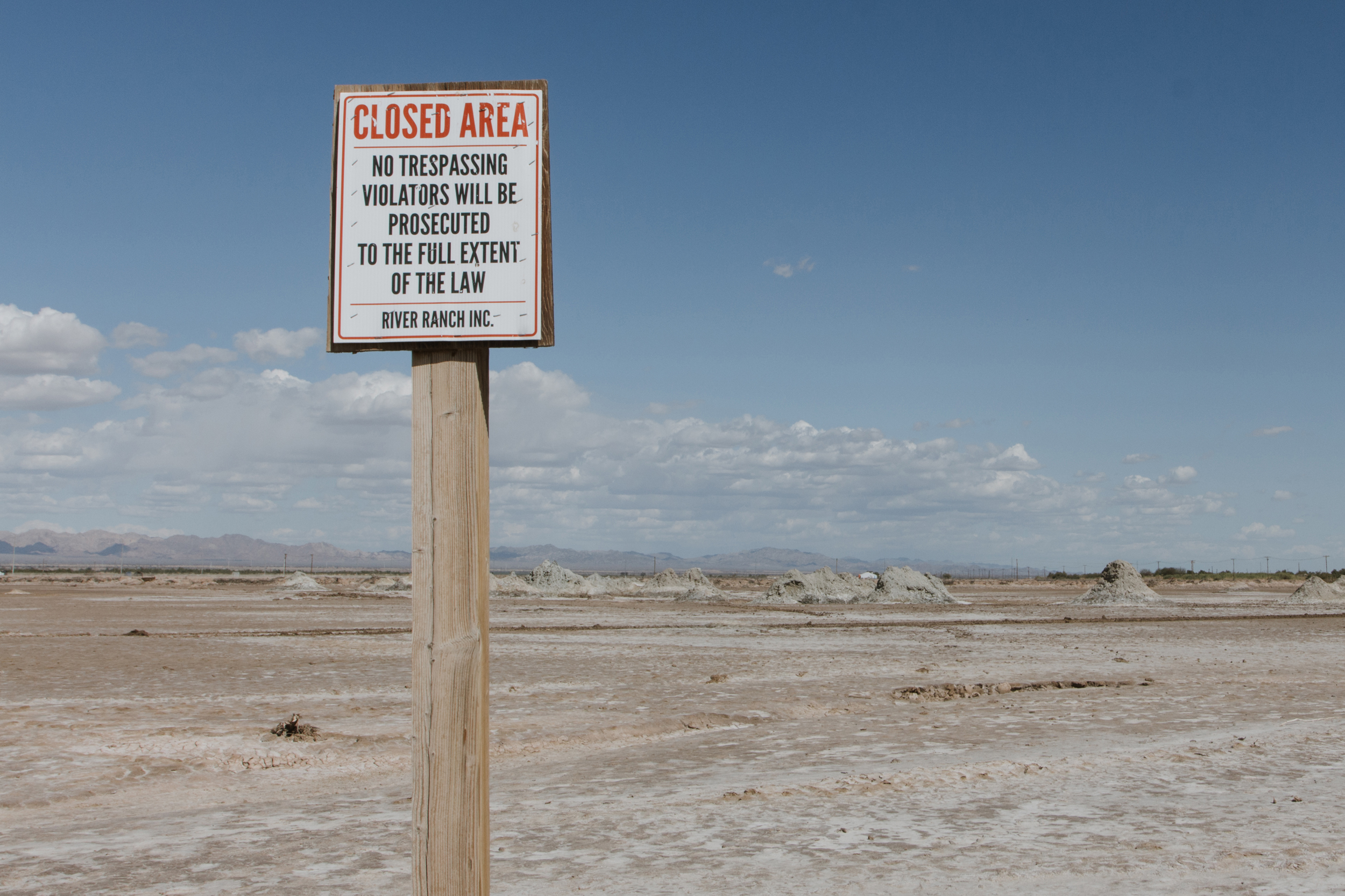
Long maintained primarily as a repository for agricultural runoff—its water mixed with pesticides, bacteria and other pollutants —the Salton Sea is shrinking because of rapidly rising temperatures and reduced agricultural runoff following water reallocations to support urban growth. Today, its exposed lakebed of pollutants accumulated over decades releases toxic dust into nearby towns, contributing to air pollution that regularly exceeds federal safety limits. Imperial County’s childhood asthma rate is roughly four times the state and national averages.
In the low-income, predominantly Latino neighborhoods surrounding the lake, families often cannot afford asthma medication or specialty care, and live in housing without air filtration or air conditioning—all of which magnifies the pollution’s harms.

“Our county officials don’t go out of their way to create plans to combat this,” said Cooper, sitting in his office at The Becoming Project. His criticism is reinforced by numerous studies and reports describing the Salton Sea’s deterioration after decades of government neglect. “It’s just a fend-for-yourself kind of thing.”
Calipatria is also a place where many residents struggle to put food on the table, even though they live among and in many cases work at bountiful farms. Mexican laborers recruited here and paid low wages helped landowners transform the arid landscape of Imperial Valley into a multibillion-dollar agricultural export hub and a top vegetable producer.
Water is a through line for both the haves and have-nots.
A handful of farming families are the main beneficiaries of the valley’s treasured share of the Colorado River, large agribusiness dynasties that hold vast, highly valuable priority water rights. Local farmers pay one of the cheapest irrigation rates in the American West: $20 for an acre-foot of river water. That’s enough to supply a couple of Calipatria households for an entire year.
By contrast, Cooper says, most local residents are hard-pressed to buy both food and clean drinking water. Some families in Niland, just north of Calipatria, rely on makeshift pumps to illegally draw water from the valley’s contaminated irrigation canals because they can’t pay a utility bill for treated water that averages nearly $1,000 a year, an amount that for both communities substantially exceeds a threshold the California water board uses to judge whether rates are unaffordable.
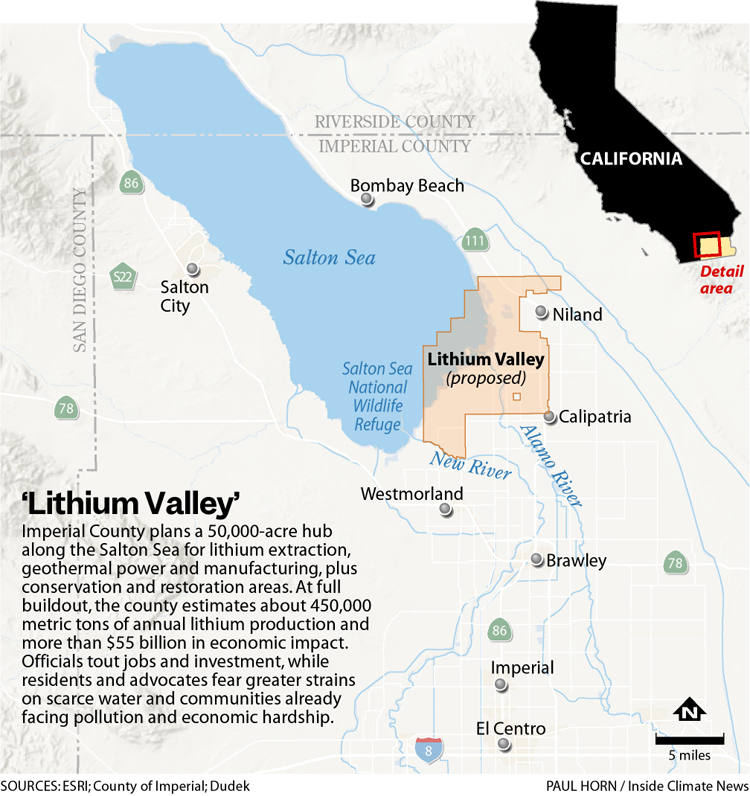
Now there’s a new contender for the area’s dwindling water. With $5 million in state funding, Imperial County has proposed a regulatory framework for a “Lithium Valley” spanning 51,000 acres on the Salton Sea’s southeastern edge. There’s debate about how much can actually be extracted, but company executives and government officials maintain that there’s enough accessible brine reserves to supply lithium for 375 million electric cars—a number topping the entire U.S. population.
The county’s plan hinges on the use of direct lithium extraction, or DLE, which supporters say will consume less water and land than traditional mining processes. Lithium Valley would mark the first time DLE is scaled to a commercial level in the U.S., and some researchers and advocates have doubts about whether the technology can live up to its hype.
“When lithium came here,” Cooper recalled, people were asking “why are you going to use all of these heavy amounts of water [when] we’re struggling?”
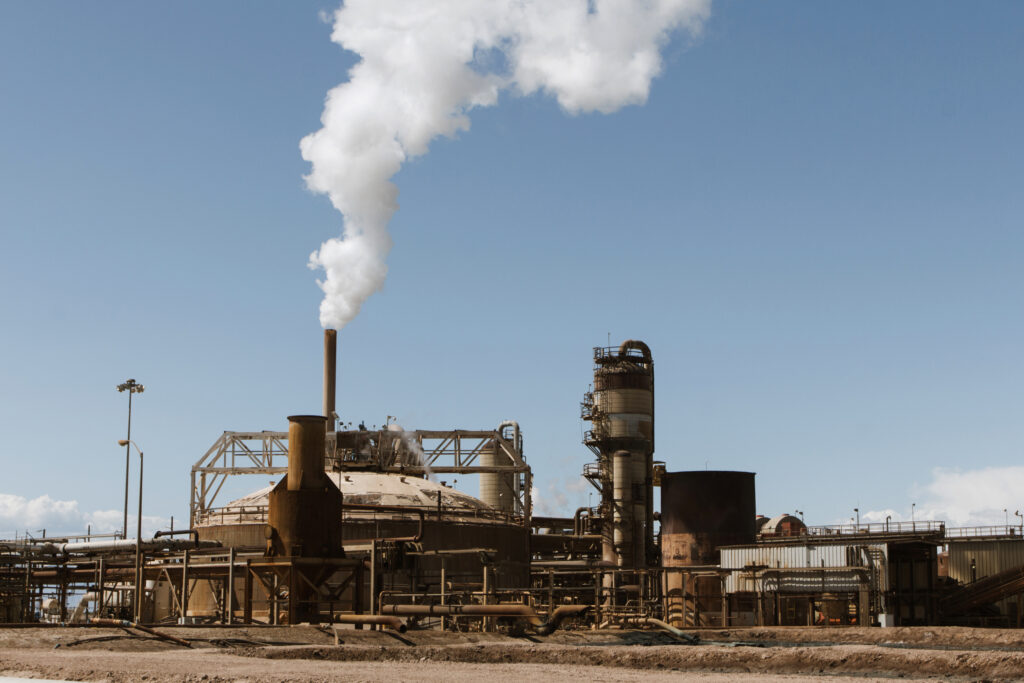
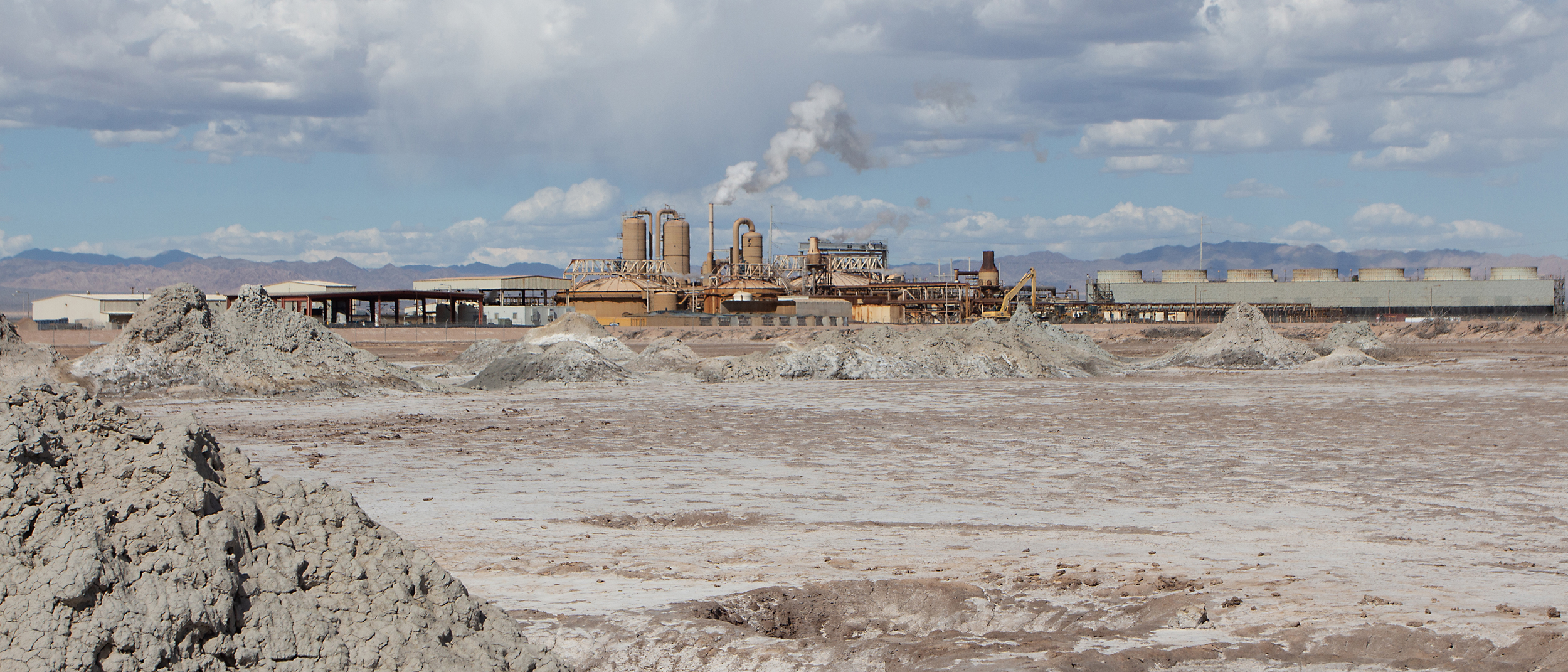
Three lithium mining companies are proposing projects at the site, each in various planning stages. The biggest is Controlled Thermal Resources, based in Australia before relocating its headquarters to the U.S. CTR aims to build a plant to extract lithium as part of a larger clean-energy project known as “Hell’s Kitchen.” The Trump administration has selected CTR’s plant for a program meant to accelerate federal infrastructure permits, though a California appeals court recently ordered further review on a local permit.
Bari Bean, Imperial County’s lithium ombudsman, said trips to the U.S. Department of Energy and the White House about Lithium Valley have underscored to her that Trump administration officials will “be supportive however they can.” She welcomed the administration’s decision to include CTR’s project on the federal fast-track list and its commitment to finalize a $1.3 billion Biden-era loan for EnergySource, another company proposing a lithium production facility.
She considers Lithium Valley a “tremendous opportunity” for everyone involved, including Calipatria and other vulnerable communities.
“If these developments never get built, there will be no funds” to solve the region’s more intractable problems, said Bean, a former employee of Berkshire Hathaway Energy—one of the three companies seeking a lithium mining permit. “The way we create change here is by changing.”
One morning last year in Calipatria, the sun blazed down on a skate park where Cooper and fellow activists had organized a children’s tournament about a half mile from Lithium Valley’s planned border. Cheering families sat beneath umbrellas, while Cooper, sweat beading on his brow, handed out high-fives and water bottles.
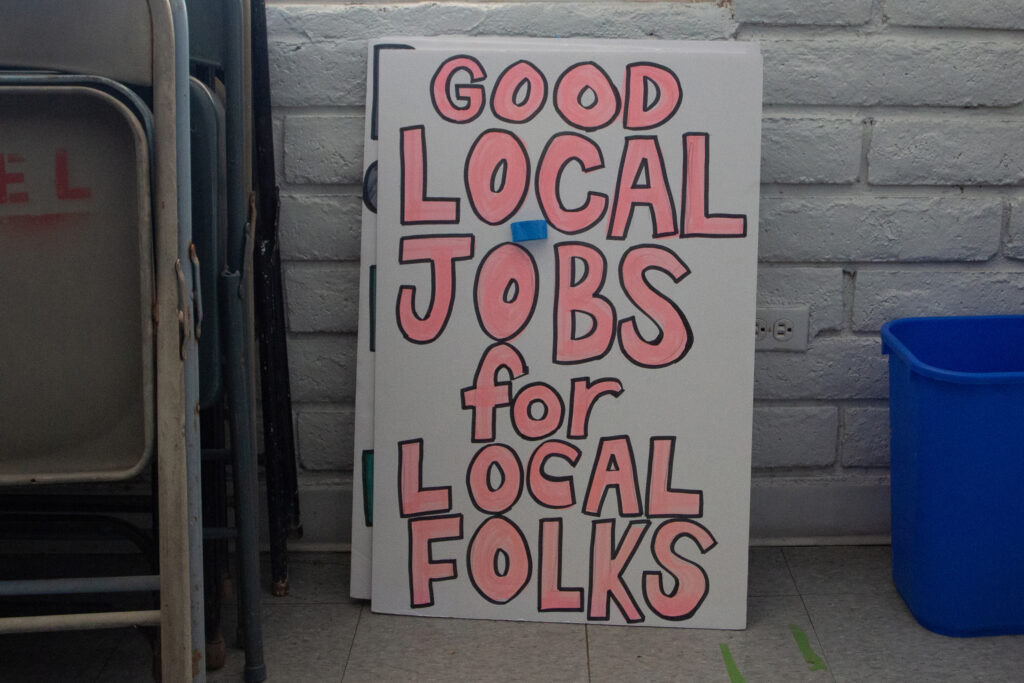
While they watched, residents offered mixed opinions about the lithium plan. Some said the area needs new jobs but also must address longstanding issues like affordable access to clean drinking water and health care. Others said they want assurances that lithium executives and local officials will actually lift up frontline communities. Many did not feel well-informed enough to fully understand the stakes of the boom or comfortable being quoted by name, fearing retaliation.
“People at the top could make a difference in the community,” said Malik Glasgow, who leads a nonprofit called Access to Thrive that works closely with The Becoming Project. But he doubts that county leaders are “really looking out for you and your community instead of just the big dollar.”
Who Gets the Water?
For the Hell’s Kitchen project, CTR has requested tapping 6,500 acre-feet of water per year. CTR’s chief executive officer, Rod Colwell, said that amount will decline with higher recycling efficiency as additional phases come online. His goal is for the DLE technology to capture lithium as brine passes through a series of tanks in a closed-loop system that recycles water.
“Water does not get wasted,” Colwell said. “We’re very confident in water usage.”
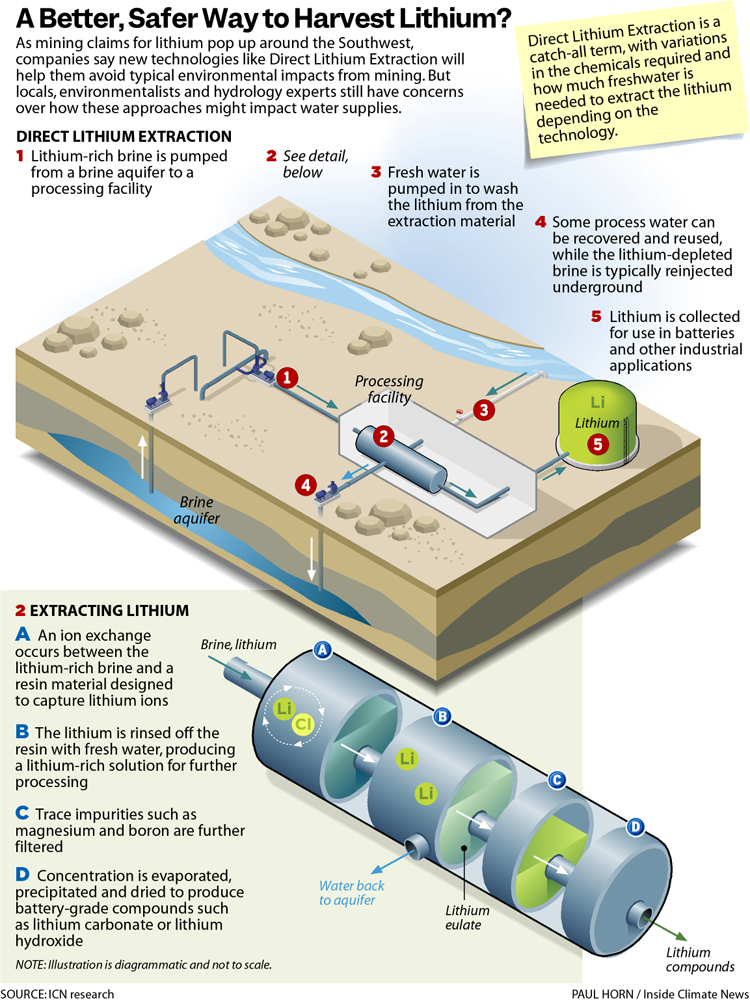
Confidence in the fledgling DLE technology is far from universal. Some studies conclude it still relies on a substantial amount of freshwater. One often cited by the industry and government agencies because it emphasizes the region’s lithium potential also notes that DLE freshwater use might actually exceed that of other types of lithium extraction. Blair, the Cal Poly professor, said examples from Argentina, at one of the only sites the technology has been used at commercial scale, already show DLE-related water depletion.
While the new technology likely will become more sustainable over time, behind-the-scenes water use, such as for cleaning or preparing the brines for extraction, often gets excluded in project presentations, said Dunn, the Northwestern University expert.
“It can’t swoop in right now and save the day,” she said.
If CTR and competitor EnergySource hit their full production targets and use as much water per ton of extracted lithium as studies suggest, their operations could consume as much as 50,000 acre-feet per year, according to an analysis by Columbia Journalism Investigations and Inside Climate News.
The county, meanwhile, has projected that up to 100,000 acre-feet of freshwater would be needed each year for a full buildout of Lithium Valley, including for environmental mitigation. That’s roughly five times more water than what’s currently available for all non-agricultural uses countywide—at a time when Colorado River water users face steep cuts.
In a legal challenge involving the Hell’s Kitchen lithium project, a coalition of grassroots and environmental groups questioned the county’s water assumptions to supply Lithium Valley. They argued that the county’s estimates rely on water that is currently used in agriculture and would only become available if conserved—and such redirection could further dry out the Salton Sea, choking residents with more toxic dust, as studies also suggest.
An appeals court ruled against the county’s approval of the project, finding it failed to adequately address whether enough water was available and how diverting more from the Salton Sea would affect local air quality. The justices, who sent the case back to a lower court to order specific fixes to the permit, noted that the local water management agency had expressed serious concerns over the county’s claims and that no agreements were in place to ensure the “hypothetical supply” of water.
That agency, the Imperial Irrigation District, oversees the region’s river allocations and agricultural irrigation, and has some of the biggest and most senior water rights on the river. IID has committed to cutting at least 250,000 acre-feet of water use per year beginning in 2027 as part of California’s proposal to use less of the river. The target would require significant conservation measures, such as more efficient irrigation by farmers and programs that pay them to temporarily reduce irrigation.
All of that makes IID’s position as arbiter of who gets to access water for non-agricultural purposes, and under what terms, increasingly contentious. But in an interview last year, IID General Manager Jamie Asbury applauded the county’s vision for Lithium Valley and said the district is prepared to help make it a reality.
“We understand the sensitivities in the area,” Asbury said, referring to Imperial Valley’s water scarcity. She acknowledged that DLE’s impact on local water resources remains largely unknown but said the district appreciated the need for job creation.
“We live here, too, and also want economic development to occur,” Asbury said.
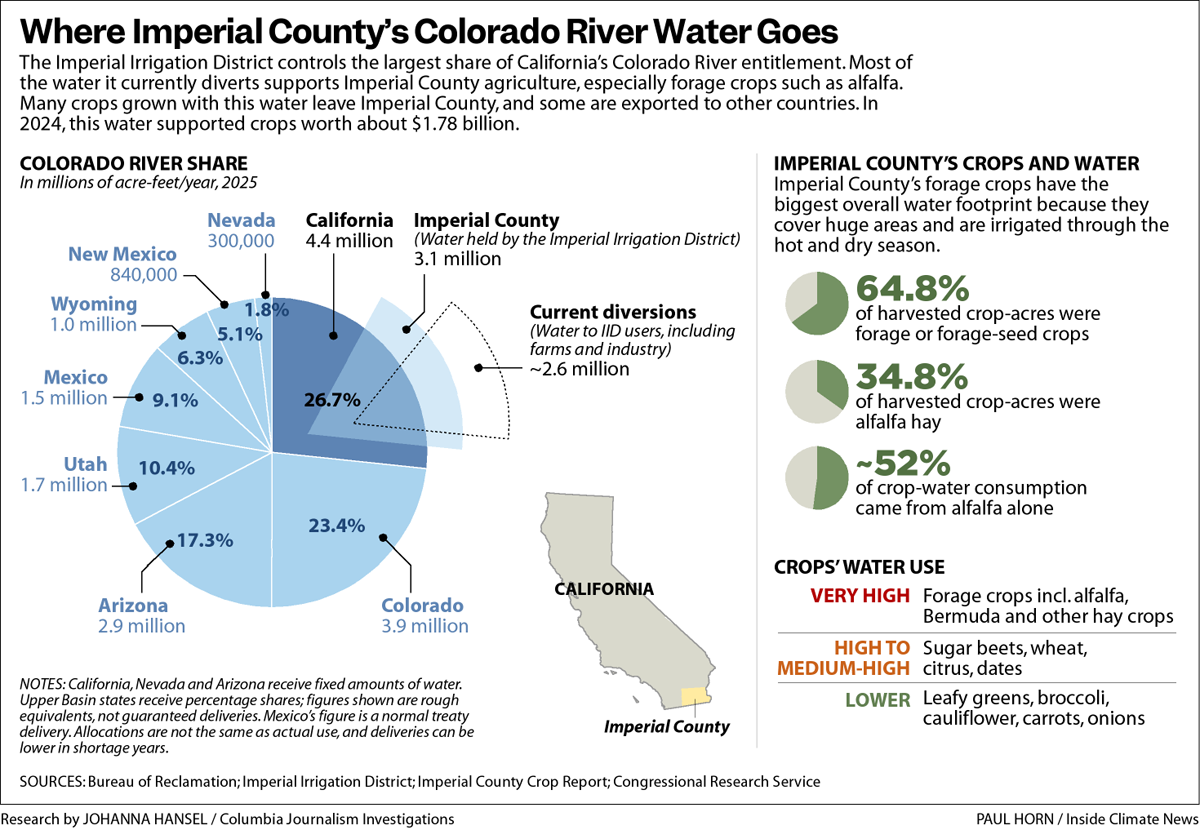
Yet there’s no official plan yet on how exactly to secure Lithium Valley’s future water. As vice chair of the California Lithium Valley Commission, Kelley has put forth an idea to incentivize local agricultural interests to make it happen: Farmers could conserve their water, transfer any extra as credits to a “water bank” run by the IID and get paid for it. The agency would then sell the banked credits to prospective lithium developers under fixed, 30-year contracts.
Stephen Benson, a former district board member who operates a small farm, said many places like his could be more efficient in order to free up water for lithium mining. Water could be conserved if farmers are compensated, Benson said, something he thinks many would be willing to do if the resulting economic development benefits the valley.
“I support diversification of the economy beyond farming,” Benson said. “You only grow so many crops, and we’ve been doing it for 100 years.”
Imperial Valley’s system guarantees that the water making farmers prosperous will remain a revenue generator for them as the warming planet tightens supply. Even during extreme drought, local farmers’ water rights from IID, which are among the strongest in the Colorado River Basin, protect them from uncompensated cutbacks or scarcity price increases common in other drought-stricken agricultural regions.
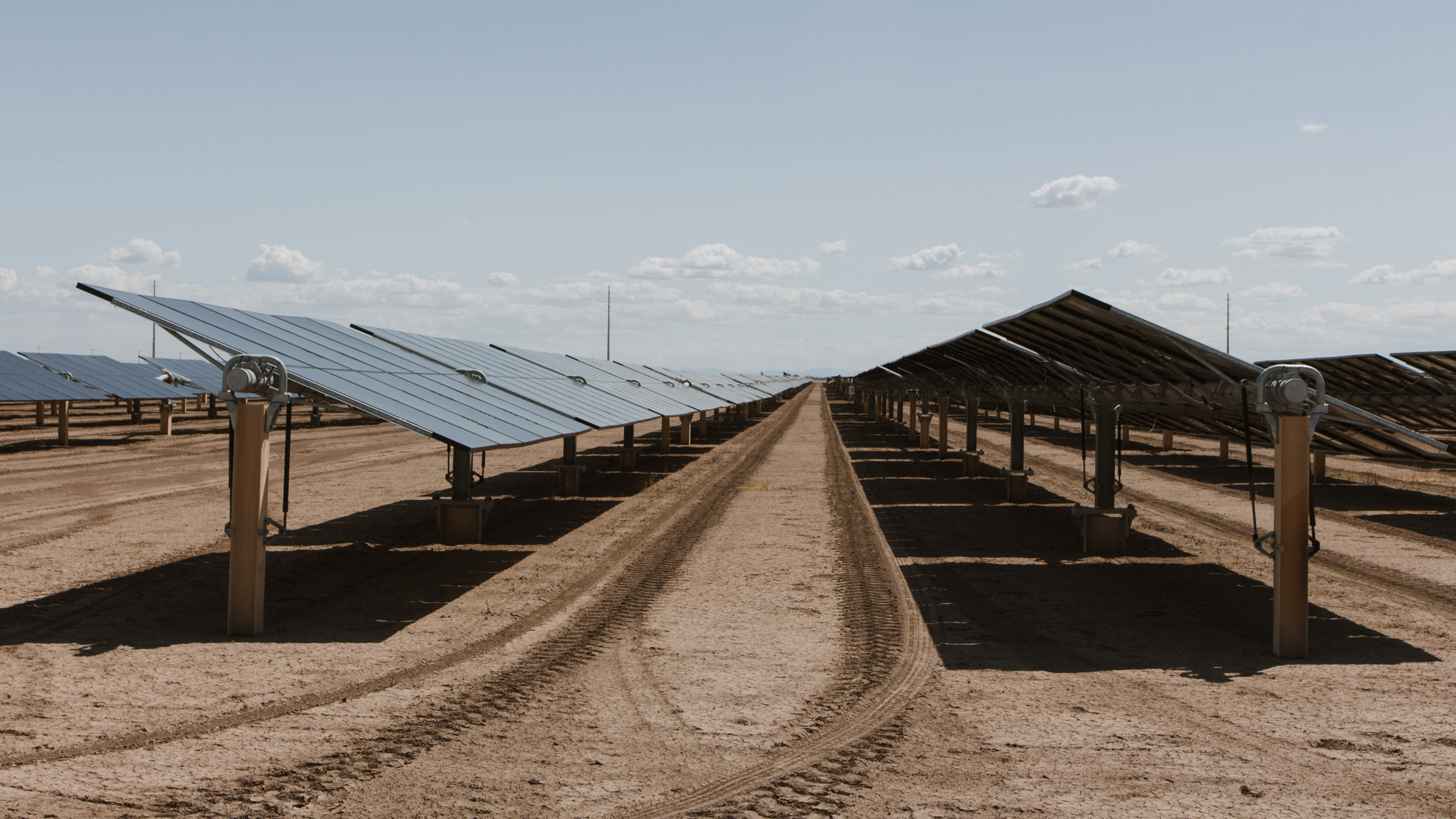
Environmental advocates call the situation untenable. They argue that water rights should only exist if water actually does—otherwise, inequities will worsen. Past development in Imperial Valley offers a cautionary tale: During a recent boom in solar energy, local landowners and public agencies profited after they transferred part of their water rights to solar companies. But many farm workers lost jobs as fields were fallowed—and few permanent solar positions materialized.
While county officials insist that Lithium Valley won’t strain water resources, federal regulators already have documented initial damage. In October 2024, the U.S. Environmental Protection Agency settled with Hell’s Kitchen Geothermal LLC, a CTR affiliate, after determining that the company’s construction activities had harmed wetlands connected to the Salton Sea. The company had discharged soil into roughly 27 acres of wetlands and caused water to drain from as many as 1,200 acres, leaving them without enough water to sustain their ecological functions, the EPA found.
And IID has since made clear it does not want to be held responsible for increased dust if reduced water flows further accelerate the sea’s decline.
Jared Naimark, the western mining senior manager at the environmental group Earthworks, said his organization joined the legal fight to try to force the county to do a more honest accounting of Lithium Valley’s environmental and social costs and how they should be mitigated. Critical to that is considering the region’s ongoing drought and shrinking freshwater supply in an era of climate change.
“We want to see Hell’s Kitchen and the lithium industry done right,” Naimark said.
Who Gets the Benefits?
When California state officials unveiled a vision for Lithium Valley in 2020, they created a commission to study its feasibility, benefits and risks. The panel’s final report recommended tying lithium development to community benefits and long-term equitable regional investment, the kind that reaches places long underfunded by the government.
But by then, Imperial County officials impatient with the state process had already charged ahead, designing their own policy proposals after assembling a working group of community organizations, labor unions and lithium companies. A key element was a “lithium tax,” a severance tax designed to support the municipal services needed to manage the area’s industrial growth.
That ultimately drove the state’s response. Gov. Gavin Newsom’s staff negotiated with Imperial officials to avoid a patchwork of county-level approaches, and in 2022, Newsom signed a lithium tax into state law.
This story is funded by readers like you.
Our nonprofit newsroom provides award-winning climate coverage free of charge and advertising. We rely on donations from readers like you to keep going. Please donate now to support our work.
Companies must pay a flat fee of up to $800 for every ton of lithium they extract in the state over a certain threshold. A fifth of this tax revenue will go toward restoration projects around the Salton Sea. The remaining proceeds will benefit the county.
Imperial County’s spending plan sets aside roughly 10 percent of its lithium tax revenues for a community benefits program to fund everything from public parks to tribal initiatives. About a third of it has to be distributed to affected communities. As part of this, Calipatria and four other nearby communities that will be most directly affected by lithium mining will receive some additional funding, based on their population size and exact location.
Cooper wonders if the calculation would have been different, had the state played a bigger role in designing the community benefits. He doubts Calipatria’s share, an estimated $270,000 a year under the county’s funding scenario, will even cover the high cost of regular repairs to the municipality’s old, corroded sewer system.
Much of the lithium tax revenue, an estimated $3.8 million a year, will go directly to the county. Its officials say localities will ultimately benefit from those funds, too. But that hasn’t worked out well for Calipatria and other underserved local communities in the past, Cooper said.
Kelley, the county supervisor, whose family has deep roots in Imperial Valley’s agricultural and political circles, has played a central role in the lithium-development planning for the last decade and considers the tax model fair.
“There’s always going to be somebody that feels like they didn’t get enough,” he said.
Local officials have tried to walk a narrow line: securing benefits for Imperial County without pushing the fledgling lithium industry elsewhere. Colwell, CTR’s CEO, once warned that the company would leave if California didn’t drop its lithium tax. Since then, the county has offered incentives tied to local manufacturing, while the state awarded CTR a $30 million tax credit linked to local hiring.

In 2023, local officials launched a year-long outreach campaign to solicit public input on Lithium Valley. Cooper worked with a grassroots group contracted for the effort, knocking on residents’ doors, gathering comments and listening to concerns. People wanted to know whether companies would mitigate dust and other contaminants, if local firefighters would receive training and equipment to respond to a potential lithium fire, and who would pay for road repairs after heavy construction traffic moves through residential neighborhoods.
Instead of recommending ways to address the concerns, county officials ignored them, Cooper said. He still thinks the development could be good for the community if done right, but at that point he lost faith in the county’s willingness to make that happen.
Kelley, who oversaw the county’s outreach work, claimed that some grassroots groups, like the one Cooper had teamed up with, had not held public meetings or done a broad enough campaign. “Their report was lacking,” he said. “There was not much that I could harness from [it].”
Cooper said there had been public meetings, and residents told Columbia Journalism Investigations and Inside Climate News that they had attended. The Becoming Project and several other groups have since created a new coalition to push for agreements that would legally bind companies to deliver specific benefits to frontline communities in exchange for their support of lithium mines. One example mentioned by area residents to create lasting change: workforce training beyond the lithium industry’s limited job opportunities.
The point of such an agreement is for residents to have a seat at the table to participate in project decisions and help shape the benefits, rather than have company and government officials offer them up ad hoc.
One of the county’s ideas: a lithium- and geothermal-themed “recreation park” and other projects to educate the public about the benefits of mineral extraction, a multimillion-dollar expense officials wanted to pay for with public funding and lithium industry financial support. To Cooper and fellow activists, that epitomizes what’s wrong with Lithium Valley: flashy initiatives that overlook what residents struggling with toxic dust storms, water scarcity, economic instability and other difficulties actually need.
“What you will hear [from the county and companies] is that this is a historical opportunity,” he said. “It’s only an opportunity if it’s executed right, and that’s not being done right now.”
Federal regulators used to encourage community-benefit agreements to set and deliver on concrete goals, such as local hiring, fair wages and environmental protections, to those living on the frontlines of developments. The Biden administration required companies applying for green energy loans and grants to engage with communities and submit plans proving their projects would boost the local workforce and promote equity, among other benefits; the plans could lead to more formal deals.
But the Trump administration scrapped this requirement for government-funded developments in January 2025—eliminating one of the few tools that communities had to hold lithium mining companies to their word.
Unlike some states and municipalities, where developers must negotiate legally binding agreements with designated community participants to secure public subsidies or project permits, neither California nor Imperial County have mandated such conditions. Negotiations are optional—and companies help decide who gets a seat at the table.
CTR has voluntarily ironed out labor deals with local construction-worker unions and is drafting what it calls a “good neighbor agreement” with some community groups. Colwell, the CEO, said the company is negotiating deals with two churches that he attends, as well as a local charity that would support the lithium visitor center.
He said his company won’t discuss any benefits agreements with coalition members who sued the county over its approval of CTR’s project.
“That’s for sure,” said Colwell. He questions whether the groups are “really working for the community’s benefit,” while acknowledging that “they do do some good.”
Asked about the rollback of the federal community-benefits policy, Bean, Imperial’s lithium ombudsman, said she’s not concerned. The county is already working with local partners to make sure residents won’t be left out, she said. As an example, she notes the “local hiring goals” included in the Lithium Valley plan.
“That’s a choice that the county has made,” she said, “without there being any requirement for us to do that.”
Cooper and fellow activists say they no longer believe the county or the companies are prepared to properly manage lithium development’s benefits and risks. In an already-strained region, they argue, even small miscalculations can have cascading consequences.
“It’s easy to paint us as the bad guys,” said Cooper, whose Becoming Project is not a plaintiff in the lawsuit but is part of a broader coalition supporting the legal challenge and works closely with the groups behind it to coordinate advocacy. “But it’s even easier to address some of the concerns that we have, so we don’t have to be in court.”
Twice in the last two years, according to Cooper, county officials showed up unannounced at a coalition member organization’s office and inspected the books. Activists viewed the visits as a form of intimidation.
Kelley, who did not respond to requests for comment about that, said he believes Imperial County is trying to create good-paying jobs in new fields for local families. Earlier, he said, he talked to coalition members to try to bridge the divide. “I sat with [them] in their little office, trying to let them know, like, ‘What are you doing—throwing doubts into the room?’” he recalled.
That’s “causing economic harm,” Kelley said, noting the delays caused by the legal battle. General Motors, meanwhile, recently backed out of an agreement to purchase lithium from CTR.
“We should have already been in production by now,” Kelley said.
Back at The Becoming Project’s headquarters in Calipatria, Cooper and Glasgow hunched over a blueprint of Lithium Valley, studying its technical and financial details. Posters on the walls outlined community benefit agreements and outreach strategies. “We will not be a sacrifice zone,” one poster declares.
Cooper launched the grassroots group in 2019, selling water bottles to raise money to buy hygiene products for homeless people. In the years since, he and Glasgow have tried to educate families about the risks for children playing outside in poor air quality. Together with other local activists, they’ve installed air-monitoring devices and built air filters for residents who can’t afford their own.
But lately Calipatria residents are more likely to stop by The Becoming Project’s headquarters to ask questions about Lithium Valley. A weathered farmer was sitting on a plastic chair outside the group’s office in the hot afternoon sun, eager to share his thoughts about the mines.
But few are comfortable doing so publicly. Cooper and Glasgow say people ask why they’re willing to speak so openly about their concerns.
“We have to get it on the record [when things are not done right],” Cooper said. “Or are we going to tell everyone that we had a chance and didn’t say anything?”
Wyatt Myskow reported this story for Inside Climate News. Johanna Hansel and Carla Samon Ros were fellows at Columbia Journalism Investigations, the investigative-reporting unit at the Columbia Journalism School. Inside Climate News and Columbia Journalism Investigations provided editing, graphic illustration and other support.
Additional support was provided by the National Press Foundation and the National Press Club Journalism Institute.
About This Story
Perhaps you noticed: This story, like all the news we publish, is free to read. That’s because Inside Climate News is a 501c3 nonprofit organization. We do not charge a subscription fee, lock our news behind a paywall, or clutter our website with ads. We make our news on climate and the environment freely available to you and anyone who wants it.
That’s not all. We also share our news for free with scores of other media organizations around the country. Many of them can’t afford to do environmental journalism of their own. We’ve built bureaus from coast to coast to report local stories, collaborate with local newsrooms and co-publish articles so that this vital work is shared as widely as possible.
Two of us launched ICN in 2007. Six years later we earned a Pulitzer Prize for National Reporting, and now we run the oldest and largest dedicated climate newsroom in the nation. We tell the story in all its complexity. We hold polluters accountable. We expose environmental injustice. We debunk misinformation. We scrutinize solutions and inspire action.
Donations from readers like you fund every aspect of what we do. If you don’t already, will you support our ongoing work, our reporting on the biggest crisis facing our planet, and help us reach even more readers in more places?
Please take a moment to make a tax-deductible donation. Every one of them makes a difference.
Thank you,
