

Close Menu
NCIJ Network NCIJ Network
    What's Hot

    Scientists discover that leukemia can begin developing 50 years before diagnosis

    November 23, 2026

    Have Wisconsin Democrats previously pursued ranked-choice voting? 

    November 23, 2026

    Europe’s critical chance to end the year with a win for multilateralism

    November 23, 2026
    Facebook X (Twitter) Instagram
    Trending
    • Scientists discover that leukemia can begin developing 50 years before diagnosis
    • Have Wisconsin Democrats previously pursued ranked-choice voting? 
    • Europe’s critical chance to end the year with a win for multilateralism
    • Mysterious new viruses reveal a missing link in evolution
    • ‘We had to reinvent the system completely,’ Brazilian philanthropy leader says
    • DataWatch: Average marketplace premiums in Wisconsin will jump 22% in 2027. See how your county compares.
    • Badenoch: Rejoining EU won’t fix Britain’s economic woes – POLITICO
    • Emmanuel Macron proposes French budget ‘golden rule’
    • About
      • Our Team
      • Editorial Policy
      • Editorial Independence
      • International Support
    • Trust & Standards
      • AI Usage Policy
      • Conflict of Interest Policy
      • Corrections Policy
      • Ethics Policy
      • Fact-Checking Policy
      • Source Protection
    • Get Involved
      • Guide for Sources
      • Support Independent Journalism
    • Legal
      • Cookie Policy
      • Privacy Policy
      • Terms of Use
    Facebook X (Twitter) Instagram
    NCIJ Network NCIJ Network
    Monday, November 23
    • Home
    • World
    • Ai
    • Business
    • Politics
    • Health
    • Crypto
    • Science
    • Technology
    • Cybersecurity
    • Defense & Security
    • Economy
    • Energy
    • Europe
    • More
      • Fact Check
      • Investigations
      • Opinion & Analysis
      • Environment
    NCIJ Network NCIJ Network
    Home»Science

    A quake on Mars may have set these rocks rolling

    NCIJ NETWNCIJ NETWORKBy NCIJ NETWNCIJ NETWORKOctober 7, 2026 Science No Comments3 Mins Read
    Share
    Facebook Twitter LinkedIn Pinterest Email

    Earthquakes frequently trigger rock falls. Now there’s solid evidence marsquakes can send boulders tumbling, too.

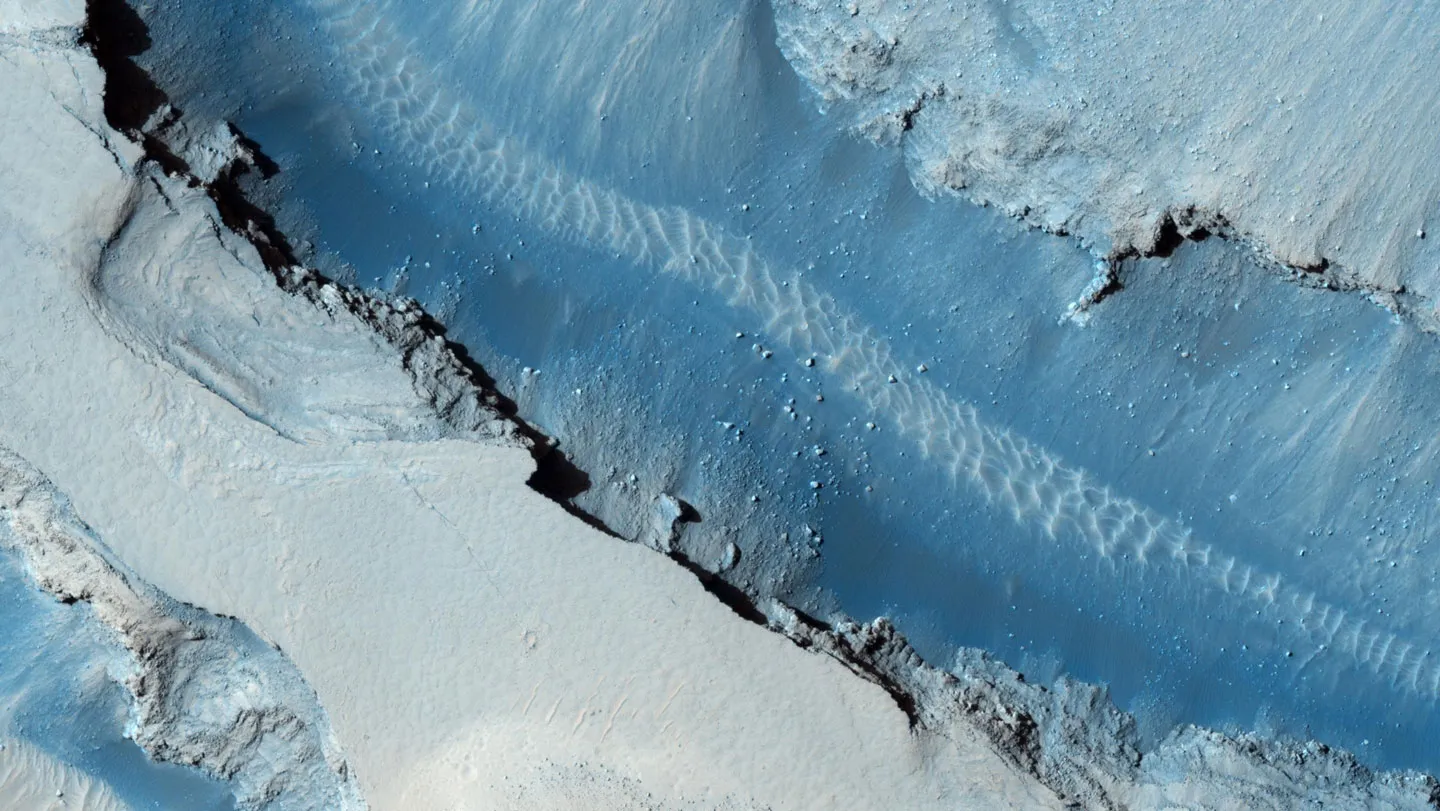
    Scientists mined high-resolution imagery of the Red Planet taken shortly after a recent temblor and found hundreds of new imprints left by tumbling boulders, researchers report September 2 in npj Space Exploration. Such rockfalls can be used as a proxy for seismic data, which is difficult to collect across the solar system.

    The data were collected with NASA’s InSight lander, which touched down on Mars in 2018. Over the next four years, its seismometer detected more than a thousand marsquakes. Many of those temblors originated in a region known as Cerberus Fossae, just north of the Martian equator. That’s a dynamic landscape riddled with slopes, cracks and rocks on the move, says Vijayan, a planetary scientist at the Physical Research Laboratory in Ahmedabad, India, who goes by a single name. “Thousands and thousands of boulders have fallen.”

    Sign up for our newsletter

    We summarize the week’s scientific breakthroughs every Thursday.


    Vijayan and his collaborators focused on one well-detected marsquake captured by InSight that occurred in July 2019 just a few tens of kilometers from Cerberus Fossae. By comparing images taken in June 2019 and December 2020, the researchers discovered 27 new linelike features. Each was composed of tens to hundreds of distinct marks. These structures were most likely tracks created by boulders bouncing downhill, the team concluded.

    An image of the same slope in December 2020 shows a new boulder track on the far right. It is most likely due to a marsquake.Images courtesy of Vijayan, NASA/JPL-Caltech/UArizonaOn this sloping landscape in Cerberus Fossae, taken before a marsquake in July 2019, there’s no boulder trail in the top right.Images courtesy of Vijayan, NASA/JPL-Caltech/UArizona
    A closeup of Cerberus Fossae on Mars before a quake with boulder line at top right
    An image of the same slope in December 2020 shows a new boulder track on the far right. It is most likely due to a marsquake.Images courtesy of Vijayan, NASA/JPL-Caltech/UArizonaAn image of the same slope in December 2020 shows a new boulder track on the far right. It is most likely due to a marsquake.Images courtesy of Vijayan, NASA/JPL-Caltech/UArizona

    Using historical imagery, the researchers calculated that only about two such features form each year on average in Cerberus Fossae. “We have statistics of previous boulder falls,” says Bivas Das, a seismologist at the Physical Research Laboratory and a member of the research team. Recording 27 new structures over a span of just 18 months is wholly unexpected, Das says. “That’s a big increase.” The nearby marsquake recorded by InSight was probably the instigator, the team concluded.

    Mysteries remain, however. All of the rockfalls occurred on the north side of a prominent valley in Cerberus Fossae, despite more boulders being located on the south side of the valley. “That puzzles us,” Vijayan says. The complex landscape of Cerberus Fossae might well alter how seismic waves travel, making it difficult to predict how shaking will impact different areas, he says. “The wave propagation is going to be complicated.”

    Looking for such boulder falls elsewhere could help space exploration efforts, the team suggests. Human settlements would do best avoiding areas that are seismically active, and tumbling boulders can be the proverbial canaries in the coal mine, Vijayan says. “They’re like a proxy in the absence of seismic data.”

    Mars quake rocks rolling set
    NCIJ NETWNCIJ NETWORK
    • Website

    Keep Reading

    Scientists discover that leukemia can begin developing 50 years before diagnosis

    Mysterious new viruses reveal a missing link in evolution

    Two monster black holes from the dawn of time defy explanation

    A galactic shock wave could rewrite the map of the Milky Way

    New gum disease treatment kills bad bacteria while sparing the good

    DNA’s secret sunscreen may have helped life survive on early Earth

    Add A Comment
    Leave A Reply Cancel Reply

    Editors Picks

    Scientists discover that leukemia can begin developing 50 years before diagnosis

    November 23, 2026

    Have Wisconsin Democrats previously pursued ranked-choice voting? 

    November 23, 2026

    Europe’s critical chance to end the year with a win for multilateralism

    November 23, 2026

    Mysterious new viruses reveal a missing link in evolution

    November 23, 2026
    Latest Posts

    Iran Shows No Military Can Do the Impossible

    August 22, 2026

    Pakistan’s Crypto Pitch: “Come Build Here”

    August 22, 2026

    Microsoft Patches Severe Entra ID Flaw (CVSS 10.0) Allowing Remote Code Execution

    August 22, 2026

    Subscribe to News

    Get the latest sports news from NewsSite about world, sports and politics.

    NCIJ Network is an independent digital news platform delivering trusted investigative journalism, European and global news, in-depth analysis, and fact-based reporting with accuracy, transparency, and integrity.

    Facebook X (Twitter) Instagram Pinterest YouTube

    Scientists discover that leukemia can begin developing 50 years before diagnosis

    November 23, 2026

    Have Wisconsin Democrats previously pursued ranked-choice voting? 

    November 23, 2026

    Europe’s critical chance to end the year with a win for multilateralism

    November 23, 2026

    Subscribe to Updates

    Get the latest creative news from FooBar about art, design and business.

    Type above and press Enter to search. Press Esc to cancel.