


For Seychelles and other countries across the Western Indian Ocean region, marine conservation is a fundamental component of national development. But the ocean observes no national borders, which makes international cooperation and common financing instruments essential.
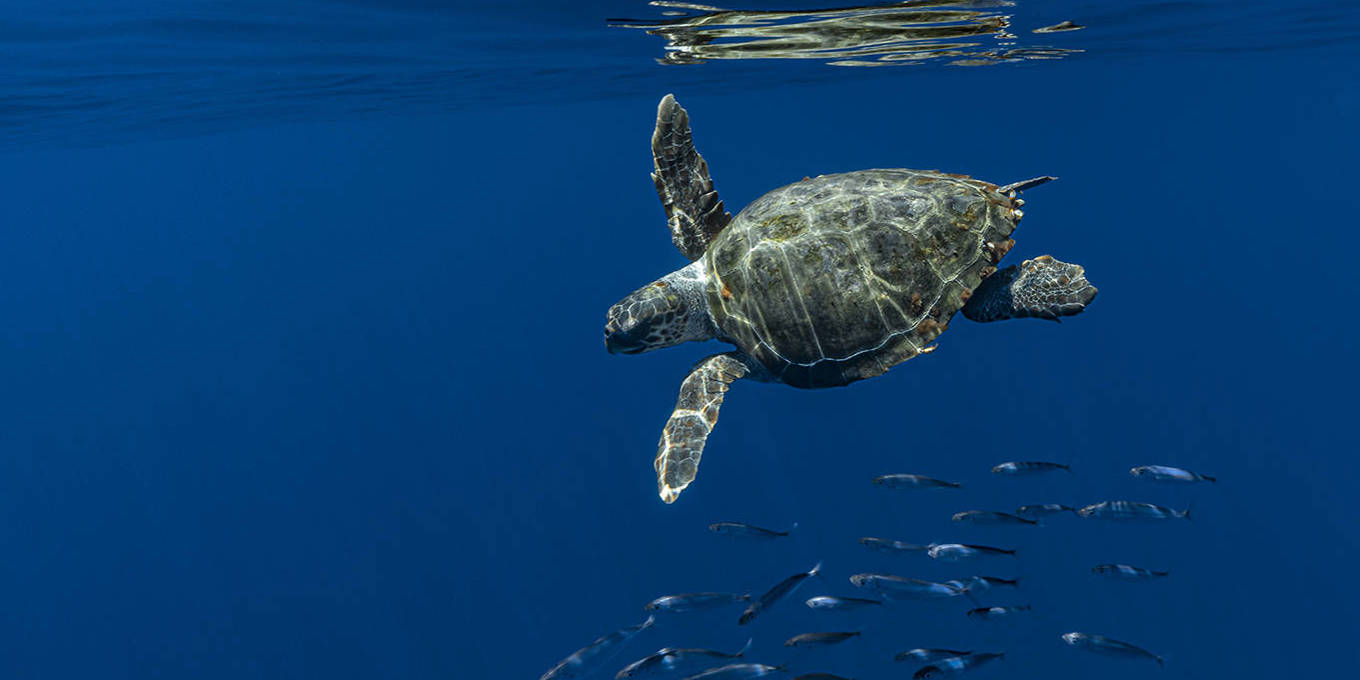
VICTORIA—Every year, sea turtles return to the beaches of northern KwaZulu-Natal, in South Africa, where they began life. Once they leave the shore, some travel north through the Mozambique Channel, using waters and coastal habitats off Mozambique and Madagascar, while others journey into the wider Indian Ocean. South Africa can protect their nesting beaches, but no country alone can protect their entire journey.
The turtle embodies the central challenge of ocean conservation. Strong national action is indispensable, but protecting migratory species, interconnected habitats, and shared ecosystems requires countries to work together. And to do that, the finance supporting such cooperation must be capable of making the same journey as the turtle.
For the approximately 60 million people living within 100 kilometers (62 miles) of the Western Indian Ocean coastline, the stakes of conservation are immediate. Healthy marine ecosystems support food security, livelihoods, trade, and tourism, as well as providing bulwarks against storms. They are the natural foundation of the sustainable blue economies our countries are working to build.
But their value also reaches far beyond the region. Our mangroves and seagrasses store carbon. Our reefs sustain biodiversity. And our waters support migratory species whose journeys connect coastlines and the wider ocean. Protecting them may be a regional responsibility, but it is also in the rest of the world’s interest.
Regional leaders do not lack ambition, nor are we waiting for others to define what ocean conservation should look like. In my country, Seychelles, we have seen what can happen when ambitious goals are backed by strong political commitments and innovative finance. Our marine spatial planning and conservation-finance experience demonstrates that protecting the ocean can be integrated into national development. Now, other countries across the Western Indian Ocean are pursuing similar strategies shaped by their own priorities and circumstances.
Through the Nairobi Convention, governments have committed to stronger cooperation in developing sustainable blue economies and more effective, inclusive forms of ocean governance. The Regional Ocean Governance Strategy has established the mandate, and we are all now tasked with creating the financing mechanisms capable of delivering it.
It is a tall order. Achieving the common objective of protecting 30% of marine and coastal areas by 2030 requires more than drawing boundaries on a map. Protected areas must be supported by science, effective management, enforcement, community participation, and investments in sustainable livelihoods.
With the landmark Agreement on the Conservation and Sustainable Use of Marine Biological Diversity of Areas beyond National Jurisdiction now in force, new possibilities are opening for conservation beyond national waters. The Western Indian Ocean region must be ready to influence how the agreement is implemented. Our responsibilities will extend far beyond any single project or grant. Reefs do not recover according to project deadlines, just as fisheries won’t be replenished in sync with funding cycles. Conservation requires continuity.
That is why women from three coastal villages in Anjouan, Comoros, formed an association after learning from fishing communities in Madagascar and Zanzibar. They temporarily closed part of their reef to octopus fishing, helped enforce the closure, and then waited. When the fishing ground reopened, the average octopus caught was twice its previous weight. The idea crossed borders because likeminded communities were open to learning from one another.
In these and other ways, Western Indian Ocean communities are already taking the lead on conservation. But sustaining and extending their progress requires finance that supports local leadership, knowledge-sharing, and long-term ecosystem management. National institutions and project investments remain essential, but some responsibilities are regional by nature. Fisheries can move and species can migrate between interconnected habitats.
No single fund can finance every item on the conservation agenda. Pollution controls, greener ports, and other maritime priorities require different instruments. Nonetheless, governments are working toward a Western Indian Ocean Regional Conservation Trust Fund (RCTF) that can fill critical gaps, mobilizing and deploying sustained finance for priorities that cross borders and are best addressed regionally. Designed to complement and not compete with national funds, development banks, and project finance, the RCTF will focus only where cross-border cooperation adds clear value.
The region is not starting from scratch on this issue. Consultations with governments, conservation organizations, and financial partners are already ongoing, informed by lessons from near and far. But the next phase must be government-led to determine the RCTF’s priorities, safeguards, governance structure, and relationship with existing institutions.
International partners can help accelerate that work. They are not being asked to create a new agenda or finance another isolated project. They can help build one component of a regionally owned financing architecture, directed toward conservation needs that conventional funding struggles to sustain. This is not simply about funding conservation in the Western Indian Ocean. The real opportunity is to invest in the region’s own capacity to lead the effort.
When governments meet for the Twelfth Conference of the Parties to the Nairobi Convention (COP12) next week, they will mark 40 years of cooperation through that agreement. They must also look ahead. A sustainable blue economy for the region must be built on healthy ecosystems backed by reliable, long-term finance. The goal for the conference should be to authorize a government-led next phase for the RCTF, defining where it can add value and how it should cooperate with other regional bodies.
The Western Indian Ocean is one connected system. Its future demands finance equal to the distance its species travel, the connections its ecosystems sustain, and the ambition its countries are bringing to the table.
