


Not even the most effective European electrification strategy will eliminate the need for the molecules that fossil fuels provide. Given this, Europe must diversify its oil and gas supplies, maintain its refining capacity, and lock in decarbonization by building a hydrogen-energy industry at scale.
WASHINGTON, DC—When European Commission President Ursula von der Leyen was delivering her State of the Union address in Strasbourg, I was in Washington at a meeting of the Global Advisory Committee of the Energy Futures Initiative Foundation, created and led by former US Energy Secretary Ernest Moniz. In Strasbourg, von der Leyen set out a bold ambition: “Let’s make Europe’s future electric.” In Washington, we grappled with a sobering reality: electrons alone cannot power economies.
Von der Leyen was right about one thing: Europe cannot remain an “industrial powerhouse” while facing “structurally too high” energy prices. As long as the European Union remains dependent on imported fuel, this will be a chronic constraint, as was apparent when Russia launched its full-scale invasion of Ukraine, forcing Europe to diversify rapidly. And it has again been underscored since the United States and Israel launched their war against Iran. Europe has spent an additional €90 billion ($102 billion) on fossil-fuel imports since the war began, von der Leyen lamented, without adding a “single molecule of energy.”
For von der Leyen, there is only one solution: electrification. She set the goal of doubling electricity’s share of European energy consumption by 2040. It is a worthy aim, given Europe’s need for much more electricity—clean, abundant, and competitively priced—and grids capable of delivering it. As von der Leyen also noted, the EU installed more than 80 gigawatts of renewable capacity last year, but roughly six times as much is still awaiting grid connection. That is an infrastructure problem on a strategic scale.
But not even the most effective electrification strategy will provide Europe’s missing molecules. Critical sectors—such as aviation, maritime transport, chemicals, fertilizers, high-temperature industrial processes, heavy transport, and defense—cannot run on electrons alone. Whether we like it or not, Europe will continue to consume oil and gas for the foreseeable future.
Any European energy strategy must therefore blend a firm commitment to decarbonization with a plan for managing continued dependence on oil and gas securely. This must include refining capacity.
In Europe, refineries are often viewed as relics of the hydrocarbon age. This is dangerously reductive. In fact, they are part of an industrial ecosystem encompassing storage, ports, pipelines, logistics, emergency supplies, aviation and maritime fuels, petrochemical feedstocks, skilled workers, and technological know-how. Europe might consume progressively less oil and gas, but as long as it consumes any, outsourcing its refining capacity merely increases dependence and vulnerability. The EU learned the hard way that optimizing for price during normal times (by purchasing ever-larger quantities of Russian gas) can come at a high cost in times of crisis.
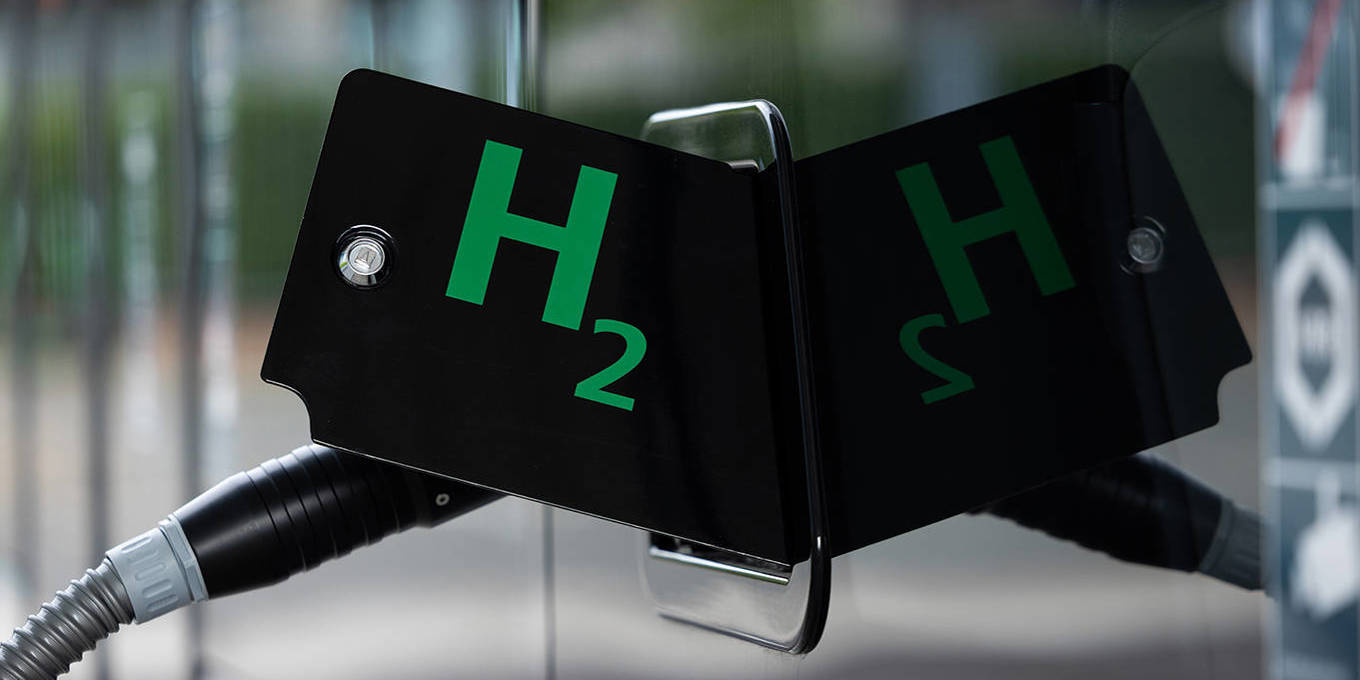
Eventually, Europe will move beyond fossil fuels. But it will not move beyond the need for molecules. That is where hydrogen, which did not receive a single mention in von der Leyen’s address, comes in. Hydrogen is a victim of a familiar cycle: an emerging technology is presented as a solution to almost everything, progress proves slower and more expensive than anticipated, and enthusiasm dwindles. But hydrogen is neither a panacea nor a failure.
Green hydrogen, produced through electrolysis using renewable energy, can substitute for fossil fuels in a wide range of applications, from transport to heavy industry and household heating. But it is not always the best option. In some situations, direct electrification works better. Hydrogen should thus be applied only in areas where direct electrification is difficult, such as steel, fertilizer, and chemical production, certain high-temperature processes, shipping, and, potentially, aviation.
The challenge is to turn molecular hydrogen from an aspiration into an industry at scale. This requires affordable clean electricity, electrolyzers or other low-carbon production routes, storage capacity, transport infrastructure, certification systems, and, crucially, sufficient demand to justify investment. Meeting these conditions will take time. Europe cannot conjure a hydrogen economy into existence by proclamation any more than it can legislate the physics of an electricity grid. It needs to do the hard work of building one.
Europe confronts a dual challenge: decarbonize, with clean hydrogen and its derivatives providing a growing share of the molecules that currently come from fossil fuels, while ensuring secure energy supplies along the way. Success will require European leaders to start treating energy security, affordability, and decarbonization as one strategy, rather than as three competing agendas.
Energy policy now encompasses not only climate policy, but also industrial policy, because energy determines whether factories remain competitive, and social policy, because stability demands that households can afford their heating bills. It also overlaps with security policy, because routes, refineries, grids, storage facilities, and ports can become instruments of coercion or targets of attack, and with technology policy, because AI, data centers, and advanced manufacturing require immense amounts of reliable power. And it is relevant to foreign policy, because energy dependencies constrain an actor’s room for maneuver.
Energy independence is not realistic. Europe needs to manage interdependence by diversifying suppliers, preserving essential capabilities, developing domestic advantages, and avoiding dependencies that can be weaponized. The point is neither to cling to yesterday’s energy system nor to pretend that tomorrow’s already exists. Instead, Europe must build the energy system of the future—one that includes both electrons and molecules—while maintaining the strategic capabilities necessary to safeguard its strategic autonomy.
