


Welcome to Foreign Policy’s Africa Brief.
The highlights this week: Thousands of Yemeni refugees flee to Djibouti amid growing Houthi attacks, Morocco holds its first parliamentary elections since major youth-led protests, and fighting resurges in Ethiopia’s northern Tigray region.
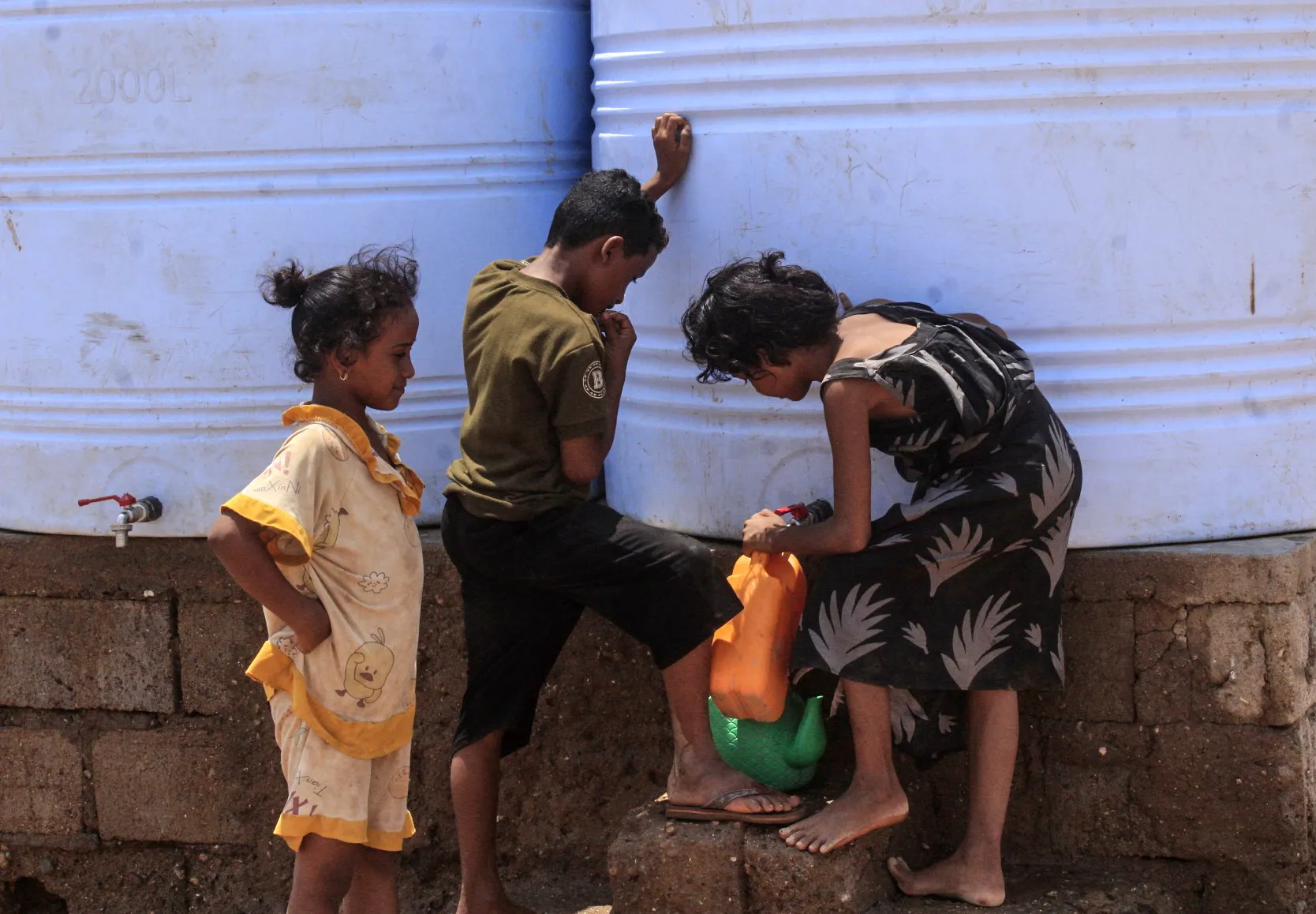
The United Nations is warning of a rapidly escalating humanitarian crisis in Djibouti, as more than 3,000 Yemeni refugees have fled by boat to the Horn of Africa country in recent weeks following offensives by Iranian-backed Houthi rebels along the Red Sea.
The U.N. refugee agency has said that continued fighting could cause this figure to spike to 10,000 people in the coming months, especially as rough sea conditions are forecast to improve after mid-October.
Djibouti sits directly across from Yemen on the Bab el-Mandeb Strait, a vital shipping chokepoint connecting the Red Sea to the Gulf of Aden that handles approximately 12 percent of global maritime trade. The Houthi’s recent capture of Yemen’s port city of Mokha and the strategic Mayun Island (also called Perim) has now put the rebel group just 12 miles from Djibouti’s coast.
Djiboutian President Ismail Omar Guelleh has exploited his country’s location as an economic asset for decades by leasing land to foreign powers; the United States, China, Japan, and some European nations have military bases there. But Djibouti’s strategic position has increasingly become a liability as it faces rising fallout from the Iran war.
Security experts argue that the widening Houthi campaign could draw the Horn of Africa deeper into war in the Middle East and further destabilize the region. Djibouti is not the only country receiving refugees amid the conflict; hundreds of Yemenis have also fled to the Somali breakaway regions of Somaliland and Puntland.
Djibouti already hosts around 36,000 registered refugees, mainly from Somalia and Ethiopia, which has strained public infrastructure and clean water access among a population of just 1.2 million. The country took in more than 15,700 Yemeni refugees in 2015, when Yemen’s civil war escalated. (Most of those who arrived then have since returned to Yemen or relocated.)
“Djibouti can no longer afford to carry a regional burden,” the country’s finance minister, Ilyas Dawaleh, wrote in Addis Fortune earlier this month. “A Horn of Africa left to absorb rising displacement alone is less able to secure its coastline or deny space to those who threaten shipping through the strait.”
Complicating matters, Israel’s recognition of Somaliland in December, a decision likely made partly in order to monitor Houthi activity across from the territory, may bring heightened insecurity to the region. Eventually, Marc Lynch wrote last week in Foreign Policy, it could “turbocharge Houthi ties with the Somalia-based al-Shabab terrorist group, which has been organically growing for several years, raising the risks of a transregional expansion of the war across the Horn of Africa.”
In recent months, the Houthis and al-Shabab have drastically expanded military and tactical cooperation, according to a Wall Street Journal report. A closer alliance also creates the potential for greater arms smuggling that could create an economic lifeline for both militias.
Al-Shabab, meanwhile, has managed to profit off the conflict. As naval attacks in the Middle East have drawn maritime traffic closer to Somalia’s coastline, leading to a resurgence in piracy, security assessments suggest that al-Shabab has integrated its operations with Somali pirate networks to boost its revenue, taking an estimated 20 percent to 30 percent cut of ransom payments.
Nearly two decades of U.S. security support and military intervention have failed to decisively weaken al-Shabab. Last week, Washington agreed to give the U.N. another year to phase out its logistical support for African Union (AU) peacekeepers in Somalia. Security analysts warned that removing the $550 million support network too quickly would weaken the AU’s ability to hold back al-Shabab, further destabilizing a highly volatile Red Sea corridor.
Small nations such as Djibouti have stressed that they are ill-equipped to deal with the Middle East crisis, coupled with these overlapping conflicts in the wider Horn of Africa—not just in Somalia, but also Ethiopia and Sudan. Currently, the U.N. refugee agency’s Djibouti operation is only 15 percent funded and requires urgent support to prepare for future arrivals from Yemen.
Tuesday, Sept. 22, to Monday, Sept. 28: The U.N. General Assembly high-level week takes place in New York City.
Sunday, Sept. 27: São Tomé and Príncipe holds parliamentary elections.
Tuesday, Sept. 29: A Nairobi court is scheduled to hear a landmark—and long-delayed—case brought by nearly 200 African content moderators against tech giant Meta.
Ethiopia’s renewed war. Tigray People’s Liberation Front (TPLF) rebels seized control of airports in the cities of Mekelle, Shire, and Axum in Ethiopia’s northern Tigray region on Wednesday while fighting between the TPLF and federal forces erupted in the neighboring Afar and Amhara regions, fueling widespread fears of a return to all-out war.
On Sunday, the TPLF and six other armed groups formed the so-called Alliance for Survival, which seeks to overthrow Prime Minister Abiy Ahmed’s federal government. This followed months of escalating tensions between Addis Ababa and the TPLF, with troop buildups along the Tigray region’s border.
The news comes just after the United States lifted sanctions against Eritrea’s ruling party and military on Friday amid the Houthi blockade of Red Sea shipping. Washington imposed the sanctions in 2021 due to human rights concerns during the 2020-22 Tigray civil war, when Eritrea fought alongside Ethiopian troops.
Since the war, the Ethiopian-Eritrean relationship has deteriorated, as Abiy has pursued Red Sea access through Eritrea, which Addis Ababa lost when Asmara gained independence in 1993. Ethiopia has also accused Eritrea of colluding with the TPLF.
Washington is courting Eritrea because its port of Assab lies near the strategic Bab el-Mandeb Strait, but bringing the country back into the international fold has indirectly escalated tensions between Ethiopia and Eritrea. Additionally, rising Houthi attacks may restrict shipping around Djibouti’s port, which Ethiopia relies on for around 97 percent of its cargo, potentially encouraging Abiy to renew his bid for maritime access.
Moroccan elections. On Wednesday, Moroccans will vote in parliamentary elections amid high youth dissatisfaction with healthcare, education, and high unemployment, which partly triggered deadly Generation Z-led protests last September and mass migration to Spain’s North African exclave of Ceuta in July.
Twenty-seven political parties are competing for 395 seats in the lower chamber of parliament. But ultimate political power still rests with King Mohammed VI, who will appoint a prime minister from the party that secures the most votes. The current government is a three-party pro-monarchy coalition led by the National Rally of Independents (RNI), which won 102 lower house seats in the 2021 elections; the Authenticity and Modernity Party (PAM), with 87 seats; and Istiqlal, with 81.
After sustained pressure from last year’s protests, the current prime minister, billionaire businessman Aziz Akhannouch, chose not to run for reelection as the president of his RNI party. The RNI is now steered by Mohamed Chouki, who is promising to create 1 million jobs during the next term.
Yet political observers expect a PAM win, with prominent figures in the running for possible prime minister including Fouzi Lekjaa, the current budget minister and head of Morocco’s soccer federation, and Fatima Ezzahra El Mansouri, the housing minister and mayor of Marrakech, who could be Morocco’s first woman prime minister.
Nigerian fuel. Nigeria’s Dangote Refinery, a private company based in the outskirts of Lagos, has become Europe’s top supplier of jet fuel in recent months amid severe supply shortages in the Middle East triggered by the Iran war.
The news comes as recent polling conducted by SBM Intelligence has shown that high gasoline costs are Nigerians’ second-biggest worry ahead of elections in January, after insecurity marked by widespread kidnappings for ransom.
Many Nigerians were eager to invest in the Dangote Refinery when it launched an initial public offering last week—the biggest in Africa’s history—but the company’s success also highlighted Nigeria’s stark economic paradox as a petrostate. The country produces far more aviation fuel than it uses, yet domestic airlines struggle to afford it.
Peace in Sudan? In Foreign Policy, Sudan’s army chief, Gen. Abdel Fattah al-Burhan, argues that lasting peace in his country requires “homemade” solutions and the establishment of a single national military rather than relying on temporary external cease-fires.
Burhan and his sacked deputy-turned-rival Mohamed Hamdan Dagalo, the head of the paramilitary Rapid Support Forces, have been fighting for more than three years for control of Sudan, creating the world’s worst humanitarian crisis. Many Sudanese civilian groups have pushed back against military-led solutions to the conflict.
The U.S. State Department issued a statement late on Tuesday arguing that both sides in Sudan’s civil war are ineligible to govern the country. This followed reports that the United States has withheld a visa for Burhan ahead of his scheduled appearance at the U.N. General Assembly.
Morocco’s World Cup prep. In New Lines Magazine, Renée Boskaljon reports on a wave of urban demolitions in Moroccan cities including Rabat, Casablanca, Marrakech, and Fez as the country prepares to co-host the 2030 FIFA Men’s World Cup.
While the government defends the moves as a public safety measure against building collapse, vulnerable families face rapid displacement and inadequate compensation. Meanwhile, home prices “across the city have climbed sharply, driven in part by the demolitions themselves,” Boskaljon writes.
