


In February 2023, George Garrow jumped in his car and hurried to help people impacted by a freight train that had derailed in East Palestine, Ohio.
The crash happened about a quarter-mile west of the Ohio-Pennsylvania state line and sent plumes of toxic smoke and hazardous chemicals into the air above the small town. A medical doctor by training, Garrow was on his way there when it dawned on him that he was in over his head.
“I realized I don’t know the first thing about what we were supposed to do to care for someone who may be exposed to an environmental pollutant,” he said.
Garrow is CEO of Primary Health Network, Pennsylvania’s largest federally qualified health center, with a network of 46 community clinics. Also known as community health centers, these sites aim to fill gaps in the healthcare system and provide care to underserved populations, regardless of a patient’s ability to pay.
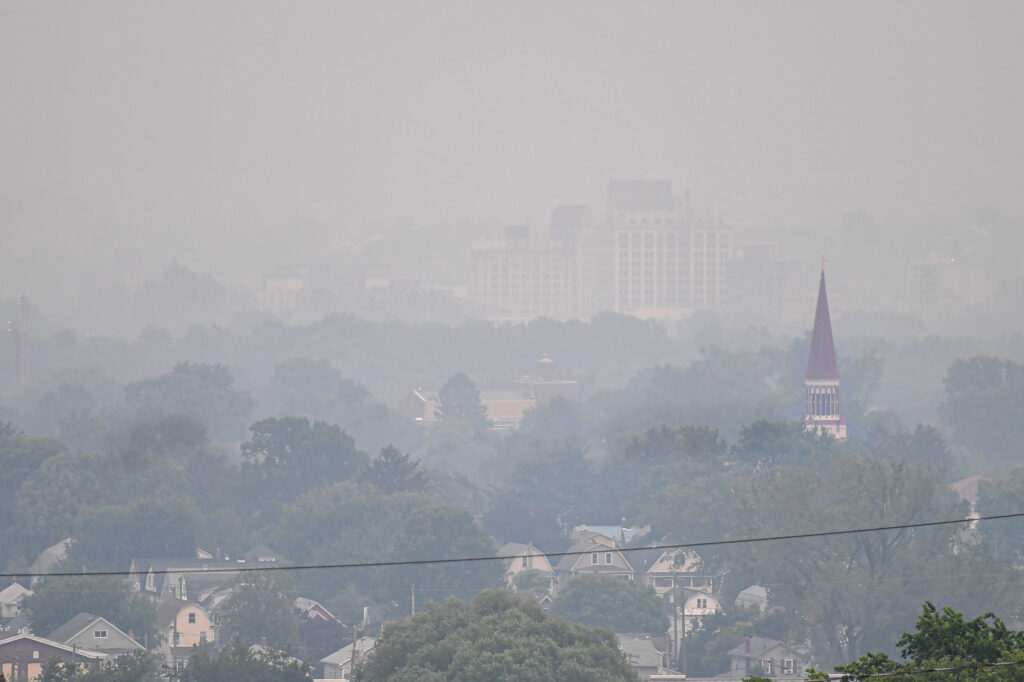
A few months after the train derailment, wildfires raging in Canada sent smoke billowing south into Pennsylvania, and Garrow recalled seeing people harmed by the dangerous air quality.
“What I noticed was [the wildfire smoke] was particularly impactful on folks that were under-resourced: people in poverty, with unstable housing, or people who were lower income,” Garrow said. “I realized they didn’t teach me about that in medical school either.”
Those two events sent Garrow on a journey. He began working with Pennsylvania State University and the Pennsylvania Department of Health to create a learning collaborative for environmental health. The goal is to help primary care providers, particularly those serving vulnerable rural communities, create a more climate-resilient system—educating them about the impacts of weather and other environmental factors, known as environmental determinants of health.
As the climate warms, fueling more extreme weather, the previously hidden toll of these events is becoming more widespread. Pennsylvania is expected to continue to experience more extreme heat and flooding events, according to the state’s most recent climate assessment.
A Community-Wide Trauma
Researchers are beginning to gather more data about how the uptick in extreme weather will affect people’s long-term health—sometimes in unexpected ways.
Kristina Brant, an assistant professor of rural sociology and demography at Pennsylvania State University, co-authored a paper published in July showing an increase in opioid overdose deaths following severe flooding events. She found deaths significantly increased in the one to two years following a severe flood and can persist up to a decade later.
Brant and her colleagues examined data from 2000 to 2017. They looked at 11,744 overdose deaths in 219 counties across rural Appalachia, including 23 Pennsylvania counties. They estimated severe floods caused 1,368 of those overdose deaths. Brant said trauma is one of the key reasons.
“Even if someone didn’t lose their home, the flooding was a community-wide traumatic event,” said Brant. “People who work in treatment and recovery often teach people [with substance use disorder] to avoid triggers, but if a rainstorm was coming, it could make them think back to that traumatic flooding event.”
Other factors that led to more opioid-related deaths were reduced access to harm reduction services, like Narcan, which can reverse the effects of a life-threatening overdose. Many people also experienced instability related to jobs or housing, and there is often less mental health care available in rural areas to begin with.
“Sometimes, there’s not a norm of seeking care regularly,” Brant said. “So when people experience this traumatic flooding event, they don’t necessarily have someone they’re already seeing who could help them talk through this and manage the issue.”
Victoria Lynch, a postdoctoral research fellow at the Mailman School of Public Health at Columbia University, has also spent time researching the long-term effects of extreme weather and health. She co-authored a paper published earlier this year examining 30 years of data showing an increase in drug-related deaths following severe weather.
This story is funded by readers like you.
Our nonprofit newsroom provides award-winning climate coverage free of charge and advertising. We rely on donations from readers like you to keep going. Please donate now to support our work.
The immediate aftermath of an extreme weather event is often covered extensively by the media, tracking deaths, injuries and property damage, but Lynch said the challenges people face in the months and years that follow can be less obvious.
“The severity of these events is still under-studied,” said Lynch. “One of the long-term effects of Hurricane Katrina and New Orleans is that the population never recovered. It can lead to these mass displacement events.”
Growing Public Awareness
As more insight into the lingering health effects of extreme weather has emerged, Lynch said the issue is piercing the public consciousness.
“I started doing this work about a decade ago, and when I talked about floods in the U.S., I was often met with a lack of interest or quizzical looks,” she said. “That’s no longer the case.”
While there will continue to be damage caused by extreme weather, Lynch added that many of the solutions to minimize long-term harm are achievable and include actions many communities already take—like emergency planning, dedicated citizen outreach and scaling support networks ahead of severe weather events.
“The consequences of these weather events is absolutely something we can address.”
— Victoria Lynch, Mailman School of Public Health at Columbia University
For example, New York state set up a short-term emotional support and mental health program called Project Hope for residents following disasters like Hurricane Sandy in 2012 and the COVID-19 pandemic. The Pennsylvania Department of Drug and Alcohol Programs, which licenses drug and alcohol treatment facilities, requires them to have emergency preparedness plans.
“The consequences of these weather events is absolutely something we can address,” said Lynch.
Another strategy is to invest in renewable energy to power clinics in rural areas, according to Jill Rosenthal, Director of Public Health Policy at the Center for American Progress, a left-leaning think tank in Washington, D.C. She co-authored a 2024 report examining ways to create a more climate-resilient healthcare system across the U.S.
She said such efforts have become more challenging due to federal funding cuts.
“Rural hospitals are already at great financial risk. Nearly one-third of rural hospitals across the United States are at risk of closure due to financial instability,” said Rosenthal. “Yet the Trump administration and Congress made the largest Medicaid cuts in the program’s history through One Big Beautiful Bill Act, even though rural hospitals rely on Medicaid to finance care.”
Despite the challenges of supporting rural communities, and preparing for and responding to extreme weather, Garrow of Primary Health Network said he’s seeing a growing interest in the issue.
In October he’s participating in a tabletop exercise for health center leaders from across Pennsylvania on emergency weather preparedness.
“These events are going to have downstream implications for communities over the long-term,” Garrow said. “It’s our job to begin to have these conversations.”
About This Story
Perhaps you noticed: This story, like all the news we publish, is free to read. That’s because Inside Climate News is a 501c3 nonprofit organization. We do not charge a subscription fee, lock our news behind a paywall, or clutter our website with ads. We make our news on climate and the environment freely available to you and anyone who wants it.
That’s not all. We also share our news for free with scores of other media organizations around the country. Many of them can’t afford to do environmental journalism of their own. We’ve built bureaus from coast to coast to report local stories, collaborate with local newsrooms and co-publish articles so that this vital work is shared as widely as possible.
Two of us launched ICN in 2007. Six years later we earned a Pulitzer Prize for National Reporting, and now we run the oldest and largest dedicated climate newsroom in the nation. We tell the story in all its complexity. We hold polluters accountable. We expose environmental injustice. We debunk misinformation. We scrutinize solutions and inspire action.
Donations from readers like you fund every aspect of what we do. If you don’t already, will you support our ongoing work, our reporting on the biggest crisis facing our planet, and help us reach even more readers in more places?
Please take a moment to make a tax-deductible donation. Every one of them makes a difference.
Thank you,
