


Shadow IT includes hardware, software, and services running outside IT and security teams’ visibility or approval. It can include unapproved applications employees install, browser extensions with excessive permissions, and endpoints provisioned once and never enrolled in any monitoring platform. These unmanaged assets create visibility gaps because existing security controls do not monitor them.
Many organizations rely on network discovery scans to measure asset coverage. While useful, network discovery only identifies endpoints that respond during the scan window. Powered-off devices, isolated network segments, and software that does not expose listening ports can remain invisible. As a result, network discovery measures network reachability, not monitoring coverage.
Wazuh is a free and open source security platform that unifies SIEM and XDR capabilities across endpoints and cloud workloads. It collects system inventory data directly from each monitored endpoint, allowing security teams to compare what network scans report against what the Wazuh-monitored endpoints report.
This comparison helps identify unmanaged endpoints, unauthorized software, and monitoring gaps.
Why shadow IT resists discovery
Shadow IT persists because the tools that report findings often can’t observe the assets in question. Understanding where the gaps form helps security teams decide which controls to extend.
- Unmanaged endpoints: A workstation that is reimaged and never re-enrolled, or a virtual machine built for a short-lived project and left running, produces no telemetry. It does not appear in patch reports, vulnerability findings, or alert data, because no agent is installed to monitor them.
- Unapproved applications on managed endpoints: Remote access tools, file sharing clients, and productivity utilities installed outside the approved software baseline introduce risk on endpoints that are otherwise fully monitored. The endpoints are visible, but the software running on them is not always reviewed against policy.
- Software that opens no network port: Unauthenticated network discovery can infer services from the ports a host exposes, but it cannot reliably identify software that does not listen for inbound connections. Browser extensions, locally installed utilities, and remote access tools that initiate outbound connections to a broker are not observable through that method.
- Devices that cannot run an agent: Printers, switches, IP cameras, and other network devices require inventory and monitoring methods other than an endpoint agent.
Addressing these categories requires endpoint telemetry and additional data sources for devices that cannot run an agent.
Closing the blind spot with Wazuh
Wazuh helps organizations reduce shadow IT exposure through continuous system inventory collection, centralized analysis, and correlation of inventory data with vulnerability and policy information. The following capabilities help security teams identify unmanaged assets and unauthorized software across their environment.
- Continuous system inventory: The Wazuh agent collects hardware details, operating system information, installed packages, network interfaces, listening ports, running processes, services, users, groups, and browser extensions from each monitored endpoint. The Wazuh agent on Windows endpoints additionally reports installed updates. The Wazuh agent forwards this data to the Wazuh server, which processes it and stores it in the Wazuh indexer as the endpoint’s current state. The system inventory capability is enabled by default, runs an initial scan when the Wazuh agent starts, and rescans on a configurable interval that defaults to one hour.
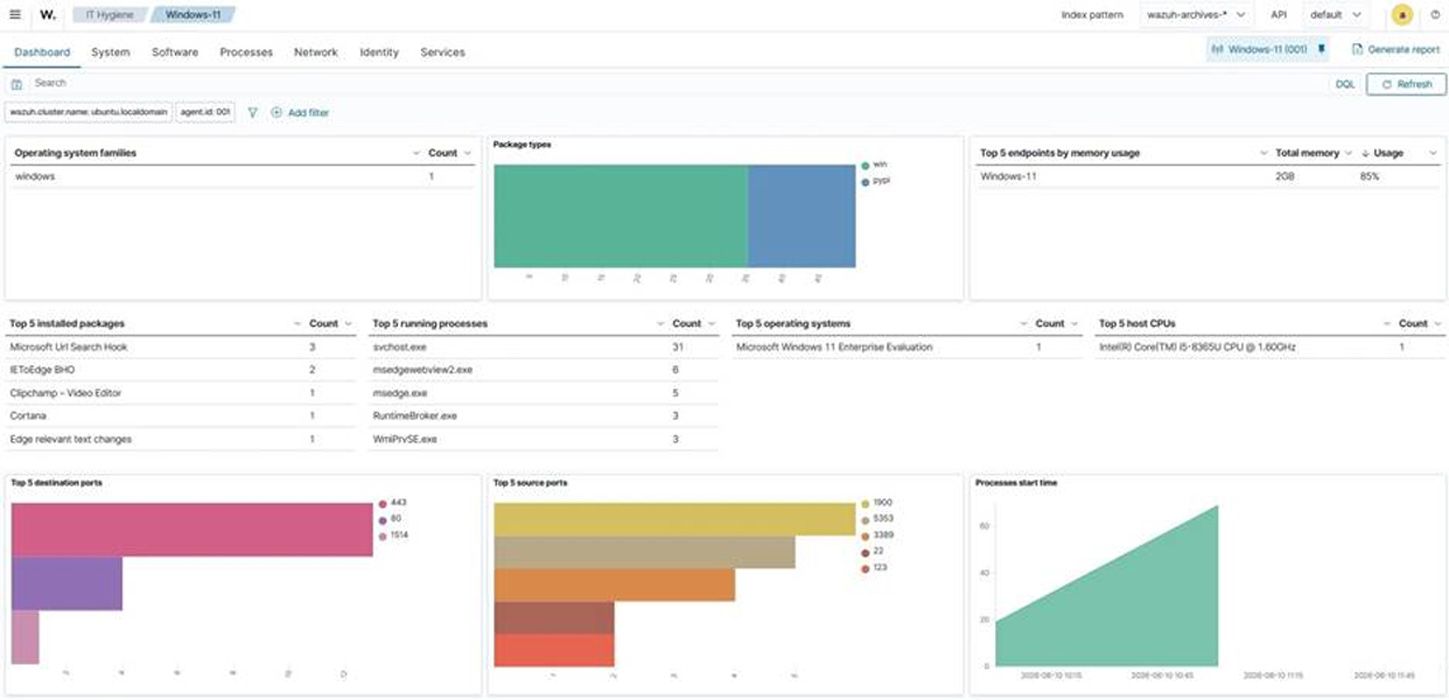
Figure 1: Wazuh IT Hygiene dashboard - Centralized visibility across the environment: Inventory data from every monitored endpoint is aggregated into dedicated indices and presented on the Wazuh dashboard under IT Hygiene, organized into Dashboard, System, Software, Processes, Network, Identity, and Services sections. Security teams can query the entire data from a single interface rather than inspecting endpoints individually. The Network section includes a Traffic tab listing the ports actively listening on each endpoint. This is a host-side view of the same information a network scan attempts to infer remotely.
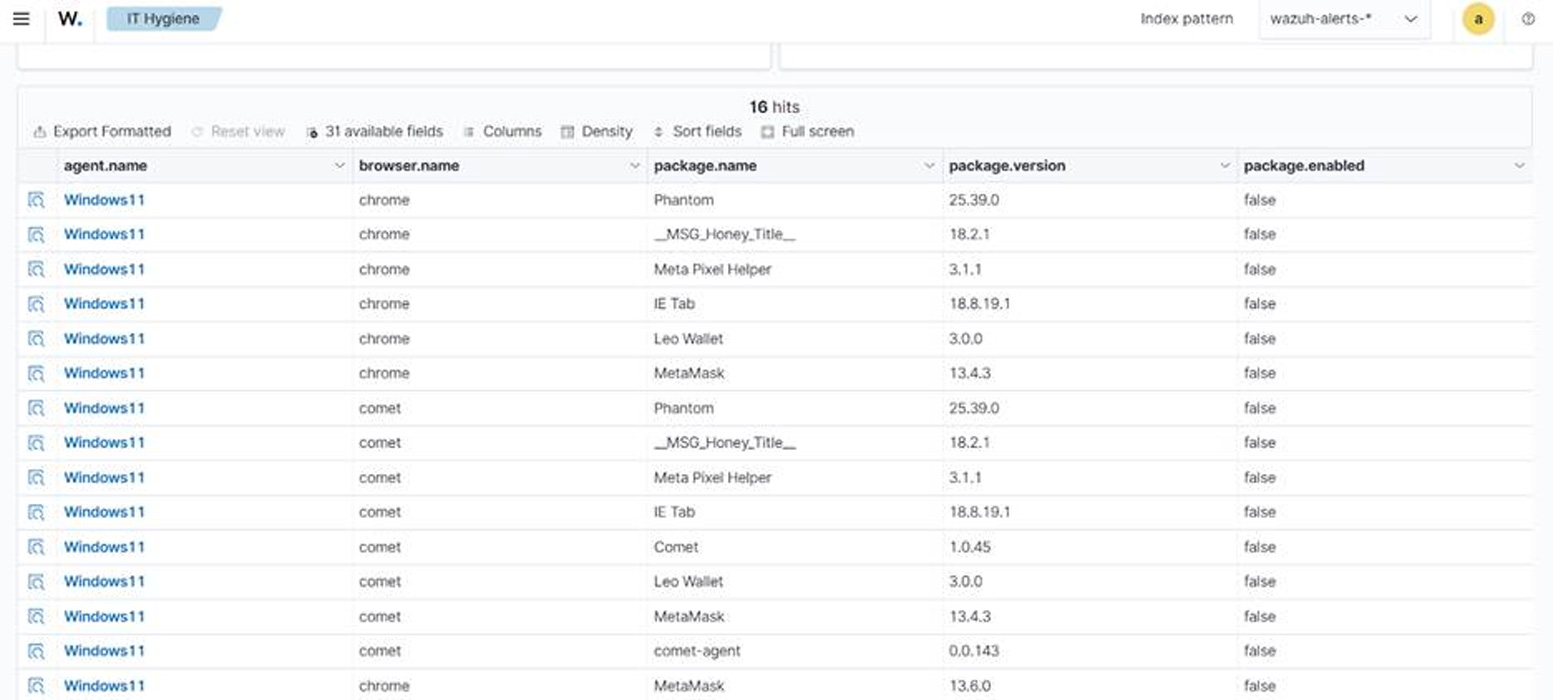
- Visibility into browser extensions and endpoint services: Wazuh 4.14.0 and later collect inventory data about browser extensions, endpoint services, users, and groups. The browser extension model is unified across Windows, macOS, and Linux, allowing security teams to identify extensions with broad permissions across the estate from a single query. The services inventory normalizes Windows services alongside Linux systemd units, which helps teams find unapproved software configured to start automatically.
- Coverage for devices that cannot run a Wazuh agent: Wazuh provides agentless monitoring over SSH for routers, firewalls, switches, and Linux or BSD systems. For devices that support neither an agent nor an SSH session, the Wazuh server accepts syslog directly from network appliances and other equipment. These capabilities provide additional visibility into devices that cannot run a Wazuh agent. However, SSH and syslog monitoring provide only the information exposed by the configured commands, files, and device logs.
- Monitoring agent coverage itself: Agent enrollment status measures coverage among endpoints already registered with the Wazuh server. It does not identify unknown endpoints that were never installed or enrolled. A Wazuh agent reports one of four states: never connected, pending, active, or disconnected. Agents that enrolled but never connected indicate deployments that did not complete. An agent moves to disconnected when no keep-alive message arrives within the configured window, which defaults to 15 minutes. Reviewing these states helps security teams identify endpoints assumed to be monitored but not reporting.
- Correlating inventory against vulnerabilities and policy: Inventory data supports security decisions when compared against a reference. Wazuh vulnerability detection correlates collected software inventory with vulnerability content from the Wazuh Cyber Threat Intelligence (CTI) platform. It does not probe endpoints or sweep the network, so the analysis runs centrally on data the endpoints have already reported. The same inventory can be joined against external data sources to identify end-of-life software that no longer receives security updates.
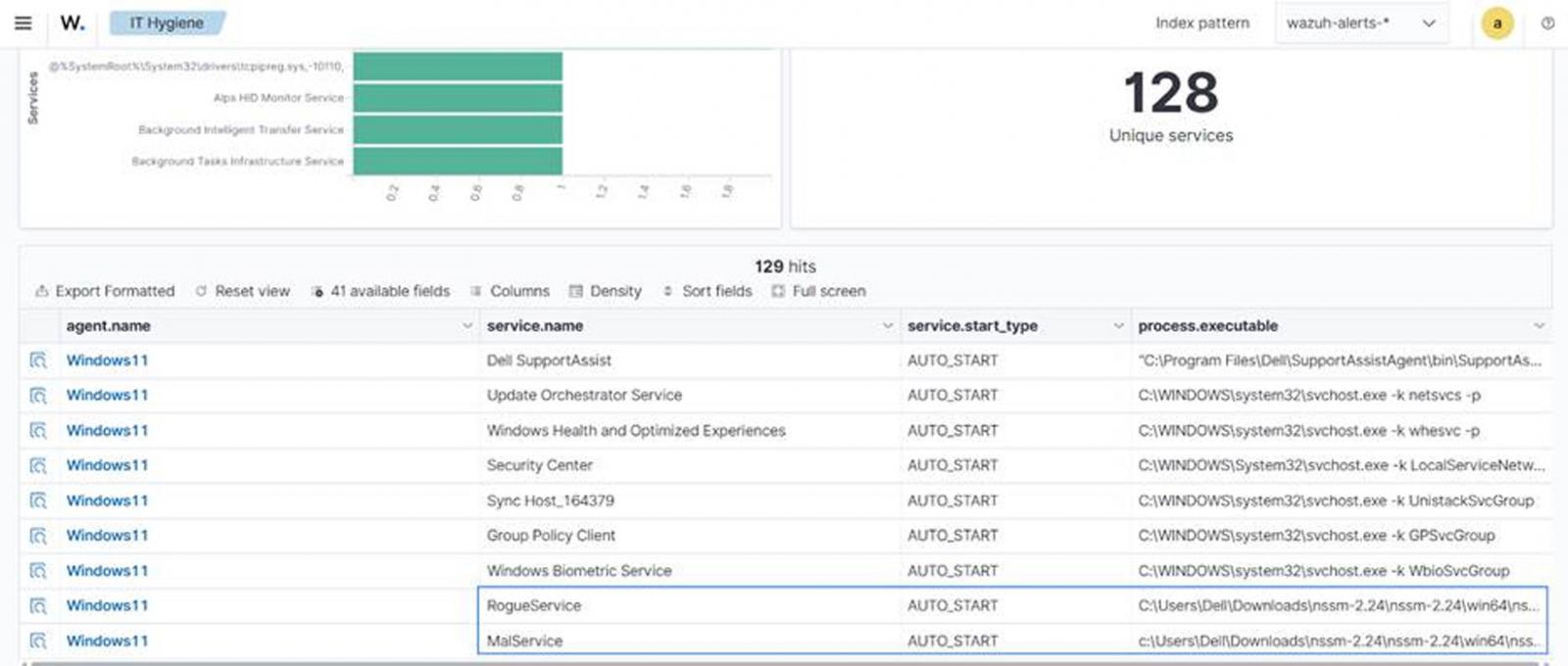
- Threat hunting across inventory data: Because inventory is stored centrally and indexed, security teams can query it during investigations rather than collecting data on demand. The Wazuh blog post Threat hunting using inventory data collected by Wazuh demonstrates this with custom rules, CDB lists of unauthorized software and ports, and queries run against the inventory. This approach surfaces assets that no single alert flags on its own.
- Detecting and removing unauthorized applications: Security teams can configure custom Wazuh rules to detect selected unauthorized applications and use a tested Active Response script to remove them from monitored endpoints. The Wazuh blog post Managing shadow IT with Wazuh covers the full configuration, including the custom detection rules and the active response script that uninstalls unapproved applications from monitored endpoints.
Conclusion
Shadow IT is a visibility problem before it is a policy problem. Organizations cannot enforce a software baseline on assets they cannot see, and network scanning alone shows only the systems that respond during a scan.
Wazuh helps reduce this visibility gap by collecting inventory from monitored endpoints and ingesting data from configured agentless sources. Endpoint inventory shows what is installed, running, and listening on each host, while agentless monitoring and syslog ingestion extend visibility to supported devices that cannot run a Wazuh agent. Wazuh agent enrollment states also help security teams measure monitoring coverage instead of assuming it.
With this data indexed centrally, security teams can identify vulnerabilities, investigate inventory across monitored endpoints, compare software with lifecycle information, and initiate configured remediation for applications outside the approved software baseline.
Discover more about Wazuh by exploring its documentation and joining its growing community of professionals.
Sponsored and written by Wazuh.
