


- After eliminating its corporate watchdog, Canada is relying on its little-known National Contact Point (NCP) to handle complaints against Canadian corporations operating overseas — including mining companies.
- But the Canadian NCP has a weak track record: just three of 33 cases since 2000 have resulted in formal joint agreements, and critics say it lacks the independence and investigative powers needed to uncover abuses.
- Complainants are now being pushed to the NCP despite years of concerns about the mechanism, with some refusing to transfer their cases because they have little faith in the process.
- The stakes are particularly high for communities affected by Canadian mining companies abroad, leaving advocates calling for an independent watchdog with powers to investigate, compel evidence, and recommend meaningful remedies.
When the Canadian government earlier this year shut down its independent watchdog responsible for investigating alleged human rights abuses including environmental pollution by Canada-based companies operating overseas, it promised that a little-known office called the National Contact Point would take over that work. But critics say the National Contact Point, which has operated for more than a quarter of a century, lacks the powers and independence needed to fill the gap.
The recently shuttered office of the Canadian Ombudsman for Responsible Enterprise (CORE) was set up to evaluate complaints about alleged human rights abuses by Canadian companies operating abroad in the garment, mining, and oil and gas sectors. Two months into Mark Carney’s tenure as Canada’s prime minister, the position became vacant. Carney never appointed a new ombudsperson. CORE languished for more than a year without a leader, unable to proceed probing complaints. Carney then declared it was ineffective and eliminated the office in June.
Global Affairs Canada, the country’s foreign ministry, which oversaw CORE, said in a statement that “a decision has been taken to permanently streamline the CORE Ombudsperson’s work into other functions with stronger track records of effectiveness, including the National Contact Point.”
But those who have followed the National Contact Point’s 26-year history disagree about its effectiveness. Only three of the 33 cases submitted to the National Contact Point (NCP) since 2000 have reached a formal joint agreement; in one of the cases, it was the NCP of another country that led the case. Even then, agreements were not necessarily meaningful redress but rather some agreed-upon action, which could be part of what was sought.
The Canadian NCP declined to answer questions for this story, including on its own tally of case outcomes.
Instead, Global Affairs Canada, which oversees the NCP, provided a statement: “Responsible business conduct remains a priority for the Government of Canada. In support of this priority, Canada’s National Contact Point (NCP) will continue, with an enhanced staff complement, to promote awareness and adoption by Canadian companies of the OECD Guidelines for Multinational Enterprises and contribute to the resolution of disputes regarding alleged non-observance of these guidelines,” wrote Brittany Fletcher, deputy director of media relations at Global Affairs Canada.
Fifty-two countries around the world have set up an NCP. These are meant to help multinationals follow the Organisation for Economic Co-operation and Development’s (OECD) Guidelines for Multinational Enterprises on Responsible Business Conduct, which are nonbinding principles for ethical business conduct. NCPs operate as nonjudicial grievance mechanisms for alleged breaches of these guidelines by companies based in those countries.
Catherine Coumans, research coordinator for MiningWatch Canada, said she and others from Canadian civil society nonprofits had fought for the creation of CORE because the NCP had failed to address the needs of those harmed by Canadian companies.
“What we wanted the ombudsman to be able to do was exactly what was missing from the National Contact Point, which is to do independent investigations and make findings of fact about whether harm had in fact occurred,” Coumans said. She added she’s concerned that reliance on this office will mean the conduct of Canadian corporations will be left unchecked.
“What this essentially means is that it’ll be business as usual for Canadian mining companies operating overseas. They have nothing to be concerned about. They won’t have to improve their practices. They will not be held to account in Canada in any way,” Coumans said.
While Global Affairs Canada said it’s increasing staff at the NCP, which has had two dedicated staff since 2017, Coumans said she doesn’t believe adding personnel will improve structural issues.
Left without options
When CORE was closed in June, it still had 24 active complaints pending and three awaiting intake. Complainants, some of whom had spent years waiting for answers from the office, received an email saying, “we are writing to inform you that all activities of the Office of the Canadian Ombudsman for Corporate Responsibility (CORE) will cease following a decision by the Government of Canada.” They were given two options: transfer their file to the Canadian NCP or close their case.
It was a baffling email for John Namegabe Bugabo, a human rights defender based in the Democratic Republic of Congo.
In 2022, Bugabo submitted a complaint to the NCP. When the process yielded no tangible results, he brought the issue to CORE in hopes of a different outcome.
He said being turned back to the NCP was deflating. He described being “very very angry, you can imagine.” Now, he said, he has nowhere else to turn. He’s one of at least three complainants who have refused the transfer of their cases because of a lack of faith in the NCP.
In his complaint, he represents 129 individuals from the villages of Mege and Bandayi who allege they were forcibly evicted from land near the Kibali gold mine, 45% owned by Canadian company Barrick Mining Corp. Bugabo said more than 2,000 people were impacted by the evictions, though a smaller group was represented in the complaint.
He alleged homes were destroyed by police and military to make way for an expansion of the gold mine without consultation. Residents became homeless, without the opportunity to salvage their belongings. The demolition allegedly also destroyed schools, places of worship and agriculture, such as fish ponds, fields, and mango orchards. Bugabo alleged that some people protesting the evictions were shot and killed.
Barrick Mining denied any role in the 2021 resettlement, saying it was led by the DRC government.

Bugabo said that when he first submitted the NCP complaint in Canada, he had faith in the office. In 2015, he was part of a complaint made to the Netherlands NCP alleging that Dutch brewer Heineken’s DRC subsidiary, Bralima, failed to properly pay severance to some employees following large-scale layoffs.
The Netherlands NCP facilitated talks between the parties in a process that resulted in what was termed a historic agreement, in which former employees received monetary compensation, though the specific details have not been made public. The settlement was used as a case study at the 2017 United Nations Forum on Business and Human Rights to showcase the potential of the NCP system.
Bugabo said he felt his experience using an NCP could be an asset to the communities impacted by the Kibali evictions. He spent months preparing the complaint, which was deemed admissible in 2022. The Canadian NCP agreed to look at allegations that Barrick Mining contributed to human rights impacts during the 2021 resettlement operation.
The company disputes the allegations.

The parties met in mediation in 2023 for one day. According to Bugabo, they agreed to return to talks after a three-week break, but during that time, the Canadian NCP stopped the mediation. It said in its final report that it “determined that offering to facilitate further dialogue/mediation under its good offices was unlikely to contribute to a resolution of the issue.” It then closed the file and issued final recommendations.
The communities had hoped for compensation for everything lost during the sudden demolitions, including fields and crops, household belongings like tables and beds, and for businesses destroyed with goods inside them.
The final recommendations didn’t address these hopes. The NCP recommended Barrick Mining improve transparency by disclosing more information about its role in the 2021 resettlement, its relationship with police and security forces, and how company equipment may have been used during the operation. The NCP urged the company to promote respect for human rights in security activities, explain how it has addressed lessons learned from the resettlement, and communicate its expectations of any future government-led resettlements involving the Kibali mine.
Five years later, Bugabo said, many from these communities remain homeless and are still seeking remedy.
He said he continues to have concerns about the independence of the Canadian NCP, and its susceptibility to the influence of Canadian corporations, a concern shared by Coumans of MiningWatch Canada.
Global Affairs Canada said the office is currently located in its Responsible Business Conduct Division, which is part of the Trade Strategy Bureau. A 2019 peer review of the office conducted by representatives from the NCPs of Belgium, Denmark, the United Kingdom, and representatives of the OECD Secretariat reported that the Canadian NCP’s location within the Trade Commissioner Service of Global Affairs Canada created a perception of impartiality for some in civil society.
Coumans said this positioning creates a conflict of interest, and cited one particular case as illustrating this clearly.
Concerns over industry interference
In 2016, the Bruno Manser Fonds, a Swiss environmental NGO, filed a request with the Canadian NCP to review Sakto Corp., a real estate investment firm based in Ottawa. The company was controlled by Sean Murray and Jamilah Taib Murray, the latter a daughter of Abdul Taib Mahmud, the former chief minister of the Malaysian state of Sarawak.
According to the NGO, during Mahmud’s tenure, the rainforest in Sarawak shrank to a tenth of its original size, depriving the nomadic Penan Indigenous peoples of their traditional way of life and leading to massive biodiversity loss on the island.

The Bruno Manser Fonds alleged that millions of dollars from illicit logging kickbacks from this deforestation were siphoned into Sakto-affiliated companies around the world, including Canada-based Sakto Corp., through the family connection.
Sakto denies these claims. “The harmful impact of those allegations has required Sakto to pursue defamation proceedings in Switzerland. A decision is pending,” Duncan Fraser, a lawyer for the company, wrote in a statement.
According to the Bruno Manser Fonds, Sakto is part of a larger corporate group, making it a multinational, and the NGO had hoped the review by the Canadian NCP would confirm these connections. Sakto denies it’s a multinational.
“Sakto is a 100% Canadian company, with all Canadian shareholders. Sakto has never done business outside Ottawa and has never been affiliated with any other company,” Fraser wrote.
The request for review from the Canadian NCP alleged that Sakto breached the OECD guidelines by failing to disclose enough information about its finances, beneficial owners, and corporate structure.
Lukas Straumann, executive director of the Bruno Manser Fonds, said that from his perspective, the NCP process started out well: the office drafted an initial assessment that found that the OECD Guidelines for Multinational Enterprises on Responsible Business Conduct did apply to the company and that the issues were material and merited further examination. However, the problems started after this draft assessment was shared with the parties.
The NCP said in a July 2017 final assessment that it was closing the complaint after “aggressive communications by both parties.”
It faulted the Bruno Manser Fonds for sharing confidential case files and said that this led to the derailment of the review. Straumann admitted to breaching confidentiality , saying they went public because the process was being derailed behind the scenes.

Straumann said being portrayed as responsible for the complaint’s collapse was “a ridiculous and irresponsible attempt of trying to shift the blame,” adding that “the Canadian NCP should enforce the OECD guidelines, including on transparency, not go after NGOs who highlight these deficiencies.”
The NCP also said Sakto had inappropriately involved a member of the Canadian parliament during the confidential NCP assessment process; aggressively challenged the NCP’s jurisdiction; and bypassed the NCP process to make legal submissions directly to Canada’s deputy justice minister.
Emails showed Andrew Leslie, a Liberal MP at the time, wrote a letter to the minister of international trade criticizing the NCP process and accusing the Bruno Manser Fonds of a “campaign of harassment.”
“They intimidated or pressured the public officials in charge, so the whole thing fell apart,” Straumann said. The NCP office recalled its original final assessment and closed the complaint.
It was something Straumann said he never expected in Canada, which he saw as having a well-functioning public administration. “People with money and political power, they can bend the rules. And that was the shocking thing to see that even in Canada, the rules can be bent and are bent,” he said.
According to Fraser, Sakto stands by the tone and content of every statement it made defending itself and disagrees that there was any inappropriate pressure placed on officials. “It is entirely appropriate to contact one’s Member of Parliament when dealing with a governmental body,” he wrote.
OECD Watch, a Netherlands-based NGO that evaluates the NCPs, filed a complaint against the Canadian NCP with the OECD Investment Committee over the case. The committee found that the Canadian NCP had failed to fulfill its responsibilities under the guidelines; that its actions severely “lacked transparency”; and that it didn’t “ensure a fully equitable process and contributed towards a perception of a lack of impartiality.”
Sakto also said the complaint was poorly handled, arguing the NCP failed to properly assess the allegations and its jurisdiction, used inappropriate language in its initial assessment, and produced confusing and contradictory documents that undermined the company’s confidence in the fairness and competence of the process.
Internationally crucial office, in need of reform
Joseph Wilde-Ramsing is the advocacy director for Netherlands-based SOMO, the Centre for Research on Multinational Corporations, and a founder of OECD Watch. He said he believes the Canadian NCP is particularly important on a global scale because Canada is home to about half of the world’s publicly traded mining and mineral exploration companies.s
He’s been following the work of these offices around the world for more than 20 years and said Canada’s NCP is falling behind those of some other developed countries, like that of the Netherlands.
“The Canadian NCP’s track record is extremely poor,” said Wilde-Ramsing, who, like Coumans, described the office as lacking independence and having a conflict of interest in disputes with the Canadian private sector.
Bugabo has had an opportunity to directly compare the NCPs of the Netherlands and Canada. “The difference is that the Netherlands NCP is more free, is independent,” he said.
It’s a sentiment shared by other international and domestic corporate accountability advocates. The Netherlands NCP is widely considered to be among the strongest because, unlike many other National Contact Points, it operates using independent experts who are not part of the government to handle cases and run mediations.
Because of this, complainants around the world will actively seek to use this office if they can argue the company has a connection to the Netherlands, said Wilde-Ramsing. Conversely, complainants avoid using the Canadian NCP because of its relative ineffectiveness if they can find a link to another NCP, he said.
While the 2019 peer review recognized the Canadian NCP’s ability to withdraw trade support if the company does not engage in the NCP process in good faith as a strength, it reported this option had only been used once.
The reviewers also flagged issues with the complaint process, like onerous substantiation requirements, restrictive rules on public campaigning and confidentiality, and substantial delays in resolving cases.
Canada’s NCP is currently undergoing its second periodic peer review, led by the OECD and representatives from two peer NCPs. The process will look at how well it’s operating and handling complaints since the 2019 report was released.
In Canada, Coumans said MiningWatch Canada is asking for CORE to be reinstated or for the creation of a new office with powers to compel evidence and independence from the government.
Bugabo said the existence of an effective mechanism in Canada could forestall some of the issues communities like the ones he represents are having with Canadian corporations.
“It is important for them to be strong,” he said, “because if the company knows that the problem will be taken at hand, they will prevent themselves to do wrong.”
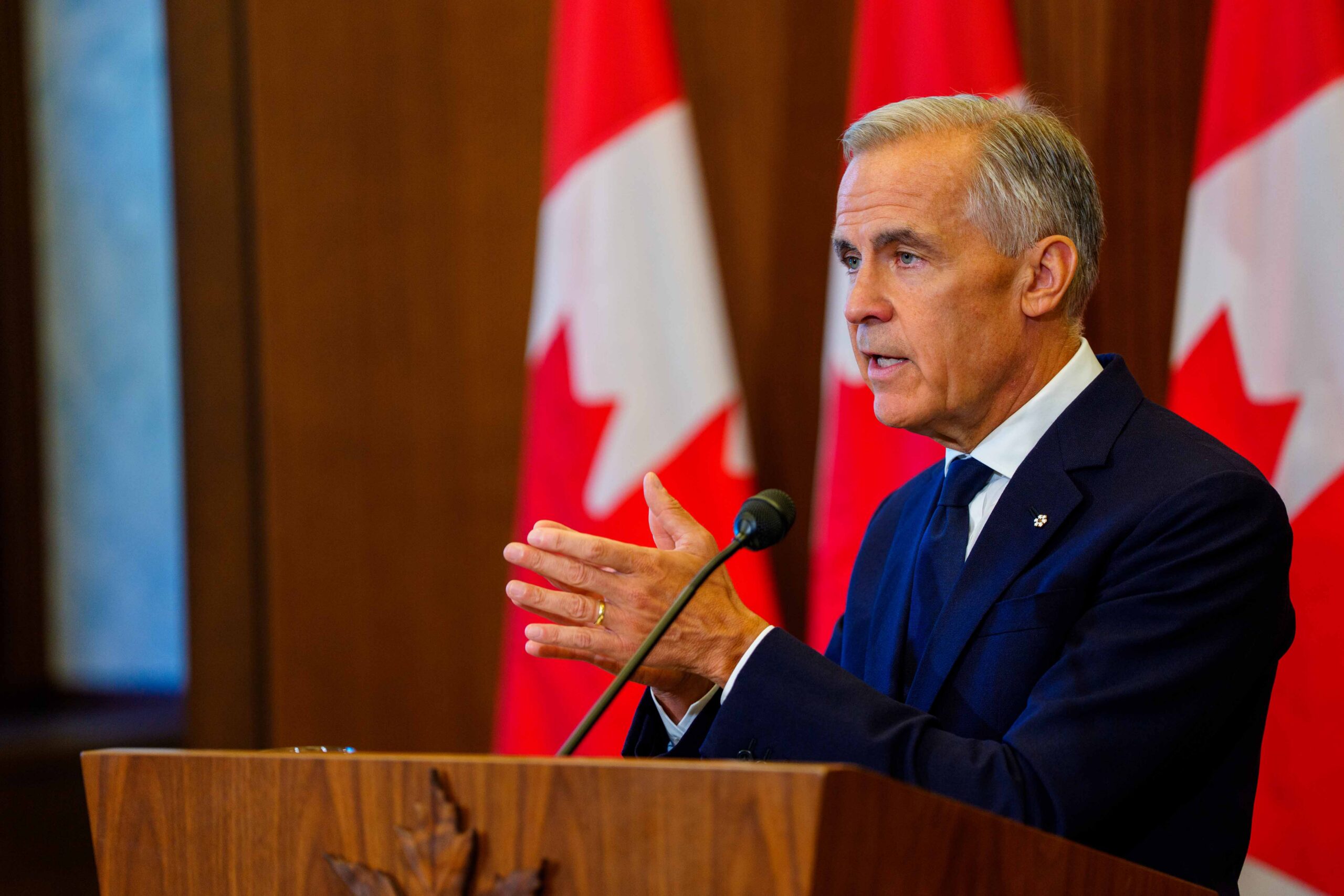
Banner image: Canadian Prime Minister Mark Carney delivers remarks on tariffs to the media on Parliament Hill, Ottawa, Ontario, Canada on August 22, 2026. Image by Lars Hagberg/Office of the Prime Minister.
Accountability advocates ‘shocked’ as Canadian government eliminates watchdog agency
Canada’s watchdog post vacant as overseas mining complaints mount
Cite this article
Annie Burns-Pieper (2026). Canada shuts down corporate watchdog. Critics say its replacement lacks teeth. Mongabay Conservation news. DOI: https://doi.org/10.66709/news-330245

