


- The U.S. announced a historic oil deal in August that gives it access to more than 65 billion barrels of proven reserves in Venezuela, which is structured through a private company, North American Blue Energy Partners.
- It’s part of a U.S. attempt to increase investment in Venezuela’s natural resources, most notably oil and gas.
- The country has one of the largest proven crude oil reserves in the world, at an estimated 300 billion barrels. However, it’s heavier and harder to refine than the oil in other countries.
- Observers expressed concern about increased greenhouse gas emissions and oil spills, as well as the lack of transparency surrounding the deal, which could threaten protected areas and Indigenous territory.
In late August, the U.S. announced a historic oil deal that gives it access to more than 65 billion barrels of proven reserves in Venezuela, with investment of up to $100 billion in new oil infrastructure across the country. The deal has been billed as a way to secure “energy dominance” for the U.S. while driving Venezuela’s economic recovery. But observers say they’re concerned about the climate impact of fossil fuels, the deal’s lack of transparency, potential oil spills and other environmental risks.
“Economic recovery cannot come at the expense of human rights relating to the environment,” said a Sept. 9 joint statement from the Venezuelan Program for Education-Action on Human Rights (Provea) and Clima21, an environmental NGO. “No economic interest takes precedence over the constitutional and internationally recognized right to a healthy, safe and sustainable environment.”
The deal is structured through private company North American Blue Energy Partners (NABEP), the second-largest Venezuelan oil producer, which has “100-year concessions for 17 oil fields,” according to the U.S. government. The U.S. has a “35% equity stake” in the company and can purchase 20% of its production, with a right of first refusal for the remaining 80% throughout the 25-year agreement.
It’s part of an attempt by the U.S. to increase involvement in Venezuela following a January military operation to remove President Nicolás Maduro, who has been accused of narco-terrorism and cocaine trafficking. Throughout 2026, U.S. officials have visited Venezuela to discuss investment in the country’s natural resources, most notably oil and gas.
Venezuela has one of the largest proven crude oil reserves in the world, at an estimated 300 billion barrels. Over the last decade, decaying oil infrastructure, corruption and international sanctions have hampered its production capacity to only around a million barrels per day, much lower than what many other oil-producing countries can produce.
The NABEP deal alone is expected to produce 1.5 million barrels a day, Venezuelan authorities said in a statement. It will also generate an estimated revenue of over $209 billion for the country, or around $8.4 billion annually over the 25-year deal.
“[The agreement with the US] will have a great impact on the lives of all Venezuelans in the medium and long term,” President Delcy Rodríguez said at a press conference. “We’re projecting a perspective towards a prosperous future.”
Venezuelan oil is “dirtier” than in many other countries, containing high levels of sulfur and heavy hydrocarbons that require more energy to refine and that results in higher emissions. Natural gas is also often produced alongside the oil and involves intensive flaring, a process in which methane-rich gas is burned in the open air.
Around half of the methane emitted in Central and South America last year came from oil and gas facilities in Venezuela, according to the International Energy Agency.
The country also has dozens of oil spills every year — a figure that may actually be much higher, according to some researchers, who believe the government actively covers up many of the spills to avoid public scrutiny.
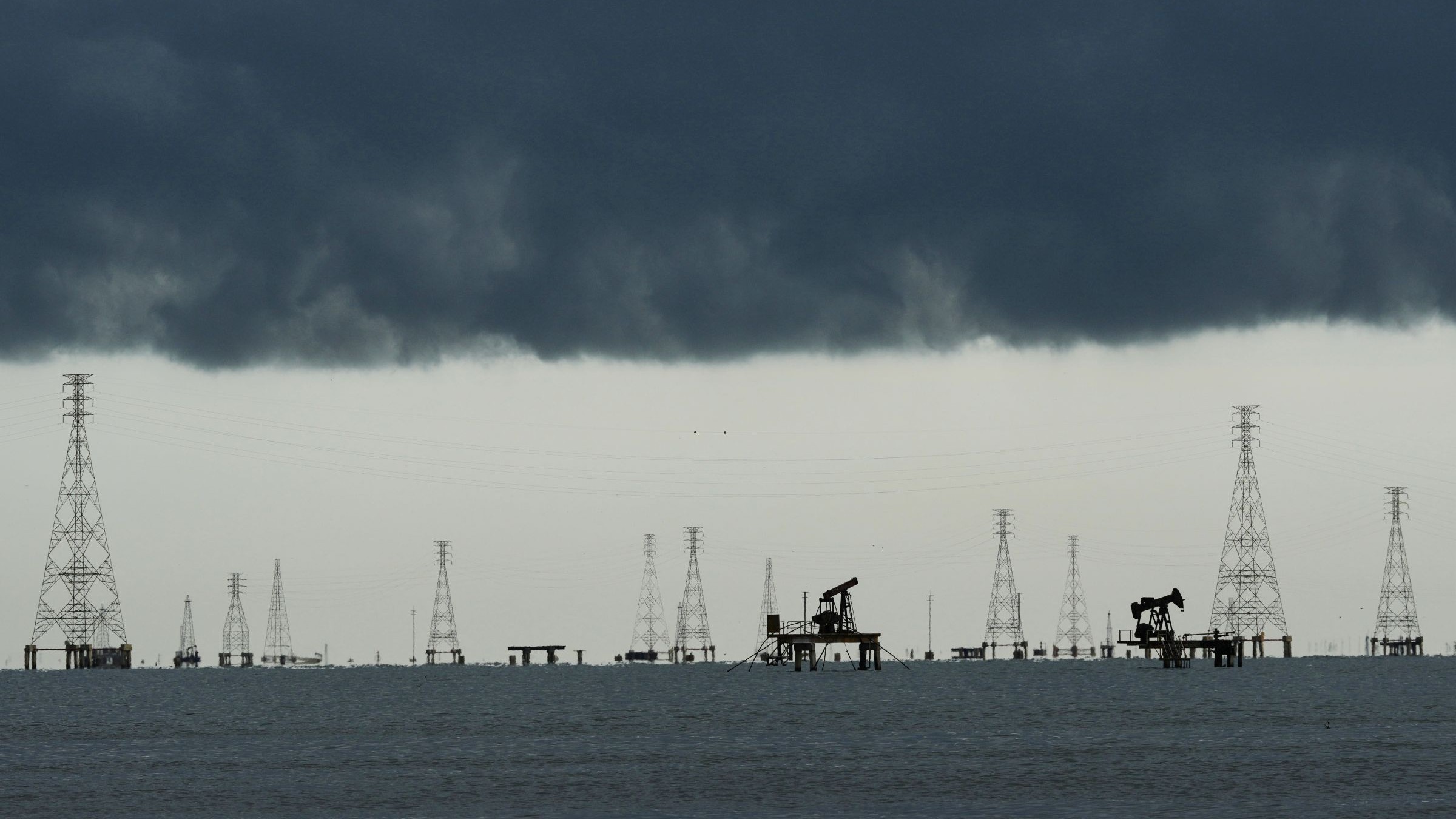
One of the worst-hit areas is Lake Maracaibo, an area with brackish and freshwater ecosystems that has historically supported small-scale fishing communities.

“It is impossible to imagine what environmental governance under the oil agreement will look like, what spills and accidents will mean amid the agony of the rule of law and the frightening track record of U.S. corporations around the world,” Emiliano Teran-Mantovani, a member of the Venezuelan Observatory of Political Ecology, said in a statement about the NABEP deal.
NABEP and the Ministry of People’s Power for Hydrocarbons didn’t respond to Mongabay’s request for comment or weren’t available.
Around 70,785 square kilometers (27,330 square miles) of Venezuela’s oil blocks overlap with protected areas, according to data from the World Database of Protected Areas and oil block maps from ProVita, an environmental nonprofit. Several civil society groups in Venezuela said officials haven’t specified the location of the 17 oil fields and whether they would impact protected areas or Indigenous territory.
In their statement, Provea and Clima21 said the Venezuelan government and international companies must be transparent with their projects moving forward, including “immediate publication of the environmental protection mechanisms” included in their agreements.
They also said those mechanisms should be consistent with the U.N. Guiding Principles on Business and Human Rights, as well as vulnerable peoples’ international right to Free, Prior and Informed Consent.
Venezuela should also develop “binding targets” to reduce greenhouse gas emissions and establish concrete plans for an energy transition that allows the country to overcome its dependence on extractive industries, according to Provea and Clima21.
“The country’s reconstruction must be grounded in a development model that is sustainable, participatory, just and respectful of human rights,” the groups said.
Banner image: Clouds form over pumpjacks and power transmission towers on Lake Maracaibo in Cabimas, Venezuela. (AP PhotoAriana Cubillos)
See related from this reporter:
Since US intervention, Venezuela’s illegal mining crisis has only worsened, critics say
FEEDBACK: Use this form to send a message to the author of this post. If you want to post a public comment, you can do that at the bottom of the page.
Cite this article
Maxwell Radwin (2026). Venezuela’s historic oil deal with the US reignites environmental, human rights concerns. Mongabay Conservation news. DOI: https://doi.org/10.66709/news-329807

