


Close Menu
NCIJ Network NCIJ Network
    What's Hot

    Saudi Arabia: Satellite image reveals major damage that shut crucial oil pipeline

    September 15, 2026

    Netherlands rail disruption due to suspected sabotage, operator says

    September 15, 2026

    AI poses huge risks to national security without guardrails, minister says

    September 15, 2026
    Facebook X (Twitter) Instagram
    Trending
    • Saudi Arabia: Satellite image reveals major damage that shut crucial oil pipeline
    • Netherlands rail disruption due to suspected sabotage, operator says
    • AI poses huge risks to national security without guardrails, minister says
    • Make NHS and military uniforms in UK, fashion firms urge Burnham | Manufacturing sector
    • Former TikTok execs built an app that uses AI to teach you how to pose for a photo
    • BambooToken malware controls Windows and Linux systems via MQTT
    • USDT Payments Feature in Polish Energy Giant’s Failed $230M Oil Deal
    • NASA’s Webb Reveals Dynamic Panorama of Star Formation
    • About
      • Our Team
      • Editorial Policy
      • Editorial Independence
      • International Support
    • Trust & Standards
      • AI Usage Policy
      • Conflict of Interest Policy
      • Corrections Policy
      • Ethics Policy
      • Fact-Checking Policy
      • Source Protection
    • Get Involved
      • Guide for Sources
      • Support Independent Journalism
    • Legal
      • Cookie Policy
      • Privacy Policy
      • Terms of Use
    Facebook X (Twitter) Instagram
    NCIJ Network NCIJ Network
    Tuesday, September 15
    • Home
    • World
    • Ai
    • Business
    • Politics
    • Health
    • Crypto
    • Science
    • Technology
    • Cybersecurity
    • Defense & Security
    • Economy
    • Energy
    • Europe
    • More
      • Fact Check
      • Investigations
      • Opinion & Analysis
      • Environment
    NCIJ Network NCIJ Network
    Home»Cybersecurity

    BambooToken malware controls Windows and Linux systems via MQTT

    NCIJ NETWNCIJ NETWORKBy NCIJ NETWNCIJ NETWORKSeptember 15, 2026 Cybersecurity No Comments3 Mins Read
    Share
    Facebook Twitter LinkedIn Pinterest Email

    A previously unknown malware framework called BambooToken, active since at least 2023, is now using the Message Queuing Telemetry Transport (MQTT) protocol to communicate with Windows and Linux systems.

    The malware adopted MQTT for command-and-control communications in variants developed between 2024 and 2025, compromising servers used by mobile apps, legal and financial services, and software development.

    MQTT is a lightweight messaging protocol primarily designed for IoT (Internet of Things) devices. It relies on a central broker and channels called “topics” to relay messages from publishers to subscribers, rather than using direct communication channels.

    While MQTT is not novel, it is an uncommon approach, and researchers at cybersecurity company ESET documented an unrelated backdoor called MQsTTang in 2023.

    In the case of BambooToken, the infected machine subscribes to topics associated with a unique identifier. The attacker then publishes to those topics the commands to be executed on infected hosts.

    The malware publishes status and system information through the broker and receives operator instructions through subscribed topics.
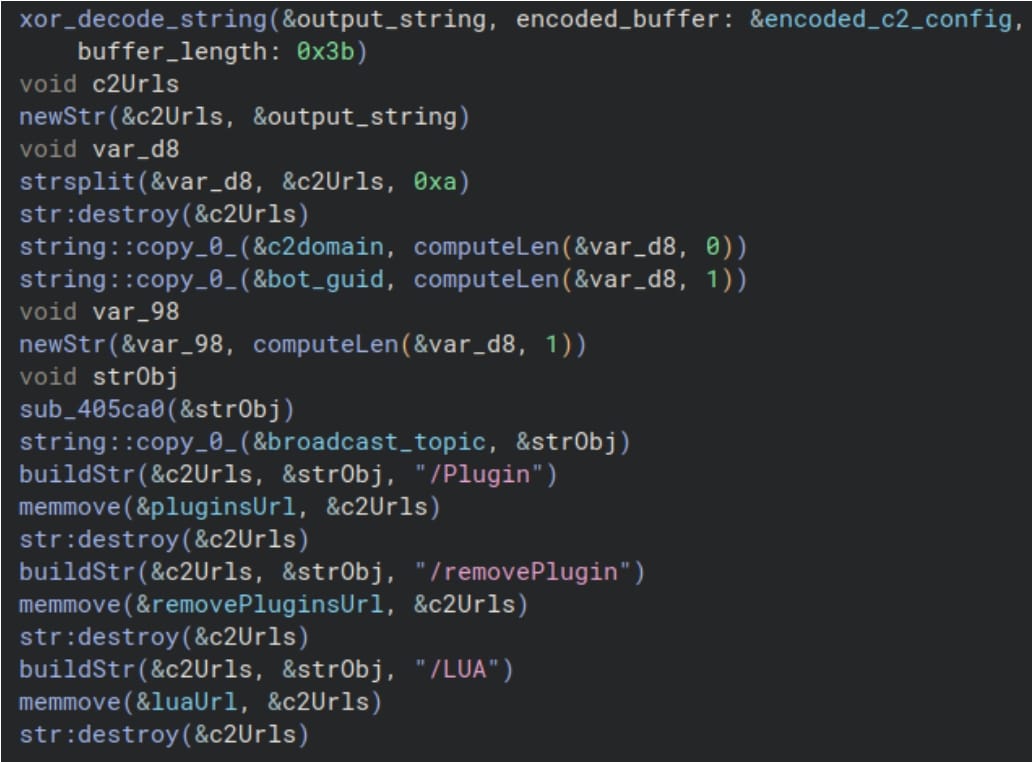
    Hardcoded Topics in the malware code
    Hardcoded Topics in the malware code
    Source: Lumen

    This approach has the advantage that infected systems do not connect directly to the attacker’s infrastructure, which increases evasion and resilience. At the same time, communications can be asynchronous, ensuring operational continuity during temporary network disruptions.

    A report today from Lumen’s research arm, Black Lotus Labs, notes that BambooToken infected systems by side-loading via a digitally signed Tendyron OnKey USB-token software or by impersonating the Kingsoft Office productivity suite.

    The researchers recovered a BambooToken plugin that enumerates antivirus products on infected hosts and returns the results to the C2. They also found strings pointing to keylogging, clipboard theft, audio recording, webcam capturing, and screenshot capturing.

    However, they retrieved these details from “dead code,” meaning the researchers cannot confidently determine if the referenced modules existed and were used in attacks or were still under development.
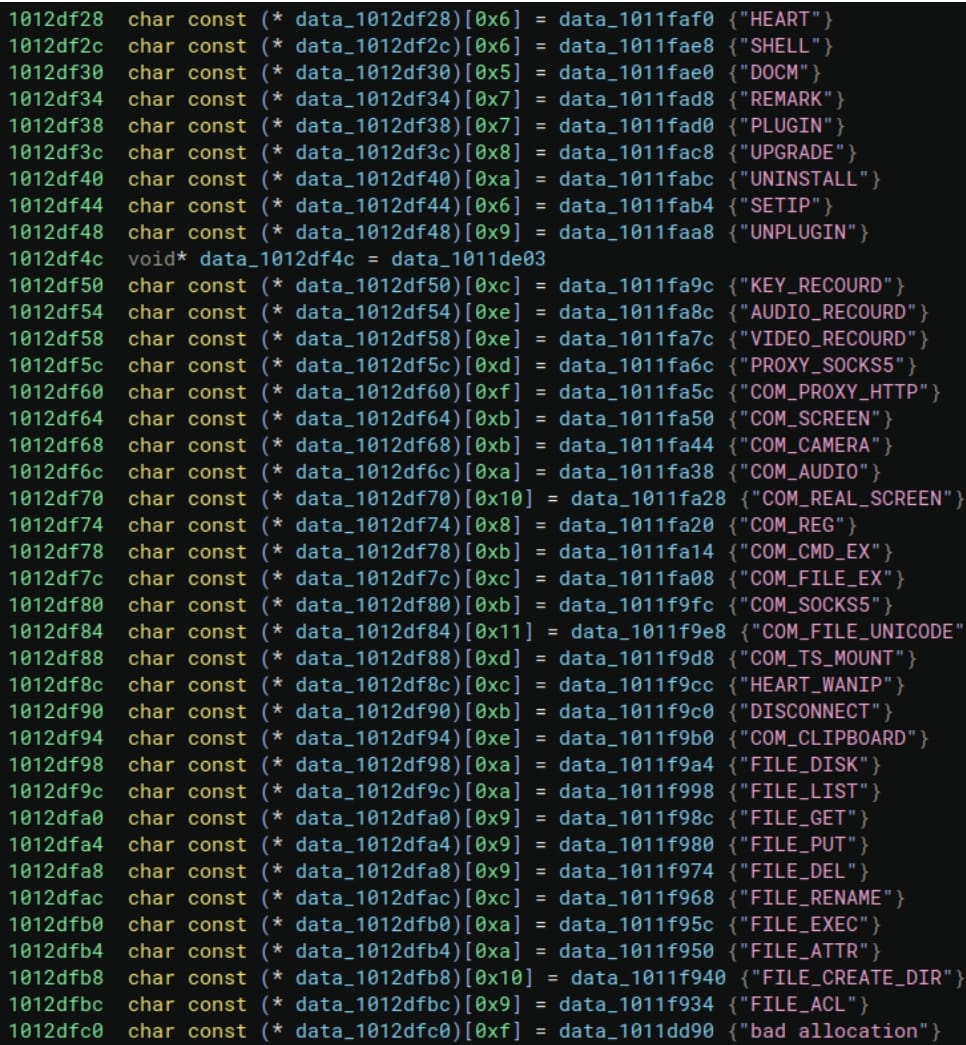
    Strings found in dead code section of .rdata file
    Strings found in dead code section of .rdata file
    Source: Lumen

    The researchers found a Linux variant of the malware, BambooToken version 2.1, as the most recent one (observed in December 2025) that could be linked to the campaign

    It also uses MQTT, collects extensive system information, can spawn a command shell, and allows operators to upload, download, and delete files. However, Black Lotus Labs says that “the Linux sample still appeared to be under development.”

    Lumen’s telemetry identified approximately a dozen compromised enterprise entities, mostly in Asia and South America, including hotels, biomedical firms, law firms, a financial organization, and a cryptocurrency website in Lithuania.

    Additionally, the researchers found that the most compromised servers were associated with the backend infrastructure of mobile applications.

    The threat actor also compromised a GitLab server in Hong Kong, creating a potential foothold for supply-chain attacks.

    Lumen hypothesizes that some of the activity may have targeted overseas Chinese users accessing mainland services through the SpeedCN VPN service.

    Although the researchers could not attribute BambooToken activity to a specific threat actor or a known activity cluster, they note that the targeting patterns are consistent with China-aligned operations.

    Lumen has shared indicators of compromise (IoCs) associated with this activity to help defenders detect and block the attacks.


    article image

    Join Mikko Hyppönen and security leaders from the NFL, CHANEL, and Atlassian for a two-hour digital summit on what AI-speed attacks change, what defenders should stop doing, and how to validate, decide, fix, and re-validate at machine speed.

    Save your seat

    BambooToken controls Linux Malware MQTT Systems Windows
    NCIJ NETWNCIJ NETWORK
    • Website

    Keep Reading

    Attack Chains, Not Just Attack Surfaces: Why Testing Individual Techniques Misses the Point

    Human Attacker Exploits Marimo RCE, Reaches SSH Bastion in Eight Seconds

    240,000 Hit by Data Breach at Japan’s Digital Agency

    Apple Patches 200 Vulnerabilities With New iOS 27, macOS Golden Gate 27 Releases 

    Suspected Black Axe gang leaders face cybercrime charges in the US

    Microsoft confirms KB5002914 Excel update breaks copy and paste

    Add A Comment
    Leave A Reply Cancel Reply

    Editors Picks

    Saudi Arabia: Satellite image reveals major damage that shut crucial oil pipeline

    September 15, 2026

    Netherlands rail disruption due to suspected sabotage, operator says

    September 15, 2026

    AI poses huge risks to national security without guardrails, minister says

    September 15, 2026

    Make NHS and military uniforms in UK, fashion firms urge Burnham | Manufacturing sector

    September 15, 2026
    Latest Posts

    Two new compounds could reveal hidden drivers of Alzheimer’s disease

    August 4, 2026

    Marmot Researchers Turn to OnlyFans for Funding—And There Are Meme Coins Too

    August 4, 2026

    New Pass-ta-key attacks let malware hijack Google-synced passkeys

    August 4, 2026

    Subscribe to News

    Get the latest sports news from NewsSite about world, sports and politics.

    NCIJ Network is an independent digital news platform delivering trusted investigative journalism, European and global news, in-depth analysis, and fact-based reporting with accuracy, transparency, and integrity.

    Facebook X (Twitter) Instagram Pinterest YouTube

    Saudi Arabia: Satellite image reveals major damage that shut crucial oil pipeline

    September 15, 2026

    Netherlands rail disruption due to suspected sabotage, operator says

    September 15, 2026

    AI poses huge risks to national security without guardrails, minister says

    September 15, 2026

    Subscribe to Updates

    Get the latest creative news from FooBar about art, design and business.

    Type above and press Enter to search. Press Esc to cancel.