


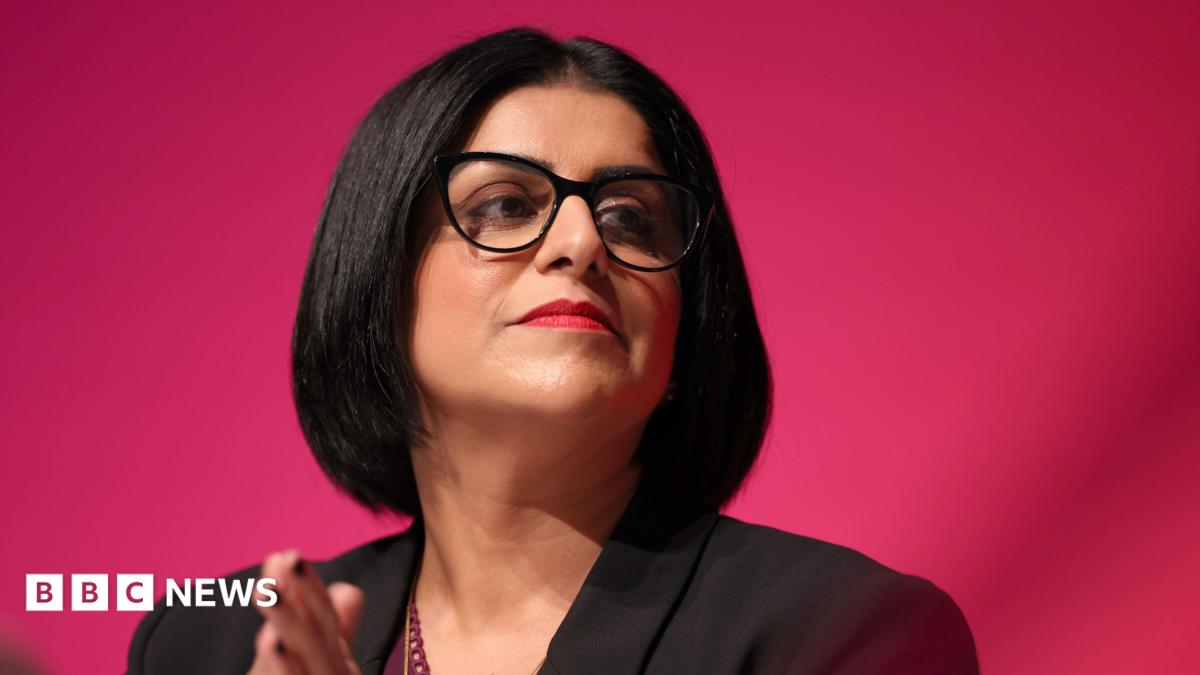
Just a few weeks before Rayner’s intervention, Mahmood had doubled down on her plans. Addressing the centre left IPPR think tank, she said “in just four years, this country experienced levels of migration it had previously seen across four decades.
“It was not just the scale, but also the nature of that change that was so destabilising.”
There was more, and with a big number attached.
“We have never, in the history of this country, had so much low-skilled migration in so little time.
“We estimate, based on findings from the Migration Advisory Committee, that the lifetime cost to the taxpayer will be £10bn. That figure would be paid for by working people in this country.”
She added: “It is an affront to the idea of fairness within our migration system.”
Incidentally, the £10bn figure is contested by some – or at least placed in a wider context.
The aforementioned IPPR argue that the original plans were “never in reality going to create a £10bn long-term saving, given they were meant to delay care workers’ eligibility for ILR rather than prevent them from settling altogether.
“Delaying ILR would save money on welfare, whereas the £10bn figure includes much broader long run costs once care workers enter retirement, claim the state pension, and make greater use of health and social care.”
Nonetheless, Mahmood’s message in March left senior Conservatives privately agreeing with her – and struck by her willingness to be unflinching in her approach to the subject.
But around 100 of her Labour colleagues were not happy – and making their views known publicly.
By the time I found myself in the dusty car park of a sports club near Wigan in May, waiting to talk to an ambitious by-election candidate by the name of Andy Burnham, it was clear changes were highly likely.
He told me it was important to “work hard to get the balance right” but that the “broad thrust” of what the home secretary was doing “is right”.
“Broad thrust” will be the words that account for the gap between what Mahmood used to say and what she is saying today.
The Conservatives and others will seize upon the change. The Tories will argue it amounts to an “excruciating U-turn” as one senior figure described it to me, claiming it would be “deeply personally embarrassing” for the home secretary.
They also ponder how the government will choose to make the changes, as they believe if primary legislation isn’t used to do it – such as via an amendment to the Immigration and Asylum Bill currently before parliament – the plans could be successfully challenged in court.
Mahmood will argue she has tried to finally arrive at a policy the widest range of people may see as fair.
We will see and hear the range of reaction she provokes in the coming hours and days.
