


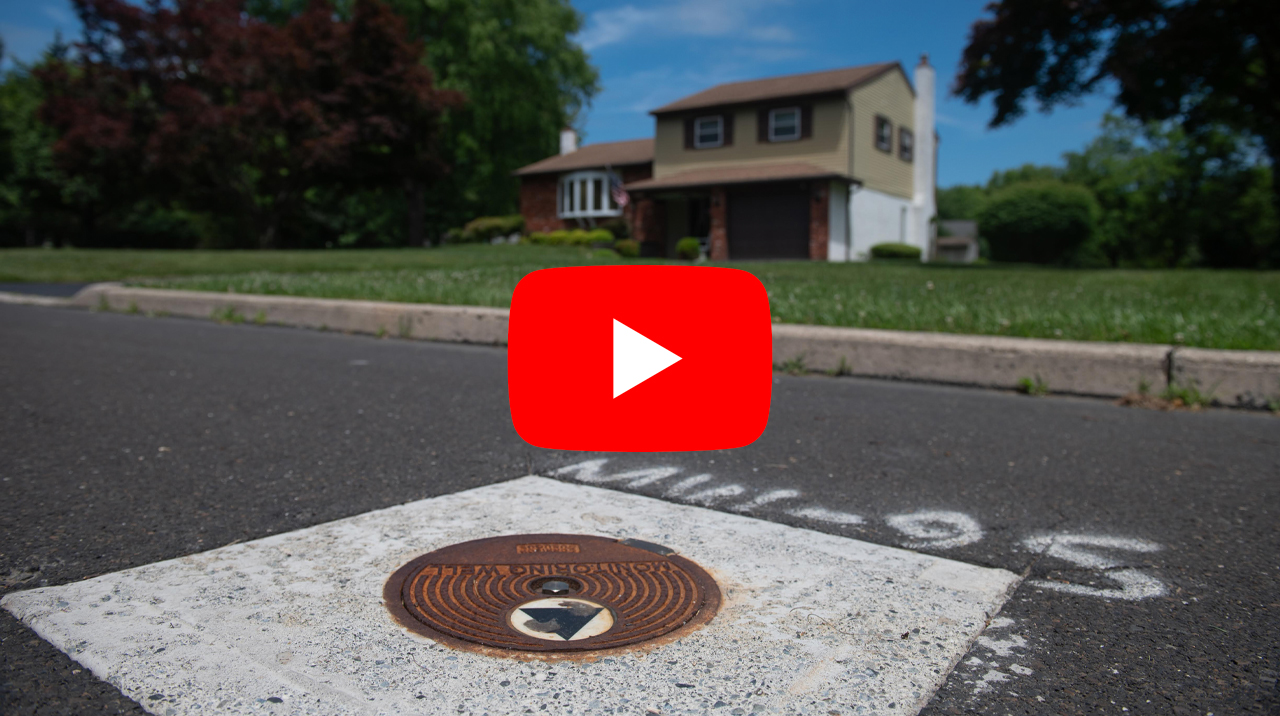
Welcome to Inside Climate, a podcast from the staff of Inside Climate News. In this episode, we delve into how President Donald Trump’s environmental policy rollbacks are impacting ordinary people. In Pennsylvania, a jet fuel pipeline spill has tainted the drinking water source for more than 200 homes in Pennsylvania and homeowners continue to struggle with the cleanup. And elsewhere, a different type of pollution is wreaking havoc as Guatemala is inundated with cheap plastic imports and extremely limited infrastructure to manage the waste.
Listen and subscribe on YouTube, Spotify, Apple Podcasts, Amazon Music, and iHeart.
JAKE BOLSTER
When President Donald Trump returned to the White House in January 2025, he prioritized rolling back regulations that stymied the fossil fuel industry.
MARIANNE LAVELLE: When it comes to the oil and gas industry, there’s definitely an effort to reduce regulation.
Now, the impacts of that policy are being felt in Pennsylvania, where a ruptured gas pipeline has polluted the drinking water of dozens of homeowners.
MARIANNE LAVELLE: They had 16 gallons of jet fuel floating on top of their drinking water well.
Abroad, a different type of pollution threatens the health and air quality of millions of people.
LIZA GROSS: Over the past decade, Guatemala imported more than a million tons of household plastic goods. The people in the countryside actually burn this stuff because they don’t have access to waste disposal.
That’s coming up on Inside Climate.
Welcome to Inside Climate, I’m Jake Bolster.
The fossil fuel industry has seen its profits skyrocket this year amid record heatwaves and conflict in the Middle East. The world’s six largest fossil fuel companies reported earnings of $52 billion in just the second quarter of this year. That’s up more than 150 percent over 2025, all due to the global surge in oil prices.
The industry is also experiencing a prosperous political moment, given the outsized support the Trump administration has granted its players by rolling back environmental regulations and cancelling clean energy investments in favor of oil and gas development.
In fact, the six largest fossil fuel companies plan to increase production by 14 percent by 2030 compared to 2024 levels. That’s equal to pumping an additional 2.5 million barrels of oil a day, according to an analysis by the group Oxfam.
So with fewer regulatory guardrails holding the industry in check, Inside Climate News wanted to understand how this is impacting communities in real time.
First, we’ll speak to reporter Marianne Lavelle who has been covering a jet fuel pipeline leak in Pennsylvania that has polluted the groundwater that dozens of homeowners rely on for household use, with few repercussions for the company responsible for the leak.
Second, we’ll pivot to plastics, products derived from crude oil and natural gas, with reporter Liza Gross. She traveled to Guatemala to document how households are overwhelmed by plastic waste and have resorted to burning it, causing severe air pollution and health impacts.
This story is funded by readers like you.
Our nonprofit newsroom provides award-winning climate coverage free of charge and advertising. We rely on donations from readers like you to keep going. Please donate now to support our work.
Jet Fuel in the Water
JAKE BOLSTER
Hey Marianne, thanks for joining us.
MARIANNE LAVELLE
Hi Jake, glad to be here.
JAKE BOLSTER
So, Marianne Lavelle is the Washington, D.C., bureau chief for us at Inside Climate News. She’s covered the environment, science, law and business in D.C. for more than two decades, and has won numerous awards for her reporting. Previously, she worked as an energy editor and writer at National Geographic, U.S. News and World Report magazine and the National Law Journal.
So Marianne, you have covered a major story here in the U.S. that deals with water pollution, specifically a community that discovered petroleum fuel had leaked into its drinking water. And I want to get into the specifics of your reporting, but before we do that, can you just talk about why this was a story you wanted to cover?
MARIANNE LAVELLE
President Trump has this agenda, very clear, of removing regulation from the fossil fuel industry. But on the other side, regulation for industry is really protection for people. And we wanted to see what it looked like from that side of things. And so we went to this community that has seen what it’s like to have much less protective federal agencies.
JAKE BOLSTER
Right. So let’s start then with this community. How did they discover that there was a leak in a pipeline where they lived?
MARIANNE LAVELLE
Yeah, you have to go all the way back to 2023. And some people realized that there was this overwhelming taste and smell of gasoline in their drinking water, and so they called state and local officials. There’s no gasoline station nearby, there’s no highway nearby. The only place that
fuel could have come from is this underground pipeline, a 68-year-old pipeline that goes right under the community, delivering fuel from Pennsylvania to New Jersey.
JAKE BOLSTER
And these are common, right? Like these pipelines are all over the U.S.?
MARIANNE LAVELLE
All over the U.S. and this one happens to be in one of the most densely populated places, the suburbs of Philadelphia and the suburbs of New Jersey, the most densely populated state.
JAKE BOLSTER
Right. So who owns this pipeline?
MARIANNE LAVELLE
This pipeline is owned by, really, a giant in the oil and gas industry, Energy Transfer. It’s based in Dallas, but they bought a large oil company, you know, maybe 15 years ago, Sunoco. And they inherited all of this pipeline infrastructure in the northeastern United States.
JAKE BOLSTER
And when the community was tasting and smelling this petroleum in their water, what was the reaction from the company? Well, how did the company find out? Did the community bring it to them? Did state legislators do that?
MARIANNE LAVELLE
As people soon found out, they ordered Energy Transfer to investigate. And Energy Transfer came out, they took some readings, they even did some digging, but they said there’s really no problem with our pipeline. It must be bacteria in the water. It must be your water problem. And these folks all have private drinking water wells. So this happened again and again through 2024. People just kept calling the company. The company never went back and told the federal regulators they were getting these calls, but they kept telling people there’s just no problem with our pipeline.
JAKE BOLSTER
Yeah. And you were able to track down some of the community meetings where residents were talking about the evidence of jet fuel in their wells and we have some audio of that.
MARIANNE LAVELLE
Yes, you’re going to hear Kristine Wojnovich and she is, really, her and her husband, are the first people who alerted authorities in 2023 and this is right after they finally opened up their drinking water well.
KRISTINE WOJNOVICH
I have to say, I was really emotionally unprepared for this moment.
When they opened the well, however, there was a huge plume of oil fumes that came out of the top of the well. They measured 12.35 feet of jet fuel. Jet fuel that has been sitting on top of our drinking water since September of 2023 when it started to gather there. According to GES, after they pumped it out, they measured 15 gallons that had just been sitting there, gathering.
MARIANNE LAVELLE
So ultimately jet fuel was found floating in the drinking water wells of six homes. And what happens to the fuel is it separates. A lot of it floats, but the components, which are toxic, begin to separate and dissolve into the groundwater. And so those components, like benzene, xylenes, were found in about 28 local home drinking water wells to date.
JAKE BOLSTER
What are some of the health effects of those?
MARIANNE LAVELLE
They have both short-term and long-term effects. The short-term effects are kind of what you would expect—dizziness, nausea, irritation of the skin and eyes. People are really concerned about the long-term effects, which may not show up for years, but benzene is a known carcinogen, especially associated with leukemia, so Energy Transfer now faces a slew of lawsuits and one of the things that people want is long-term medical monitoring because of this jet fuel spill.
JAKE BOLSTER
We’ve got a jet fuel leak that’s polluting a community’s drinking water. That sounds like a crisis. How long did it take to stop the leak?
MARIANNE LAVELLE
Well, once Energy Transfer found the leak, it only took a day for them to take out that section, replace it, and get the fuel moving again. People were very upset in the community that the fuel just started moving almost immediately when, really, they weren’t sure how safe this pipeline was. What’s the state of the rest of the 68-year-old pipeline? And that’s where they wanted the federal regulators to step in.
JAKE BOLSTER
Yeah. I mean what was it, 20 months of looking and then to fix it in a day?
MARIANNE LAVELLE
Exactly, exactly. But it’s even worse than that because after it was fixed, that was January 2025. It is now August 2026. People are still living with jet fuel in their groundwater there.
JAKE BOLSTER
Yeah, where are we on the cleanup for residents?
MARIANNE LAVELLE
Yeah, so the company over this last year and a half has drilled wells all through the community. It’s very disruptive, as you can imagine, but they said they need the wells to see how far the jet fuel has gone, how deep it is. And they have a cleanup plan, but it’s just not happening as fast.
JAKE BOLSTER
And who’s overseeing the cleanup plan?
MARIANNE LAVELLE
Pennsylvania Department of Environmental Protection is doing oversight. The problem is Pennsylvania’s law gives the state regulators limited authority to really order Energy Transfer to do something. The interesting thing is the EPA, the federal EPA, also has that authority, but it has decided not to step in here, even though the area’s Republican congressman has asked them, really implored them, to to step in.
JAKE BOLSTER
Let’s talk a little more about the penalties or the degree of accountability Energy Transfer has faced during all of this. How would you characterize that?
MARIANNE LAVELLE
Well, they’ve faced no penalties. There’s another federal agency, it’s called the Pipeline and Hazardous Materials Safety Agency, and it really has responsibility for making sure that that pipeline is safe. That agency, which people call PHMSA, it has authority to penalize Energy Transfer and really to order certain things to be done. Initially, PHMSA put out a pretty strong order, a proposed order. But over the next few months, PHMSA significantly lightened the load on the company.
JAKE BOLSTER
Can you tell me a little more about the Pipeline and Hazardous Materials Safety Administration? That’s not a federal administration I was aware of until this story.
MARIANNE LAVELLE
It’s such a small agency, not too many people are aware of it. And it’s interesting because they’re responsible for the 3.3 million miles of oil and gas pipelines that go interstate. The agency only has about 550 people. And it’s a small agency and it has gotten smaller during the first year of the second Trump administration.
PHMSA really hasn’t played the role that people expected it to play in this case. Even the state senator who represents this area, his name is Steven Santarsiero, and he was really expressing frustration at a July community meeting.
SEN. STEVE SANTARSIERO
PHMSA has been completely absent from our conversation now for the better part of the last 18 months. I’m not confident, here today, that the continued operation of this pipeline doesn’t pose a risk, not just to these residents but other residents throughout the region.
JAKE BOLSTER
So what actions, if any, have PHMSA taken in this case?
MARIANNE LAVELLE
Well the one concrete action is PHMSA has ordered the pressure on the pipeline to be reduced to about 80 percent.
JAKE BOLSTER
Has Energy Transfer done that?
MARIANNE LAVELLE
They have done that. So that means less, less fuel per minute goes through the pipeline.
However, there’s other instances where it’s been very clear that PHMSA has taken a very light touch with Energy Transfer. In one case, PHMSA’s investigators came in to check the company’s compliance with its safety order, and the staffers at Energy Transfer wouldn’t give the agency the documents that it was seeking. And the agency sent a warning letter to the company saying it could be subject to $2.7 million in fines, but the agency decided not to take action at that time. So it’s really part of what we’re seeing with that agency is not taking the enforcement actions it once took.
JAKE BOLSTER
Tell us some of the ways the Trump administration has changed the rules of the game, so to speak, for companies like Energy Transfer.
MARIANNE LAVELLE
Yes, I mean one thing that’s happening is the U.S. Environmental Protection Agency is narrowing the scope of its authority under the Clean Water Act. One of the things that it is doing is making it absolutely clear it does not have authority for groundwater. And this is an exclusion that the oil and gas industry sought specifically. If there’s a spill that’s underground like this, it’s less clear that the U.S. EPA even has authority. Under the Biden administration, the Biden rules stated that in some cases pollution underground is within the EPA’s authority. So that’s one way.
PHMSA itself lost 17 percent of its staff. It lost a large number of its staff supervisors and its senior people. And last year its enforcement fell to an all-time low, about 50 percent fewer enforcement actions than it had ever done before. So definitely you’re seeing less regulatory and enforcement activity by the federal agencies.
JAKE BOLSTER
Are there any other direct actions you uncovered in your reporting that would indicate Energy Transfer might be benefiting from a strong relationship with the Trump White House?
MARIANNE LAVELLE
Yes, one week after PHMSA gave its notice to the company that it wanted this safety order in place, Energy Transfer’s chief executive named Kelcy Warren, he gave $12.5 million to this political action committee called MAGA Inc., which supports the Trump agenda. Not only that, the next day…
JAKE BOLSTER
Well sorry, and that’s unusual because these political action committees are typically for candidates running for office, not elected officials.
MARIANNE LAVELLE
Exactly. Remember, at this point President Trump is in office. The election’s over. But he has this political action committee out there supporting his agenda.
Kelcy Warren, the chief executive of Energy Transfer, also was able to send $12.5 million from the company itself to MAGA Inc. So that’s a combined $25 million to the PAC. It was the biggest donation that Kelcy Warren had ever made in his very active career of political donations, but it also was the largest donation at that time to MAGA Inc. So it definitely was an attention getter and the largest donation to that political war chest from the fossil fuel industry. That war chest is now $400 million, which is more than any of the other Republican big PACs going into the midterm elections.
JAKE BOLSTER
Did the timing of those donations and some of PHMSA’s actions jump out at you?
MARIANNE LAVELLE
Yeah, the donations came one day after Energy Transfer said that it wanted to sit down with PHMSA and negotiate over what the safety order would be in response to this jet fuel spill. So it all was happening at the same time.
JAKE BOLSTER
So what else changed for Energy Transfer after it made these donations?
MARIANNE LAVELLE
So two months after the company’s $25 million donations to MAGA Inc., the company had negotiated this consent agreement with PHMSA and it placed a lot fewer burdens on the company. It didn’t have to submit any leak detection plan, for instance, or a schedule for improving its hardware, software or even its staffing. Instead, it was really up to the company to decide if there are any changes it had to make at all that would really improve spill detection ability. And this, this really fulfilled, kind of, what was expected under the Trump administration. Trump really made clear even before the election, at a big fundraiser that Energy Transfer’s chief executive actually co-hosted, and Trump told oil and gas executives, “You know, if you give me a billion dollars, we’ll make sure to unleash your industry.” And really, it was clear in a way it usually isn’t during the campaign season that there would be this quid pro quo. And we just saw that play out so clearly in this case of the jet fuel spill.
JAKE BOLSTER
So what did reporting this story tell you about environmental enforcement under the second Trump administration?
MARIANNE LAVELLE
Well, when it comes to enforcement against the oil and gas industry, there’s definitely less of it. There’s definitely an effort to reduce regulation. And that is playing out for the people who are affected by the actions of the oil and gas industry and making it much more difficult for them to get official attention to their problems and the problems sometimes have to do with health and safety, as in the case of this community, which really is just looking for clean drinking water.
JAKE BOLSTER
Marianne, this has been such valuable reporting and I’m looking forward to seeing how you continue to report on environmental enforcement on rollbacks under the Trump administration. Thank you very much for joining us today.
MARIANNE LAVELLE
Thank you, Jake.
Plastic in the Air
JAKE BOLSTER
Hey Liza, how are you doing?
LIZA GROSS
Good, how are you doing, Jake?
JAKE BOLSTER
I’m doing real well. It’s good to see you here. Good to have you.
LIZA GROSS
Thanks for having me.
JAKE BOLSTER
Of course. So Liza Gross is a reporter for Inside Climate News. She’s based in Northern California and covers issues related to plastic and environmental justice for ICN. Prior to joining ICN, she worked as magazine editor for the open access journal PLOS Biology. You were a reporter for the Food and Environment Reporting Network and covered toxic and environmental health for diverse national outlets, including the New York Times, the Washington Post, Discover and Mother Jones.
JAKE BOLSTER
Before we get to your reporting in Guatemala, let’s just start with an overview of the challenges that plastic production and waste can pose.
LIZA GROSS
Well, it’s a huge problem, and that’s because plastic manufacturers have cranked out hundreds of millions of tons of plastic every year for decades. They originally advertised these plastic products as the ticket to a carefree lifestyle, but the skyrocketing production of these petroleum-based materials, which are laced with toxic chemicals that can’t be recycled, can’t be sustainably managed, and so now we’re dealing with a global plastic production crisis. When it became clear just how bad the plastic waste crisis was, manufacturers started promoting recycling as a solution, but hardly any plastic can be recycled. So barely 9 percent of plastic that has ever been produced has ever been recycled, which is kind of a shocking statistic.
JAKE BOLSTER
We’ve got around 90 percent of the plastic that is ever produced has no way to reuse it. Where is all that plastic going?
LIZA GROSS
Yeah, so a lot of it ends up in landfalls. A lot of it ends up in the environment, in rivers and waterways. And so a lot of this stuff is actually getting exported from the United States and other rich countries to countries like Guatemala that don’t have the means to properly dispose of it.
I’m gonna be looking at sort of the plastic waste import problem in the next story in this series that we’re talking about, which is called Prisoners of Plastic. But for the first story, it’s really the struggle to deal with all this plastic stuff that’s sold in stores. And so when you have a country like Guatemala where it’s really limited, it’s a limited resource country to begin with, right? And so they have very limited waste management capacity. And then in the countryside, where I was visiting, people don’t have garbage collection. I mean, there’s like three garbage trucks that do or don’t go up to the hillside where there are 36 villages. So yeah, that’s, people see no alternative, but, you know, they have to get rid of all this stuff. And so they burn it. And that’s actually what I saw when I visited the villages.
JAKE BOLSTER
We obviously have no shortage of plastic goods here in the United States. What were some of the plastic goods you were seeing in Guatemala?
LIZA GROSS
Oh my goodness. So going on the road up to the villages from Jalapa, which is a medium-sized city east of Guatemala City, you would see little bodegas, you know, all these roadside markets all the way up along the road.
There was this one store called Super China. And so a lot of these goods are being imported from China, increasingly from China. And so you would walk in the store and you’d just be hit with this horrible pungent VOC, sickly-sweet odor from plastic just piled up on the shelves. It’s like water bottles, it’s toys, it’s lunch pails.
JAKE BOLSTER
How many tons of plastic are we talking?
LIZA GROSS
So over the past decade, Guatemala imported more than a million tons of household plastic goods. And the amount imported from China tripled, almost, since 2016.
JAKE BOLSTER
How is all this plastic being disposed of?
LIZA GROSS
If you ask what’s happening to the plastic, I’d have to say nothing sustainable, unfortunately. And so since more than half of the people in Guatemala live in poverty, a ridiculous percentage of the people in the countryside actually burn this stuff to dispose of it because they don’t have access to waste disposal services—I mean, you know, one garbage truck for, like, you know, 15 villages. You just basically see this debris everywhere. And then people throw it down the hillside. One thing that was really, really distressing was that some of the researchers told me when you ask people what they do with the plastic, the people who don’t burn it were saying, “That’s what the river’s for.”
JAKE BOLSTER
Mm. Meaning they’re just, they’re just dumping it in the river?
LIZA GROSS
They’re dumping it in the river. And the Motagua River in Guatemala is the longest river in the country. It’s also one of the most plastic-polluted rivers in the world.
JAKE BOLSTER
And your story, you got into some of these statistics, but three-quarters of households in Guatemala countryside are burning their waste, and that includes plastic?
LIZA GROSS
That’s actually what the point of this project, called Ecolectivos, that the researchers I traveled with were working on. They were basically trying to find ways to help people reduce the burning of plastic because it’s incredibly harmful. I mean, it’s bad enough to be burning wood, which is what a lot of people cook with in countries like Guatemala, where you don’t have access to clean cooking fuels, but they also have no access to garbage disposal. So they are their own garbage collectors and disposal force. And so you saw a lot of people burning stuff right outside their home. You saw people burning things along the side of the road. I mean, there was just burning plastic all over the place.
JAKE BOLSTER
And we read in the U.S. about potential health impacts from cooking indoors with gas. What are the health impacts of cooking indoors with wood and plastic?
LIZA GROSS
Well, wood is particularly bad. And so wood is one of the leading causes of death for women of reproductive age around the world. This is a very well-known World Health Organization statistic, so people have been working on this problem for a really long time. And it also causes incredible respiratory problems for children and heart problems. It causes all sorts of disorders and as you can imagine, makes asthma worse and it makes pneumonia much worse. And so a lot of these kids in developing countries are getting pneumonia. And this just aggravates that terribly. You’re more likely to see very severe cases of pneumonia with households that burn plastic.
JAKE BOLSTER
Here in the U.S., burning plastic trash is illegal because of this toxic air pollution. What are the alternatives?
LIZA GROSS
Well, that’s the million-dollar question. So finding solutions and alternatives to burning plastic is actually the main thing that the researchers I traveled to Guatemala were trying to figure out. So they tried to provide people with safer cooking alternatives. As you mentioned, cooking with gas, we know there’s a lot of problems with that, that’s not clean either, but when your alternative is cooking with wood, it actually does help quite a bit.
JAKE BOLSTER
What is the appetite from the women that you spoke with for change here? I mean, yes, researchers want data, they want to answer these questions, but how are the people who are living this way responding to what’s happening around them?
LIZA GROSS
Well, very positively. So most of the people who were in the study groups, once they started learning about the harms of burning plastic, they were very enthusiastic to do whatever they could to join the project and sort of reduce reduce the burning of plastic, which they recognized meant reducing the use of plastic. And so they were doing all sorts of various projects. Because once they learned how bad it was, most of them did stop burning it inside in their homes. But you know, sometimes it’s like thoughtless, I have this pasta bag of plastic, I’m just gonna toss it in there. But they still have no alternative but to burn it outside. And so they were very frustrated that nobody’s helping them try to figure out what to do about this. Cause I mean, Guatemala itself is resource poor, but the countryside is extremely poor. And so they were looking for solutions, like doing community cleanups. You know, one of the women that I spoke with was really charismatic and very enthusiastic, working with her local church to organize the community to clean up all the plastic along the side of the road.
JAKE BOLSTER
You’ve been on this beat for several years. Has something struck you as the best solution to handle this waste?
LIZA GROSS
I think it’s really difficult. It’s something from the 1970s, really, when the environmental movement was born, where people are always talking about you know, recycle, reuse, reduce. But when you’re talking about plastic, there’s no recycling that’s gonna happen. And that’s almost by design. I mean, the people who are making these harmful products knew nearly from the beginning, because they have scientists working to help them, you know, develop the products, that this stuff was pretty harmful. And but they hid that information from the public and they said, “You guys are getting more concerned about the waste problem? It’s your fault. You should recycle it.” But that was the, you know, plastic manufacturers’ ploy to blame consumers for creating all this waste when they were creating a product that couldn’t be recycled.
JAKE BOLSTER
Yeah, so broadly, reduce, reuse, recycle, maybe that’s their approach. What’s the approach that works for Guatemala right now?
LIZA GROSS
Yeah, that’s another big question that the researchers are trying to answer. So the research project with Ecolectivos was really focusing on helping community members figure out how to reduce their use and stop burning in their communities. But what was really clear is personal actions can only do so much. I mean, so this is a systemic problem. They need infrastructure build-out to get waste collection through to all the villages, and then they really need the capacity to manage all this waste.
But at the community level, a few really positive developments have happened. One is that there’s work afoot to make a community collection center. So create local landfill for one thing and then create a collection center where people can bring sorted trash and pull out the metal, pull out the aluminum, pull out the plastic that can still be recycled, which is usually the numbers one and two on the bottles can typically be recycled, but not always. And so that will make a big difference because as it is, people have to sort of go around from house to house, which is a lot of houses and really rugged roads, and then take all that stuff they collected to the recycling center in the city. And so that’s a deterrent for a lot of people.
And then the other thing that’s really, really cool in terms of just stopping burning plastic is that the research team is doing this experimental project where they’re going to have induction stoves, so electric induction stoves, in the field station. And that’s gonna be kind of a huge thing for a couple of reasons. Culturally, it’s gonna be maybe something, you know, women who’ve been brought up since they were, you know, toddlers cooking using fires that you know, wood fires are gonna look at that and be like, what? How does that work?
JAKE BOLSTER
And induction stoves, they use magnets, there’s no flame. It would be very different.
LIZA GROSS
Yeah, it’s completely, you know, zero emissions. But there are two hurdles for that that the researchers see right now. One is a very practical thing—is there even a power grid that can supply everybody properly? And the other thing is cultural. So women, you know, boil corn on their stoves, maize, for hours to make the dough for masa to make their tortillas and so I don’t know if an induction stove can do that and they’re gonna figure that out, because it’s a very precise way of boiling it. But then they also need this really long sort-of wooden plank to roll out the dough for the tortillas. And so they’ve got to make sure all those needs are met. That’s in the works right now and I’ll be following that, because that’s really cool.
JAKE BOLSTER
Yeah, yeah. Well please keep us posted. Liza, thanks so much for being here and sharing your great reporting with us.
LIZA GROSS
Well, thanks so much for inviting me to talk about it.
Final Thought
JAKE BOLSTER
Finally, an update to a previous story we reported on Inside Climate about a water crisis in Corpus Christi.
Despite reservoirs in Texas rebounding from recent rain, Corpus Christi continues its battle over water resources after the city came extremely close to running out of water earlier this year. We reported that in episode 2 of Inside Climate.
In a dramatic update to that story, the city council has ordered a public referendum on a citizen-led petition called “the fair water amendment” that would sharply increase the price of water for industrial users during drought conditions.
The community-led proposal would add millions of dollars in fees for the region’s largest water users, including Exxon Mobil, Occidental Chemical, and Valero, whenever water levels fall below 30 percent full, like they had for the last 29 months, until August of this year.
The proposal is expected to face legal challenges before it appears on ballots this November.
KILEY PRICE
Thank you so much for listening to Inside Climate.
For more of our reporting, please visit insideclimatenews.org and sign up for our newsletters, all of which are free to read because we want to make our work available to anyone, wherever they are.
You can also follow us on your favorite social platforms and share our podcast with others.
If you love what you read, see and hear, please consider donating to support our nonprofit newsroom because we rely on the support of our audience to make our reporting and this podcast possible.
We’ll be back in two weeks with more climate stories from our reporters all across the world.
About This Video
Perhaps you noticed: This video, like all the news we publish, is available for free. That’s because Inside Climate News is a 501c3 nonprofit organization. We do not charge a subscription fee, lock our news behind a paywall, or clutter our website with ads. We make our news on climate and the environment freely available to you and anyone who wants it.
That’s not all. We also share our news for free with scores of other media organizations around the country. Many of them can’t afford to do environmental journalism of their own. We’ve built bureaus from coast to coast to report local stories, collaborate with local newsrooms and co-publish articles so that this vital work is shared as widely as possible.
Two of us launched ICN in 2007. Six years later we earned a Pulitzer Prize for National Reporting, and now we run the oldest and largest dedicated climate newsroom in the nation. We tell the story in all its complexity. We hold polluters accountable. We expose environmental injustice. We debunk misinformation. We scrutinize solutions and inspire action.
Donations from readers like you fund every aspect of what we do. If you don’t already, will you support our ongoing work, our reporting on the biggest crisis facing our planet, and help us reach even more readers in more places?
Please take a moment to make a tax-deductible donation. Every one of them makes a difference.
Thank you,
