


For more than a decade, the Chinese government has overseen a trillion-dollar building spree across the globe, helping construct and finance a vast network of mines, ports, railways and other infrastructure outside its borders.
These projects through its Belt and Road Initiative are increasingly shaping global development, especially in emerging economies. What does it look like when such a large investment push comes from an authoritarian country without a free press?

Inside Climate News sent reporters to countries across four continents to answer that question. The resulting stories found that the spending has had devastating impacts on local communities and the environment near these projects, and long-lasting effects on the global climate.
Beijing is drawing increased attention for its leading role in clean energy technologies like solar and wind energy and electric vehicles. But it has also helped build a global fleet of coal power plants hampering governments’ ability to meet climate targets.
In many countries, Chinese investment has flowed to regions where local governments have been accused of human rights abuses or ignoring environmental regulations.
Here are five takeaways from our Planet China series:
Unmatched Scale and Speed
China’s Belt and Road Initiative has offered many governments access to money that was hard to find elsewhere, especially for emerging and developing economies. Total spending since 2013 surpassed $1.5 trillion this year, including lending from Chinese banks, construction contracts for Chinese firms and other investments, according to the Green Finance & Development Center at Fanhai International School of Finance in Shanghai.
This money often comes with few strings attached, compared to loans from Western and multilateral banks that often require countries to implement financial or governance reforms. For many governments, Belt and Road investments helped build the roads, railways, power plants and mines that have fueled economic growth. But these projects have had enormous impacts on local communities and ecosystems.
Ignoring Environmental Risks
Some Belt and Road projects have proceeded despite clear evidence of high ecological risks. In Indonesia, for example, Chinese companies own, financed and are constructing a hydroelectric dam in the middle of the habitat of the world’s rarest great ape.
The Tapanuli orangutan was identified as its own species in 2017, the same year construction began on the dam. There were fewer than 800 orangutans remaining then, and scientists and advocates launched a global campaign to halt the dam, given the threat it posed to the species. Yet even after one Chinese bank withdrew its support, a state-owned enterprise stepped in, and construction is near complete.

In Peru, a Chinese-backed shipping conglomerate built a deepwater megaport north of Lima that not only damaged surrounding soils, waterways and homes but has sparked a network of roads and railways leading eastward into the heart of the Amazon rainforest. Environmental scientists and researchers say the construction of these routes—with little to no environmental oversight—is pushing the world’s most climate-critical rainforest closer to a tipping point, converting it from a carbon storehouse to a major carbon source.
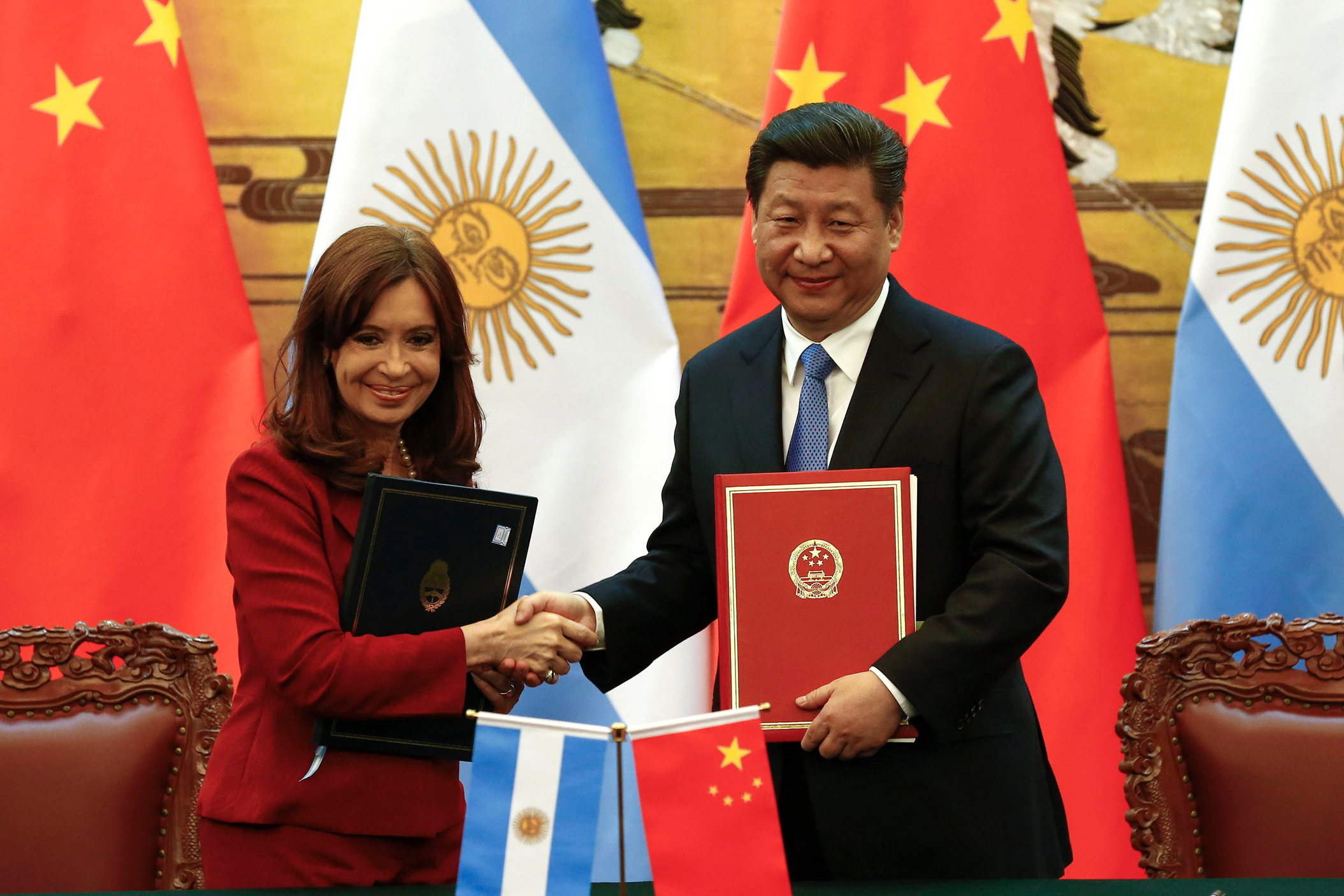
Two $4.7 billion Chinese-financed dams on Argentina’s Santa Cruz river threaten vital glaciers in the Southern Patagonian Ice Field. Those glaciers provide the region with fresh water and supply nutrients to delicate ecosystems, and their loss will ripple globally, contributing to sea level rise and shifts in climate patterns.
In Zambia, a Chinese state-owned copper mine spilled millions of gallons of toxic waste into the nation’s rivers, including its largest, the Kafue.
“Communities downstream are at serious risk of developing birth defects, cancers, liver and lung disease, heart conditions, and other chronic illnesses,” a consultant for the company told the Zambian government after the company downplayed the risks.

Threatening Human Rights
Many Belt and Road projects have proceeded even in the face of associated human rights risks. In Zambia, the villagers whose livelihoods were wiped out by the copper mine’s waste-pit spill were restricted from seeing their lawyers and pressured to sign away their rights. Journalists who have reported on these risks in Africa have faced threats, smear campaigns and surveillance.
Some scientists who spoke against the dam in Indonesia were dismissed from their positions or prohibited from working in the country’s national parks. Some activists faced death threats, and one died under suspicious circumstances.
Authoritarian Development
The environmental and human rights consequences of China’s Belt and Road Initiative are obscured by design. Unlike democracies, China lacks a free press capable of scrutinizing its overseas investments. Instead, Beijing has built a vast global media apparatus, anchored by state-owned outlets that flood airwaves with glowing coverage of the country’s investments.
Advocates based in the Global South who have spent decades fighting harmful foreign investments told us that they have long struggled to navigate China’s opaque political and corporate systems—making it difficult or impossible to hold its companies accountable. In many cases, civil society groups have struggled to speak to or meet with Chinese companies that own projects in their communities.
Two Sides to an Energy Transition
China is far and away the global leader in most clean energy technologies. Its exports of solar panels, electric vehicles and other technologies are beginning to lower global climate pollution, and Chinese companies are also increasingly manufacturing these products overseas. But this development is coming at a cost, too.
Chinese companies have been accused of violating labor rights at an electric vehicle plant in Brazil and at nickel mines in Indonesia. Battery projects in Hungary have proceeded despite warnings they could contribute to water shortages.
Some experts said these investments are new enough that host governments and civil society have the opportunity to help shape them.
“Whether or not these industrial mega-projects lead to any positive development outcomes depends upon domestic policy choices,” said Tim Sahay, co-director of the Net Zero Industrial Policy Lab at Johns Hopkins University. Host countries, he added, “must bargain hard with Chinese firms to actually achieve their own goals of sustainable development.”
About This Story
Perhaps you noticed: This story, like all the news we publish, is free to read. That’s because Inside Climate News is a 501c3 nonprofit organization. We do not charge a subscription fee, lock our news behind a paywall, or clutter our website with ads. We make our news on climate and the environment freely available to you and anyone who wants it.
That’s not all. We also share our news for free with scores of other media organizations around the country. Many of them can’t afford to do environmental journalism of their own. We’ve built bureaus from coast to coast to report local stories, collaborate with local newsrooms and co-publish articles so that this vital work is shared as widely as possible.
Two of us launched ICN in 2007. Six years later we earned a Pulitzer Prize for National Reporting, and now we run the oldest and largest dedicated climate newsroom in the nation. We tell the story in all its complexity. We hold polluters accountable. We expose environmental injustice. We debunk misinformation. We scrutinize solutions and inspire action.
Donations from readers like you fund every aspect of what we do. If you don’t already, will you support our ongoing work, our reporting on the biggest crisis facing our planet, and help us reach even more readers in more places?
Please take a moment to make a tax-deductible donation. Every one of them makes a difference.
Thank you,
