


- “[M]igratory birds do not belong to any one country, but are a shared global heritage, and their survival requires a borderless safety net,” says Alex Ngari, migratory birds and flyways programme manager for BirdLife Africa.
- Gaps in scientific knowledge regarding migratory birds’ pathways affect conservation efforts, Ngari explains.
- These gaps also prevent us from predicting the safety of bird populations in relation to climate change, he adds in a Q&A with Mongabay ahead of the Global Flyways Summit in Nairobi, Kenya.
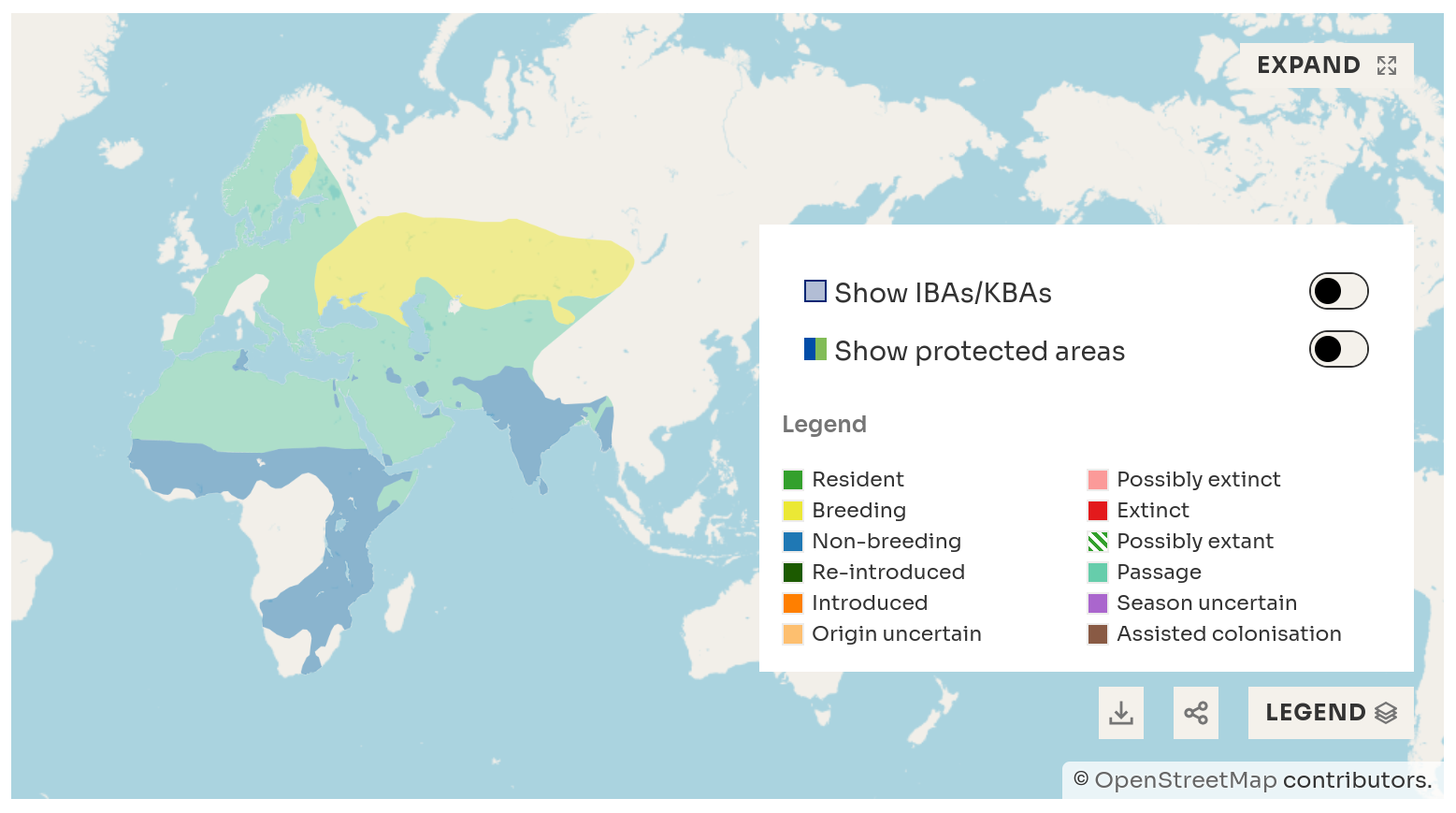
Every year, twice a year, millions of birds belonging to hundreds of species fly between breeding grounds in Europe and Asia and their non-breeding habitats in Africa. Scientists have surprisingly sparse knowledge of exactly where many species actually go — or what risks and obstacles the migrating birds encounter along the way. Populations of the vulnerable curlew sandpiper, which breeds in in Siberia, for example, appear everywhere from South Asia to East and Southern Africa during the northern hemisphere winter.
“One important fact that we all need to understand is that migratory birds do not belong to any one country, but are a shared global heritage, and their survival requires a borderless safety net,” says Alex Ngari, who manages the migratory birds and flyways program for BirdLife Africa.
“These birds know no borders, which means that the conservation methods that we develop must be aware of that fact, and every country has a responsibility to protect them.”
Until recently, what monitoring there was relied on ringing — but piecing together birds’ year-long itinerary depends on where someone encounters a ringed bird, on that person knowing what the band on its leg means, and details of the encounter reaching some coordinating authority.
As lighter and more reliable electronic tags that can be fitted to birds to record and broadcast their locations have become available, researchers have started to gather more detailed information about migratory pathways. This type of tracking is still relatively expensive, however, especially for tags small enough for small-bodied birds to carry.
Ahead of BirdLife International’s Global Flyways Summit in Nairobi, Kenya, on Sept. 8, Mongabay spoke to Ngari about gaps in scientific knowledge of migratory pathways, and obstacles to protecting habitat across migrating birds’ full ranges. The interview has been lightly edited for clarity.
Mongabay: Across the African continent, many known stopover sites for migrating birds are being degraded or lost, particularly wetlands.
Alex Ngari: A lot of migratory bird species rely on wetlands as their main habitats, which means that when wetlands are affected, it directly threatens their lives.
Since the 1970s, about 22% of wetlands in Africa have disappeared due to human encroachment, climate change, and unsustainable water extraction amongst many other reasons.
Mongabay: Which sites in Africa are you most worried about right now?
Alex Ngari: [Among the] wetlands that I find critical, due to the large number migratory birds that they serve, is Lake Chad.
Birds have to cross the vast Sahara Desert to get to Lake Chad, where they can rest, feed and drink water before moving on. However, Lake Chad is currently affected by climate change and human encroachment, forcing these birds to compete for the little wetland habitat left in it — 90% of this lake has disappeared.
Another important site is the Tana River Delta [in Kenya], which provides multiple habitats that make it important to various bird species. It is, however, under threat from human activities such as farming. The construction of dams along the Tana River is also being proposed. This means that there is a lot of competition for the delta between humans and wildlife as the habitat becomes degraded.
The Nyabarongo Wetlands in Rwanda is a complex of papyrus, swamps and marshes around the Nyabarongo River and is another especially important habitat for migratory bird species [such as the near threatened pallid harrier (Circus macrourus), and the endangered Malagasy pond heron (Ardeola idae), which migrates between its breeding grounds in Madagascar and wetlands across East Africa]. There is a lot of agricultural activity happening around this site too, coupled with extraction of the papyrus reeds and sedimentation which end up making the wetland less habitable for birds and other wildlife.
I would also mention the Bijagós Archipelago in Guinea-Bissau. This site plays host to more than a million wintering birds every year. The site is under threat from overfishing by humans, which affects the birds in terms of food. Rising sea levels also affect the mudflats, which birds rely on to feed and rest.
Those are just some of the important sites, but BirdLife has identified a total of 471 priority sites across the Africa-Eurasian Flyway for conservation action.

Mongabay: What are the consequences for conservation of the gaps in knowledge that persist about the pathways followed by migrating birds?
Alex Ngari: The biggest problem is that these gaps prevent us from fully understanding the migratory cycle of a particular bird.
Knowing and conserving the [Asian or European] breeding grounds of these migratory birds is not enough, as we need to understand their full migratory cycle and then make the environment safe for them so that they can safely travel and come back. Without the full knowledge of their migratory routes, we end up with a lot of blind spots, which is not good for conservation since we don’t know what strategy to apply and where to apply it.
The other challenge is misaligned conservation priorities. You need specific data about these birds’ movements rather than general knowledge, so that you do not apply a conservation strategy that will only benefit certain species of birds while ignoring others. For instance, you can concentrate your effort in conserving a specific protected area, yet the birds that are globally threatened do not benefit because we lack knowledge about their whereabouts.
The other issue is that these gaps prevent us from predicting the safety of bird populations in relation to climate change. Climate change is real, but, because we do not have all the information about certain birds, we may not be able to predict which of their habitats has been affected and where we need to concentrate our conservation efforts to avoid the same.
Knowledge gaps also affect international policies as they make it difficult to form bilateral conservation collaborations between countries without knowing where these migratory birds move to and from.

Mongabay: What is the biggest gap in cooperation between African countries along the major flyways, and what needs to change?
Alex Ngari: One of the challenges we have seen is [inadequate] enforcement of conservation laws by different countries.
Another concern is transboundary funding imbalance. For instance, in the conservation of the Egyptian vulture which is found in Asia, Africa and Europe, you will find that Europe has dedicated funds for conserving birds and respective priority sites there, while such funds do not exist in countries in Africa. Europe has the Birds Directive, which is budget-supported legislation to protect all natural wild bird species and their habitats across EU member states, but this has not happened in Africa.
Yet another problem is social economic isolation: When we are developing conservation plans, some of them may not align with direct societal economic needs. Some of the sites that we may be looking to protect may also serve as sources of human livelihood, so we have to find a way to consider human livelihood needs just as much as the migratory birds’ survival.
In order to achieve sustainable conservation outcomes, especially in Africa, you have to consider how the surrounding community will also benefit. It has to be a win-win situation.
As BirdLife, we have been pushing for a global funding [pool] that considers all migratory birds and the areas they visit. We are encouraging governments to form collaborations both locally and globally that benefit the conservation of all birds.
We have a number of treaties that have been developed, such as the Africa-Eurasian Water bird Agreement (AEWA) and the Convention on Migratory Species (CMS), among other MOUs [Memorandums of Understanding] meant to protect and conserve migratory species. These policies need to be implemented at both a global and national level.
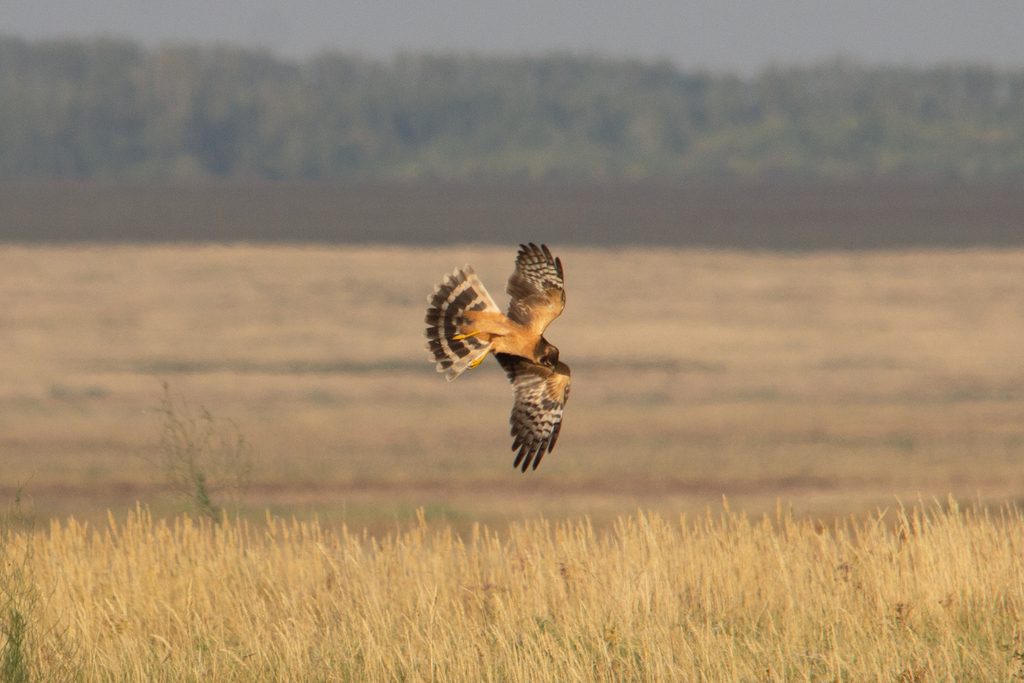
Banner image: Pallid harrier (Circus macrourus) at Omsk, Russia in 2026. Image by Yaroslav Burmatov via iNaturalist (CC BY-NC 4.0)
Up to half the bird species using the African-Eurasian flyway are declining
Tiny trackers reveal where migratory shorebirds need protection across Africa
Feedback: Use this form to send a message to the author of this post. If you want to post a public comment, you can do that at the bottom of the page.
Cite this article
Wilson Odhiambo (2026). ‘Birds know no borders’: Interview with BirdLife Africa’s Alex Ngari. Mongabay Conservation news. DOI: https://doi.org/10.66709/news-329044

