


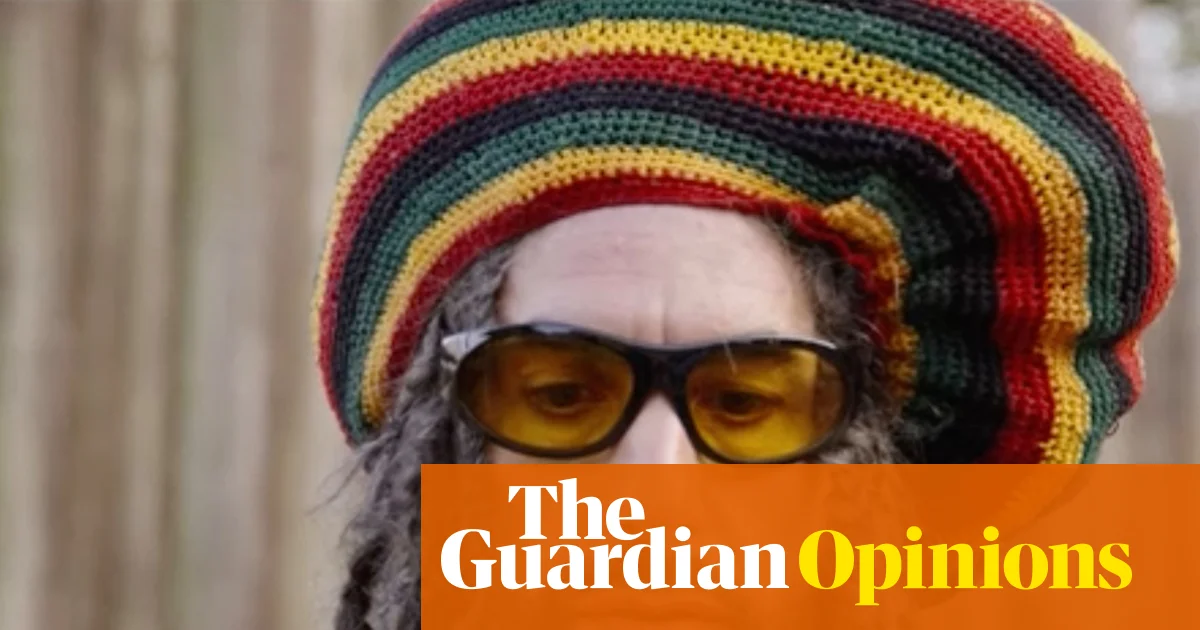
And so the nostalgia machine grinds on, dragging another pop culture corpse back into the light: yes, it’s the return of Ali G. Respeck.
Sacha Baron Cohen’s skull-cap-wearing, “rudebwoy” wankster is staging a comeback with Ali G: Who Iz I?. The new film, premiering next month, is a mockumentary that sees the character starting a family with long-term companion Julie (thinking his approach to fatherhood will be “absent”) and embracing TikTok, all while donning new fake dreads and a rastacap.
It’s taken little time for this revival to enter Britain’s terminal “ARE U OFFENDED, SNOWFLAKE?” culture-war cycle. The Telegraph’s chief film critic, Robbie Collin, wrote that Ali G would save us from comedy’s offence police: “We need a good dose of this sort of puerile needling more than ever.” And now there is a pressure campaign asking cinemas not to screen Baron Cohen’s “racist caricature”, which has accrued more than 46,000 signatures.
The old hits never die. Yet I think this reboot, however tedious, prompts some worthwhile reflection about the changing state of Britain. Since Ali G’s debut in 1998, there has been disagreement over who the joke is on. Erstwhile defenders viewed the character’s absurdity as a reflection of society’s soft bigotry, a satire of white liberal elites’ prejudices.
Ali G’s initial premise was interviews with unsuspecting public figures while posturing as a low-educated wannabe, and lobbing inane questions that reliably wrongfooted the interviewee. With a few exceptions, these interviewees were white, from Noam Chomsky to Newt Gingrich to Donald Trump (who walked out). The socialist MP Tony Benn, victim of such a set-up on the 11 O’Clock Show, admitted in 2000 that “at no stage during our talk did I suspect for a second that it was other than a genuine programme”. The idea then was that you were laughing at the gullibility of the liberal middle classes.
But some viewed this interpretation as apologia for something sinister. Black British comedians in particular viewed Ali G as a straight-up racist caricature. Comedian Felix Dexter was candid: “I feel that a lot of the humour is laughing at black street culture and it is being celebrated because it allows the liberal middle classes to laugh at that culture in a safe context where they can retain their sense of political correctness.”
I think the most interesting intervention worth revisiting is that of the sociologist Paul Gilroy, who saw the comedy as a reflection of multicultural Britain’s coming-of-age. Writing in 2002, after the premiere of the film Ali G Indahouse, Gilroy posited that the character provided “a satirical Rorschach blot in which even the most neurotic scrutineers of the national psyche can discover their fears and hopes”.
That interpretation fit with Gilroy’s theory of cultural hybridity: Ali G’s incoherence as a “shapeshifting” white English man performing a pastiche of Black urban street culture embodied the cultural mongrelisation that had been shaping Britain under New Labour. Ali G represented a cartoonish version of the very real destabilising of racial categories that was happening at the time. Some were optimistic about cultural diversity, while others were anxious. In particular the influence of nascent “yardie” culture, American hip-hop and conspicuous consumption was sometimes viewed as a social contagion impeding British youth.
The salient question for me, then, is less whether it’s OK to find Ali G funny, or if it’s offensive, but rather what the character’s function and purpose is in 2026. His particular cultural bricolage is now being thrown into a far more charged political environment.
Cultural boundaries remain porous, but the political boundaries around national belonging have hardened. Ali G emerged from a politics fascinated by cultural change and mixing, and returns to a politics dominated by a more severe policing of who gets to be British. The anxiety Ali G once represented is now a far more antagonistic struggle; just take a look at the ubiquitous “yookay” meme, the idea that multiculturalism has socially corrupted the UK.
The mediums through which we absorb culture have also changed. Ali G’s racial politics were originally mediated through television: editing, scheduling and official channels for regulation meant that, however controversial, Baron Cohen and his collaborators could control its message. Online, that control disappears. You can easily imagine an Ali G scene now being clipped and shared as an anecdote of Britain’s decline.
after newsletter promotion
And so Ali G arrives from the analogue world into one that is far more racialised, online and politically volatile. But the character has become obsolete because it is no longer transgressive: the cultural mix that once made Ali G ludicrous is now mundane. The seemingly exotic language Ali G parodies has for a long time now been understood as Multicultural London English.
There is also the problem of Baron Cohen himself. His original approach had an incredibly effective comedy mechanism, using interviews to make powerful establishment figures reveal themselves. But Baron Cohen is no longer the outsider performing the outsider role, he is now a very famous 54-year-old multimillionaire attempting a last-gasp revival. Will anyone be duped, and what exactly could he reveal now anyway?
It’s easy to dismiss the furore around Ali G’s return as political correctness. But it’s not that Britain has become too sensitive for the joke, it may be that the joke simply doesn’t work any more. And so what returns with Ali G is little more than the same old stereotype in a new costume, detached from the time in which it meant something more.
