


A British national was among 119 people rescued in Nepal on Tuesday, an official said almost a week after deadly flash floods on the country’s border with Tibet.
An army spokesperson told reporters at a press conference that Tuesday’s rescue efforts had saved 118 Nepali nationals – 44 women and 74 men.
“We have also rescued one British male during this search and rescue operation, and the search and rescue operation is continuing,” he said.
The British man is yet to be identified. The UK Foreign Office was contacted for comment.
The rescues mark a rare breakthrough in a devastating week for Himalayan communities on both sides of the Nepal-Tibet border.
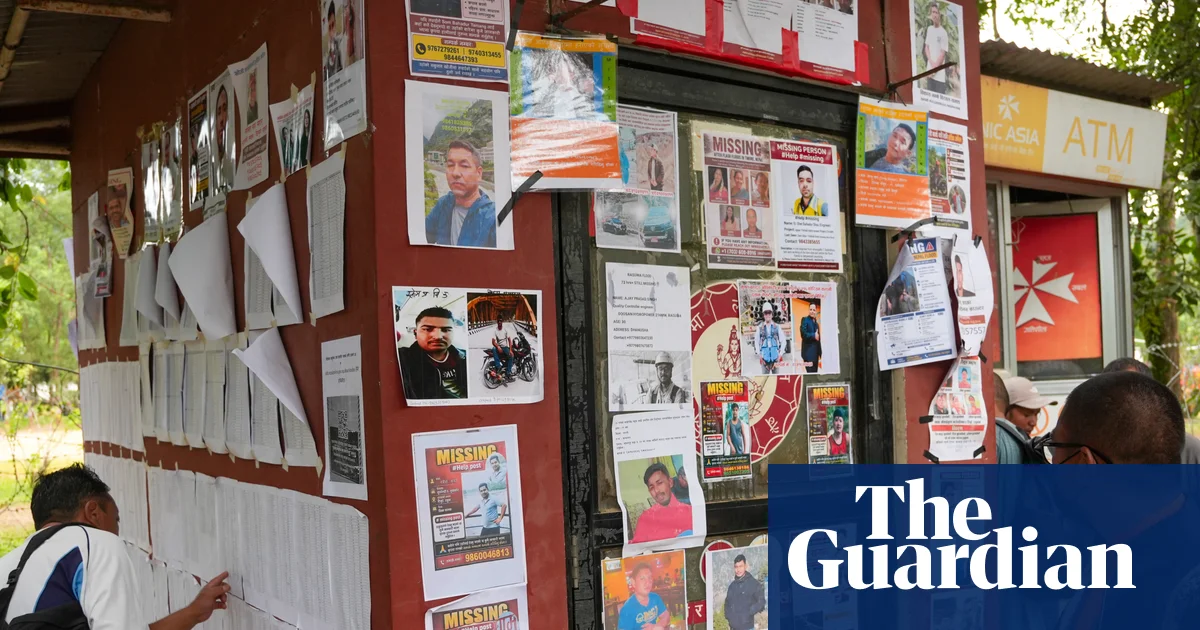
At least 1,050 people have been confirmed dead in Nepal since Wednesday’s flash floods, while Chinese state media said 66 people had been killed in Tibet. More than 4,000 people are still missing.
Nepal’s prime minister, Balendra Shah, said 11,000 people had been rescued across the affected region. This included 330 foreign nationals, the Nepalese tourist board said in an update on Tuesday.
Preliminary analysis of satellite imagery suggests the collapse of a glacier high in the Himalayas was the primary cause of the disaster.
The collapse – so large it was initially recorded as a magnitude-4.4 earthquake – triggered a deadly torrent of water, mud and ice that tore along the Lhende Khola, Bhotekoshi and Trishuli rivers on Wednesday.
Crews have faced dangerous and difficult conditions while searching unstable terrain and flood debris.
Search efforts are now focused on attempts to reach about 600 workers believed to be trapped inside tunnels at several hydropower stations in the region.
“Massive work has been going on in the tunnel, all the tunnels,” the army spokesperson said on Tuesday.
Thirty-six British nationals are missing, the Foreign Office minister, Stewart Wood, told the House of Lords on Tuesday. The figure had previously been put at 33.
A rapid deployment rescue team from the UK arrived in Nepal on Saturday to provide support for Britons and their families as part of the government’s £5m commitment to support relief and recovery efforts.
The Red Cross estimates that 93,000 people have been directly affected by the disaster.
Scientists have said such disasters are more likely as the climate crisis affects mountainous and polar regions.
The UN’s top scientific advisory body said in 2023 that previously ice-bound landmasses – such as permafrost tundra and mountain glaciers – would become increasingly unstable as temperatures rose.
Officials from Nepal, China and Tibet met in May to discuss strengthening their joint response to floods, weather and glacier-related hazards, Reuters reported on Tuesday.
