


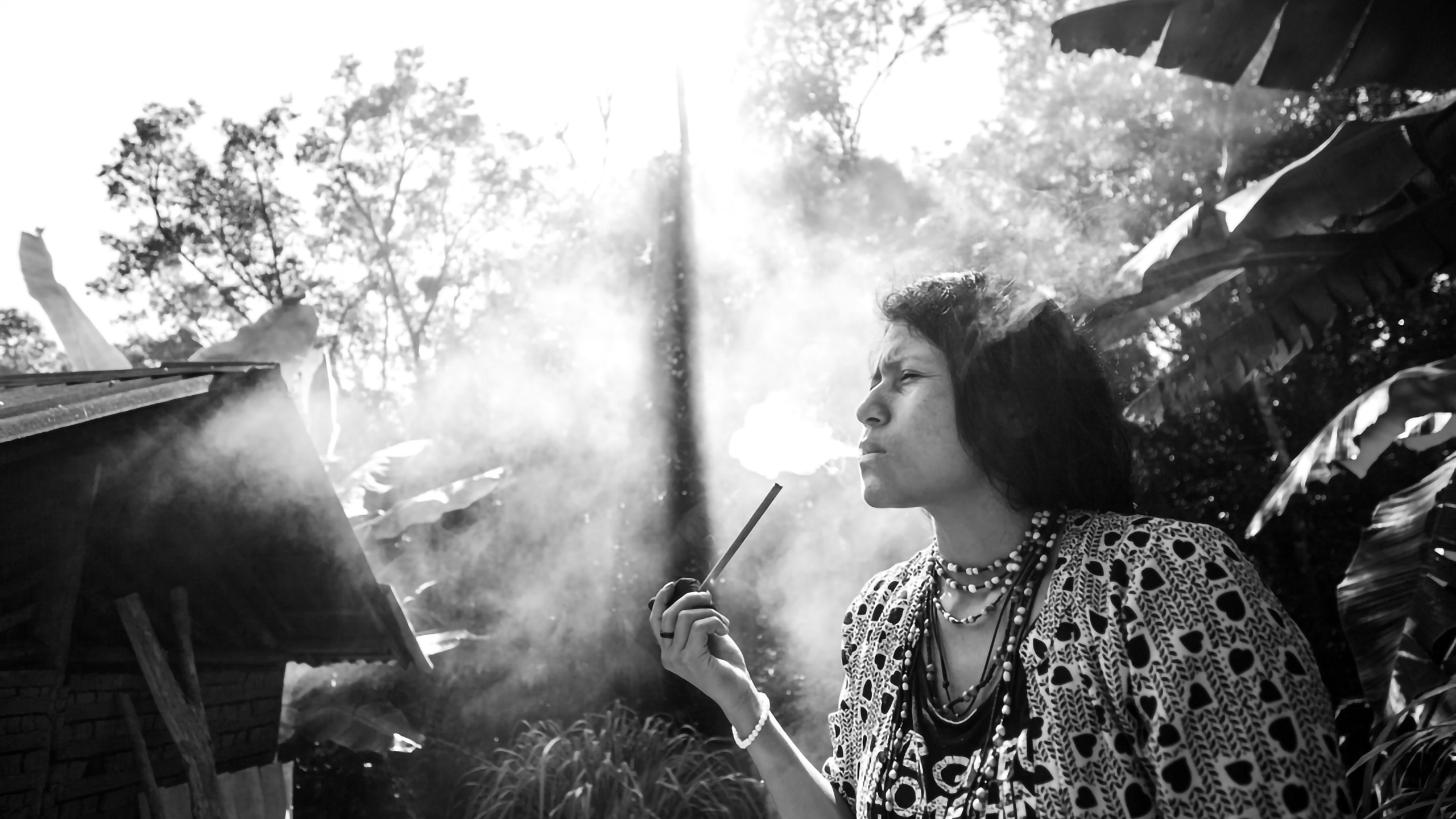
- Guarani leaders Tiago Karaí and Kerexu Laudiceia Benites died with their two children and three other members of Tekoa Kalipety when a semitrailer struck their car on August 14. Tiago was 34; Laudiceia was 31.
- Tiago began as a teacher of Guarani language and culture before helping reclaim parts of the Tenondé Porã Indigenous Territory and organizing campaigns over land rights, railway impacts, and environmental protection.
- Laudiceia taught philosophy and history, studied traditional medicines, and helped maintain the family’s prayer house. Tiago’s sister Cleonice, who also died in the accident, was a ceremonial singer, midwife, and leader of Guarani women’s gatherings.
- The group was visiting relatives and sharing traditional seeds with Guarani communities facing land shortages. The semitrailer that struck them was carrying maize for industrial agriculture.
On August 14th, seven people from Tekoa Kalipety were traveling between Guarani communities with seeds. They had spent the week checking in on relatives, praying at Porto Lindo, and sharing traditional seeds harvested back home in southern São Paulo. They were on their way to another Indigenous territory when, on that evening, a semitrailer carrying maize detached from a truck and struck their car.
Tiago Honório dos Santos, known as Tiago Karaí, 34, died with his wife, Kerexu Laudiceia Benites, 31; their children, Tadeu, 14, and Luna, seven; Tiago’s sister, Kerexu Cleonice Honório dos Santos; and two other members of Kalipety, Ileo Benites and Genilson Euzébio Karay Mirim. The truck driver fled the scene.

Tiago was born in a Guarani village near the coast of São Paulo state. His parents moved to the Tenondé Porã Indigenous Territory before he was two. At the Guarani Gwyra Pepó school, he wondered why children were taught so little about Guarani life. After finishing secondary school at 19, he returned to the school as a teacher.
Known then as Karaí Tataendy, he taught Guarani language and culture to primary-school children. He believed they needed to know both Guarani and non-Indigenous ways of life. Teaching their own language gave them something he had found missing when he sat in the same classrooms.
In 2013, Guarani families began reclaiming ancestral sections of Tenondé Porã, moving onto former eucalyptus plantations to build settlements like Tekoa Kalipety, where Tiago and Laudiceia made their home.
Families cleared fields for maize, cassava, yerba mate, and jety, the Guarani sweet potato. They brought dozens of varieties of jety back from visits to Guarani villages elsewhere in Brazil and Argentina. Non-native eucalyptus timber was used to build houses, and native trees were planted in its place. Kalipety grew to around two dozen families.
Laudiceia taught philosophy and history at the Irapepó Indigenous School and supported the campaign for education in the Guarani language. In Kalipety, she studied traditional medicines and became one of the village’s leaders. Small gardens of medicinal plants surrounded the family’s home. She helped receive visitors from other Indigenous communities, including Ehuana Yanomami, a leader, researcher, and artist. They cooked together, comparing remedies, planting methods, and forest knowledge from communities hundreds of miles apart.
Laudiceia and Tiago sang at ceremonies. Their family maintained one of Kalipety’s prayer houses. Tadeu and Luna spent their childhood running between the planting rows and sitting in on conversations with whoever was passing through the village.
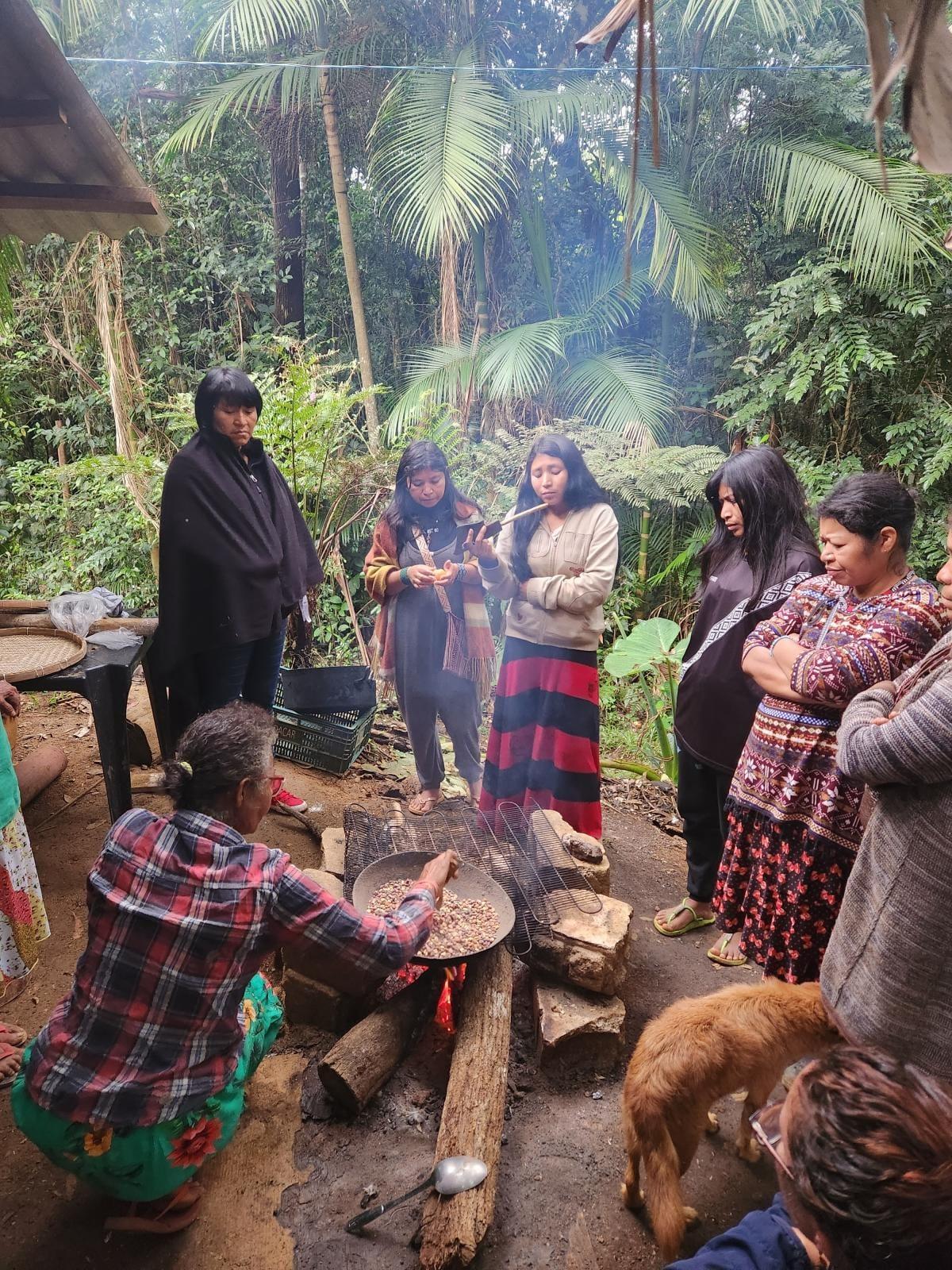
Cleonice, Tiago’s older sister, was an experienced ceremonial singer and one of the territory’s principal midwives. She helped revive the practice of giving birth within the Indigenous territory and organized women’s gatherings where, as participants put it, the men stayed in the kitchen while the women discussed their concerns.
Both took part in the campaign for recognition of Tenondé Porã’s roughly 16,000 hectares of Atlantic Forest, rivers, and farmland. Tiago served as an executive coordinator of the Comissão Guarani Yvyrupa, which represents Guarani communities across southern and southeastern Brazil, and was elected to its São Paulo state coordination in 2022.
Tatiane Klein, a journalist and anthropologist who met Tiago in 2014 and became friends with him, Laudiceia, and Cleonice, remembered him as serious, generous, and precise with his words. “In the moments when he had to speak, he spoke, and he encouraged the others to speak too,” she told Mongabay’s Shanna Hanbury in an interview. He also helped prepare younger people to take his place. Shortly before his death, he stepped away from the Inter-Village Committee to make room for two leaders he had helped train.
When the commercial freight railway running through their lands was expanded, five Indigenous territories were left dealing with its social and environmental effects. The company resisted carrying out measures intended to mitigate the damage and compensate the Guarani. Tiago helped form the Comitê Interaldeias (Inter-Village Committee), bringing together the five affected territories to hold the rail operator accountable.
To force the issue, community representatives bought enough shares in the rail company, Rumo, to gain entry to its 2019 shareholders’ meeting. “Our intention is not to make money,” Tiago explained, but to acquire “the right to speak, to bring the reality into the assembly.” Their intervention also allowed the communities to help redesign the company’s Indigenous mitigation program around measures they considered important.
A similar struggle played out over the Cinturão Verde Guarani—a proposed municipal policy for land restoration and support for Guarani culture that languished in local government for half a decade. By 2021, Tiago was openly pushing back against the city’s unfulfilled promises of formal dialogue.

At Kalipety, families were restoring the forest while growing food. Their land protected tributaries of the Capivari River, described by the Guarani as the last unpolluted river in São Paulo. Visitors came to learn about the fields, walk through the territory, and hear the children’s choir. Tiago welcomed them, though he was wary of tourism turning everyday village life into a spectacle.
During a recent visit to western Paraná, Tiago had been troubled by conditions facing Guarani communities with little land. He told a colleague that he intended to return in November with ten more people from Tenondé Porã. At home, he said, demarcation had allowed families to pray, sleep, work, and cultivate their fields. In Paraná, “people aren’t even eating well or sleeping well or able to grow crops.”
The family’s last journey belonged to the same network of visits through which Kalipety had replenished its fields. Klein noted a bitter detail: the semitrailer was loaded with maize.
In effect, industrial commodity agriculture had collided with a journey devoted to traditional seeds.

