


Wired for Profit: Fifth in a series about Alabama Power’s influence over electric rates, renewable energy, pollution and politics in the Yellowhammer State.
BIRMINGHAM, Ala.—Darrell Nance knows he’s being watched. We all are.
Nance, a longtime resident of the city and founder of DeFlock Birmingham, can easily point out the cameras to you if you’re interested. It’s not much of a challenge.
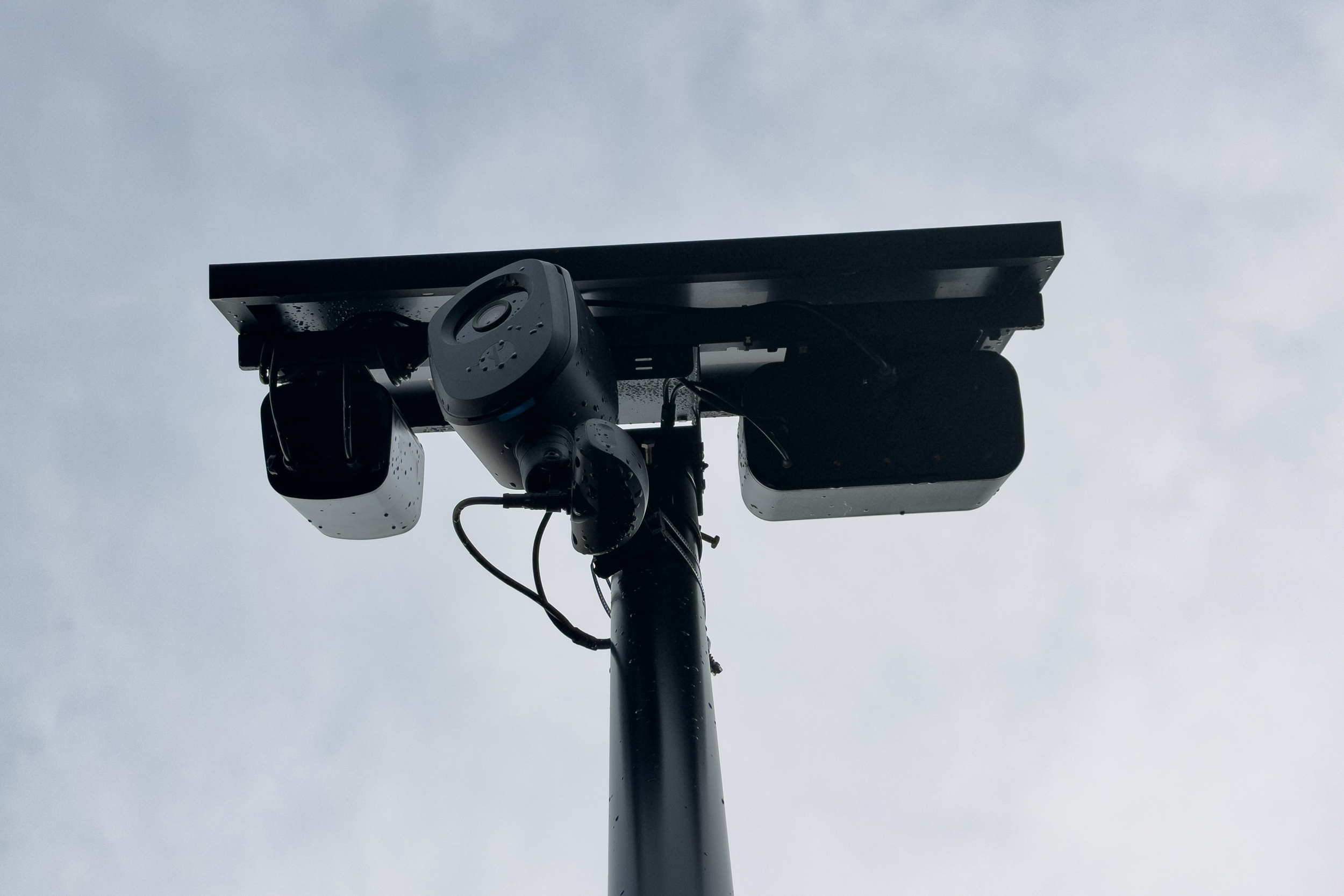
Every few blocks, it’s inevitable. Another surveillance camera, or two, or three, tucked at the top of a power pole, or two, or three, carefully recording from above.
Here in the Magic City and across the country, the proliferation of surveillance cameras and automated license plate readers (ALPRs) has become commonplace. Increasingly, local governments, businesses and even homeowners associations have turned to companies like Atlanta-based Flock Safety to provide the camera infrastructure for their communities in a stated effort to improve public safety and solve crime.
What has resulted, many residents and surveillance scholars say, is a network of interconnected surveillance systems that go far beyond the gas station CCTV of yore. Instead, anyone with access to the resulting data, authorized or not, has the ability to search millions of records of time-stamped, location-specific data like a passing car’s license plate number, its make and model and any identifying information like bumper stickers.
Misuse of data collected by companies like Flock has already garnered headlines across the nation, including in Alabama. But one concern unique to the state, experts have said, is the relationship between surveillance companies and the state’s massive investor-owned utility, Alabama Power, which Flock has called its “longest-standing reseller” as recently as this year.
Since at least 2019, the power company has marketed automated license plate readers and other surveillance camera equipment to local governments across the state as a convenient way for cities and counties to improve public safety with ease, allowing Alabama Power to do the necessary installation on its own power poles, providing easy access to ideal camera placement and a source of electricity—all at a cost that could simply be added as a line item on the local government’s power bill.
The strategy has worked. A company representative confirmed in 2025 that Alabama Power has partnered with more than 80 municipalities across the state to provide subscription-based surveillance services from Flock and similar companies, a result that law enforcement agencies have lauded as a meaningful law enforcement tool.
But the relationship between Alabama Power and companies like Flock comes with strings attached, residents like Nance and surveillance scholars have said.

“I would think there are Alabama Power customers who would be alarmed that sensitive location data, including the ability to track individuals across time and space—is being collected and shared in ways that they may not realize,” said Elizabeth Joh, the Martin Luther King Jr. professor of law at the University of California, Davis, who studies the intersection of policing and technology.
Nance, a longtime community organizer and data analyst, is one of them. He’s worked for months to try to get substantive answers from elected officials about contracts between local governments, Alabama Power and companies like Flock. He’s had limited success.
“I don’t think they really care,” he said. “They’re more worried about their relationship with people like Alabama Power than their relationships with constituents.”
Alabama Power declined to answer specific questions for this story but spokesperson Alyson Tucker said in a written statement that “Alabama Power works with customers such as municipalities, businesses and community organizations to provide technology services and related equipment supported by our existing electric infrastructure.
“Under these agreements, Alabama Power installs and maintains equipment, but does not operate the system or have access to data,” the company statement said. “Program participants own the data collected and are responsible for how that information is accessed, managed, used and shared.”
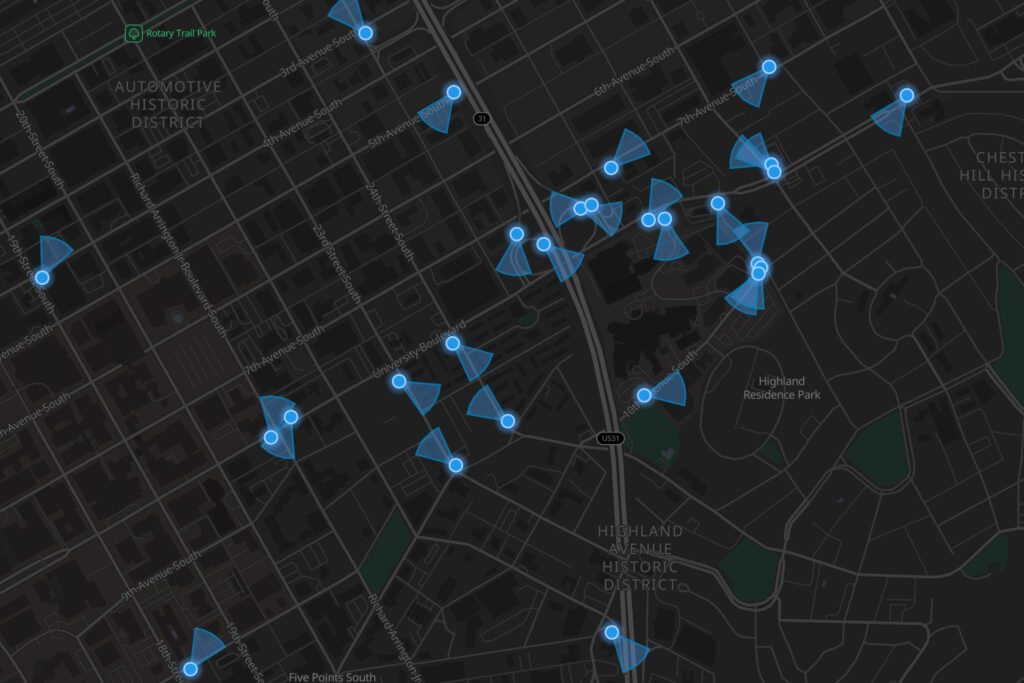
Data reviewed by Inside Climate News aggregated from open records requests and public databases shows that dozens of cities across Alabama have adopted the use of Flock or similar surveillance equipment. The records, which date as far back as 2020, document more than 3 million instances of searches by customers with Flock access in the state.
Officers or other users from more than 180 local governments or police departments in Alabama have searched Flock data, the records show.
Law enforcement officials have said they love the technology, which they claim helps them solve crimes more often and more efficiently.
“In a world of constantly expanding technology, Law Enforcement must also embrace and take advantage of every avenue to protect our communities,” the Alabama Sheriffs Association wrote in a July social media post. “Every day, dare I say perhaps every hour, these emerging technologies lead to the arrest of wanted persons, the location of AMBER Alert victims, and the provision of investigative leads.”
The post said that while “there should be proper policies and procedures implemented to protect information and ensure security,” that the public should refrain from assuming the worst of law enforcement officials: “Be thankful and pray for them.”
The post went viral, garnering thousands of comments and shares.
“Those who would give up essential liberty, to purchase a little temporary safety, deserve neither liberty nor safety,” one user commented, quoting Benjamin Franklin. A Flock Safety blog post argued the quote is used out of context in debates over its products.
Research on the efficacy of automated license plate readers has shown the technology has limited, if any, deterrent effect on crime.
Hesitancy over the scope of Flock surveillance has become bipartisan, even in deeply Republican Alabama. In August, influential state Sen. Arthur Orr, R-Decatur, said he believes there should be significant guardrails for the technology.
In 2021, he filed legislation that would have been the state’s first major effort at placing limits on the use of automated license plate readers. The proposal required secure storage of sensitive information, required written and publicized policies about the use of ALPRs and provided criminal penalties for anyone convicted of misusing collected data. The bill passed the Alabama Senate unanimously but died in the House.
Orr has said that opposition from law enforcement, who like the technology, likely stalled the bill’s final passage, but the legislator said he plans to introduce an updated bill during the 2027 legislative session.
“I have real concern, and we’ve seen this in other jurisdictions, and even some here in Alabama, where law enforcement has used it to illicitly snoop on whomever they want to determine their whereabouts,” Orr said. “And that is absolutely unacceptable.”
Conservative media outlets have covered Flock extensively, publishing news stories and opinion pieces with headlines like “Flock cameras are quietly tracking Alabama gun owners.”
“On any given Saturday in Alabama, a man can leave his driveway, gas up, run by the gun shop for ammo, shoot all morning at the range, and be home for lunch,” one opinion piece said. “He hasn’t broken any law or bothered a soul. And in more of our towns than you’d guess, a camera on a pole photographed his truck at every stop and filed it in a searchable database owned by a private company in Atlanta.”
The pole in that scenario would likely be an Alabama Power pole—one of the selling points the company uses in marketing its surveillance tech to local governments.
The company’s website claims it serves municipalities, housing authorities, homeowners associations, nonprofits and businesses, providing them with advanced security cameras, license plate recognition, pole access, electric service, internet connectivity and a warranty.
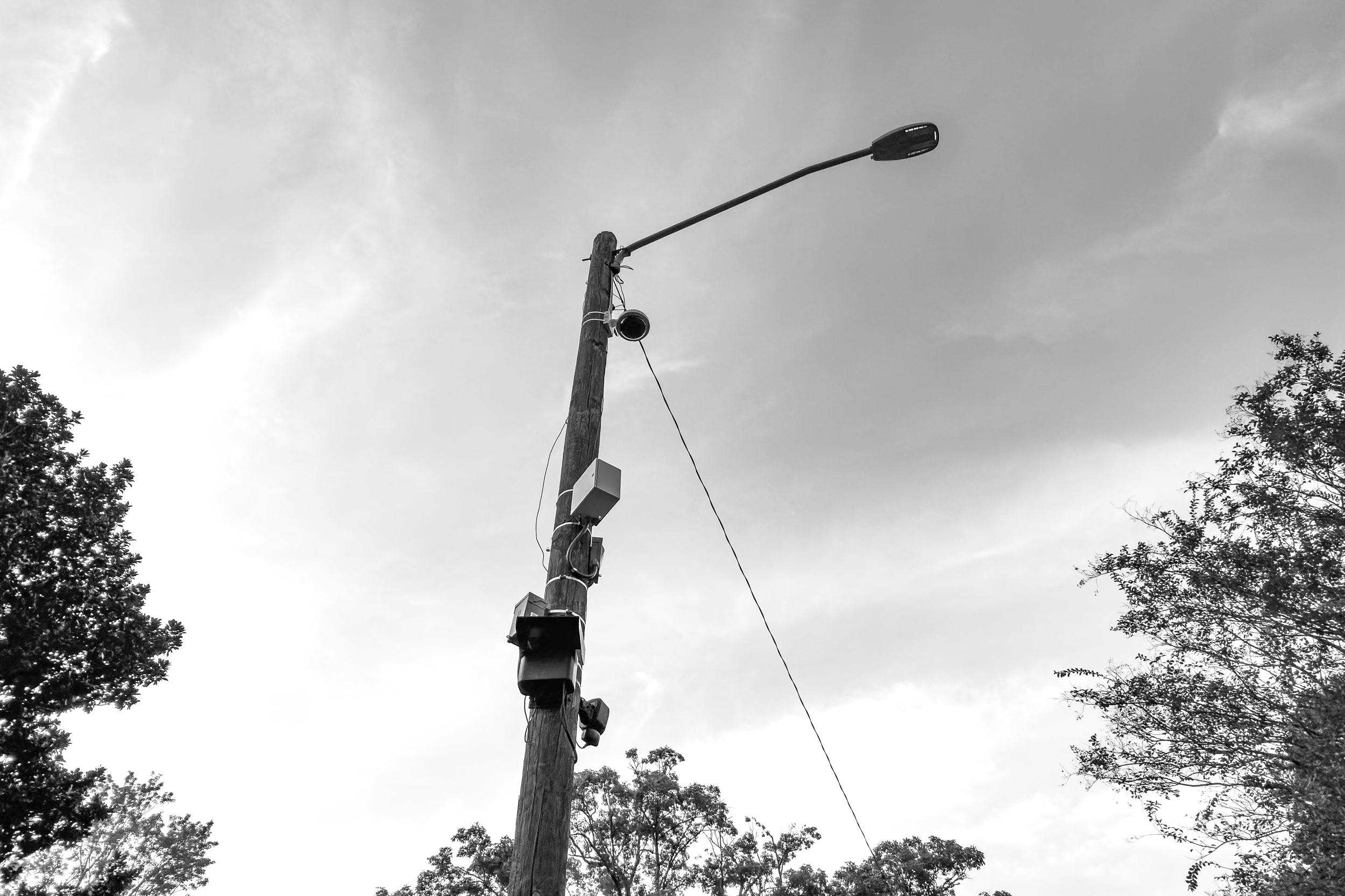
Because of its status as the state’s largest utility, the company says it can provide potential surveillance clients streamlined deployment, ongoing maintenance support, an existing infrastructure and simplified billing.
“We coordinate installation, connectivity and infrastructure needs through a single provider,” the website states. “We maintain the infrastructure and equipment covered by the customer agreement.”
Those customer agreements between Alabama Power and local governments, as well as the utility’s own agreement with Flock, are not publicly disclosed in most municipalities, though some have been obtained through public records requests.
Inside Climate News obtained such contracts from multiple cities across Alabama. Nearly all are identical.
Typically, cities contract directly with Alabama Power to effectively lease the surveillance equipment and pay for all associated services, including electricity and internet connection. Each camera and related services costs municipalities around $250 per month, a price that quickly adds up in larger cities. Because Flock costs are added to a city’s normal utility bill, the associated costs in smaller towns are often paid without additional scrutiny from public officials, who routinely approve such expenses.
In 2025, Birmingham opted to expand its partnership with Flock through Alabama Power, approving a $9.7 million contract with the utility to install and maintain 100 cameras and license plate readers, adding to 330 cameras approved the year before.
Birmingham City Council members initially voted to delay consideration by a week, expressing surprise at the speed and sticker price of the proposal from Mayor Randall Woodfin and Chief of Police Michael Pickett.
Council member Hunter Williams also said he wanted more information about why Alabama Power was a necessary middle man in the surveillance landscape.
“Obviously Flocks could be placed wherever with solar panels: No need for Alabama Power,” he asked city officials present at the meeting. “So what do we gain from having this contract…rather than buying them a la carte outside of Alabama Power?”
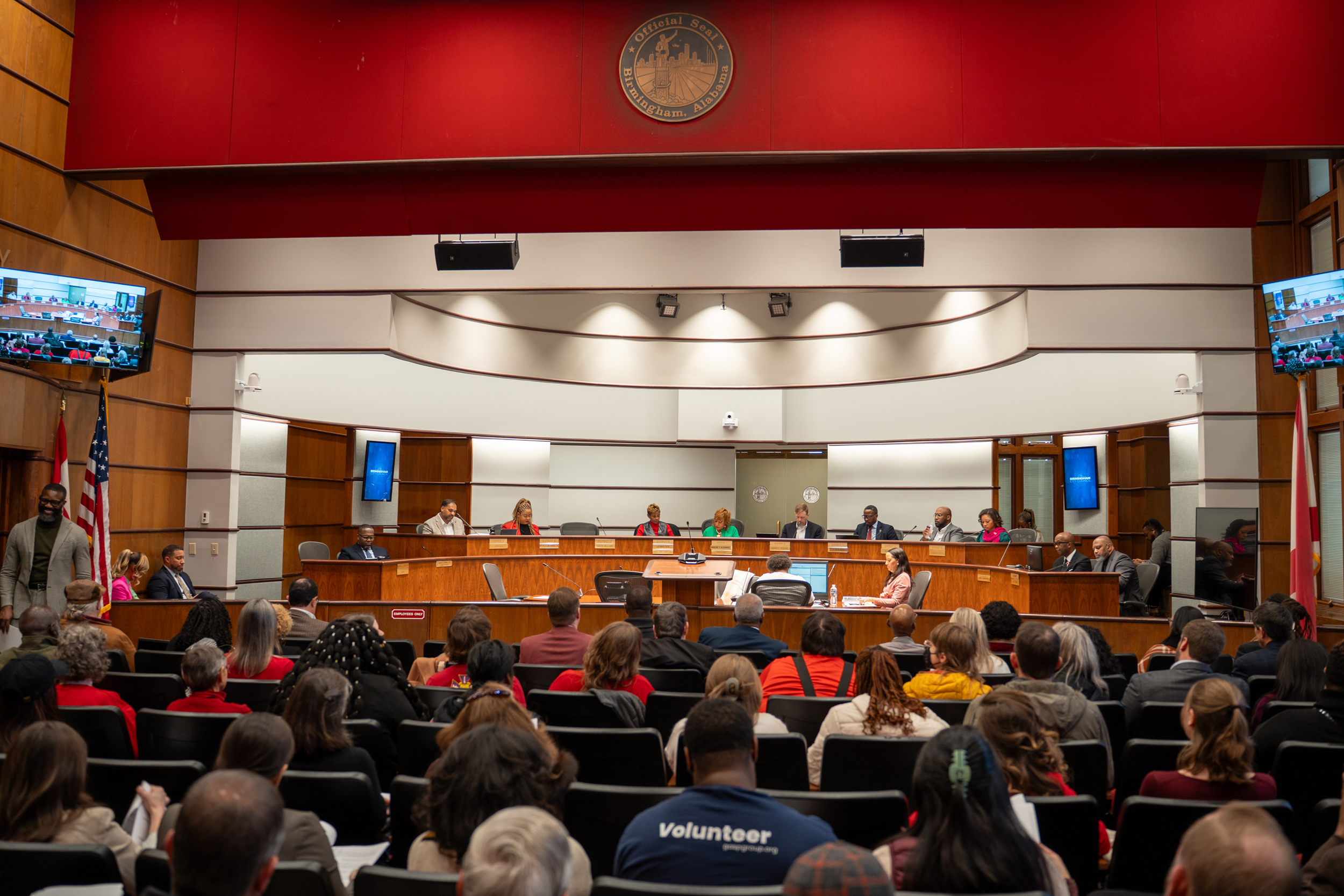

Woodfin responded by telling council members that Birmingham Police Department representatives were in deep communication with Alabama Power officials to collaborate on how best to get the most out of federal funding for surveillance tech they had obtained through partnership with Republican U.S. Sen Katie Britt.
Later that week, the council held a committee meeting that was attended by Woodfin, Pickett, Jonathan Bozeman, public safety manager for Alabama Power and city council members.
During the July 7 meeting, council members questioned city officials and the utility representative about why the contract for surveillance cameras wasn’t placed out for a bid and why the city was choosing to contract with Alabama Power instead of directly with companies like Flock.
Woodfin and Birmingham’s chief financial officer Chaz Mitchell framed the arrangement between the city and Alabama Power as a practical and financial necessity—a convenient and efficient way, they argued, for the city to improve public safety. But council members had questions.
“Is this a sole-source situation,” then-Council member Carol Clarke asked officials. “Or is there a way to get competition in this process? Or not really—because we’d still have to have a pole use agreement?”
No offer was put out for other vendors to submit bids, officials explained, because the agreement fell under a public safety exception to the public bid law.
Council member Valerie Abbott, who like Clarke did not seek reelection, asked why the charges for Flock and other surveillance services were part of an electric service contract.
Bozeman, the utility representative, was careful to note that Alabama Power places charges for surveillance on a separate line item from charges for electricity, which are regulated by the state’s Public Service Commission.
“Where you see the service charge, that includes the entire process of installing and maintaining the camera systems,” he said. “So that includes subscriptions to the video management software, to the license plate recognition software. That is data plans for the cameras to be able to talk back to the internet to get back to the real-time crime center. And that is also including an upgraded data connection at the real-time crime center for the camera system.”
The power usage amounts to just $3,000 a month, Bozeman said: “The rest of that is the service of the actual cameras.”
The camera infrastructure carries an ongoing price tag of $2 million a year in Birmingham, council member Darrell O’Quinn noted, an amount the city hopes to recoup from continued grant funding.
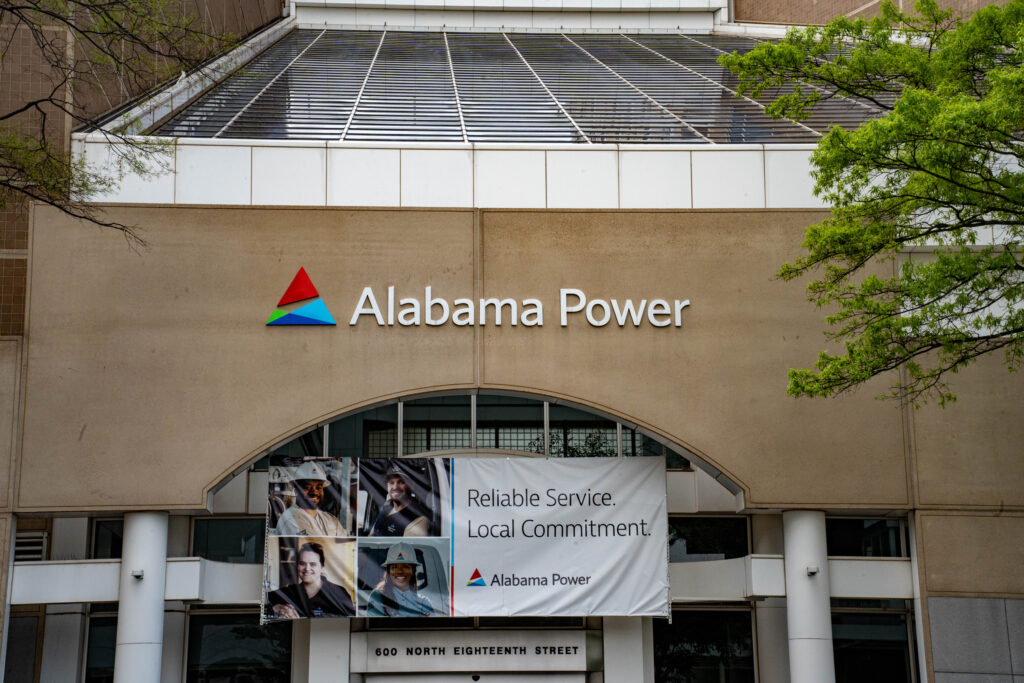
But using Alabama Power was also really the only option logistically and financially, according to the city officials in the meeting. The utility’s effective control of the infrastructure on right-of-ways would require them to be involved in one way or another, Mitchell said.
“It would be rather expensive” for the city to install its own poles to support the camera expansion, Mitchell said. “We would still have to lean on Alabama Power to do the install.”
“He’s being modest,” Woodfin said of Mitchell. “It’s cost prohibitive.”
Asked whether there had been any formal cost analysis, Woodfin said no.
Council members also asked whether the city expected to request additional cameras and surveillance funding in the future. Pickett said that the body could expect many future requests for money to support these programs.
“The more cameras a city has—the more eyes you have—the safer it will be,” he said. “Yes, in the future, we will request more.”
And the city’s surveillance capabilities go beyond license plate readers, Pickett emphasized.
“In other areas…we’ll have a 360-degree camera that’s identifying what a person is doing and good clothing descriptions and things of that nature,” he said.
This story is funded by readers like you.
Our nonprofit newsroom provides award-winning climate coverage free of charge and advertising. We rely on donations from readers like you to keep going. Please donate now to support our work.
In response to a question about where cameras would be deployed across the city, Woodfin said that Birmingham Police Department and Alabama Power would work together to determine locations for installation.
“The beauty of this conversation is Alabama Power and the Birmingham Police Department have gone really, really deep into this partnership relationship and the strategic deployment of where they should be,” Woodfin said of the cameras.
There was no discussion of privacy concerns around Flock cameras.
At its next regularly scheduled meeting, the Birmingham City Council approved the multi-million dollar agreement on its consent agenda.
Mark Linn, a nonprofit worker in Birmingham, said he’s not necessarily opposed to traffic cameras that only record during a violation and are accessible to an agency like the local department of transportation. The types of cameras and surveillance systems being installed across the city where he lives and works, though, are something different, he said.
“Where I think Flock goes overboard is the fact that it records far more than just violations, acting in some places like a perpetual panopticon of every person and vehicle that passes through their coverage area,” Linn said.
Even in Alabama, Flock has faced significant criticism after incidents of alleged misuse. In St. Clair County, which borders Birmingham to the northeast, officers from two police departments allegedly misused information collected by Flock.
In Springville, a police officer resigned on July 8 after the department’s chief confronted him over a search of a family member.
In Moody, another officer was terminated following an internal investigation over whether he or she had violated the department’s license plate reader policy.
A Washington Post investigation found 50 instances of similar incidents nationwide.
On Aug. 13, Flock Safety announced changes to its policies meant to address concerns about privacy.
As part of the changes, the company began recommending that the default retention time for collected data be limited to seven days, down from 30 days. The ultimate length of data retention would still ultimately be up to customers.
“Abuse of Flock technology, at any level, is unacceptable,” the company said in its announcement.
Still, Linn said he’s worried about the pattern of misuse among law enforcement officials with relatively easy access to sensitive data.
“I think we’ve been adequately shown that law enforcement can’t be trusted with these kinds of tools,” he said.
Residents like Linn and Nance are also worried about where the sensitive information collected by Flock cameras across the state is shared.

Records from the sheriff’s office in Morgan County, Alabama, show that in the last 30 days, the county’s seven Flock camera collected data on more than 100,000 vehicles. In the same period, users from more than 1,000 law enforcement agencies across the country, from Washington State to Maine, including the FBI, were granted access to the county’s data, the records show.
Morgan County is one of only a handful of the well over 100 Alabama agencies with access to Flock that chooses to publish a transparency portal, a ready-to-publish tool provided by Flock to all its customers.
Without Alabama Power, Nance believes that Flock’s spread in the state would have been a much more gradual process.
“They made it so easy,” Nance said. “That’s why it’s so scary.”
Residents also have concerns that cities’ contracts with Alabama Power may allow for the sale or sharing of sensitive data with third parties.
One contract between city officials in Moody and Alabama Power, dated October 2019, says that the city “expressly agrees that [Alabama Power Company] may authorize the disclosure” of captured content to third parties “with or without notice to customer” in several instances including “as allowed or required by applicable law.”
Joh, the legal scholar and expert on policing and technology, said that utility customers and residents deserve meaningful answers to questions about Alabama Power’s relationship with surveillance companies. She called the arrangement “interesting and troubling.”
“The big concern here is the obscuring of relationships, accountability and costs,” Joh said. “Are Alabama Power customers fully aware of this relationship? Does the contract allow for cities and their residents to see what entities—public or private—have access to the gathered content? Do they have the right to object at any point? Was there public input at the time these contractual arrangements were made? And what transparency obligations do Alabama Power or Flock have to cities where these cameras are installed?”
So far, the answers to those questions are limited. Alabama Power declined to answer specific questions for this story.
Linn would like to see Alabama Power representatives and public officials address questions like Joh’s.
“It is concerning that what is ostensibly a utility company is working so closely with unrelated third parties and law enforcement to push these cameras on cities,” he said. “It’s a company that already has too much control over the state and this ‘partnership’ is one more disturbing example of that.”
About This Story
Perhaps you noticed: This story, like all the news we publish, is free to read. That’s because Inside Climate News is a 501c3 nonprofit organization. We do not charge a subscription fee, lock our news behind a paywall, or clutter our website with ads. We make our news on climate and the environment freely available to you and anyone who wants it.
That’s not all. We also share our news for free with scores of other media organizations around the country. Many of them can’t afford to do environmental journalism of their own. We’ve built bureaus from coast to coast to report local stories, collaborate with local newsrooms and co-publish articles so that this vital work is shared as widely as possible.
Two of us launched ICN in 2007. Six years later we earned a Pulitzer Prize for National Reporting, and now we run the oldest and largest dedicated climate newsroom in the nation. We tell the story in all its complexity. We hold polluters accountable. We expose environmental injustice. We debunk misinformation. We scrutinize solutions and inspire action.
Donations from readers like you fund every aspect of what we do. If you don’t already, will you support our ongoing work, our reporting on the biggest crisis facing our planet, and help us reach even more readers in more places?
Please take a moment to make a tax-deductible donation. Every one of them makes a difference.
Thank you,

Reporter, Alabama
Lee Hedgepeth is Inside Climate News’ Alabama reporter. Raised in Grand Bay, Alabama, a small town on the Gulf Coast, Lee holds master’s degrees in community journalism and political development from the University of Alabama and Tulane University. Lee is the founder of Tread, a newsletter of Southern journalism, and has also worked for news outlets across Alabama, including CBS 42, Alabama Political Reporter and the Anniston Star. His reporting has focused on issues impacting members of marginalized groups, including homelessness, poverty, and the death penalty. His award-winning journalism has appeared in publications across the country and has been cited by the New York Times, the Wall Street Journal and the Washington Post, among others.
