


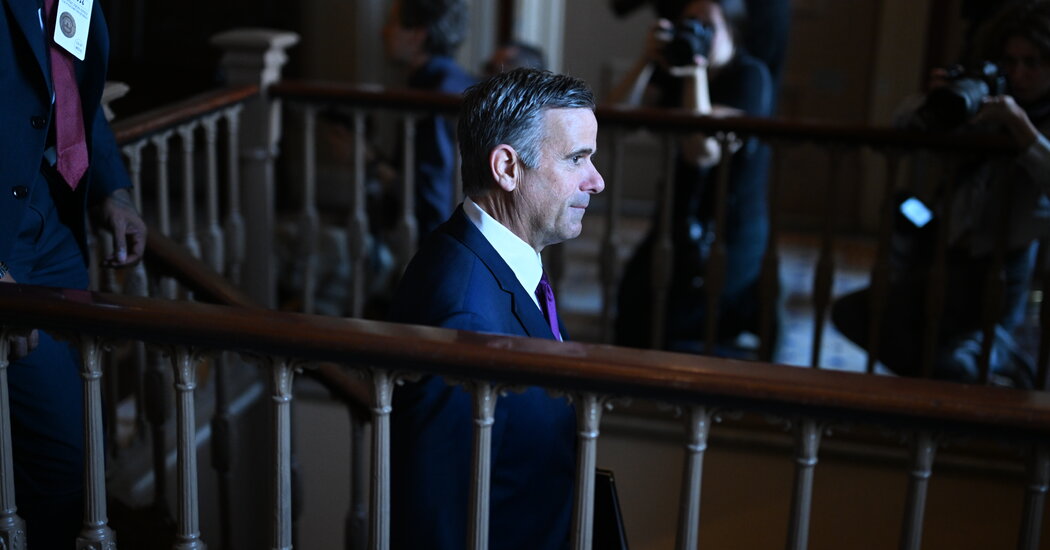
John Ratcliffe, the C.I.A. director, made a secretive visit to Moscow this week to privately share his bleak assessment of the state of the Russian war against Ukraine, and to urge the Russians to cut a deal before their military and economic situation gets worse, current and former officials said.
Mr. Ratcliffe delivered the message to Aleksandr V. Bortnikov, the head of Russia’s F.S.B. intelligence service, and made no threats about potential consequences for the Russian side should President Vladimir V. Putin ignore the C.I.A. director’s assessment and choose to continue fighting.
C.I.A. analysts have long questioned whether Mr. Putin’s advisers have given him honest assessments of the war’s trajectory and toll.
The C.I.A. has long maintained communications channels with the F.S.B. and Russia’s foreign intelligence service, which is known as the S.V.R. These intelligence channels run parallel to separate channels with Russian officials led by President Trump’s envoy, Steve Witkoff, and Jared Kushner, the president’s son-in-law.
Some officials said they hoped that Mr. Putin, a former intelligence officer himself, would see a message from the C.I.A. director as more urgent and credible than communications through normal diplomatic channels.
Last year, Mr. Trump and some of his top advisers appeared to hold the belief that a Russian battlefield victory over Ukraine was inevitable. Since then, the Russians have suffered massive losses, and their battlefield gains have stalled.
It is not clear whether Mr. Ratcliffe’s message presages any change in U.S. policy toward Russia or Ukraine.
Mr. Ratcliffe’s visit was the latest effort by the Trump administration to breathe new life into stalled negotiations. It has become increasingly clear that Ukraine is not going to give up its fight in the east, even with reduced U.S. military support.
Given what he presented as the bleak military and economic reality for Russia, Mr. Ratcliffe told Mr. Bortnikov that he believed it was time for Moscow to engage in serious negotiations to end the war.
