


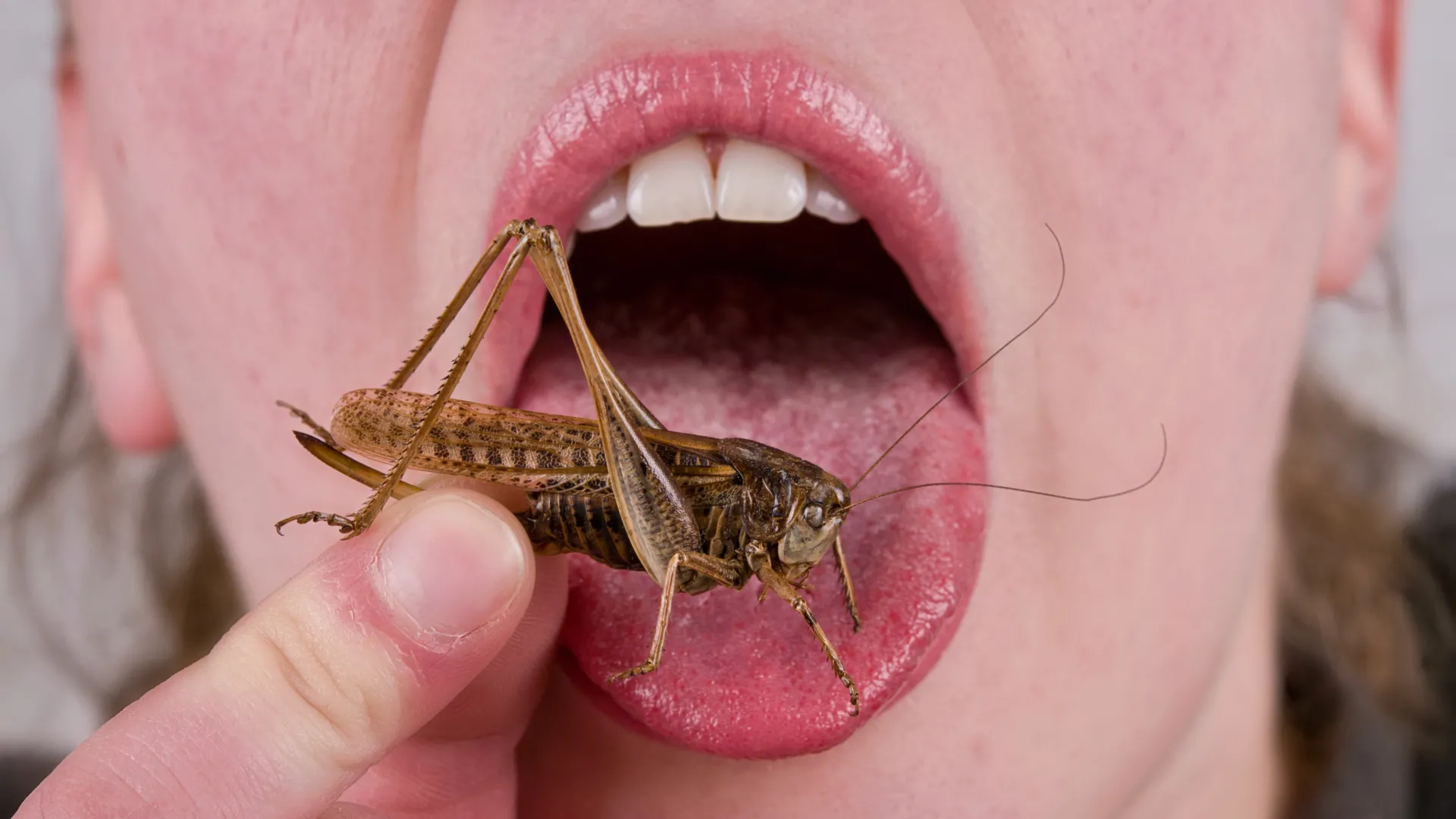
As the global population grows and climate change places increasing pressure on food systems, researchers and policymakers are looking more closely at alternative sources of nutrition. Insects are one possible option. A total of 1,611 insect species are classified as edible, and organizations including the Food and Agriculture Organization of the United Nations (FAO) have highlighted insects as a potentially sustainable food source.
Even so, many Western societies remain strongly resistant to entomophagy, or eating insects, despite the fact that hundreds of millions of people around the world already include insects in their diets. Culture may help explain that reluctance, but scientists have not known how far back it goes or what other forces may have shaped it.
Researchers from the Institute of Evolutionary Biology (IBE), a joint center of the Spanish National Research Council (CSIC) and Pompeu Fabra University (UPF), have now used genomic evidence to reconstruct patterns of insect consumption stretching back thousands of years. Their findings, published in Science Advances, indicate that eating insects was probably occasional and accidental in Europe, Central and East Asia, while it appears to have been more common in tropical regions and among Neanderthals. The work offers new insights into human evolution, ecology, and modern attitudes toward insect-based foods.
Ancient Teeth Reveal Insect Eating in Eurasia
To search for direct signs of insect consumption, the IBE researchers examined 745 samples of dental calculus (tartar) from anatomically modern humans dating back as far as 33,000 years. Dental tartar can trap and preserve DNA from species that were regularly eaten, providing researchers with a record of ancient diets.
The results suggest that modern humans living in northern Eurasia did not regularly eat insects. The team also examined genes involved in breaking down chitin, a major component of insect exoskeletons. Among North Eurasian populations, chitinase genes contain mutations associated with a reduced ability to digest insect exoskeletons. That genetic pattern has persisted for roughly 9,000 years, dating back to the rise of agriculture.
“The scarce presence of insects in the diet of northern Eurasians suggests that the absence of entomophagy is not solely due to recent cultural factors, but also to a long ecological and evolutionary history,” says Pablo Librado, principal investigator at the IBE who led the study.
Neanderthals Show More Evidence of Eating Insects
The picture was different for Neanderthals. Although they lived in many of the same environments as anatomically modern humans, their dental calculus contained considerably more insect DNA.
The amount detected in Neanderthal samples was similar to levels found in western chimpanzees, which use insects to supplement their diets on the savanna, particularly during droughts.
Among the most common genetic traces in Neanderthal tartar were remains from Diptera, the insect group that includes flies and mosquitoes. Mosquito DNA was especially abundant. The results support a recent hypothesis that Neanderthals may have regularly eaten animal carcasses containing fly larvae.
The strong presence of mosquito remains also lends support to the idea that prey carcasses may sometimes have been stored in ponds or marshy environments, where mosquitoes would have laid their eggs.
Genetic evidence points in the same direction. Neanderthal chitinase genes appear to have supported more efficient insect digestion, a pattern also detected in the only Denisovan specimen included in the analysis.
Tropical Populations Retained Insect-Digesting Genes
The researchers also investigated genes involved in digesting the chitin found in insect exoskeletons. These genes are active in the stomach and produce the enzymes chitinase acid (CHIA) and chitobiase (CTBS).
Across both ancient and modern samples, populations living closer to tropical regions were more likely to carry genetic variants associated with higher expression of these enzymes.
“Large quantities of insects need to be ingested to compensate for the high caloric expenditure involved in their collection. In the tropics, there is a greater availability of social insects, such as termites and locusts: their biomass and diversity allow for sustainable exploitation throughout the year, which even contributes to pest control,” explains Manuel Piñero, a predoctoral researcher at the IBE and first author of the study.
As human populations expanded toward higher latitudes, expression of these digestive enzymes gradually declined. The geographic pattern has remained in place for at least 9,000 years and appears to reflect the gradual abandonment of insect eating among European populations.
Why Insect Eating Declined in Europe
The findings suggest that Western reluctance to eat insects may have roots that extend far beyond recent customs or religious traditions.
“Beyond cultural or religious factors, our results suggest that the reduced availability of insects in non-tropical areas may have been a key factor in the abandonment of entomophagy, leading to a reduced capacity to digest insect exoskeletons,” Librado comments.
In other words, ecology may have helped shape both dietary behavior and human biology. In regions where insects were less abundant and harder to collect in large quantities, they may simply have become less worthwhile as a food source over time.
Could Insects Return to the Menu?
Modern food production changes that equation. Industrial processing can make it possible to use the nutritional benefits of insects without requiring people to directly digest as much of the chitin in their exoskeletons. Insect farming also makes large-scale production possible.
The Ancient Population Genomics research group led by Pablo Librado at the IBE is now studying how insect domestication develops. Researchers are using species recently approved for human consumption as models and comparing the genomes of farmed insects with those of pre-domestication individuals preserved in entomological collections.
“We investigate the evolution of domestication in animals, which also gives us information to improve the exploitation of insects for consumption, both as animal feed and for human consumption,” Librado concludes.
